

ETERNAL RESOURCE
From the air and the sea: alternative sources of water for Azerbaijan’s future
Author: Ilaha MAMMADLI
The world is rapidly approaching a water crisis. Annual consumption has already reached 4 trillion cubic metres, and up to 3 billion people experience water scarcity in one form or another. Water is a vital resource that underpins human health, food security and the stability of the global economy.
This underscores the necessity for prompt action, as emphasised by experts, who advocate for the adoption of sustainable technologies, the treatment and reuse of wastewater, and a novel approach to water governance.
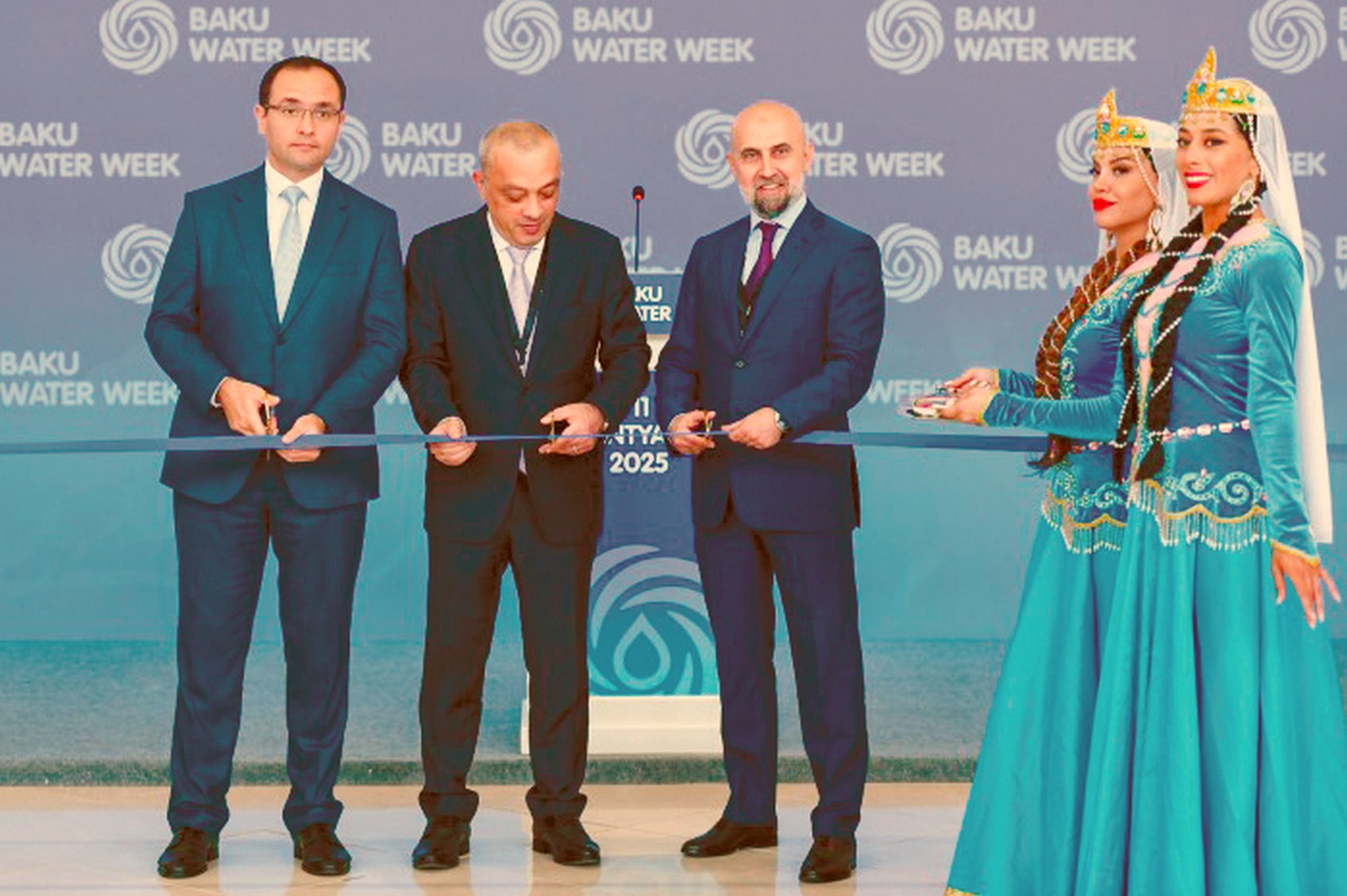
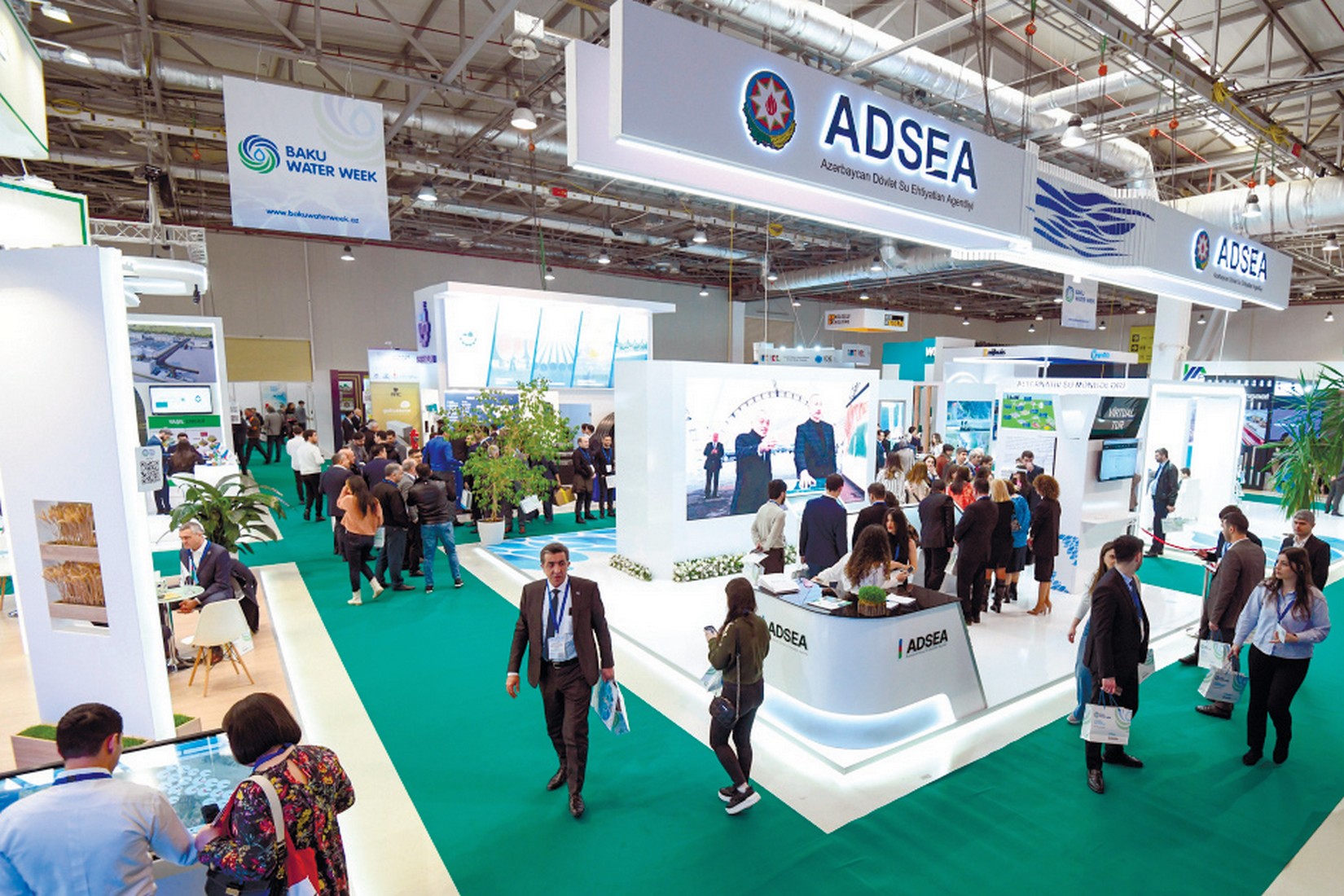
The discussion of water management strategies is becoming a global priority. Baku Water Week was a prominent platform for lively discussion, covering a comprehensive range of pressing issues, from membrane technologies to biotechnological solutions.
National approach
According to scientific estimates, by 2100 around 250 million people worldwide will be forced to leave their homes precisely because of water shortages. In areas where access to water is limited, livelihoods are impacted, incomes are reduced, and opportunities for basic survival are diminished. Even in developed countries, climate change is a key driver of migration.
Rovshan Kerimov, a research fellow at the Institute of Geography of Azerbaijan, noted that water shortages are forcing people to move, for example, from mountainous areas to lowlands. Azerbaijan is classified as a country with an arid climate. In several districts — including Guba and Shabran, as well as Khizi, Samukh and Aghsu — there are already documented cases of resettlement due to water scarcity. The outflow is particularly evident in the Guba district.
At present, the country's reservoir stocks are limited to 16 billion cubic metres, emphasising the necessity for their prudent management. Mukhtar Babayev, Presidential Representative on Climate Issues, believes that "we must learn to use water resources correctly. Azerbaijan's location in the lower stretches of rivers necessitates constant vigilance regarding water issues."
However, he emphasised, the regional context complicates the task: "Unfortunately, we cannot always reach full agreement. Azerbaijan is the only country in the region to be a member of the Water Convention, while other countries located in the upstream parts of rivers have not joined it. Consequently, we are obliged to maintain a constant focus on water issues."
Babayev noted that effective management of water resources requires a coordinated approach on the part of the relevant national and regional bodies.
The importance of joint solutions is increased by global processes, including glacier melt, shrinking snow reserves and climate change in general. "Annual expeditions to the Greater and Lesser Caucasus confirm a worrying trend: snow reserves are decreasing, glaciers are melting. As a result, water resources shrink, while floods, mudslides and other hydrometeorological events become more frequent," he stressed.
As is clear, water security is inextricably linked to global climate change. And since it is impossible to eliminate risks entirely, adaptation and preparation for new conditions are necessary.
Saving water in agriculture
The water problem is equally pressing for the agricultural sector. It is estimated that the agricultural sector consumes approximately 70% of the world's water resources. In the case of Azerbaijan, this figure is even higher. Therefore, effective water management is a prerequisite for sustainable development.
As Minister of Agriculture Majnun Mammadov asserts, surface irrigation will be prohibited in the liberated territories. "This initiative marks the initial phase in the systematic discontinuation of surface irrigation nationwide. It is vital that we conserve water while simultaneously increasing productivity, and this can be achieved through the widespread introduction of modern irrigation systems," the minister emphasised.
The consequences of drought are already evident: in 2023 alone, 178 thousand hectares were destroyed — a third of all rain-fed land in the country. At present, out of 1.4 million hectares of irrigated land, modern irrigation technologies are used on just 10-11%. During the past six years, just over 4,000 hectares have been converted to new irrigation systems. However, it is only in the first half of this year that more than 2,000 hectares have been added to this total.
In order to accelerate this process, the state is increasing its support. From this year, the subsidy level for locally produced equipment has been increased to 60%. This will make modern systems more accessible to farmers and expand the country's manufacturing capacity, creating new jobs and reducing dependence on imported technologies.
Zaur Mikayilov, Chairman of the State Agency for Water Resources of Azerbaijan (ADSEA), has announced that the country is in the process of transitioning from an extensive agricultural model, which relied on increasing consumption of resources to drive growth, to an intensive model focused on efficiency and quality. "The transition to intensive agriculture necessitates the judicious utilisation of water resources. The population is growing, demand for food is growing, while water resources are, conversely, decreasing," he pointed out.
In this context transboundary cooperation acquires particular importance, since 70% of Azerbaijan’s water resources are formed outside the country. As an example Mikayilov cited the reservoir on the Araz River, whose successful operation for more than half a century has been carried out jointly with neighbouring states.
International cooperation
According to Mikayilov, effective use of resources and development of international cooperation are becoming cornerstones of Azerbaijan's water policy.
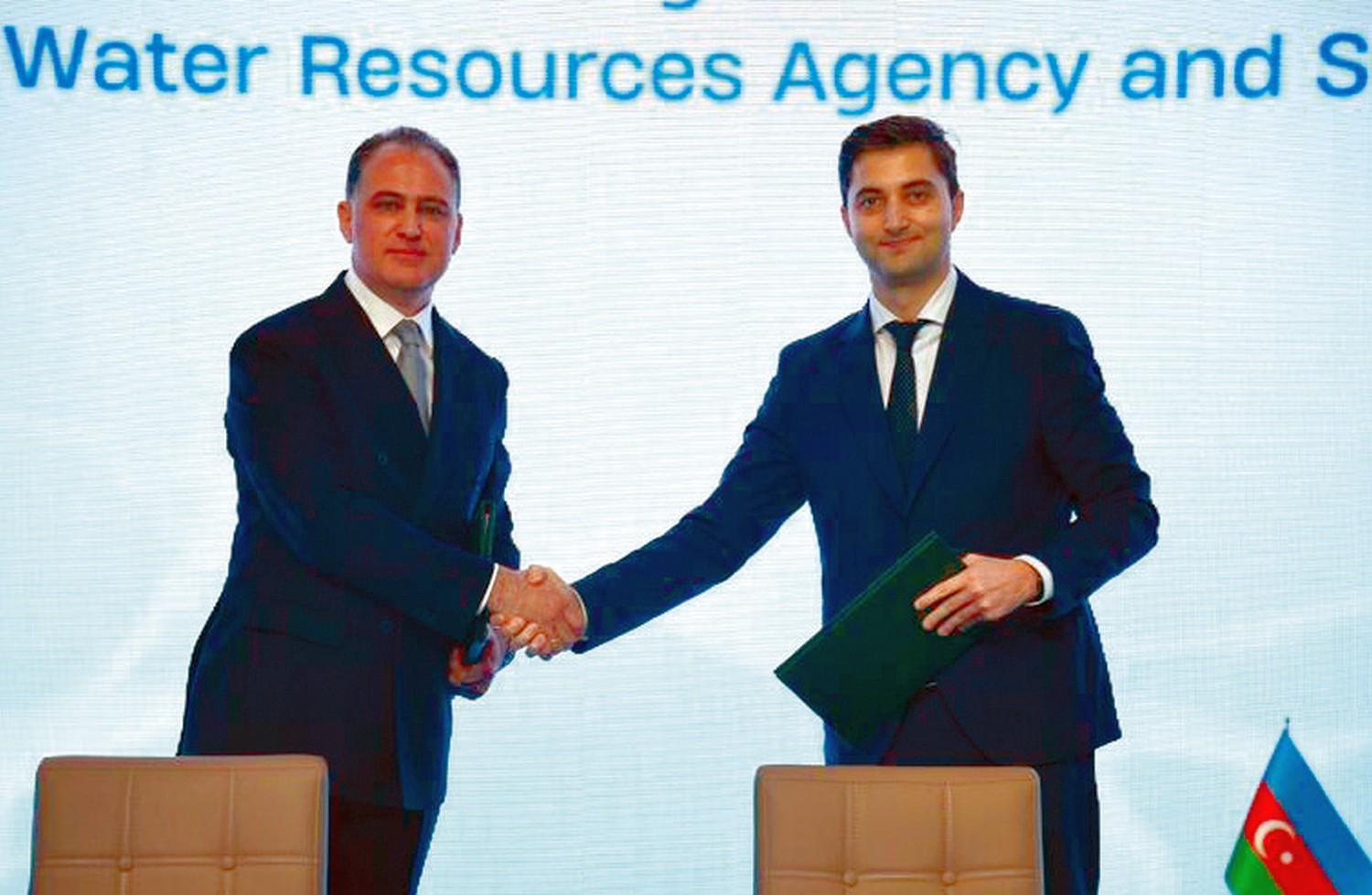
A significant part of Baku Water Week was the signing of international agreements by ADSEA with SOCAR Green LLC, the Hungarian Directorate-General for Water, and the Asian Development Bank.
The country is already experiencing the direct consequences of climate change, which necessitates the development of new solutions and strategies. In this regard, water must be regarded not only as a resource, but also as a factor in achieving a sustainable future.
According to the Service for Supervision of Water Use and Protection, resource volumes have decreased by 15–20%. "If earlier about 30 billion cubic metres of water entered the country, today that figure is significantly lower. Should trends of rising temperature and decreasing precipitation persist, we may face much more serious losses," said Rafig Verdiyev, head of the cadastre department of the Service for Supervision of Water Use and Protection.
Therefore, the implementation of systemic monitoring is of particular importance. This is of relevance not only to traditional aquifer regions but also to lands that have been liberated from occupation. According to Verdiyev, new observation points are already being established on the banks of the Araz River. Some of these have been restored in cooperation with Iran, and the relevant commission plans to install additional stations in the near future.
These hydroposts will facilitate the collection and analysis of data, ensuring the provision of drinking water to the population and enabling the efficient irrigation of cultivated areas.
Challenges for the Caspian
Climate change has a significant impact on agriculture and food security, as well as water management along the Caspian Sea coast. Of particular concern are the issues arising from the discharge of wastewater directly into the sea or onto the coast.
As Medina Hajiyeva, Head of Environmental Management Planning at SOCAR, explained, the falling Caspian Sea level means that it is not possible to achieve the necessary degree of dilution when discharging wastewater into the sea. As a result, the quality indicators of treated water and discharge standards are not being met.
Hajiyeva reported that heavy rains on the Absheron peninsula are mixed with sewage and directed to treatment facilities. Due to the inadequacy of the stormwater management system, there is a mixture of stormwater and wastewater, which complicates the treatment process. In some cases, the water is discharged into the Caspian Sea without any treatment at all.
One potential solution to this problem is the use of modular, flexible units, which can treat varying volumes of water. This treated water can then be used as a secondary source of drinking water.
Verdiyev stated that the most significant factor in this matter is the decline in the Caspian level, which is directly related to climate change (over the past four years, the sea level has decreased by 24 cm).
In this regard, Azerbaijan will implement measures to conserve and manage water resources. These measures will include the following: developing an optimal coastal zone management plan; preserving ecosystems and afforestation; and restoring and concreting main canals to reduce water losses.
Furthermore, the issue of increasing inflow from northern rivers – particularly the Pechora River into the Caspian via the Kama-Volga route – is under discussion. This could present a viable option for mitigating further sea-level decline.
Alternative sources
Azerbaijan has announced its intention to take decisive steps in the coming years to master innovative methods of obtaining water. From 2025 to 2027, the country will initiate the development of technologies to extract moisture from the air. This year, technical and economic feasibility studies and project documentation will be prepared. In 2026, pilot project territories will be determined, and by 2027, the first prototype will be ready.
Research is underway in another promising area: the development of artificial rain technology. By the end of 2025, the necessary documentation is scheduled to be finalised. In 2026, the pilot territories will be selected, and in 2027, the first experimental project will be initiated.
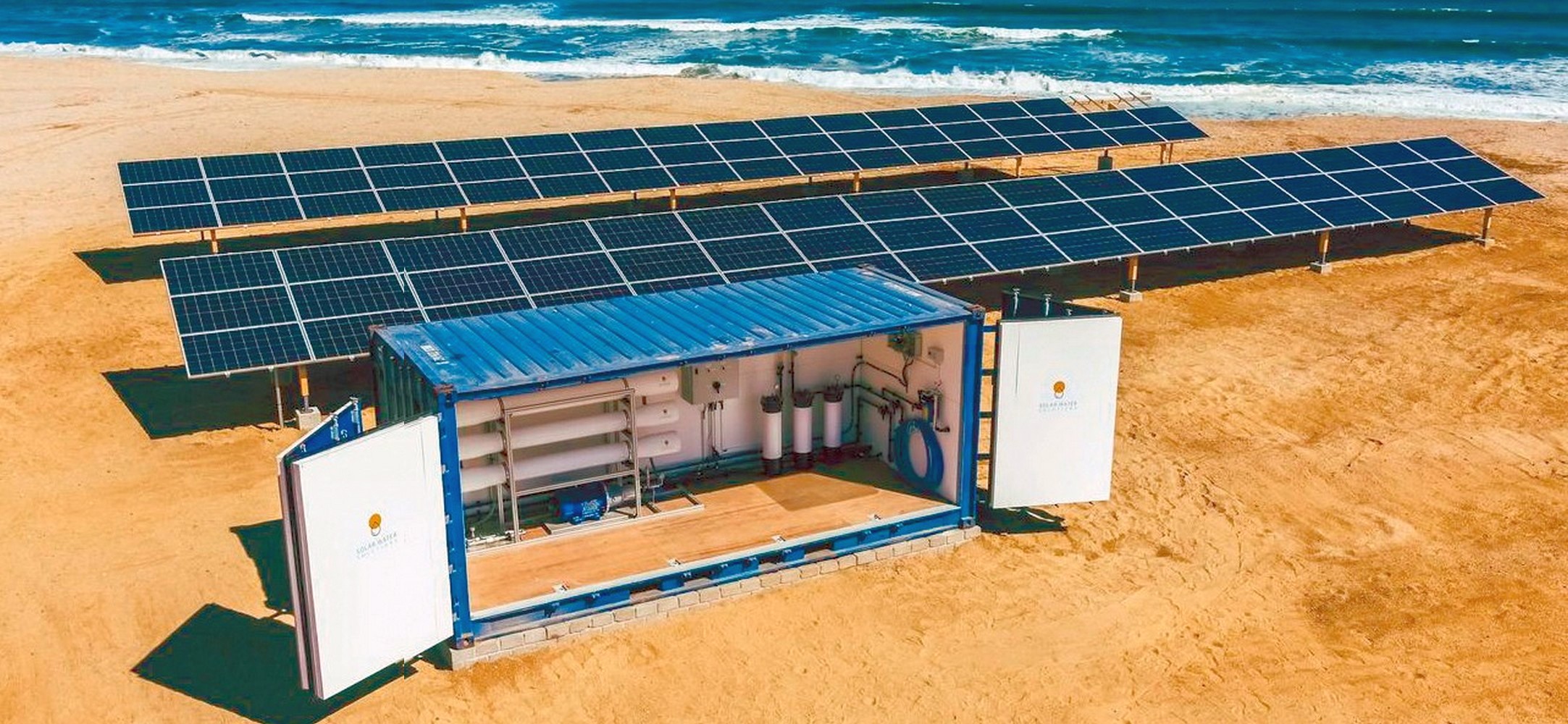
At the same time, desalination of seawater is a priority. Azerbaijan has already launched the first project that will provide Baku and Absheron with clean, fresh water from the Caspian.
Infrastructure development will be fundamental to sustainable water management. By 2025, the metering level in the drinking water supply system will reach 90%, and by 2027, it will reach 100%. Concurrently, a programme to reduce water losses will be implemented, with the target of reducing the current 35% to 20% by 2040.
The ambitious plans also include the construction of new reservoirs. It is estimated that between 2025 and 2040, there will be a 26% increase in their number.
Furthermore, as of 2025, the country will initiate a comprehensive programme aimed at safeguarding against mudflows and floods. The programme includes river monitoring, risk mapping, construction of bank protection structures and dams, as well as implementation of preventive measures capable of mitigating the consequences of natural threats.
Azerbaijan has therefore set itself the task of establishing water as a strategic resource for the future. In the face of the challenges posed by climate change and diminishing water resources, a multi-faceted strategy is being implemented, incorporating the latest technological advancements and modernising conventional systems. These measures will contribute to the enhancement of the country's water sector resilience and establish a robust foundation for its long-term modernisation.
RECOMMEND:
 190
190

