

DAWN OF A NEW ERA
Ilham Aliyev's visit to New York demonstrates Azerbaijan's growing role in global politics and economy
Author: Elchin HUSEYNOV
In late September, New York once again became the centre of global diplomacy, where world leaders gathered for the 80th session of the UN General Assembly. The main topics of the session included discussions on key global agenda items, including the conflict in Ukraine, the humanitarian situation in Gaza, and the reform of international institutions.
Baku as a hotspot of global agenda
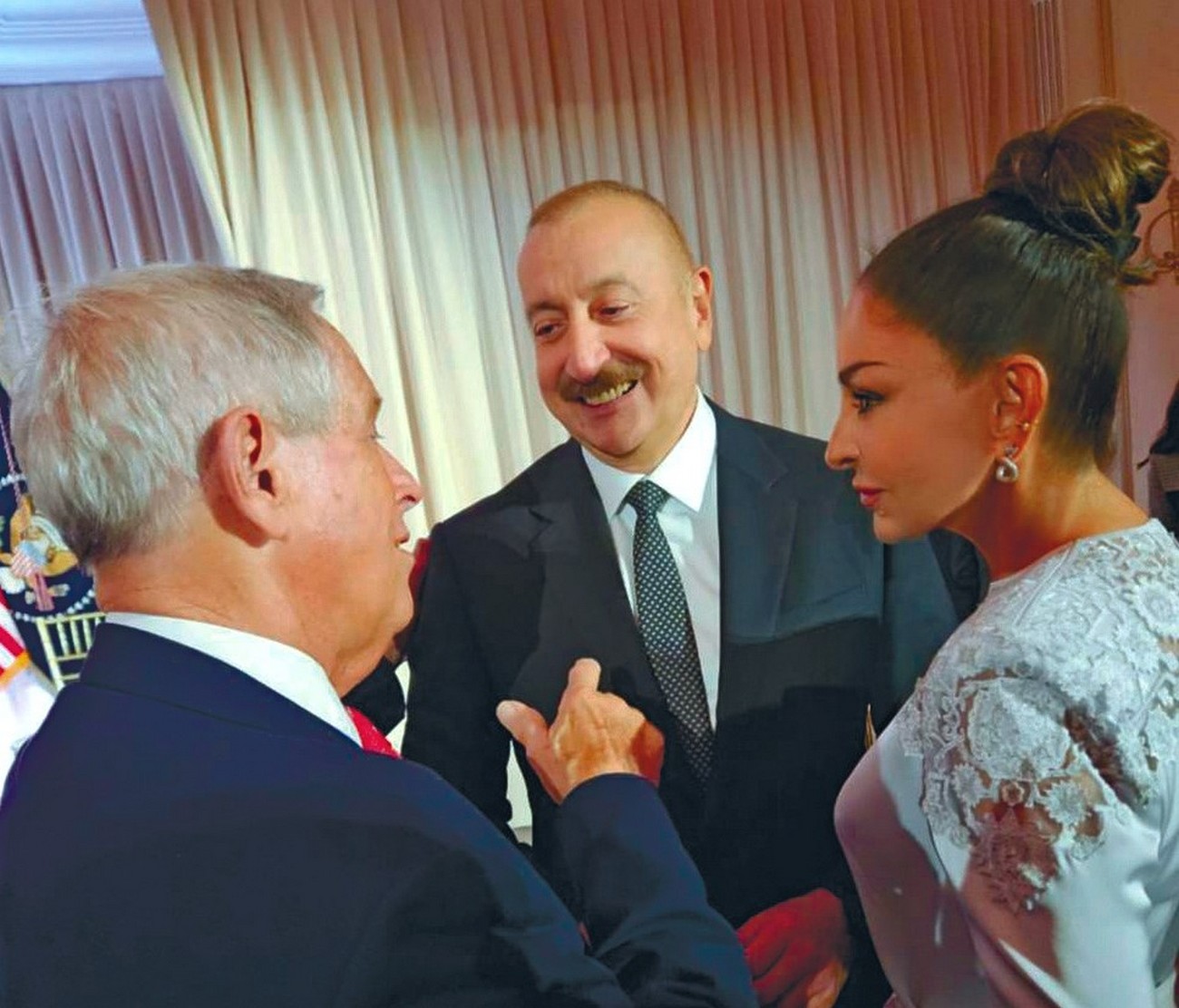
President Ilham Aliyev's visit to the US to join the 80th session of the UN General Assembly was not merely a diplomatic event but a vivid demonstration of a new balance of power. Baku today acts as a player capable of setting the pace in the region and confidently asserting itself on the world stage. Ilham Aliyev's packed schedule on the sidelines of the forum confirmed this: a series of meetings with major international corporations and financial centres on the very first day of the visit turned New York into a platform for dialogue about the future of energy, transit, and infrastructure. For Azerbaijan, this was not a showcase but a statement—a country that has restored its territorial integrity is ready to dictate terms, propose new formats of cooperation, and attract long-term capital. And it is to Baku that others now turn for answers and opportunities.
Thus, Ilham Aliyev met in New York with the head of one of the world's largest companies in alternative investment management, Brookfield Asset Management, Bruce Flatt. The parties exchanged views on Azerbaijan's opportunities in the sphere of renewable energy and the prospects of turning Baku into a regional energy centre. With the head of another large company (managing assets worth over half a trillion dollars) Neuberger Berman, George Walker, they discussed the current state and prospects of developing cooperation. Walker, emphasising the importance for the company of the economic processes occurring in the region, said that opportunities for expanding partnership within new projects are currently being assessed. And the head of one of the world's largest alternative investment management companies, Blackstone, Jonathan Gray, noted interest in expanding successful cooperation with Azerbaijan, in particular with the State Oil Fund, and highly appreciated the favourable investment climate formed in the country. The same issues were discussed with the heads of global investment management companies—Franklin Templeton, Global Infrastructure Partners, Ares Management.
Another block of meetings for the Azerbaijani leader was related to discussing the activation of bilateral relations and cooperation within international organisations. Negotiations were held with the presidents of Iraq (Abdul Latif Jamal Rashid), Kenya (William Samoei Ruto), Finland (Alexander Stubb), and Portugal (Marcelo Rebelo de Sousa), as well as the prime ministers of Greece (Kyriakos Mitsotakis) and Bulgaria (Rosen Zhelyazkov).
Ilham Aliyev also met with the Senior Vice President of the US Chamber of Commerce, Khush Choksy. During the conversation, it was noted that there are currently great opportunities for elevating relations between Azerbaijan and the US to the level of strategic partnership and expanding our trade and economic ties. Issues of cooperation in the spheres of energy, communications, artificial intelligence, and other areas arising from the Memorandum of Understanding signed between Azerbaijan and the US on establishing a Strategic Working Group to develop a Charter on Strategic Partnership were discussed.
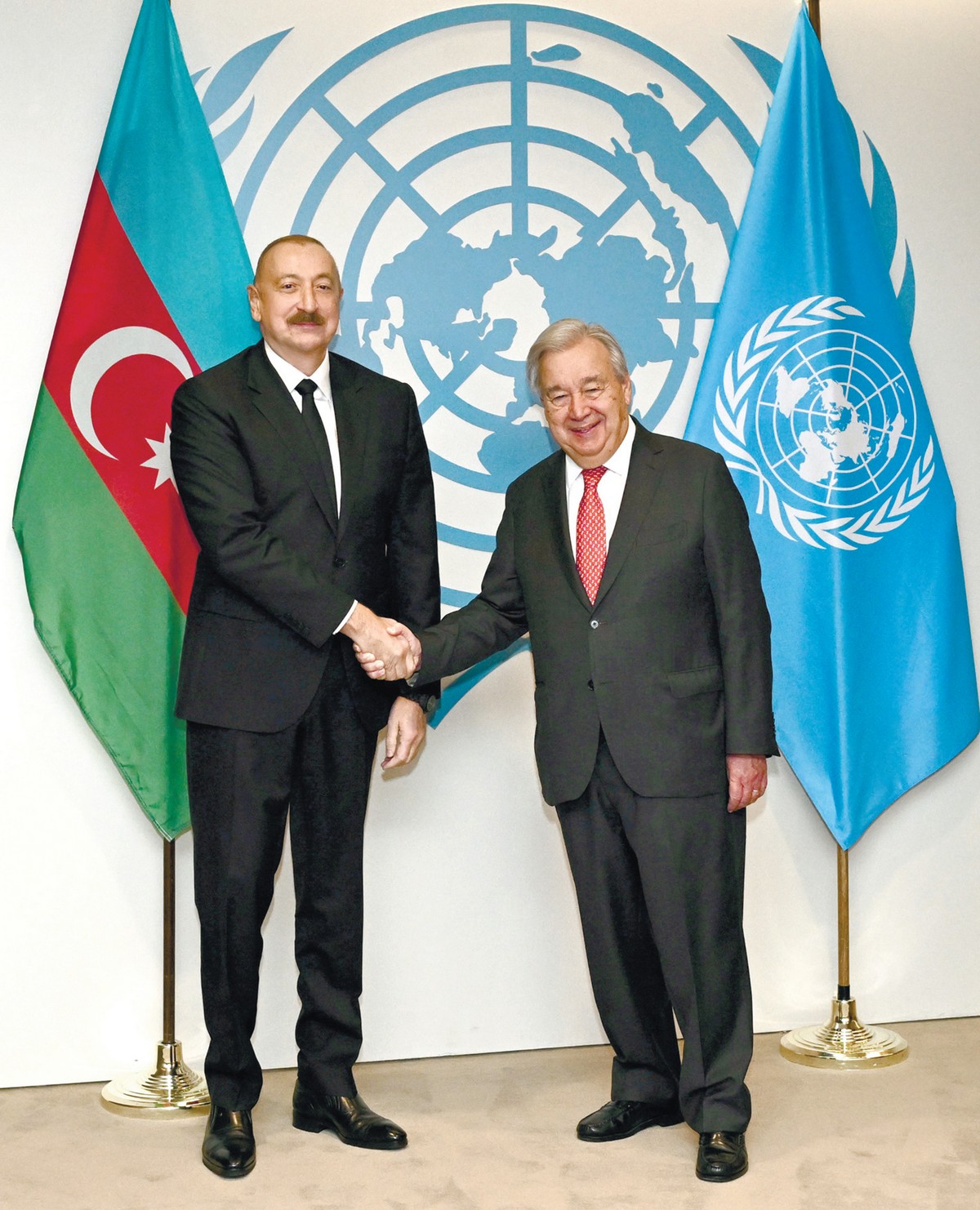
The meeting between the President of Azerbaijan and the UN Secretary-General António Guterres was also substantial. He congratulated Ilham Aliyev on advancing the Armenia-Azerbaijan peace agenda, the historical results achieved, and successes in the international climate agenda. Guterres also emphasised Azerbaijan's successful chairmanship of the Non-Aligned Movement, noted Baku's role in developing regional cooperation projects, and in establishing regional transport communications with Central Asia. And Ilham Aliyev, speaking about hosting such a major event as the UN World Urban Forum in Azerbaijan in 2026, emphasised that it creates a good opportunity to share Azerbaijan's rich experience in urban development, especially in the post-conflict period.
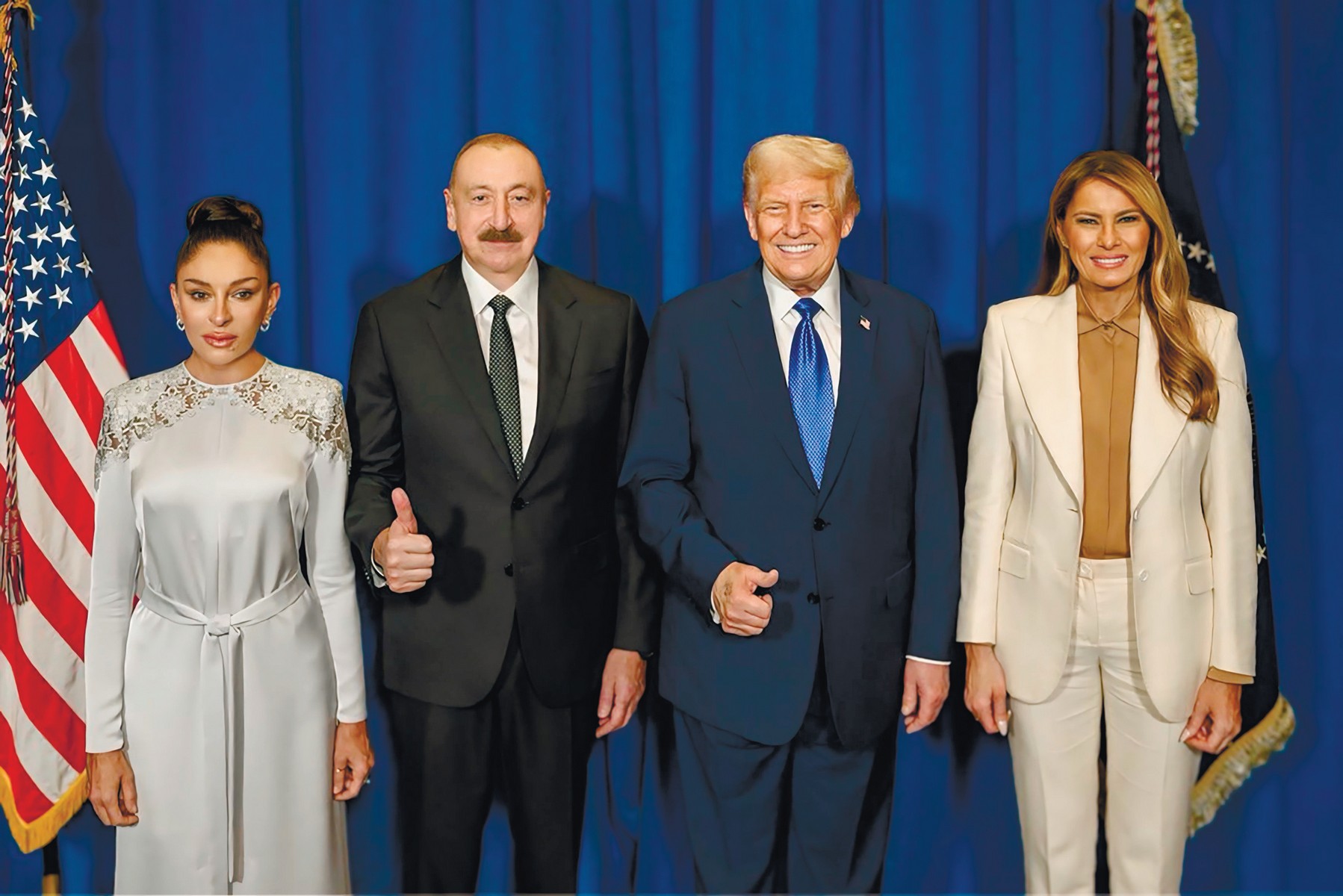
An exchange of views on cooperation issues was conducted at the meeting between the President of Azerbaijan and the Secretary General of the Council of Europe, Alain Berset. During the conversation, issues of suspending the activities of the OSCE Minsk Group, the initialling at the Washington meeting of the agreement on normalising relations between Azerbaijan and Armenia, and the significance of the Washington Declaration, signed under the witness of US President Donald Trump, were raised. Alain Berse emphasised that the Council of Europe supports the regional peace agenda.
After the Victory: Azerbaijan sets a new course
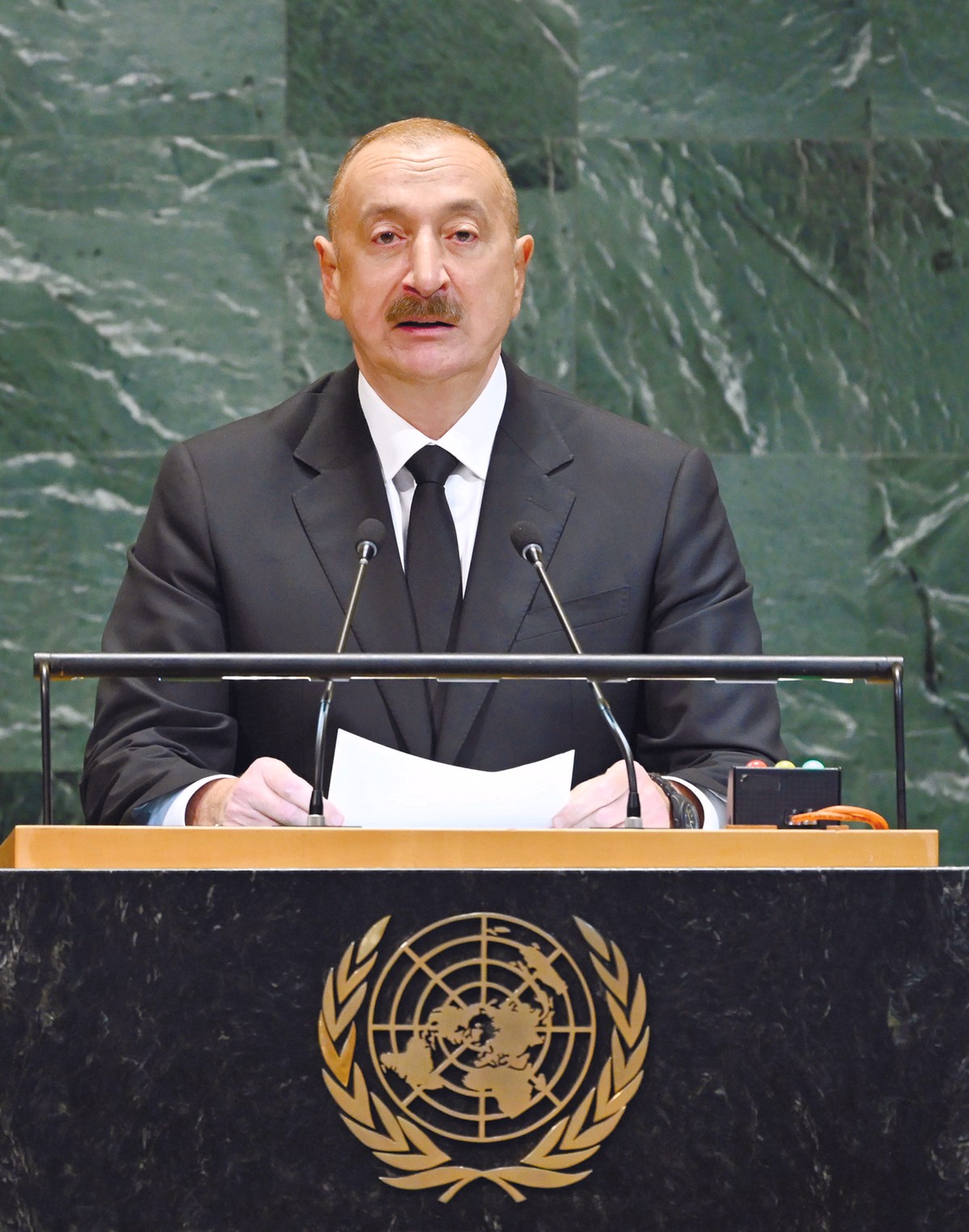
On September 25, President Aliyev delivered a speech at the 80th session of the UN General Assembly, summing up the recent historical stage of the country. Touching on the peace agreements with Armenia on August 8 in Washington, the head of state said that they "have historical significance": "I thank US President Donald Trump for opening a new page in Azerbaijan-US relations, for his decision to elevate relations to the level of strategic partnership, and for supporting the peace process between Azerbaijan and Armenia." According to him, one of the important results of the Washington summit is "Trump's Route for International Peace and Prosperity", which will ensure unimpeded passage through the Zangezur corridor and strengthen regional connections.
Ilham Aliyev also emphasised the country's global initiatives: climate programmes, energy security, and regional integration. Azerbaijan supplies natural gas to 14 countries, develops transport and digital corridors, including the "Digital Silk Road" project. "Azerbaijan has entered a new era. We have achieved victory both in war and in establishing peace. We have ended the occupation and commenced restoration works. Justice has triumphed, sovereignty has strengthened, and peace de facto has been ensured."
Speaking on the outcomes of the summit held in Baku in 2024, Ilham Aliyev noted a serious commitment to the "green" transition: "Azerbaijan is also attracting major investments in renewable energy sources, such as solar, wind, and hydropower. By 2030, about 40% of the energy we produce will be ensured from renewable sources." At the same time, he remarked that "the world will not be able to survive without fossil fuel either today or in the near future."
The President also paid attention to transport communication projects, such as the East-West and North-South corridors: "We have witnessed an increase in cargo shipments along the Middle Corridor by almost 90% since 2022. The transit times along this corridor have significantly shortened. The largest trade fleet on the Caspian, the International Trade Port of Alat, whose capacity will reach 25 million tonnes per year in the coming years, the Baku-Tbilisi-Kars railway, 9 international airports, the largest cargo airline in the region, and other factors have turned Azerbaijan into one of the international transport hubs."
The Azerbaijani leader also touched upon the great potential for cooperation in the sphere of digital communications. The country is promoting a digital transformation initiative through such a significant project as the "Digital Silk Road". This project also includes plans to create an advanced fibre-optic cable network along the bottom of the Caspian Sea, which will allow the country to become a key regional digital centre.
The President, during his speech, also focused on the country's economic resilience: this includes reducing poverty to 5%, raising ratings from Moody's and Fitch, low external debt, and growth in foreign currency reserves. The main message can be considered the following phrases: "Our vision is clear. This is peace and development based on international law, non-interference in the internal affairs of states, mutual respect, and cooperation. Let us together build a world where double standards are eliminated, justice is not selective, respect for the rule of law is demonstrated, and peace is ensured not only in words but through practical steps."
World leaders against aggression
However, one of the central issues of discussion became the Middle East conflict, in particular, the situation in Gaza and Israel's actions. In early August, the Israeli government decided on the full occupation of Gaza City, which led to an escalation of violence and a humanitarian catastrophe. The Gaza Strip continues to be the epicentre of the crisis: airstrikes have destroyed residential neighbourhoods, thousands of civilians have been killed, thousands have been injured. Residents are experiencing an acute shortage of water, food, and medical assistance. International organisations are sounding the alarm about a growing humanitarian disaster. According to the Gaza Health Ministry, controlled by Hamas, the victims of the military campaign have reached over 64,500. About 250,000 Palestinians have already left the city, but hundreds of thousands remain in the conflict zone, facing threats to their lives and health. The UN recognises these data as reliable and warns that a further Israeli offensive could cause an "even more terrible catastrophe."
President of the Palestinian Authority Mahmoud Abbas delivered a virtual speech within the session, condemning Israel's actions in Gaza as "genocide" and "war crimes". He called for an immediate ceasefire, the provision of humanitarian aid, and the withdrawal of Israeli troops from Gaza territory. Abbas also emphasised that Hamas will not participate in the post-war management of Gaza, stating the readiness of the Palestinian Authority to take responsibility for the security and restoration of the region.
In response to the criticism, Israeli Prime Minister Benjamin Netanyahu stated that he would condemn those leaders who, instead of condemning terrorists, want to provide them with a state in the heart of Israel. He emphasised that Israel will not allow the creation of a Palestinian state and will continue its policy regarding Gaza.
The international community expressed concern over Israel's actions. UN Secretary-General António Guterres, as well as the leaders of Jordan and Türkiye, condemned the Israeli aggression in Gaza. King of Jordan Abdullah II noted that the actions of the Netanyahu government threaten the sovereignty and territorial integrity of neighbouring countries. President of Türkiye Recep Tayyip Erdogan in his speech at the General Assembly also called Israel's actions in Gaza "genocide" and a "threat to post-war values". He called on world leaders to "stand on the side of the oppressed Palestinians" and condemned the silence of the international community.
Interestingly, on September 29, Donald Trump at a meeting with Israeli Prime Minister Benjamin Netanyahu in the White House presented his own 20-point "Comprehensive Plan to End the Conflict in Gaza". According to the plan, in case of acceptance by both sides, "hostilities will immediately cease", and Israeli forces "will withdraw to agreed lines for the preparation of prisoner release". For this period, the cessation of airstrikes and artillery shelling is envisaged while maintaining the current frontline until conditions for a "complete phased withdrawal of troops" are created.
The document establishes that within 72 hours after official consent from Israel, all prisoners—both alive and deceased—will be returned. In exchange, Israel will release 250 prisoners sentenced to life imprisonment after the events of October 7, 2023, as well as 1,700 Palestinians, among whom are women and children. The plan also envisages that for each released Israeli prisoner, the bodies of 15 Palestinians will be transferred.
After the completion of the exchange, members of the Palestinian movement Hamas who agree to disarmament and peaceful coexistence will receive amnesty. Those who wish to leave Gaza will be provided with safe passage to countries willing to accept them.
Within the 80th session of the General Assembly, several significant statements were made regarding the Russian-Ukrainian war. President Vladimir Zelenskyy emphasised that Ukraine is fighting for the principles of the UN Charter, including sovereignty and territorial integrity. He called for increased pressure on Russia, stating that only the joint efforts of the world community can stop the aggression and prevent further expansion of the conflict across Europe. Donald Trump, in turn, expressed confidence in Ukraine's ability to win the war and return all its territories with continued Western support. He also proposed that NATO have the right to shoot down Russian drones violating the airspace of Alliance countries.
The head of the Russian Ministry of Foreign Affairs, Sergey Lavrov, who headed the Russian delegation at the General Assembly, stated that NATO and the EU have essentially declared a "real war" on Russia by supporting Ukraine. He emphasised that the West provoked the conflict and accused the EU and NATO of having "gotten deeply involved" in the anti-Russian Ukrainian project and "become entangled" in their actions.
The statements of many European leaders reflected unity and determination in supporting Ukraine and striving for a peaceful resolution of the conflict. Emmanuel Macron sharpened attention on the fact that Ukraine is fighting for the principles of the UN Charter, including sovereignty and territorial integrity. He called on Russia, as a permanent member of the Security Council, to return to the negotiation table, cease violence, and stop threats to neighbouring states. Chancellor of Germany Friedrich Merz proposed using frozen Russian assets worth €194 billion to provide Ukraine with an interest-free credit of €140 billion, intended for the purchase of military equipment. According to him, this initiative will demonstrate Europe's determination and strengthen the collective security of the continent.
President Erdogan expressed the opinion that the Russian-Ukrainian war will not end in the near future. He stated that both sides are bearing heavy losses, Ukraine cannot compete with Russia economically, and Europe is not in a position to provide Kiev with economic support indefinitely.
The 80th session of the UN GA became an arena for discussing the Middle East conflict, where various countries expressed their positions and proposed paths to a solution. Despite the efforts of the international community, the situation in Gaza remains tense, and the search for a peaceful settlement continues to be a relevant task for all sides.
Strange things happen
In the first days of the meeting, one diplomatic curiosity, so to speak, pushed the entire New York agenda aside. All world media outlets, from the most serious to the yellow press, wrote about the incident with French leader Emmanuel Macron. He found himself in a difficult situation on the streets of New York when his delegation was stopped by police to allow the motorcade of US President Donald Trump to pass. Macron, not lost, called Trump directly from the street, jokingly saying: "Can you imagine that I am waiting for you on the street because everything is frozen due to you." Apparently, the call did not resolve the problem, and Macron had to continue his journey on foot, interacting with passers-by and even posing for photographs. The French embassy in the US commented on the incident with humour, noting that "it is good when presidents can contact each other at any time."
Incidents with Donald Trump himself also attracted the attention of all media. Thus, when ascending in the General Assembly building, the escalator suddenly stopped, and he had to continue the path on foot. Later, it was revealed that the escalator stop occurred due to the accidental triggering of a safety mechanism. There were also technical hitches during the American leader's speech: the teleprompter activation was delayed, and audibility in the hall was ensured only through headphones with simultaneous translation, as Trump later noted.
In his account on the American social network The Truth Social, the US President emphasised that what occurred "was not an accident", characterised it as "triple sabotage at the UN", and sent an official letter demanding an investigation into the circumstances of the incident. In turn, the UN Secretary-General António Guterres called for a thorough investigation of the incident.
The 80th session of the UN General Assembly once again showed that global diplomacy remains a dynamic and multifaceted arena, where the interests of leading countries and regional players clash. The focus was on issues of security and peace in the Middle East, as well as the strengthening of the positions of countries actively influencing regional processes, such as Azerbaijan. The visit of President Ilham Aliyev confirmed the growing role of Baku on the world stage, the country's ability to form new formats of cooperation in energy, transport, and digital technologies. At the same time, the situation in Gaza and the Russian-Ukrainian conflict showed that many international problems remain unresolved and require the joint efforts of the world community. The General Assembly again emphasised the necessity of dialogue, the search for compromises, and the strengthening of international law to ensure stability and security.
RECOMMEND:
 240
240

