

WINNERS WITHOUT VICTORY
The Taliban won the war but are losing power
Author: Irina KHALTURINA
The ever-expanding internal political crisis in Afghanistan could lead to a new civil war in the country and even the possible fall of Taliban rule. The Taliban movement is a complex alliance of groups, based on different tribal and ethno-regional forces, within which deep ideological and political disagreements have long been brewing. Utter chaos in a country where 90% of the population is effectively not just below the poverty line, but in a state of destitution, could have unpredictable consequences for the entire region.
Taliban vs. Taliban
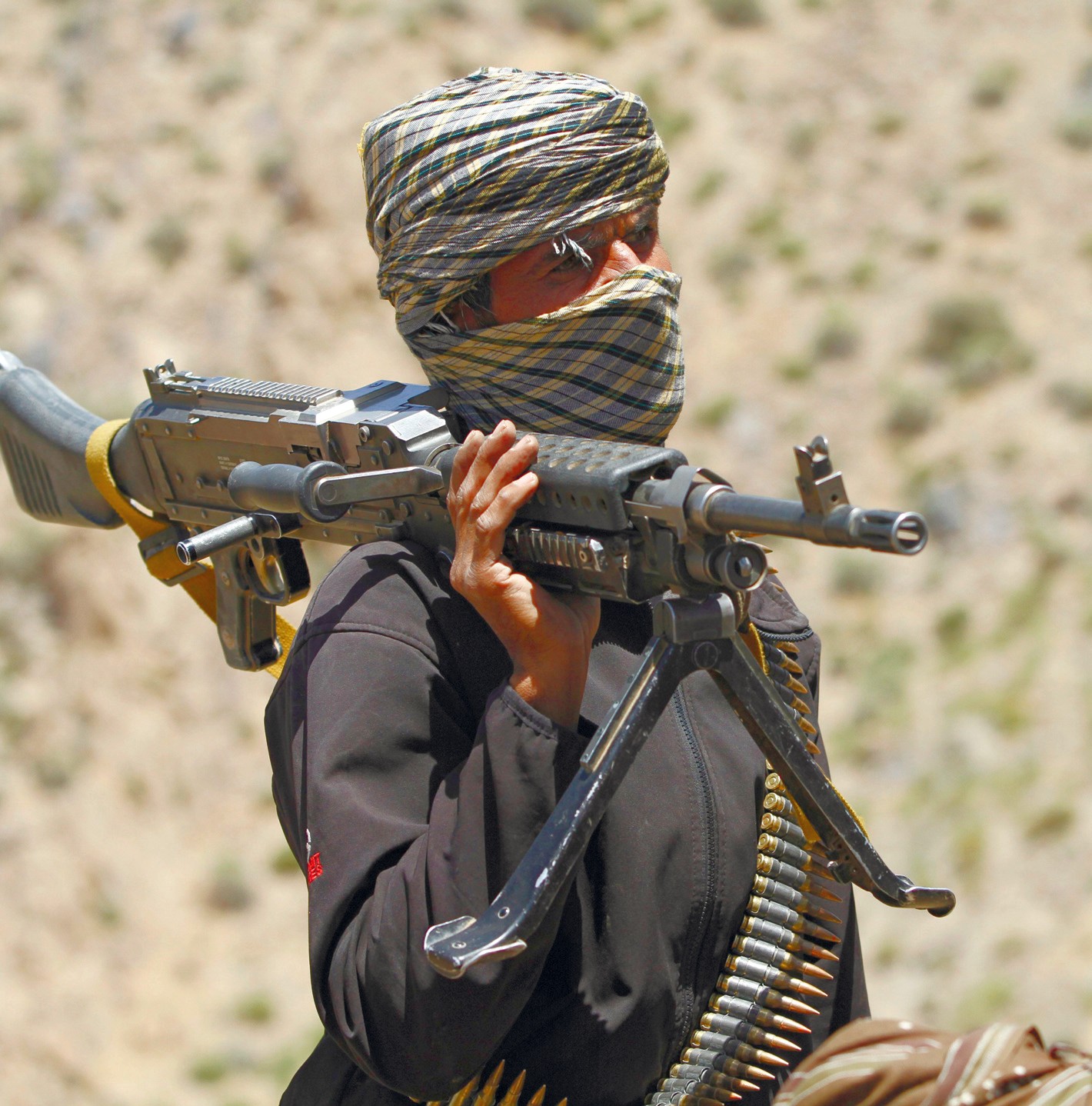
The main rival Taliban forces are represented by the Kandaharis and the Kabulis. The Kandaharis (representatives of the Durrani tribe) hold influence in the south, as well as the west of Afghanistan, and especially in the eponymous province with its centre in Kandahar. The supreme leader of the movement, Emir Mullah Haibatullah Akhundzada, is aligned with them. From the very beginning, the supreme leader and his administrative apparatus settled in Kandahar, forming a so-called parallel Kandahar government. The official ministerial bodies and institutions remained in Kabul. More recently, the head of the Taliban government, Hassan Akhund, has been named as the formal leader of the Kabul group. The "legal Taliban government" in Kabul also includes supporters of the Taliban's Interior Minister, Sirajuddin Haqqani, who is simultaneously the leader of the eponymous Haqqani Network (the movement's combat, radical wing). It consists mainly of representatives of the Pashtun Zadrani tribe from the country's southeastern and eastern regions.
Events in Afghanistan, specifically the nationwide internet shutdown on September 29, present an interesting picture. Connection to the world wide web was allegedly severed by order of Emir Haibatullah Akhundzada, who accused the network of "spreading immorality." This radical decision immediately collapsed the already poorly coordinated and inefficient work of the government and other institutions, including medical, educational, transport, and airports. In Kabul itself, restrictions were imposed on the free movement of residents and vehicles on the streets. Rumours began to circulate about armed clashes between militants from different Taliban groups.
To remedy the situation, Sirajuddin Haqqani reportedly travelled to Kandahar personally for negotiations with Haibatullah Akhundzada. But he, as rumour has it, "sacked him" and appointed Yusuf Wafa, the governor of the northern Balkh province and a close associate, as the new Minister of Internal Affairs. What is true in this story is unclear, as it was previously said that Haibatullah has been hiding in an unknown location for some time, having left his official residence in Kandahar.
Haqqani, it seems, remained at his post after all, and internet and mobile services in Afghanistan were working again by October 1. According to sources, Prime Minister Mohammad Hassan Akhund gave the order against Haibatullah's will, having been pressured by Haqqani, Defence Minister Mullah Mohammad Yaqoob, Taliban intelligence chief Mullah Abdul Haq Wasiq, and Deputy Prime Minister Mullah Mohammad Baradar.
Observers note that the Kandaharis advocate for a conservative version of governance, with a strict version of Sharia and isolation from the outside world. The Kabulis, however, favour an "open emirate," granting women rights to education and relative independence, and cooperation even with the West, specifically the US. Some figures in the Kabul group have long been cooperating quite closely with the Americans, as well as their proxies. Specifically, Sirajuddin Haqqani, despite his radical status, also allegedly advocates for improved ties with the outside world. The Kandaharis believe he has access to the armed anti-Taliban opposition. This is likely why Haibatullah's circle decided to cleanse the movement's ranks, and the internet shutdown was one attempt to exert pressure on the Kabulis.
Victors of the future
According to other reports, about 4,000 Taliban fighters (mainly from Helmand province) who are personally loyal to the Emir and take orders only from Kandahar have been sent to Kabul.
How the situation will develop is difficult to predict. But it must be understood that this is not simply a confrontation between two leaders or two groups, one of which will eventually be able to crush the other. We are not talking about parties and their supporters as understood in the Western world, who can be negotiated with, persuaded, dismissed, or, ultimately, bought off. We are talking about tribal and clan relationships, characterised by strong family ties and a unique code of honour based on religion, local culture, and a harsh way of life, added to which is the ubiquitous availability of weapons and a severe climate. In such circumstances, there can be no clear winners among the warring factions.
However, this does not mean that outside forces cannot be the victors. An increase in the degree of internal tension could very well benefit those who want to advance their own agenda in Afghanistan. If one group cannot defeat the other, sooner or later, they will both lose. In the Taliban's case, members of the Afghan Resistance (political and social groups opposed to the Taliban regime) could contribute to this.
The struggle for Afghanistan
The internal conflict in Afghanistan could also be influenced by its immediate neighbours, who are watching events very closely. Primarily, these are Pakistan and Iran. As a reminder, Afghanistan borders Iran to the west; Pakistan and India to the south and east; and Turkmenistan, Uzbekistan, and Tajikistan to the north.
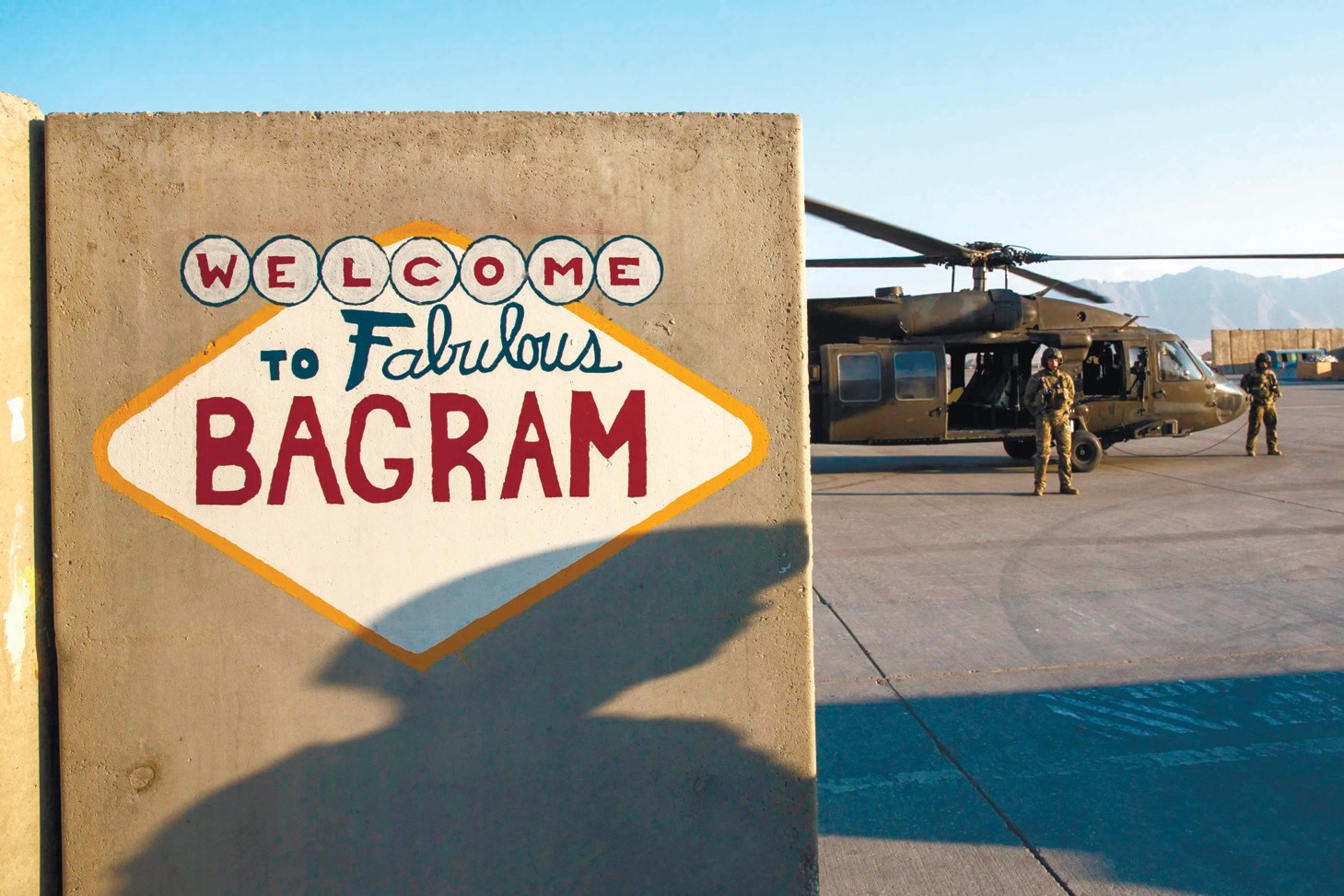
US President Donald Trump has already publicly stated his intention several times to regain Washington's control over Bagram Airbase, which is located about 60 km north of Kabul in Parwan province. The head of the White House even threatened that "bad things" would happen if the Taliban did not hand over the airbase to the United States. The Taliban recaptured the airfield in 2021, following the fall of Ashraf Ghani's government and the effective flight of the Americans. Prior to that, the base, built by the Soviet Union during its war in Afghanistan from 1979 to 1989, served as the US logistics hub for air operations for twenty years after the American invasion in 2001. Given the base's relative proximity to Iran and Russia and their interests in the region, to Pakistan, and especially to China's Xinjiang, which hosts the Lop Nur test (nuclear?) base, one can imagine how badly the Americans want Bagram back.
It should also be noted that Afghanistan is located at the very junction of logistics routes that are, again, being promoted by US rivals in the region—China, Pakistan, Iran, and Russia. Incidentally, this is precisely why these major global players moved to recognise the Taliban government. However, assessing the real capabilities of external players in the region, Washington is undoubtedly most concerned about the actions and plans of China, which wants to connect Afghanistan to the "Belt and Road" programme. The Wakhan Corridor, a fragment of the historic Great Silk Road, directly connects the two countries. Beijing views it as an extension of its China-Pakistan Economic Corridor.
The Chinese also openly declare their interest in extracting mineral resources in Afghanistan, including rare earths. This is one of the most critical areas in which Beijing and Washington compete. In August, during a visit to Kabul, Chinese Foreign Minister Wang Yi stated that China intends to initiate the practical development of mineral deposits in Afghanistan this year. Beijing is particularly interested in the oil and natural gas reserves in the Amu Darya basin, lithium extraction, and the Mes Aynak open-pit copper mine in Logar province, the second largest in the world. Afghanistan's subsoil is also rich in lead, zinc, and other metals. Thus, a new American presence in Afghanistan is clearly undesirable for China. Beijing has unequivocally stated that it respects Afghanistan's sovereignty and has warned against steps that could destabilise the region.
Against this backdrop, China's defence ministry invited the Taliban's Defence Minister, Mullah Mohammad Yaqoob, to visit the Chinese capital. Observers linked this step to attempts to ascertain whether the Taliban are genuinely prepared to resist the stated American pressure or if they might cut a deal with Washington.
It remains unclear what the new US strategy toward Afghanistan might be. Bagram Airbase is located in Parwan, which is inhabited by an ethnic Tajik population hostile to the Pashtun-Taliban. Although the Taliban controls these territories, the spirit of resistance there is high. And if the Americans seriously want to take the base back, they may try to rely on these anti-Taliban forces. Moreover, it would be desirable for Trump to regain the base before the start of the US congressional midterm election campaign. This would be a powerful trump card after the disgraceful failure of Joseph Biden's team and America's national humiliation.
Since the time of Alexander the Great, Afghanistan has been repeatedly invaded, after which the country earned the unofficial name "the graveyard of empires." In this deeply backward state, economically and politically, the strategic interests of powerful players converge. The aforementioned Wakhan Corridor, which served as a buffer zone or "no man's land" between Tsarist Russia and British India in the late 19th century, not only connects China and Afghanistan now but also separates Pakistan and Tajikistan. This is why it is also called the "strategic pivot" of Eurasia.
There are enormous reserves of drinking water here, which is critically important for this region. Given this, the discord in the Taliban's ranks is, of course, seen in a completely different light than just a feud between two groups.
RECOMMEND:
 198
198