
SECURITY, TURKIC STYLE
The 12th Summit in Gabala turns the Organisation of Turkic States into a global actor
Author: Ilgar VELIZADE
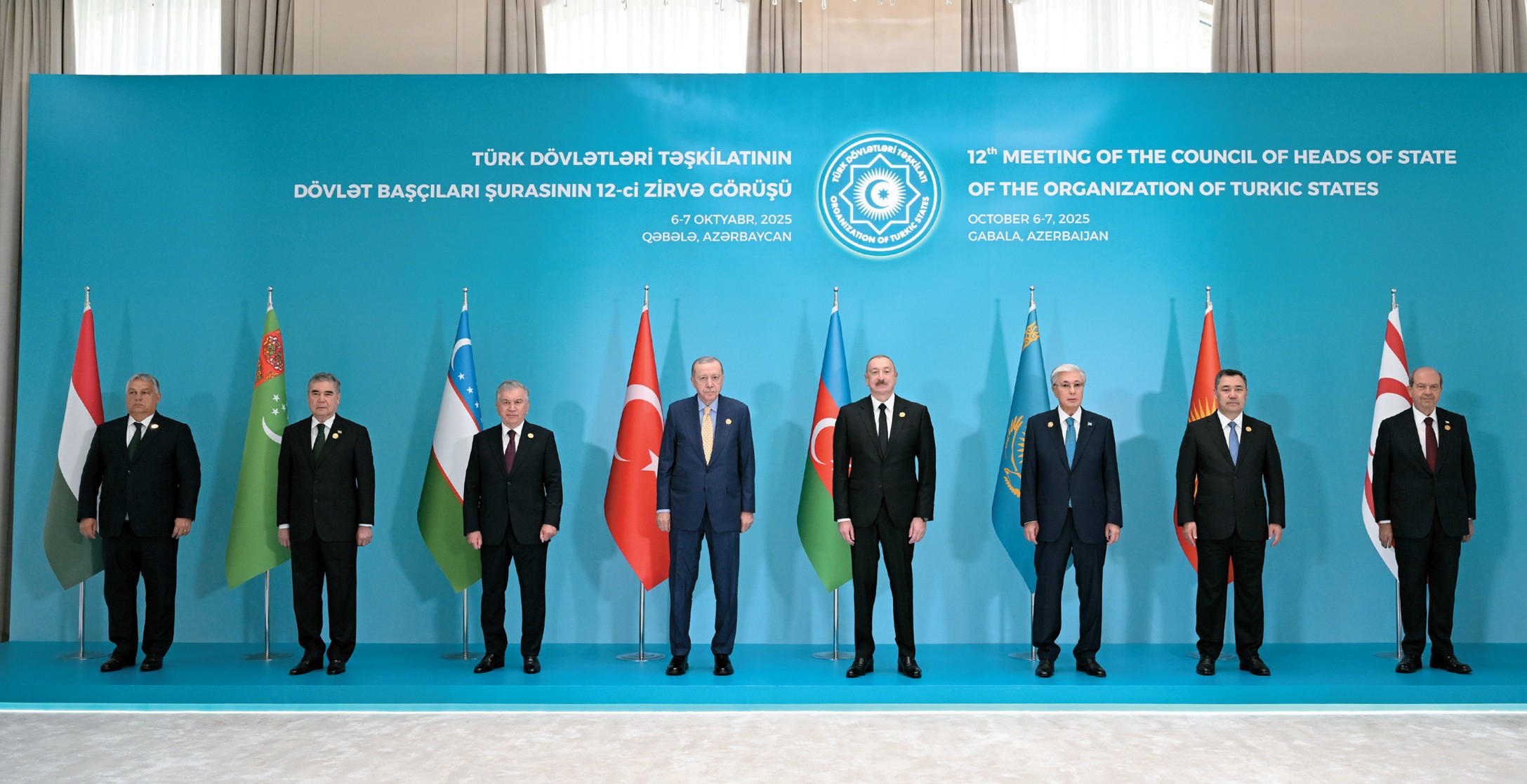
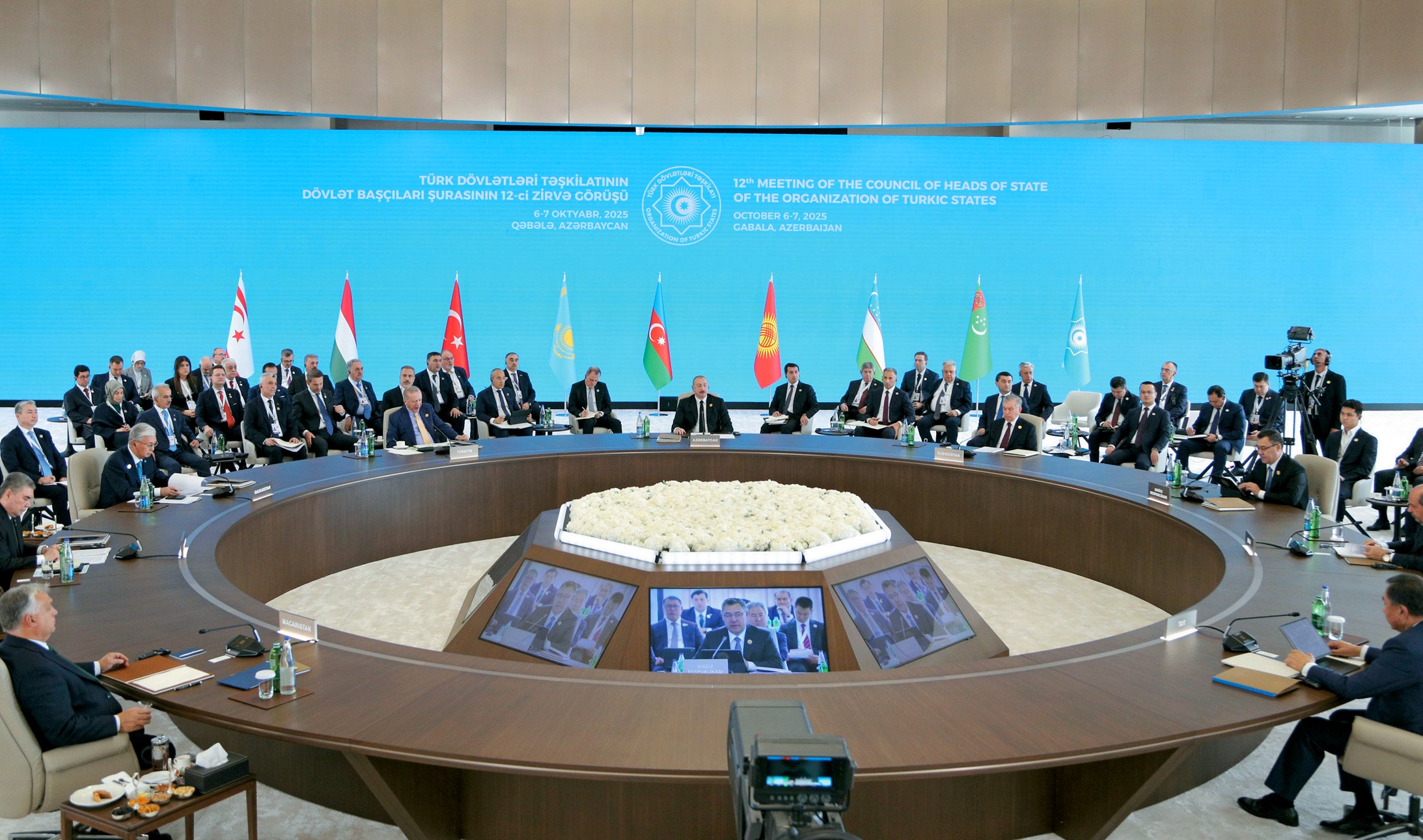
The 12th Summit of the Council of Heads of State of the Organization of Turkic States (OTS), held in Gabala, was regarded by many as one of the most consequential events in the grouping’s history. The choice of theme — "Regional peace and security" — proved deeply symbolic and reflected the real challenges confronting the Turkic world.
Today OTS states sit amid heightened geopolitical tension: a chain of conflicts and crises stretches from Ukraine and the Middle East to Afghanistan and the South Caucasus, each capable of affecting Turkic countries’ interests. At the same time, transnational terrorist networks are increasingly active, the risks of extremist contagion, illegal migration and hybrid threats are rising. All this makes collective security not merely a topic of political discourse but an urgent necessity for the region’s survival and sustainable development.
Azerbaijan sets the agenda
Opening the summit, President Ilham Aliyev of Azerbaijan focused squarely on security, stressing that it is not only the foundation of stable development but also the guarantee of states’ sovereignty and independence. He argued that in a world where international law is increasingly violated and conflicts are used as instruments of pressure, Turkic states must act as a single centre of strength, coordinating their actions and defending shared interests.
The Azerbaijani leader proposed moving from declaratory statements to creating concrete mechanisms for collective protection and coordination in military and defence spheres. Among the key initiatives was a proposal to hold the first joint military exercises of OTS countries in Azerbaijan in 2026. The idea won broad support because it signals the Turkic states’ readiness to deepen practical cooperation and to make the organisation an effective instrument of security in Eurasia.
Aliyev also recalled that over the past year Azerbaijan and Türkiye have conducted more than twenty joint exercises, demonstrating a high degree of military cohesion. In his view, this is a vivid example of how deeper partnership within the Turkic space can serve as a model for the entire organisation.
In addition, Azerbaijan transferred $2 million to the OTS secretariat’s account, thereby reaffirming its commitment not only to political but also to financial obligations to strengthen the organisation’s institutional base. Ilham Aliyev emphasised that only through systematic funding, exchange of experience and joint action can a reliable and effective collective security architecture be built.
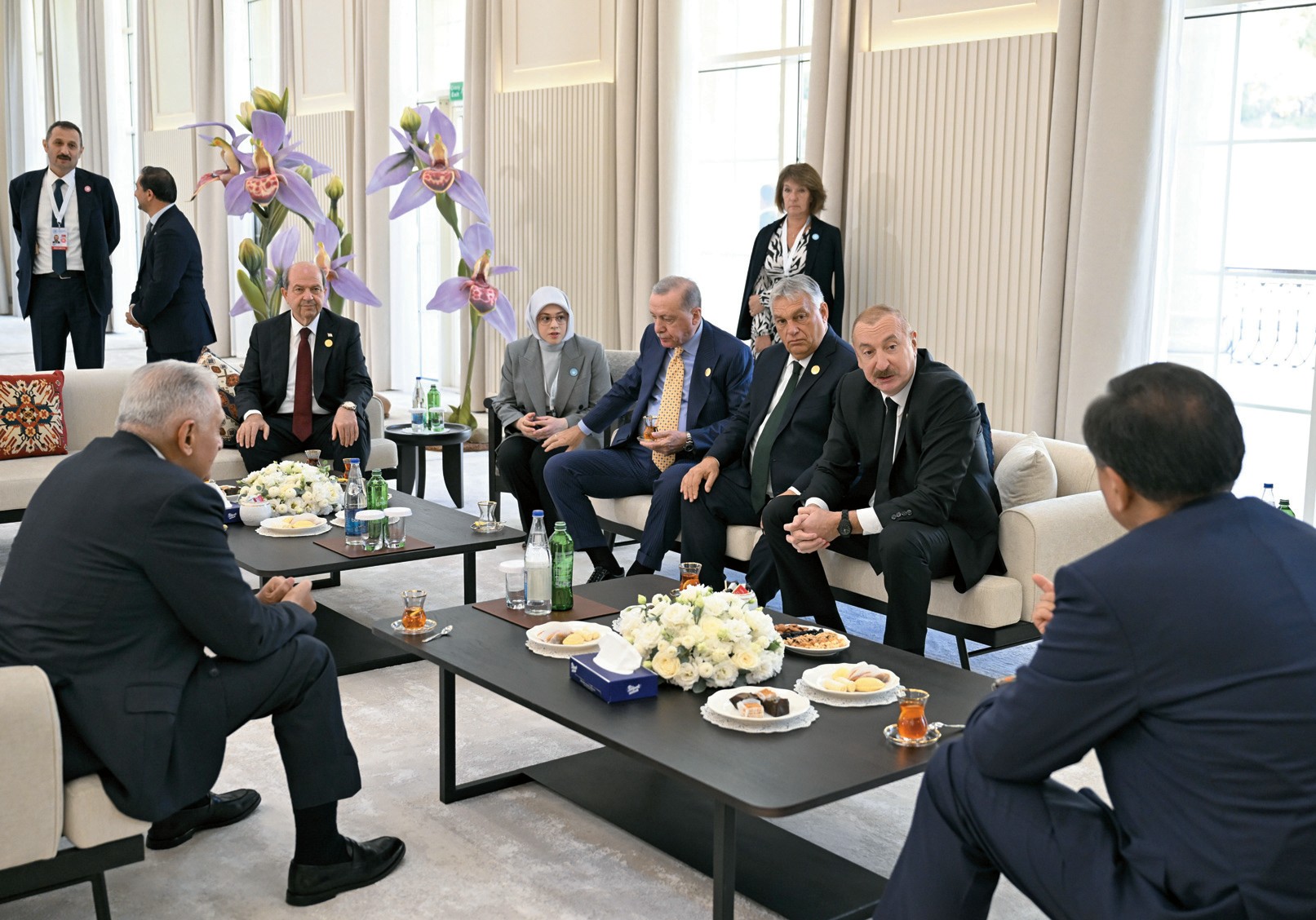
Other summit participants voiced support for the Azerbaijani leader’s address. Turkish President Recep Tayyip Erdogan said Turkic states bear growing responsibility for regional stability and countering terrorism, calling for strengthened cooperation against cyberthreats, illegal migration and transnational crime. He described Azerbaijan’s initiative for joint military exercises as an important step toward creating a sustainable collective defence system.
Kazakh President Kassym-Jomart Tokayev also backed deeper coordination on security matters, noting that Astana views the OTS as a strategic platform for protecting the shared interests of Central Asia and the South Caucasus.
The support shown by Turkic leaders for Ilham Aliyev’s initiatives demonstrated a high degree of consensus in assessing threats and an appreciation of the importance of joint action.
Transport and energy as cooperation drivers
Alongside security, summit participants traditionally devoted considerable attention to economic and transport-logistics cooperation, which has already become an integral part of the OTS agenda. In the face of rising global crises, the disruption of conventional trade routes and growing protectionism, the economy becomes the connecting factor capable of turning the organisation into a stable, peaceful and attractive platform for engagement. Turkic leaders increasingly emphasised that economic integration and the development of joint infrastructure projects not only strengthen mutual dependence and trust but also reduce the likelihood of conflict within the region by giving each state incentives for stability and peaceful development.
Azerbaijan, owing to its strategic geography, reiterated its role as a key link between Europe and Asia. In his speech Ilham Aliyev said Turkic states possess a unique transit potential that should be realised by creating a "bridge of cooperation" from the Caspian to the Mediterranean and from the Black Sea to Central Asia. He noted that routes such as the Zangezur Corridor, Baku‑Tbilisi‑Kars and the Trans‑Caspian route not only shorten delivery times but also symbolise a new geoeconomic architecture formed by the Turkic states themselves. These corridors turn the region into an important part of global supply chains, enhancing its role in Eurasian trade, transport and energy.
President Recep Tayyip Erdogan underlined the need to accelerate implementation of the Middle Corridor, which should become a durable alternative to overloaded and politically unstable routes through Russia or Iran. In a turbulent world, Erdogan said, the Turkic space demonstrates a rare combination of predictability and openness, making it attractive to investors and partners. He proposed to view the OTS as an "economic belt of peace" uniting countries’ potential on the principles of equality and mutual benefit.
Kazakh and Uzbek presidents Kassym-Jomart Tokayev and Shavkat Mirziyoyev expressed interest in strengthening transport links, seeing this as a path to diversifying external economic relations and enhancing regional autonomy. For Kazakhstan, priorities include developing rail infrastructure and modernising Caspian ports, while for Uzbekistan participation in OTS corridors offers a way to overcome geographic isolation and expand access to global markets.
Energy occupied a prominent place on the summit agenda. Azerbaijan and Turkmenistan stressed the importance of joint projects in "green" energy and hydrocarbon supplies, expressing readiness to coordinate energy policy within the OTS framework. The prospects of creating a unified energy space were discussed as a means not only to bolster energy security but also to integrate into global processes of transitioning to sustainable energy sources. Turkic states intend to be not only exporters of traditional resources but also active participants in the green transformation.
Notably, the economic and transport agenda was addressed in direct relation to energy, peace and security. Leaders agreed that the economy can become the foundation of durable regional peace. Infrastructure development, job creation, increased trade and investment all form natural barriers to confrontation and reinforce states’ interdependence. Thus, the Gabala summit once again showed that economic integration is not merely a pragmatic calculation but a strategic instrument for stabilisation and peace.
Uniting geographies
Of the summit’s important decisions, the establishment of a new "OTS Plus" format deserves special attention. This step logically continued the course toward openness and expanded external ties set out in previous declarations. The format creates institutional conditions for dialogue and cooperation with states that are not members but share the organisation’s strategic interests and values. "OTS Plus" becomes an instrument of soft diplomacy designed to extend the Turkic states’ influence beyond the region and to form a broad belt of partnerships.
In a world of growing competition between regional blocs, the initiative appears timely and strategically thought‑through. The new format will allow the construction of a flexible partnership system that does not require formal membership but creates a space for joint projects in trade, transport, energy, digital technologies and food security.
For Azerbaijan and Türkiye, "OTS Plus" opens opportunities to strengthen their role as a connecting link between the Turkic world and external centres of influence — Europe, the Middle East, South Asia and Africa. In addition, the format paves the way for cooperation with international organisations — the UN, the SCO, OIC, the EU and the Gulf Cooperation Council — turning the OTS into a full participant in global dialogue and the emerging multipolar order.
The Gabala summit demonstrated a new level of consolidation and strategic thinking within the OTS. If previous meetings focused on culture, education and humanitarian ties, this forum clearly set out future priorities: security, transport, energy, the economy and international partnership. Leaders were not only unanimous in their threat assessments but also proposed concrete mechanisms to address them: joint military exercises, the development of energy cooperation, promotion of green technologies, enhancement of transport corridors and formation of an external cooperation contour through the "OTS Plus" format.
Gabala became a symbol of the OTS’s transition from an idea‑forming stage to practical implementation. The adopted decisions reflect the Turkic states’ determination to take an active and constructive position in world politics, offering their own model of sustainable, respectful and equitable development as an alternative to block‑pressure and confrontation.
The Organisation of Turkic States is increasingly asserting itself as an independent centre of strength — not aggressive but constructive, oriented toward dialogue, stability and development. The summit confirmed that Turkic integration is not a tribute to the past but a project for the future, based on pragmatism, solidarity and responsibility for common peace.
RECOMMEND:
 250
250