
FROM CRISIS TO DIALOGUE
Baku and Moscow attempt to build a rational agenda after a phase of escalation
Author: Tofigakhanum GASIMOVA
For the past nine months, relations between Russia and Azerbaijan have been one of the most acute and discussed topics in the post-Soviet space, overshadowing even the Ukrainian war. The chill proved to be excessively rapid, sharp, and unexpected. In October 2024, a full-format meeting between the presidents of Azerbaijan and Russia took place at the CIS summit. In late December 2024, President of Azerbaijan Ilham Aliyev gave an interview to Russian television host Dmitry Kiselev, which many experts also interpreted as an unambiguous message regarding the strength of bilateral relations.
The flight that changed everything
But on December 25, 2024, the countdown to new realities in relations between Moscow and Baku began. On its approach to the city of Grozny, a civilian AZAL aircraft was struck. First, its communications were jammed, then anti-aircraft missiles exploded near the plane. The damaged Embraer, thanks to the high professionalism of its pilots, managed to fly toward Aktau, Kazakhstan, but crashed upon landing. Twenty-nine people survived, but 38 perished, including Captain Igor Knyashkin, First Officer Alexander Kalyaninov, and flight attendant Hokuma Aliyeva.
President Ilham Aliyev, who was en route to Russia for an informal CIS summit at the time, turned his aircraft around and returned to Baku. Azerbaijani specialists and state officials departed for the scene of the tragedy within the first hours of the disaster. Very quickly, photos of the liner's severed tail, marked with characteristic puncture holes whose edges were bent inward, began to circulate in the media. Even non-specialists understood that these were sure signs of an "external impact" on the aircraft.
Azerbaijan declined to investigate the air catastrophe through the Interstate Aviation Committee. The black boxes were opened in Brazil, where the Embraer was manufactured. Kazakhstan's Ministry of Transport also launched its own investigation. The theory put forward in the first hours after the plane's loss was now confirmed by all: "external impact." That is, the result of Russian air defence activity, because at that very moment, Ukrainian drones were once again expected in Russian skies.
In the immediate aftermath of the air disaster, Azerbaijan clearly delineated its position: Russia must accept responsibility, offer apologies, pay compensation as required by international practice, and launch its own investigation to bring the guilty parties to justice. It was understood that the plane was struck by accident, but when such an "accident" costs dozens of lives, it is a case where the mistake is worse than a crime. In Moscow, officials took a pause. Russian propaganda, however, unleashed anti-Azerbaijani hysteria. It reached the point that a deputy of the Milli Majlis of Azerbaijan, Azer Badamov, was denied entry into Russia while travelling as part of an official delegation to the Astrakhan region.
A new round of tension occurred in the summer of 2025, when Russian security forces in Yekaterinburg detained more than 50 ethnic Azerbaijanis; two of them—the Safarov brothers—were killed during the detention. Five others ended up in hospital. Furthermore, Russian law enforcement officers returned to investigating a murder committed almost a quarter-century ago, in 2001. Many of those detained were only 3-4 years old at the time of that crime and could in no way have been valuable witnesses, much less suspects.
Azerbaijan did not fail to respond: the activities of the Russian House, which, as it turned out, had been operating without proper documentation, were terminated; a search was conducted at the offices of the "Sputnik" agency, which led to the detention of two FSB employees; a group of cybercriminals who had arrived from Russia was detained; and a visit by Russian Deputy Prime Minister Overchuk was cancelled. In short, the situation snowballed, gathering momentum, and tensions escalated more and more.
Everything ends eventually
All crises eventually come to an end. Neither Moscow nor Baku is interested in a further deterioration of relations. Consequently, clear signs of an imminent thaw have recently become observable.
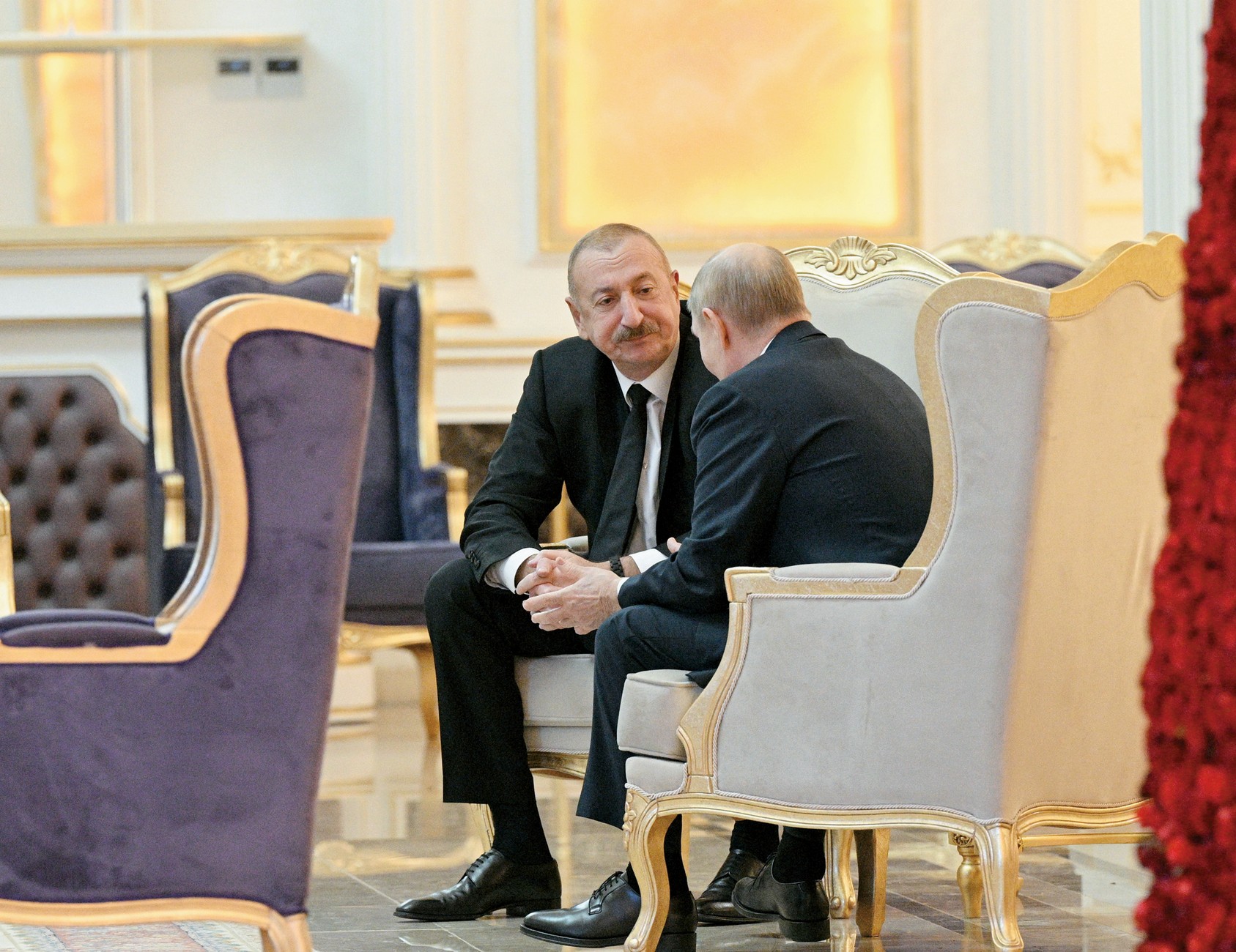
On August 26, 2025, the President of Russia sent birthday congratulations to the First Vice-President and First Lady of Azerbaijan, Mehriban Aliyeva. This was followed by a brief handshake between the leaders at the SCO summit. Then, on October 7, 2025, Ilham Aliyev called Vladimir Putin to congratulate him on his birthday. It was then, as Kremlin sources later asserted, that the agreement for a face-to-face meeting in Dushanbe was reached.
And this meeting, by and large, met expectations. Vladimir Putin began immediately with the most painful topic—the AZAL flight catastrophe, downed by Russian air defence near Grozny on December 25, 2024: "Even back then, in our first telephone conversation, I not only offered apologies for the fact that the tragedy occurred in Russia's skies, but I also expressed my most sincere condolences to the families of the victims. I would like to repeat all of this, to renew it, and to say that we, of course, as agreed, are providing all possible assistance to the investigation. The investigation is concluding, and now, in general, we can speak about the causes of this tragedy, this catastrophe. It is linked to several circumstances. The first is that a Ukrainian drone was in the sky. We were tracking three such drones that crossed the border of the Russian Federation during the night of the tragedy. The second cause is related to technical failures in Russia's air defence system itself."
As the RF president stressed, "undoubtedly, everything that is required in such cases, in such tragic cases, will be done by the Russian side regarding compensation, and a legal assessment of the actions of all officials will be given."
Thus, the Russian president, although he recalled the Ukrainian drones, nonetheless acknowledged that Russian air defence bears responsibility for the catastrophe. He offered apologies again and promised to pay compensation and bring the guilty parties to justice, although he noted that the latter would require time.
In essence, the results of the meeting signify a diplomatic victory for Azerbaijan. Russia fulfilled—or promised to fulfil—the main conditions set by the Azerbaijani side: recognition of responsibility, apologies, payment of compensation, and holding the guilty accountable. Our country did not retreat from its principled positions and achieved its objective. This allows one to speak of the return of bilateral relations to a business-like and constructive track, especially since neither Baku nor Moscow was interested in deepening the crisis.
After Putin's statements, in which he called relations between Azerbaijan and Russia "allied," the Russian propagandists who had diligently stoked passions and all but called for yet another Special Military Operation, this time against Azerbaijan, found themselves in an ambiguous position, at the very least.
Observers also note a reduction in pressure on the Azerbaijani diaspora. A large-scale inspection is already underway in Yekaterinburg, and many of those responsible for the roundup targeting ethnic Azerbaijanis and the deaths of our two compatriots are already under close scrutiny from inspectors—with all the ensuing consequences. The Investigative Committee of Russia refused to seize the assets of the Aghalarovs, father and son, in connection with the lawsuit filed by the victims of the Crocus City Hall terrorist attack. According to experts, the process of "unblocking the situation" will continue. But whether there will be a return to the previous level of relations remains a significant question.
Behind the scenes of the Summit
Azerbaijan's success in ensuring that its conditions were met during the investigation of the air disaster further underscores Baku's growing authority and political influence on the global stage. In this regard, the assessment by Hikmet Hajiyev, Assistant to the President of Azerbaijan, is noteworthy: "In the first ten days of October 2025 alone, President Ilham Aliyev took part in three different summits held in various regions and formats.
"President Ilham Aliyev's participation in three summits in just ten days is a manifestation of Azerbaijan's multi-level and multi-regional foreign policy, stemming from its diverse geopolitical identities."
While adeptly navigating new diplomatic avenues and platforms, Azerbaijan has not forsaken its traditional ones. The Commonwealth of Independent States (CIS), which emerged in the USSR's immediate aftermath, was viewed by some as an integration platform and by others as a mechanism for a "civilized divorce." Russian President Vladimir Putin put an end to these debates in the mid-2000s, stating: "The CIS was conceived from the very beginning as a form of civilized divorce." He added: "If anyone expected special achievements in all areas within the CIS, there were none and could not be any. The main goal for the CIS was the softest possible separation after the collapse of the USSR. The CIS coped with this goal."
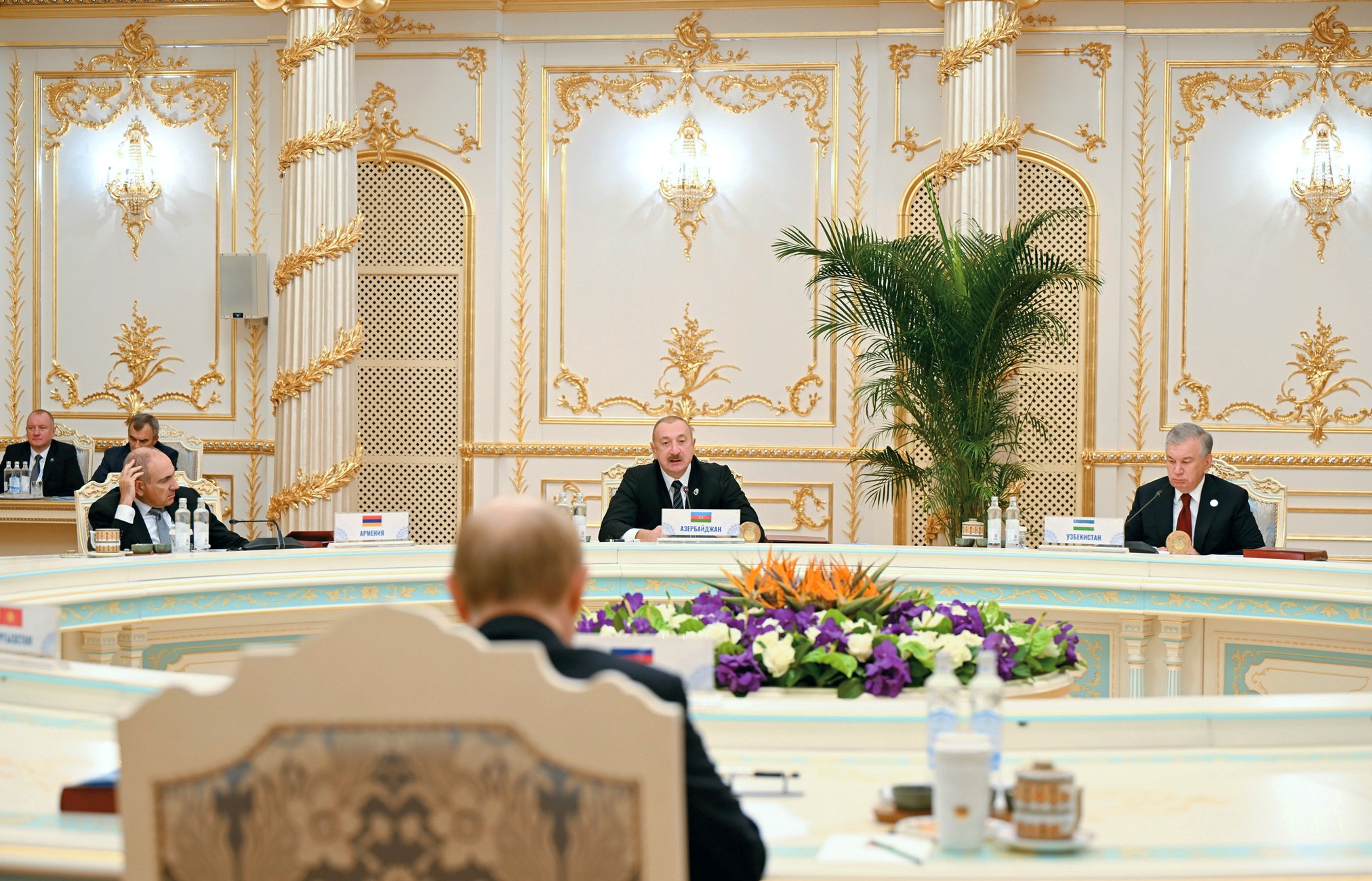
More than 30 years after the USSR's dissolution, the Commonwealth continues to function, though its discussions increasingly focus on humanitarian rather than political matters. This was evident at the recent summit in Dushanbe. In his address, Azerbaijani President Ilham Aliyev highlighted cooperation in the humanitarian sphere: "I express gratitude to the CIS heads of state for supporting the candidacy of the city of Lachin, in Azerbaijan's Eastern Zangezur region, as the CIS cultural capital this year. In June of this year, the opening ceremony of the 'CIS Cultural Capital Year' was held in Lachin, where information about the history and cultural heritage of this ancient Azerbaijani land was presented. Guests of the event saw firsthand the rapid revival of Lachin following its liberation from 30 years of Armenian occupation. The completely destroyed city has, in just a few years, been transformed into one of the most beautiful and habitable cities."
The head of state continued: "Another important event in the life of the Commonwealth was the III CIS Games, held from September 28 to October 8 of this year in Azerbaijan. The centre for the Games was the ancient city of Ganja—the homeland of the great 12th-century Azerbaijani poet and thinker Nizami Ganjavi. In addition to Ganja, six other Azerbaijani cities—Gabala, Göygöl, Yevlakh, Mingachevir, Khankendi, and Shaki—hosted more than 1,600 athletes from 13 countries, including both CIS members and guest nations."
Aliyev did not merely reference the Armenian occupation; selecting Lachin as the CIS cultural capital primarily showcases the success of Azerbaijan's "Great Return" program and the revival of territories liberated from occupation. This unprecedented task—revitalizing an area the size of Lebanon, where nearly everything was destroyed—is being accomplished by Azerbaijan independently, serving as further proof of the country's enhanced political influence and state stability.
RECOMMEND:
 237
237