

A CHOICE IN FAVOUR OF DIALOGUE
The victory of a moderate candidate in Northern Cyprus opens a window of opportunity for renewed talks with the Greek side
Author: Namig H. ALIYEV
On October 19, presidential elections were held in the Turkish Republic of Northern Cyprus (TRNC). As a result, opposition representative Tufan Erhürman won by a convincing margin, securing around 62.8% of the vote, while the incumbent president, Ersin Tatar, received nearly 35.8%.
This outcome is seen as a significant turning point in the Cyprus issue. Firstly, the elections reflect a shift in the sentiments of Turkish Cypriots – from a more rigid, Ankara-oriented stance to an attempt to revive the negotiation process on reunifying the island. Secondly, it creates a new reality for all parties involved – the Greek and Turkish communities of Cyprus, Türkiye, Greece, the European Union, and the United Nations.
Who is Tufan Erhürman
Tufan Erhürman is a Turkish Cypriot politician, lawyer, and academic, born on September 11, 1970, in Nicosia. He has led the opposition Republican Turkish Party since November 2016. In the past, he served in working groups on the Cyprus issue (2008–2010) and has repeatedly advocated resuming negotiations within the framework of a federation.
When characterising his main political positions, it is important to note that Erhürman supports resolving the Cyprus problem under the UN resolutions: "a bi-zonal, bi-communal federation." He has criticised his predecessor Tatar’s approach, who insisted on "sovereign equality" and the recognition of two separate states. Erhürman argues that such a course worsens the international standing of Turkish Cypriots.
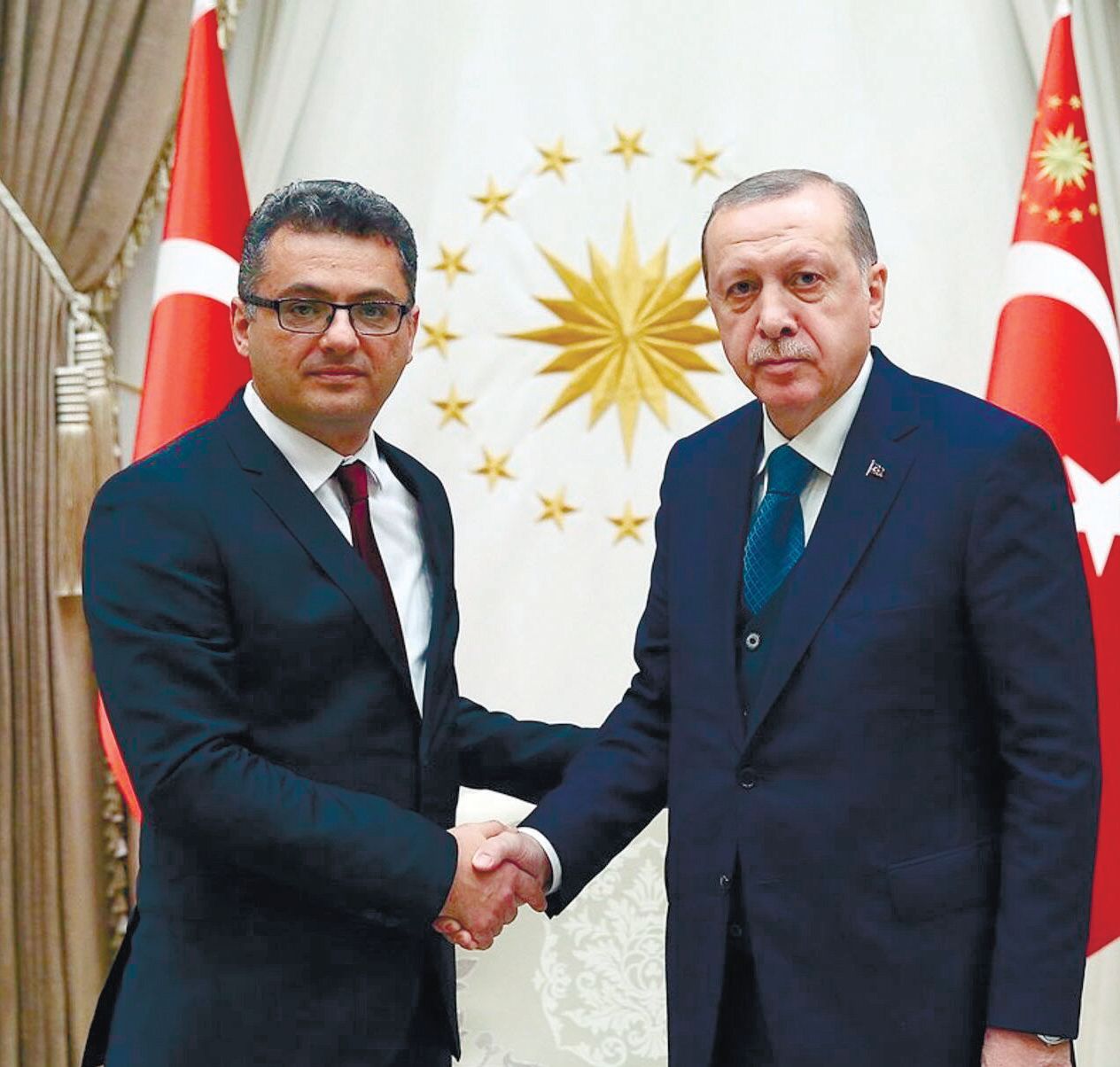
The new president stresses that the TRNC’s policy and its stance on the Cyprus question cannot and will not be formed without consultations with Türkiye. "Relations with Türkiye are vital and will be strengthened," he says.
Erhürman places particular emphasis on the economy of the northern part of the island, cooperation with Europe, and reducing political isolation. His election marks a shift in course: from focusing on separation and the two-state model towards returning to a federal solution, strengthening ties with Europe, and revitalising negotiations.
Reaction of the key layer
Recep Tayyip Erdogan and the government of Türkiye responded officially and rather mildly: they congratulated Erhürman on his victory and underlined their continued support for the northern part of the island. In his statement, Erdogan called the elections a demonstration of the TRNC’s "democratic maturity" and reaffirmed that "Türkiye will continue to protect the sovereign rights and interests of the TRNC together with Turkish Cypriots."
At the same time, stronger voices emerged within Türkiye. Devlet Bahceli, chairman of the Nationalist Movement Party, urged the TRNC parliament "to reject the election results and adopt a decision on joining Türkiye." This reflects Ankara’s strategic calculations: while officially respecting the electoral will of Northern Cyprus, it remains deeply concerned with preserving its geopolitical interests – military presence on the island, access to Eastern Mediterranean hydrocarbons, and influence within the Turkish Cypriot community.
Meanwhile, the opposition Republican People’s Party leader Ekrem Imamoglu stated that the elections in Northern Cyprus send Türkiye a message of a desire for greater autonomy.
Two key dynamics are visible in Türkiye’s position. On one hand, it recognises the legitimacy of the elections and shows readiness to work with the new president. On the other, it clearly stresses that foreign policy and the Cyprus question will not be decided without its consent and participation – as Erhürman himself acknowledged.
A chance for the Greek Cypriots to restart dialogue
The reaction of the Greek Cypriots has been mostly optimistic. The President of the Republic of Cyprus, Nikos Christodoulides, congratulated Erhürman and stated that his election opens the way for "substantive negotiations on resolving the Cyprus problem within agreed principles."
Representatives of the Greek side’s political parties have also interpreted the outcome as a signal from the Turkish Cypriot community in favour of a federation. "The Turkish Cypriots voted for a federation," said the leader of the Progressive Party of the Working People of Cyprus, Stefano Stefanos.
For the Greek side, the main expectations can be summarised as follows:
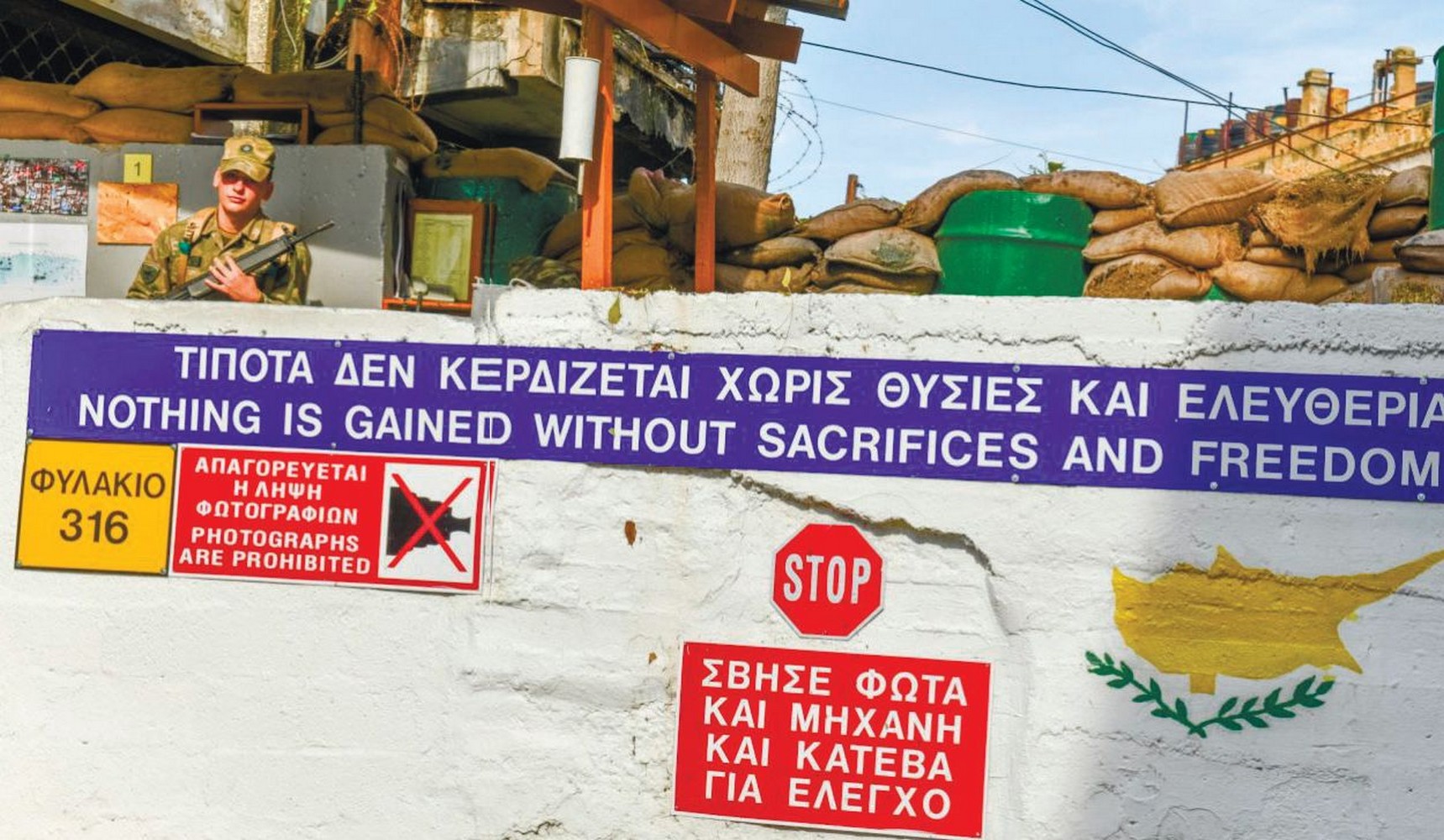
1. The new TRNC leadership may revive the stalled negotiations that have been frozen since the 2017 Crans-Montana forum;
2. Real progress could follow in confidence-building, economic, and trade relations, as well as in opening crossings between the two parts of the island.
However, some caution remains: the Greek side insists that the talks must be held strictly based on UN resolutions and must not include the "two-state" concept. President Christodoulides has previously emphasised that any renewed talks should rest on these principles.
Thus, for the Greek Cypriots, Erhürman’s victory represents a chance to regain initiative – though not a guarantee of success.
Greece: cautious optimism and firm principles
Athens’ reaction to Tufan Erhürman’s victory was restrained yet positive, focusing on the possibility of restarting negotiations on Cyprus’s reunification.
The Greek Ministry of Foreign Affairs issued a statement welcoming the democratic process in the northern part of the island. It reaffirmed Greece’s support for resolving the Cyprus issue in line with UN resolutions – that is, through a bi-zonal, bi-communal federation – and expressed hope that Erhürman’s victory "will give new impetus to the UN’s efforts" to resume talks.
Greece perceives this result as an opportunity for diplomatic progress, especially in light of former President Tatar’s harder line, which had been based on "two equal sovereign states" – effectively accepting the island’s division.
At the same time, Greek officials made it clear that Athens will not accept any settlement outside the framework of international law and UN resolutions. Negotiations, they stressed, must be based on previously agreed parameters – not started "from scratch" and not leaning towards recognition of TRNC independence. "Any initiative to resume negotiations must proceed from established foundations, without deviation towards the so-called 'two-state solution'," the Greek Foreign Ministry declared.
Athens is coordinating its actions with the government of the Republic of Cyprus (Nicosia) and has already confirmed it will support President Christodoulides’s efforts to launch a new round of negotiations, while continuing EU and UN initiatives to apply diplomatic pressure on Türkiye and the TRNC in favour of a lawful settlement.
It is evident that Greece views Tufan Erhürman’s victory as a positive but fragile signal. His intention to return to talks within the UN framework aligns with both Greek and international positions. However, Athens is also aware that without Türkiye’s constructive participation, no real progress is possible. Genuine negotiations will require not just rhetoric but compromises on sensitive issues such as security, troops, property, and governance.
Greece is prepared for a new diplomatic round, but harbours no illusions: from its perspective, progress will depend on whether Ankara and the new TRNC leadership are ready to make tangible adjustments to their previously rigid positions.
The EU and the United Kingdom are closely monitoring developments. Erhürman’s victory is seen as a potential step to bring the TRNC back onto a path of cooperation with Europe and to ease the political isolation of the northern part of the island.
International organisations interpret the outcome as an opportunity to revitalise the peace process. Reports highlight that the triumph of a moderate politician offers a chance for serious talks to resume.
The significance of Erhürman’s victory for Cyprus negotiations
Erhürman’s success can be viewed in terms of several key aspects and implications. First, a change of course. Tatar’s policy focused on a two-state solution and deeper integration with Türkiye. Erhürman, in contrast, prioritises resuming negotiations within a federal framework, fostering European orientation, and reducing isolation.
Second, the future of the negotiation process. In his post-election statement, Erhürman confirmed his intention to resume talks, stressing that they must be "effective," not merely symbolic. The Greek side has already expressed readiness, but major obstacles remain: Türkiye and part of the Turkish Cypriot community still support the two-state model, while issues of security, Turkish guarantees, and military presence remain unresolved. Years of deadlock have also eroded trust between the sides. This moment does not guarantee immediate results but does open space for movement.
Third, implications for Türkiye and the region. Türkiye seeks to maintain its influence and military foothold in the TRNC, yet the Turkish Cypriot electorate’s choice signals a desire for greater independence. Should the new leader pursue a more autonomous course, Ankara may have to adjust its strategy. "Can Türkiye change its approach? I believe it can. It depends on what Türkiye stands to gain from a settlement," commented Ersin Tatar. Within the context of the Eastern Mediterranean’s energy and geopolitical tensions, this shift is significant.
Fourth, domestic political dynamics within the TRNC. The election outcome is also an internal signal: Turkish Cypriots express fatigue with dependency on Türkiye, economic stagnation, and isolation. This gives Erhürman a mandate to steer a new direction – though he will face the reality of limited autonomy and strong Turkish influence.
Finally, the risks and pitfalls. The new president may encounter resistance within both the TRNC and Türkiye if his policies are perceived as concessions. Even if negotiations resume, success is far from guaranteed: past rounds have stalled, and any agreement will demand compromises on sensitive matters such as security arrangements, armed forces, and guarantees – all highly contentious issues.
The elections in the TRNC are more than a change of leadership. They reflect the mood of Turkish Cypriots – fatigue with isolation, the desire for autonomy, the wish to belong to Europe, and to re-engage in the peace process. Tufan Erhürman’s victory opens a window of opportunity: the federal model returns to the centre of attention, the Greek side is ready for talks, and the international community remains cautiously optimistic.
However, this is not yet a "solution moment" for all parties. It merely creates the possibility of a new beginning. Much will now depend on political will, Türkiye’s reaction, and the ability of Erhürman and the Greek side to overcome decades of mistrust. Türkiye remains a dominant player and will control the depth of any change. For the Greek Cypriots, the task is to seize this opportunity without losing vigilance.
Erhürman’s victory is a chance but not a guarantee. The path to peace in Cyprus has reopened; the question is whether it can truly be followed through.
RECOMMEND:
 259
259

