

ENTRY TO THE GULF
From investments to defence: Turkish president strengthening Ankara’s role in the Gulf
Author: Samir VELIYEV
Following the signing of the peace agreement in Sharm el-Sheikh between Egypt, Türkiye, and Qatar to resolve the Gaza conflict, these three states have emerged as leading actors in shaping a new regional order. Against this backdrop, President Recep Tayyip Erdogan’s first post–Sharm el-Sheikh tour of the Gulf acquired particular significance. It reflected Ankara’s determination to consolidate its influence in regional affairs, redefine priorities for cooperation with Gulf states, and reaffirm Türkiye’s position as one of the principal centres of power in the Islamic world.
Embarking on an extensive Middle Eastern tour that included official visits to Kuwait, Qatar, and the Sultanate of Oman from October 21 to 23, President Erdogan made it clear that Ankara intends to continue playing an active role in regional developments. Thus, the trip was more than a sequence of bilateral meetings—it was a comprehensive diplomatic mission through which Türkiye demonstrated its intention to deepen political dialogue, diversify external economic relations, and strengthen its strategic presence in the Gulf. The tour took place amid a shifting energy and geopolitical balance in the Middle East, where Ankara acts simultaneously as an economic partner and a technological leader, capable of aligning Arab interests within a new framework for regional order.
Kuwait opens its doors to Ankara
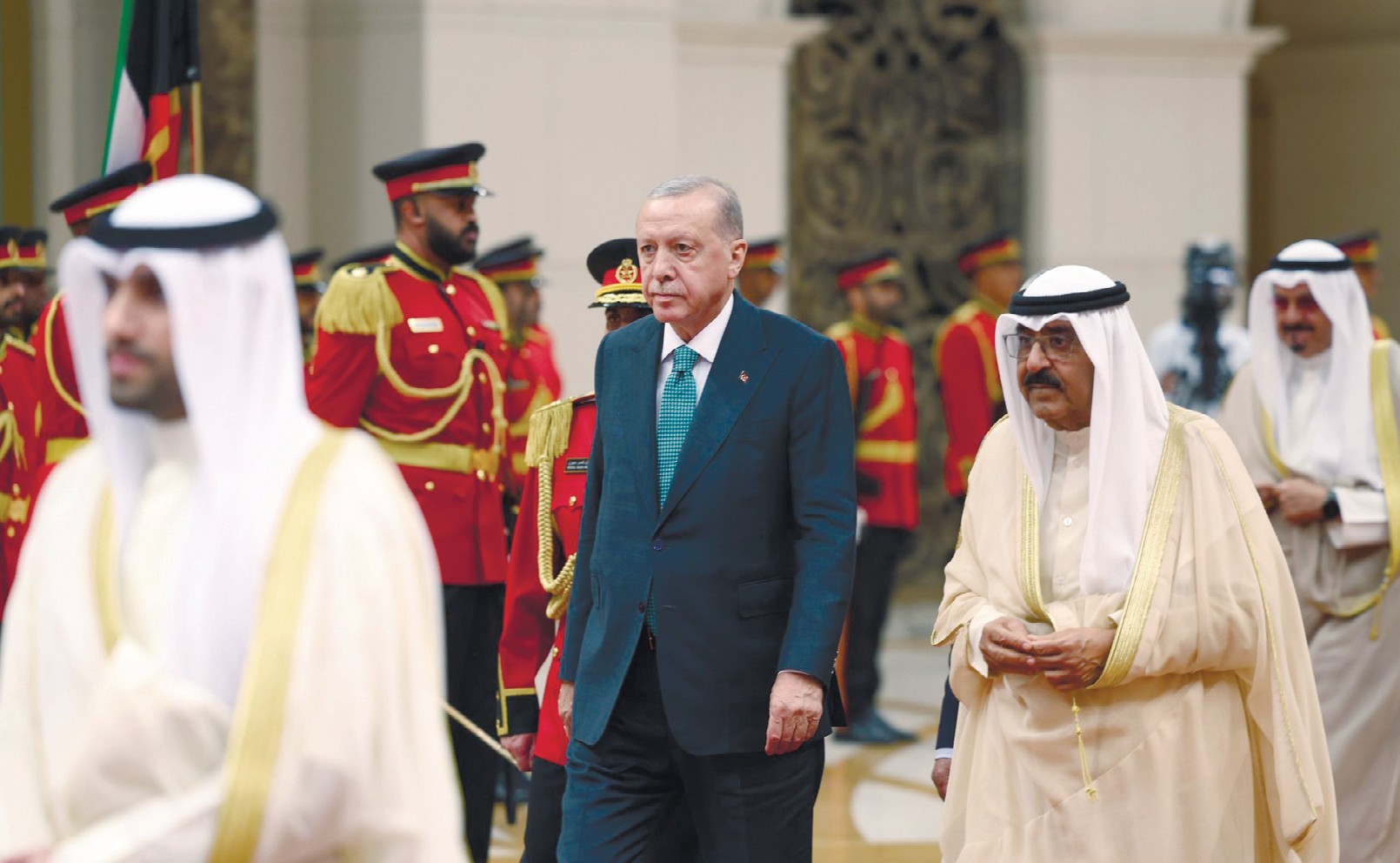
The first stop was the State of Kuwait on October 21. President Erdogan was received at the international airport by Emir Mishal al-Ahmad al-Jaber al-Sabah with full state honours. The talks held at the Emir’s palace covered the main areas of bilateral cooperation—from trade and investment to regional security and humanitarian issues. Particular attention was given to the situation in Gaza, the Syrian crisis, and joint efforts to establish a lasting architecture of peace in the Middle East.
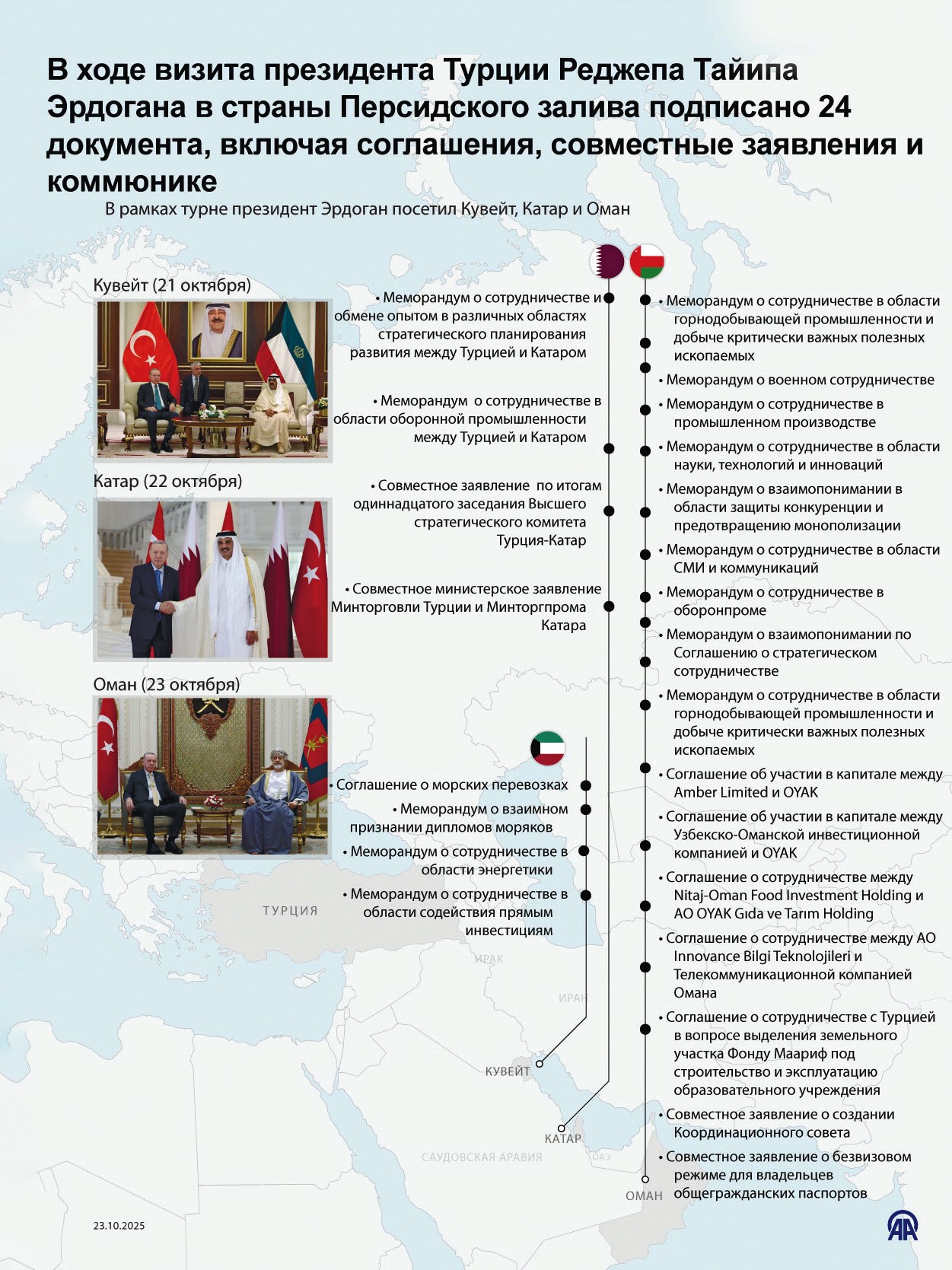
The visit was marked by the signing of four intergovernmental agreements covering investment activity, energy cooperation, maritime transport, and mutual recognition of seafarers’ certificates. One of the most significant outcomes was the contract between Kuwaiti authorities and the Turkish company Kuzu Group for the construction of wastewater treatment facilities in the Al-Mutlaa area, worth $489 million. This project represents Türkiye’s largest infrastructure initiative in Kuwait in recent years, underscoring growing confidence in the Turkish private sector and its engineering expertise.
The economic dimension of the visit reflected Ankara’s strategic focus on promoting "infrastructure diplomacy"—a mechanism through which the export of construction technologies, engineering solutions, and industrial services becomes an instrument for strengthening political and energy ties. Kuwait, seeking to diversify its economy, regards Türkiye as a partner capable of attracting investment and advanced technology, especially in construction, renewable energy, and defence industries. Politically, both sides reaffirmed a shared vision on key issues of regional stability. Erdogan emphasised that maintaining the Gaza ceasefire and supporting humanitarian initiatives remain top priorities for Türkiye. As a symbolic gesture, he presented the Emir of Kuwait with a Turkish-made TOGG electric car—a showcase of Ankara’s technological progress and an example of how innovation serves as an instrument of soft power.
To the most reliable ally
The following day, on October 22, Erdogan arrived in Doha for the second leg of his Middle Eastern tour. The visit to Qatar carried deep strategic importance, representing the continuation of the Turkish-Qatari dialogue that has evolved over the past decade. Emir Tamim bin Hamad al-Thani personally received Erdogan at the Amiri Diwan Palace, underlining the special nature of relations between the two nations, bound by solid political, defence, and humanitarian ties.
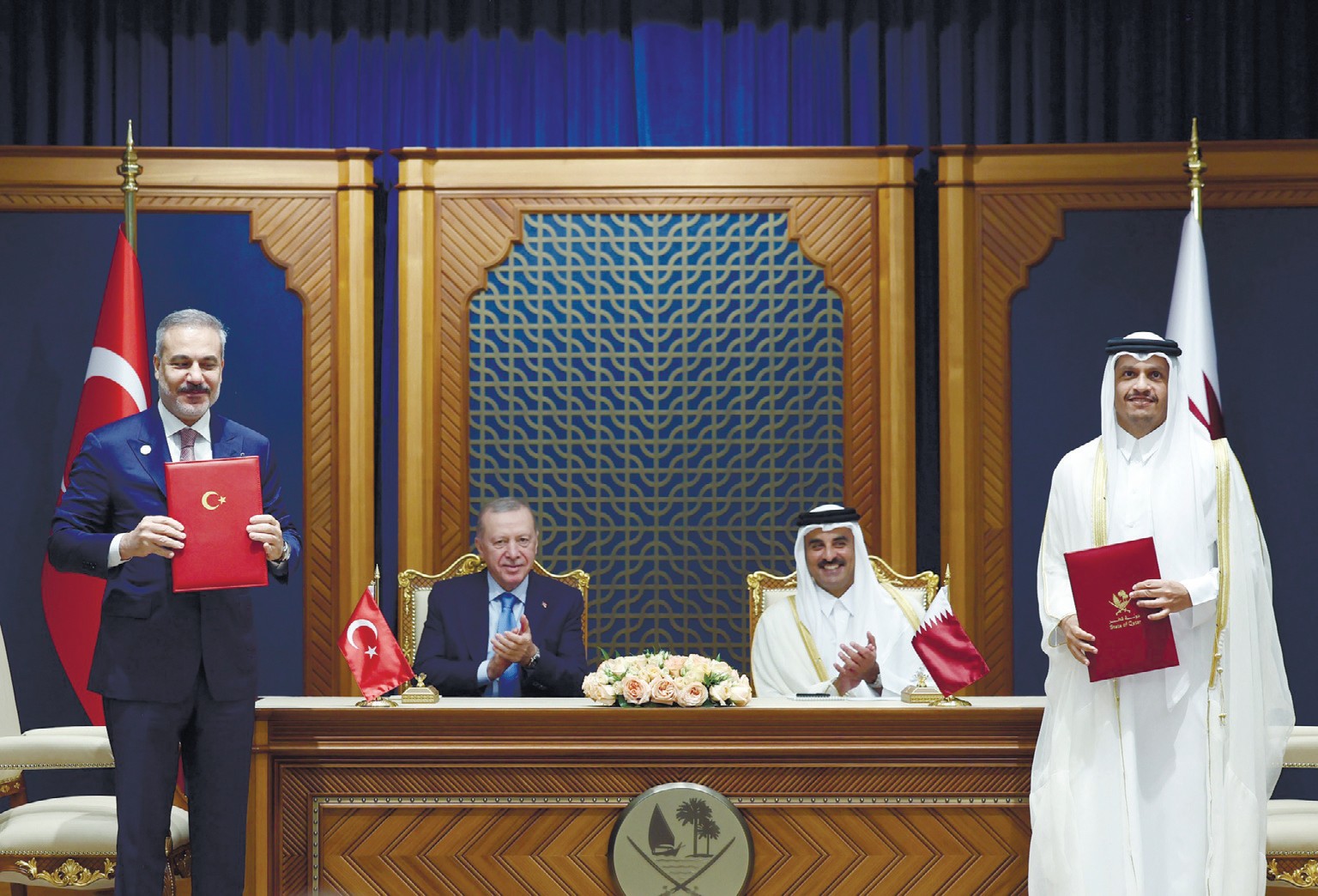
The central event of the visit was the 11th meeting of the Türkiye–Qatar Supreme Strategic Committee, during which new agreements were signed to expand cooperation in industry, trade, energy, strategic planning, and defence. Notably, the sides signed a military–technological partnership agreement that provides for joint production and technology exchange in the defence sector. According to Qatari sources, discussions included the potential transfer of Eurofighter Typhoon jets from Qatar’s Air Force to Türkiye—a reflection of the exceptional level of trust between the two countries’ defence establishments.
Humanitarian and political agendas also received considerable attention. Türkiye and Qatar took a unified stance on resolving the Gaza conflict, affirming their readiness to coordinate efforts to maintain the ceasefire and support civilians. President Erdogan reiterated that establishing an independent Palestinian state is an essential precondition for lasting peace and stability in the region. The discussions also touched on the Syrian settlement and post-war reconstruction, where Ankara and Doha are already implementing joint humanitarian projects.
Azerbaijan, alongside Türkiye and Qatar, also plays an active role in these regional humanitarian efforts. Baku contributes to rebuilding civilian infrastructure, supports educational and healthcare programmes in Syria and Palestine, and participates in international initiatives providing food and energy aid to vulnerable regions. Thus, trilateral cooperation among Ankara, Doha, and Baku takes on not only political but also civilisational significance, based on solidarity within the Muslim world and the shared goal of strengthening regional stability through humanitarian partnership and mutual assistance.
The economic aspect of the visit was equally significant. Türkiye remains one of the main destinations for Qatari investment, particularly in construction, energy, logistics, and tourism. In turn, Qatar views Türkiye as an industrial and technological partner capable of bridging Gulf economic interests with those of Europe and Central Asia. The agreements signed also covered "green" energy, digitalisation, and sustainable infrastructure—consistent with Qatar’s strategic focus on post-hydrocarbon development.
The results of the visit demonstrated that Ankara and Doha are moving towards an institutionalised alliance capable of influencing regional dynamics—from humanitarian cooperation to military–technical collaboration.
Oman and Türkiye: renewing the dialogue
The final leg of the tour took place on October 23 in the Sultanate of Oman. This visit concluded Erdogan’s three-day mission and symbolised the consolidation of Türkiye’s new diplomatic strategy in the Gulf. In Muscat, President Erdogan was greeted by Sultan Haitham bin Tariq with full state honours: his aircraft was escorted by Royal Air Force of Oman fighter jets, and the welcoming ceremony at the Al-Alam Palace underscored the exceptional importance of the occasion.
The talks between the two leaders covered a wide spectrum of issues, including trade and investment cooperation, energy partnership, tourism, maritime logistics, and infrastructure development. Oman, traditionally pursuing a neutral foreign policy, holds particular interest for Türkiye as a stable partner capable of maintaining balance among various regional powers. Ankara, for its part, views Muscat as a key gateway to the Indian Ocean and a platform for expanding its economic presence in South Asia. Security in the Strait of Hormuz and the sustainability of maritime supply routes—critical for the region’s energy flows—also featured prominently in the discussions.
Innovation and technological exchange occupied a special place on the visit’s agenda. Remaining true to his established tradition, President Erdogan presented the Sultan of Oman with a TOGG electric car—once again highlighting Türkiye’s dedication to promoting its own technological brands and the concept of "technological diplomacy". The two delegations discussed Turkish companies’ potential participation in Oman’s infrastructure and energy projects, including the construction of industrial zones, water treatment facilities, and renewable energy systems.
The visit reaffirmed both sides’ commitment to deepening cooperation and maintaining a structured dialogue. For Türkiye, the trip to Oman represented a step towards implementing its concept of "multi-vector engagement", which envisions partnerships with moderate and pragmatic regional states. For Muscat, closer ties with Ankara open new opportunities for investment and technological cooperation.
Collectively, the visits to Kuwait, Qatar, and Oman marked a new phase in Türkiye’s Middle Eastern policy—one grounded in economic pragmatism and diplomatic flexibility. Türkiye aims not only to strengthen trade and investment ties but also to build a system of regional cooperation in which Ankara acts as a mediator, partner, and driver of modernisation. For the Gulf states, Turkish engagement offers access to industrial and technological resources and helps maintain balance within the region’s complex political landscape.
Erdogan’s tour was more than a series of diplomatic visits—it defined a new strategic axis for Türkiye’s engagement with the Gulf, reaffirming its expanding role as one of the leading actors in contemporary Middle Eastern politics.
RECOMMEND:
 250
250

