

WILL AFFA MAKE THE SAME MISTAKE AGAIN?
The national team at a crossroads: trust a local coach or pay for illusions?
Author: Sanan NADIROGHLU
The qualifying stage for the FIFA World Cup has concluded. The Azerbaijani national team, having earned just 1 point from 6 matches as predicted, finished in last place. The team began the campaign under Portuguese coach Fernando Santos, before being handed over to Aykhan Abbasov. Following the official matches, the Association of Football Federations of Azerbaijan (AFFA) has once again taken up the search for a new head coach.
The main question in football
Throughout the history of independent Azerbaijan, the national football team could only pride itself on the number of points accrued in specific qualifying cycles. When Igor Ponomarev was head coach, 5 points were considered a significant achievement. In the Euro 2012 qualifiers, the team earned 7 points and improved on that result a few years later. Under Robert Prosinečki, the team set a record by amassing 10 points in World Cup qualification. It would seem fans should rejoice at the increasing point totals. However, no matter how the number of points changed, the outcome remained the same: the national team has never advanced from its group in its history. Therefore, it is not the quantity of points that is important, but the fundamental objective: to avoid last place and to advance from the group. This is something we have yet to witness.
At the start of the current cycle, AFFA's new leadership signed a contract with an expensive and ageing specialist—Fernando Santos, the former coach of the Portuguese national team, which featured Cristiano Ronaldo and won the European Championship. But Santos did not stay long in Azerbaijan. Without winning a single friendly match, his team suffered a crushing 0-5 defeat to Iceland in its very first official game. Following an emergency meeting, AFFA terminated his contract, paying a substantial, indeed high, compensation.
Two days before the next match, the team was taken over by Aykhan Abbasov, who was then managing the youth team. In his first match—with no experience coaching a senior side—he managed a draw with Ukraine (1-1). The team lost its next four matches. The qualification campaign ended, as did the cooperation with Abbasov. Now, the main question within the football community is: will AFFA place its trust in Abbasov, or will it make another controversial decision?
The main benchmark for the national team
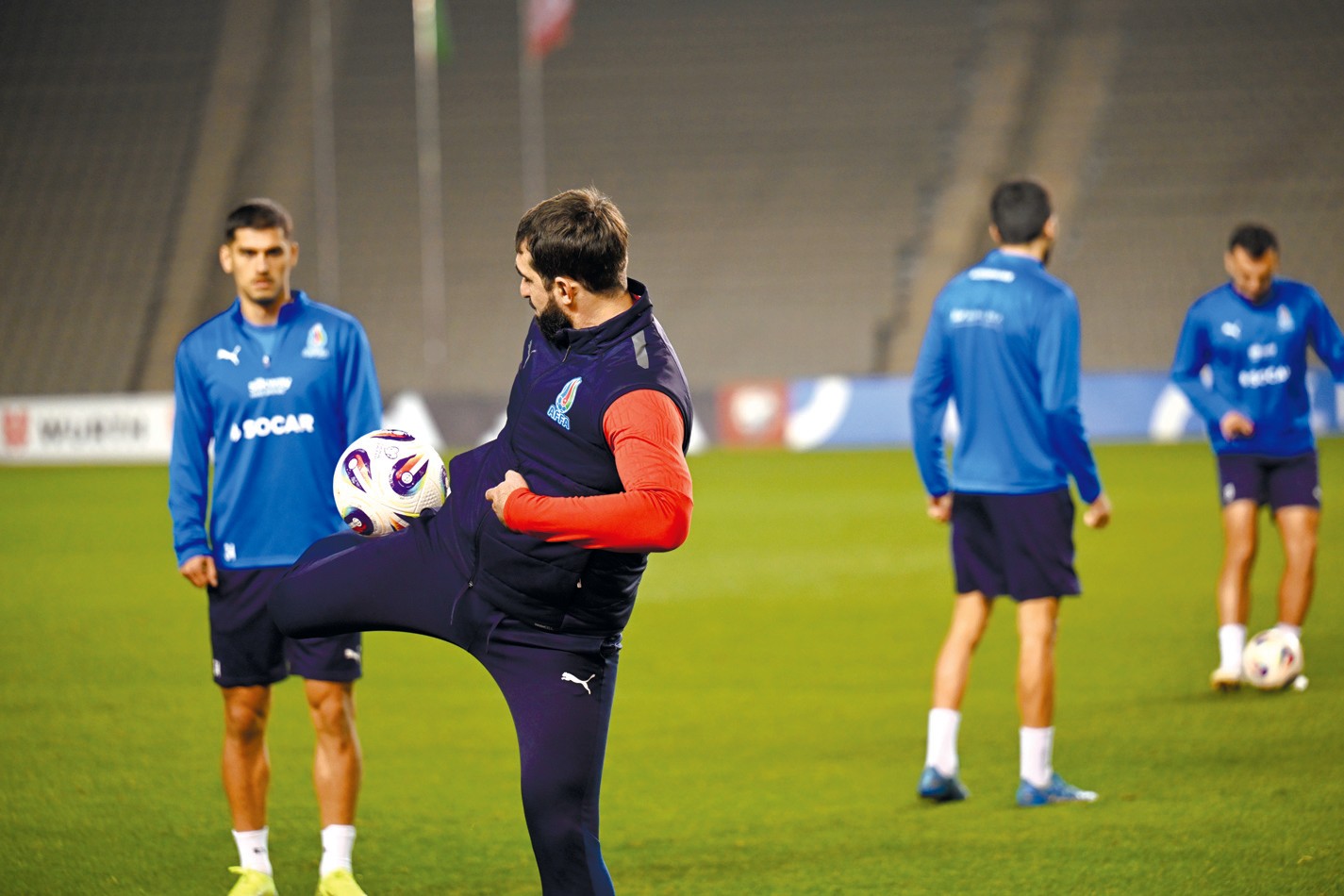
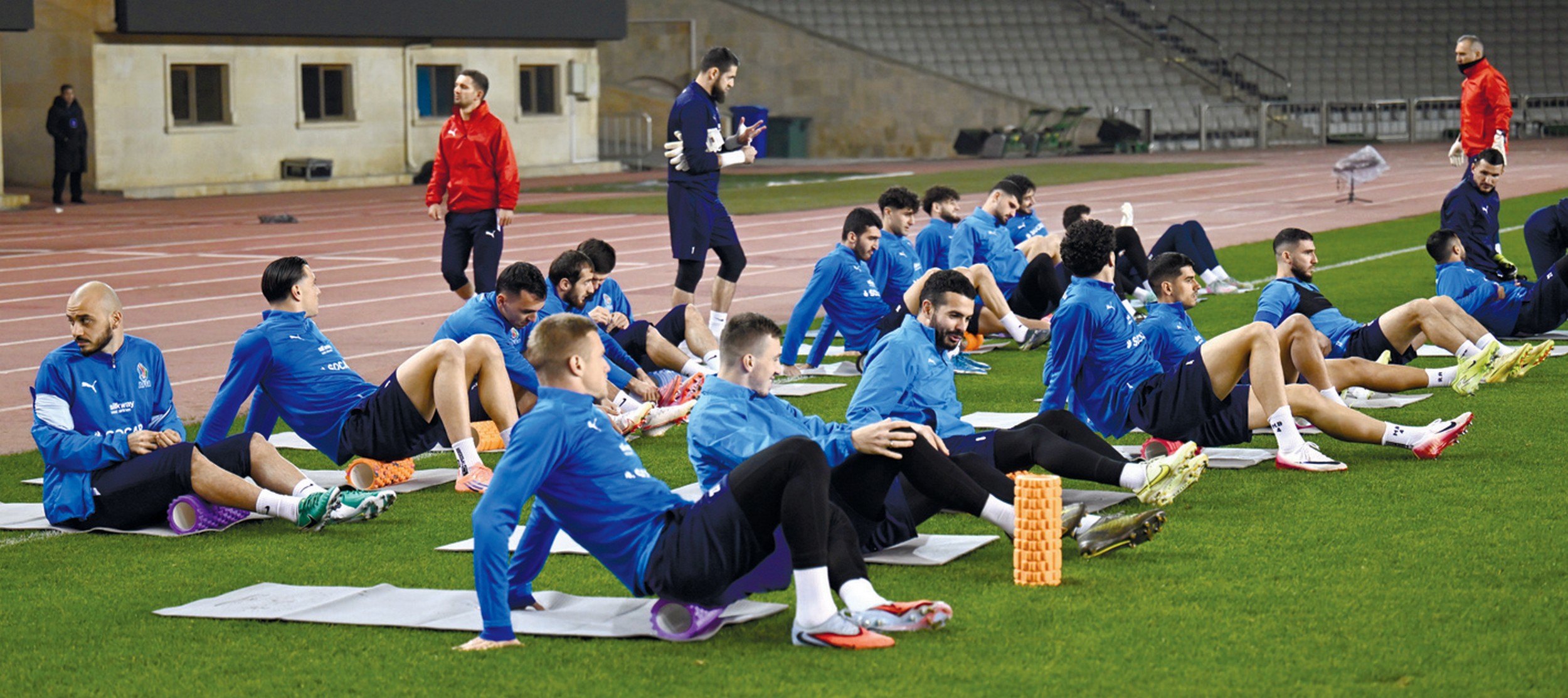
It must be acknowledged that in a short time, the team under Abbasov changed, albeit not radically. Discipline improved, and work was done on coordinated actions on the pitch. Yes, the team did not become a different one. And that is logical: it is impossible to eliminate problems accumulated over years in just two months.
After playing 6 matches, the Azerbaijani national team concluded its games in Group D of the 2026 World Cup qualifiers, showing an extremely weak result: one draw, 5 defeats. They scored 3 goals, conceded 16, and earned 1 point. The team ends a cycle with 1 point for the fourth time. Statistics confirm regression: while three goals scored is not an absolute anti-record, it is one of the lowest indicators in the entire history of the national team.
In 2026, Azerbaijan will compete in the UEFA Nations League. In League D, the team will face Europe's weakest sides. In this situation, it is probably wiser to entrust the team to a local coach. In 2026, there will be no qualifying matches, only the Nations League—the perfect tournament to test a new coach. Given that no other candidate for the head coach position is in sight, replacing Abbasov appears unconvincing.
If AFFA signs a contract with yet another foreign coach, it will bring nothing good. A foreigner is unlikely to be able to help Azerbaijani football: millions will be spent, but the necessary return will still be lacking. The reason is simple: a specialist needs at least a year to study the football landscape and the players in the country. Furthermore, the required level of footballers simply isn't there—they can be counted on one hand. Under such conditions, appointing another foreign coach is merely a waste of time.
Following Santos's departure, it would have been quite possible to sign a one-year contract with Abbasov and set specific goals: to build a new team and achieve promotion from League D to League C in the Nations League. And this could be the main benchmark for 2026.
Sadikhov: "We need patience and a lot to do"
Does the national team have a future, is there hope? We asked these questions to Vagif Sadikhov, Chairman of the AFFA Coaching Committee, to answer this question. The experienced specialist believes the team began playing with greater dedication: "I agree that under Aykhan Abbasov, the national team acquired a national spirit. The team looks more motivated. Under Santos, we saw faceless play. We understood our group was difficult. Abbasov took on responsibility at a very difficult moment. As a local specialist, as a person who loves his country, he accepted the challenge and fought until the end. These are the pluses. Patience and a lot of work are needed, and not just at the national team level, but at the club level too. Then we will see the team we dream of."
Following the home defeat to Iceland (0-2), a meeting of the AFFA Executive Committee was held. It heard a report from Aykhan Abbasov, discussed the team's performance, and plans for the future.
The name of the new head coach of the Azerbaijani national team will be announced in January. We hope that AFFA will make the right choice this time.
RECOMMEND:
 189
189

