

BLIND FURY
Overcoming prejudice: how mutual respect and awareness can make Azerbaijan’s roads safer for everyone
Author: Sabira ALAKBAR
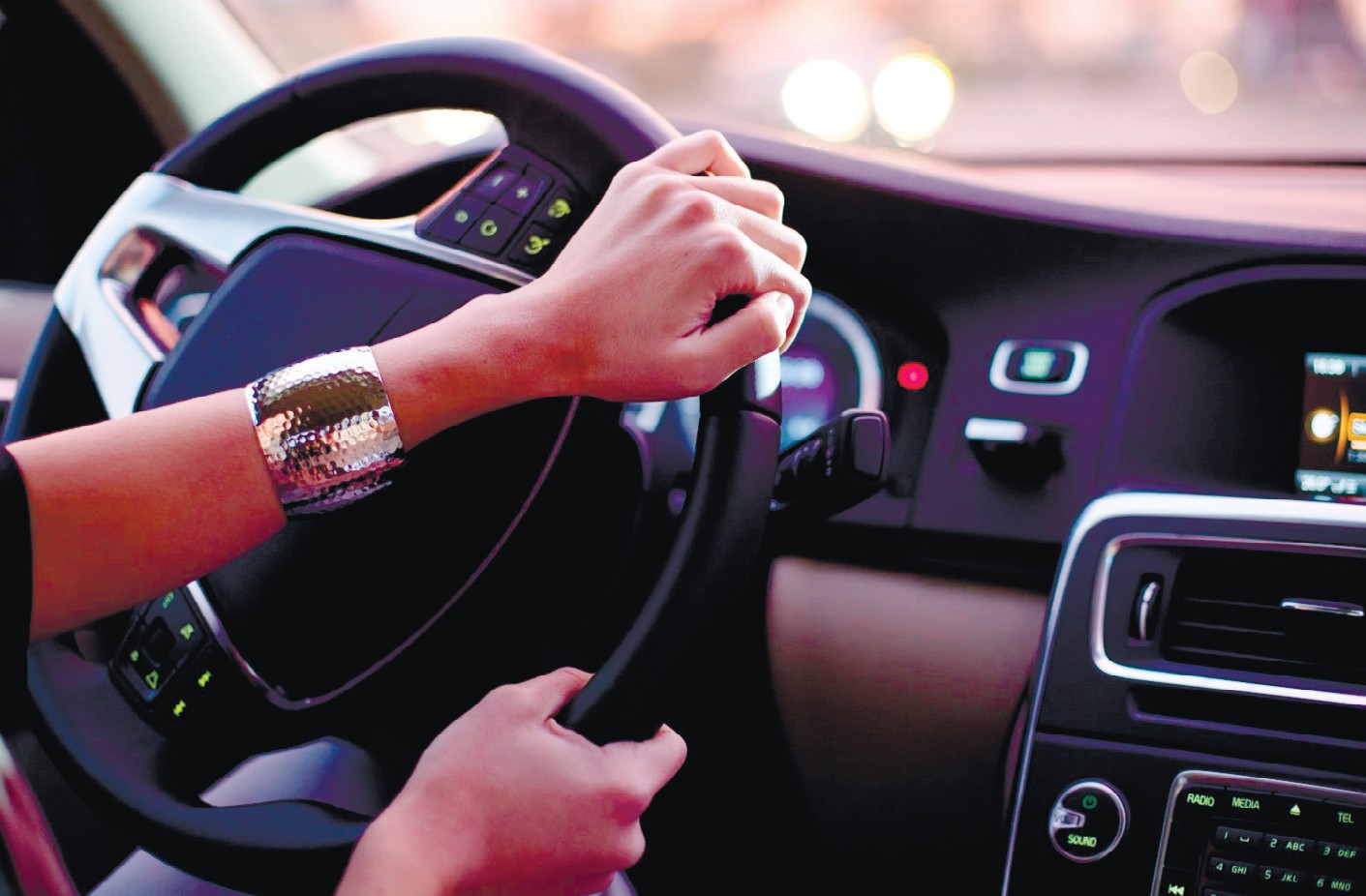
While working on this article, I was not thinking about personal resentment or a domestic complaint. I was thinking about road culture as a social ecosystem. About how stereotypes, upbringing and the uneven distribution of public attention turn every situation on the road into a small gender exam. A woman behind the wheel takes this exam under particularly harsh conditions when she is seen by a male driver. At that moment, what often lights up in his mind is not a signal of courtesy, but a reflexive urge “to prove superiority”.
For decades, the car has symbolised freedom, speed and independence. Yet for a significant segment of Azerbaijani society, namely women drivers, the road becomes not merely a route but a space of unspoken yet aggressive gender confrontation. We are dealing with discrimination rooted not in driving skill or knowledge of traffic rules, but in a deeply ingrained cultural prejudice that driving is inherently a “male prerogative”.
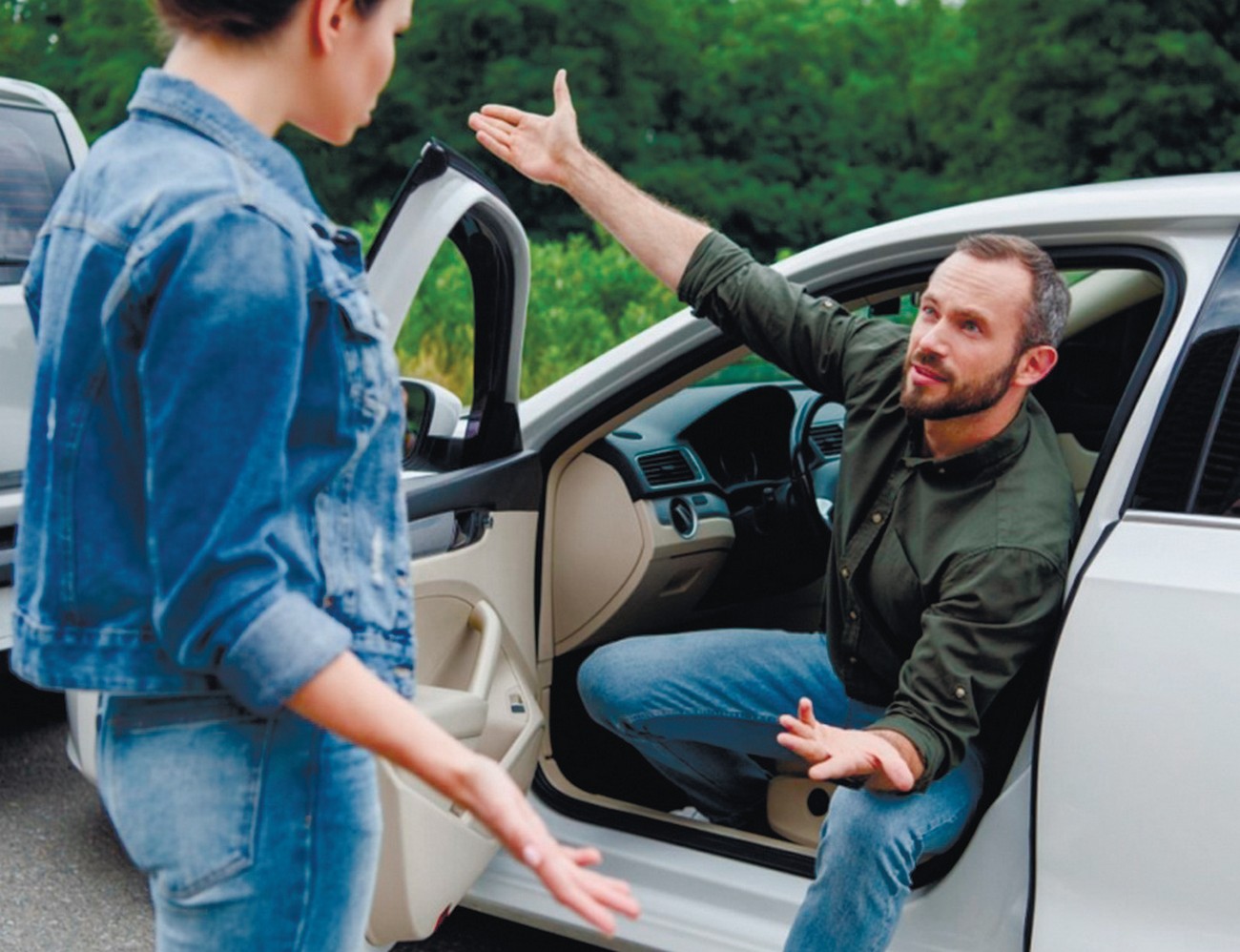
The moment a woman gets behind the wheel, she is often instantly placed in the category of “disturbers of order”, deserving of special disdain. She may be deliberately pressured: cut off, shouted at for a minor infraction with a level of fury that a man in the same situation would not always dare unleash on another male driver. Verbal aggression, including profanity, further turns the road into a battleground.
In the minds of many male drivers, whose style is frequently marked by haste and aggression, echoes of an archaic slogan still persist: “Woman, your place is in the kitchen.” This persists despite the fact that women, unlike men, often solve dozens of tasks simultaneously, quite literally steering family life and social responsibilities at once. Psychology confirms that road aggression is often fuelled not by real mistakes but by expectations. If a man is convinced that a woman drives worse, he will notice only what fits this biased image. Any manoeuvre, even a correct one, is perceived as confirmation of the stereotype. As a result, a woman on the road is not simply a participant in traffic, but a person under constant scrutiny.
The cost of a stereotype
To understand the nature of this road aggression, one must look deeper than traffic regulations. The problem has profound psychological roots.
In societies where traditional role divisions remain strong, any successful entry by a woman into a sphere long considered “male” is perceived as a challenge and a threat to status. This phenomenon is observed worldwide. A man who aggressively manoeuvres in front of a car driven by a woman is subconsciously attempting to restore hierarchy and assert dominance. He seeks to demonstrate that his confidence, his speed and his perceived right to the road outweigh hers. It is an irrational yet powerful reaction.
Instances in which women drivers, unfortunately, do display insufficient skills or weak knowledge of traffic rules instantly become grounds for sweeping generalisations: one mistake, and suddenly all women behind the wheel are deemed incompetent. At the same time, aggressive and speeding behaviour by men is written off as “confidence” or “character”, rather than a collective male flaw. This is a textbook example of double standards: the “reckless male driver” is seen as daring, while the “reckless female driver” is reduced to ridicule.
Is it all about reaction time?
Supporters of stereotypes often appeal to physiology, claiming that men have faster reactions, especially in critical situations. But is this truly decisive? While a man, buoyed by faith in his “innate reaction speed”, takes unjustified risks and plays dangerous games on the road, a woman tends to assess risks. Facts show that physiological advantages are frequently neutralised by behavioural factors. Women generally demonstrate a more cautious, calculated and defensive driving style. They are less prone to unjustified risks, aggressive overtaking and speeding.
Global statistics convincingly support this. While women may be involved in minor accidents, often related to parking or manoeuvring in tight spaces, men are far more frequently responsible for severe high-speed accidents with fatal outcomes. This is directly linked to overconfidence and risk-taking. In Azerbaijan, where road conditions often demand caution rather than bravado, a woman driver who thinks carefully and drives conservatively may prove to be the safer participant.
This point is further illustrated by a concrete example from a family known to the author. In Azerbaijan, traffic fines are often linked to the name of the person holding the most recent power of attorney, regardless of who was driving at the time of the violation.
The irony is that in this family the latest power of attorney is registered in the wife’s name, so all fines are automatically issued to her. Both spouses are fully aware that the majority of recorded violations, including speeding and dangerous manoeuvres, were committed by the husband. Thus, a system designed to record facts inadvertently becomes a mirror of real driving styles. The man, who in public consciousness is expected to embody confidence and mastery, in practice demonstrates far more recklessness than his cautious spouse. This unspoken yet documented reality shows that heightened “confidence” often borders on carelessness rather than true skill.
At the same time, the husband himself often speaks of these fines with a certain indulgent pride, attributing them to a “dynamic style”, “experienced speed” or, at worst, to simply being in a hurry.
The contrast, however, is stark. Had the same number of violations been attributed to the wife, the reaction would have been entirely predictable. Instead of indulgence, she would have faced a torrent of condemnation, instantly reinforcing every gender stereotype. For a man, her mistakes would not be mere infractions but final proof of incompetence and grounds for aggressive calls for her to give up driving altogether.
Multitasking: weakness or advantage?
Few male drivers consider that a woman who gets behind the wheel often controls far more than just a car. She manages the logistics of the entire family and household. Dozens of tasks run simultaneously in her mind: watching over children, shopping, planning dinner, thinking about a work presentation, remembering seasonal clothing needs and anticipating the ordeal of homework with school-age children. This unique multitasking ability, which many men can scarcely imagine, translates into strategic planning and foresight on the road.
At the same time, she faces harsher judgement than any man. Yet a woman driver does not simply drive; she scans her environment, evaluates risks and plans manoeuvres across multiple variables. This capacity to manage complex processes, which proves her competence in business, medicine and science, does not vanish when she takes the wheel.
While multitasking increases cognitive load and may lead to minor lapses, it does not make women more dangerous overall. On the contrary, risk assessment shows that in accidents involving women drivers, the expected severity of injuries for passengers and vehicle owners is lower. In simple terms, accidents involving women tend to be less destructive.
Global statistics speak clearly. The World Health Organization reports that men die in road accidents approximately three times more often than women. This reflects behavioural patterns: men are more likely to speed, drive under the influence, ignore seat belts and take unnecessary risks. These behaviours make accidents involving men more severe and more often fatal.
The Insurance Institute for Highway Safety in the US has recorded a consistent pattern since the 1970s and 1980s: male fatalities in road accidents have steadily exceeded female fatalities by twofold or more. This confirms that it is not biological sex that makes a poor driver, but behavioural choices linked to risk-taking.
But there are more driving men
It would be unfair to ignore another important factor: globally, including in Azerbaijan, there are indeed more male drivers than female ones. Therefore, comparing absolute accident numbers would be misleading. However, once researchers adjust for proportions and calculate accident probability per driver, the picture remains unchanged: men are more often responsible for serious accidents.
Researchers correct statistics in two main ways. First, they analyse accident rates based on mileage, comparing incidents per distance driven. This method shows that men have a higher rate of severe accidents per 1,000 kilometres. Second, they compare driver composition within the population, accounting for gender proportions. This approach also indicates higher risk associated with male driving.
Insurance companies, guided not by emotion or stereotypes but by actuarial models, consistently conclude that men represent a higher-risk category on the road. They are more prone to speeding, aggressive manoeuvres, fatigue and irritability. These are behavioural traits.
Thus, a correct analysis leads to a clear conclusion: yes, there are more men driving, but the share of serious incidents among them is also higher. This is not a matter of biology, but of culture, social norms and how society teaches men to see themselves on the road as conquerors rather than responsible participants.
This fact does not demean men. It explains why a public discussion about gender and driving is essential. If the goal is to reduce road fatalities, the focus should not be on who is “worse”, but on why certain behavioural models persist and how roads can be made safer for everyone.
From prejudice to respect
How can this situation be changed? Expecting a single law to instantly solve cultural snobbery would be naive. Worldwide, legal cases proving gender discrimination on the road are rare and difficult, as intent is almost impossible to demonstrate. That said, in Europe and the US, sexist road bullying is increasingly punished with serious fines.
The only effective path is a shift in mentality through education and empathy. Men must recognise that a woman driver is not an abstract target for aggression. She could be their grandmother, mother, sister, wife, daughter, granddaughter, aunt or cousin. She is a woman who supports her family, cares for her home and contributes equally to society.
The question must shift from “Can a woman drive?” to “Do we respect one another on the road?” Driving skill has no gender. It is defined by training, experience and, above all, responsibility. A woman driver is more likely to think about her child in the car than about asserting superiority.
Practical steps are clear. Driver education should include not only rules and manoeuvres but also lessons in respect. State policy should strengthen enforcement and punishment for aggressive and deliberately dangerous driving. The media should portray women drivers as competent professionals rather than objects of mockery.
Educational campaigns against road aggression, support for women in professional driving, community driving clubs, automated monitoring of dangerous behaviour and legal assistance for victims of aggression are all necessary. Yet without a cultural shift, without men ceasing to see women as default “violators”, progress will be slow.
It would be unfair to claim that no work is being done. Azerbaijan actively promotes equal opportunities. Media outlets regularly highlight women pilots, train drivers and public transport operators as symbols of modern progress. Yet a deep cognitive dissonance remains. While a woman piloting an aircraft is seen as a heroic, almost abstract image, a woman simply driving her children to school remains a target of daily road aggression. Public celebration of high achievements lags behind everyday reality, where mental barriers erode far more slowly.
The problem is not recognising a woman’s right to fly a plane. It is recognising her right to calmly manage her own life and her own car.
At the same time, it would be unjust to ignore the fact that many male drivers do not share these archaic views. On Azerbaijani roads one can often encounter drivers, both men and women, who demonstrate attentiveness, courtesy and mutual respect. They do more than follow traffic rules; they embody driving culture, showing readiness to yield, allow others through and remain patient. They understand that the road is a space of shared responsibility.
Such behaviour proves that courtesy is not a matter of gender but of upbringing and cultural maturity. It offers hope that mental barriers on the roads can be dismantled over time.
Aggression on the road is a sign of weakness, not strength. True driving mastery, regardless of gender, is measured not by speed but by the ability to ensure safety and comfort for all. The road must become a space of mutual respect. Otherwise, patriarchy will continue to create traffic jams and accidents, slowing not only vehicles but the development of society itself.
Respect for women drivers is not political correctness. It is a basic policy of safety. Building roads where respect outweighs stereotypes benefits everyone, those behind the wheel and those walking along the roadside.
RECOMMEND:
 231
231