

RELOCATING TEHRAN
Iran's president declares moving the capital inevitable amid water crisis and earthquake threat.
Author: Elchin HUSEYNOV
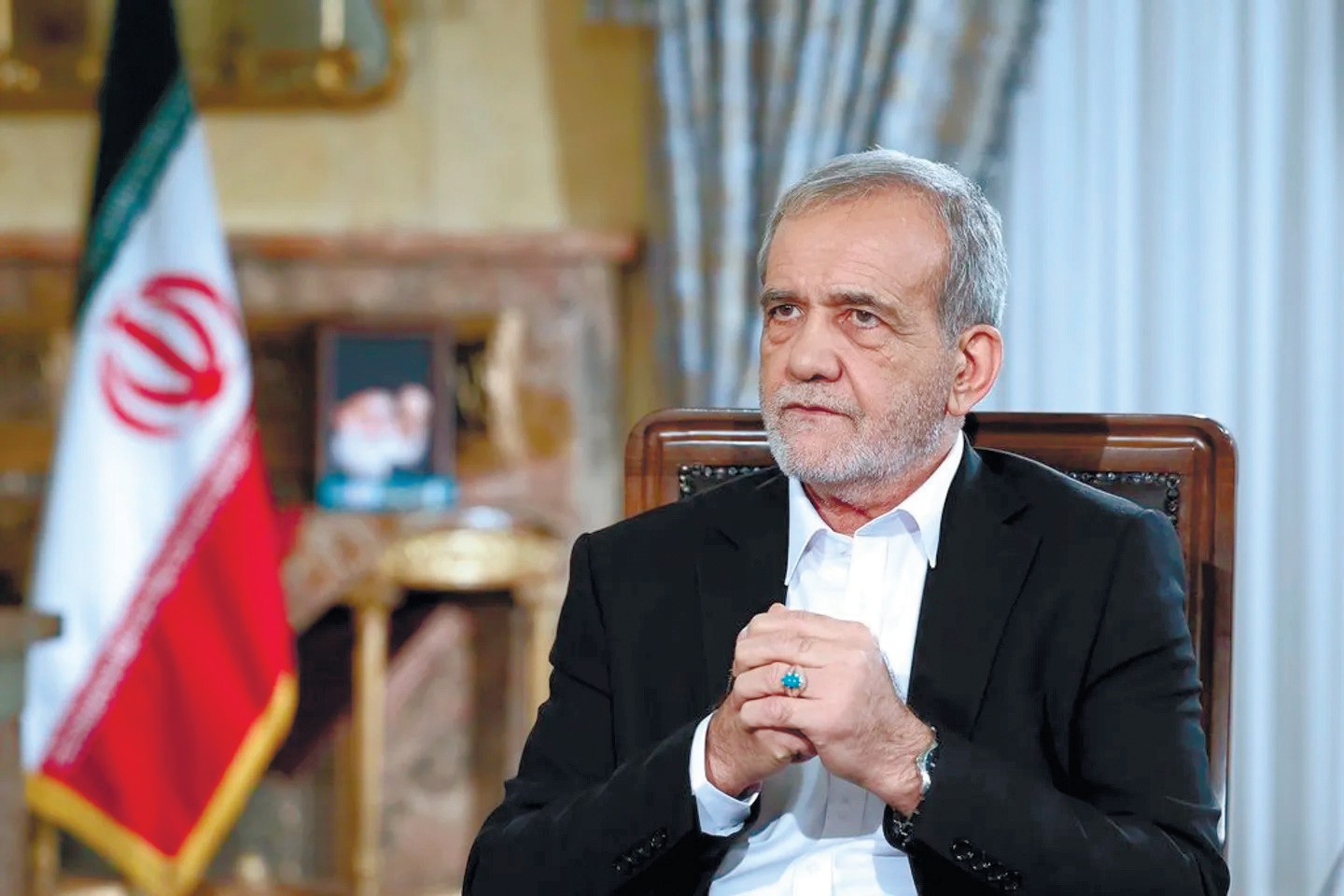
At the end of November 2025, Iran's President Masoud Pezeshkian raised a question with the nation that had previously been considered almost taboo: "We have no choice left," he stated, emphasising that Tehran is threatened by ecological and infrastructural catastrophe due to chronic water shortages, overpopulation, and dangerous land subsidence.
According to the president, attempts to "patch the holes" in the water supply and municipal infrastructure systems can no longer guarantee a normal life for the capital's residents; therefore, the government has begun to seriously consider relocating the city to the south of the country, closer to the Persian Gulf.
A proposal of this kind is one of the most ambitious and resonant in recent decades. In truth, the idea of moving the capital has been discussed at various times over several decades. For instance, back in 2004, the head of Iran's Supreme National Security Council, Hassan Rouhani, stated that Tehran is located on a seismic fault and that a previously approved plan for its relocation "requires revision." Later, in December 2013, the country's parliament voted to consider a bill providing for the search for a new capital. It was then acknowledged that "Tehran, with a population of about 12 million, can no longer be the capital" due to overpopulation, infrastructural problems, pollution, and the risk of earthquakes. Nevertheless, until recently, the proposal to move the capital was perceived as utopian: too expensive, too complicated, too risky.
But recently the topic has gained traction. Masoud Pezeshkian stated that the situation is so critical that "moving the capital is not a choice, but a necessity." He pointed to chronic water deficits, seismic threats, overpopulation, land subsidence, and environmental pressure as reasons making Tehran unsuitable for further development as the capital.
If this plan is realised, Iran could face the largest geographical shift of power in its history – and this would affect not only the country's internal structure but also its international status.
Pushed to the edge: water, transport, and seismic threat
Today, Tehran is Iran's largest city, with at least 12–13 million people in its urban agglomeration. The population density in the capital reaches nearly 17,000 people per square kilometre – more than 300 times higher than the average Iranian level. Transport, roads, the metro, utility networks, and the energy system are under colossal strain. According to city authorities, millions of residents face daily traffic jams, overcrowded hospitals and schools, and a public transport system operating at its limit. This creates constant tension for both residents and public services.
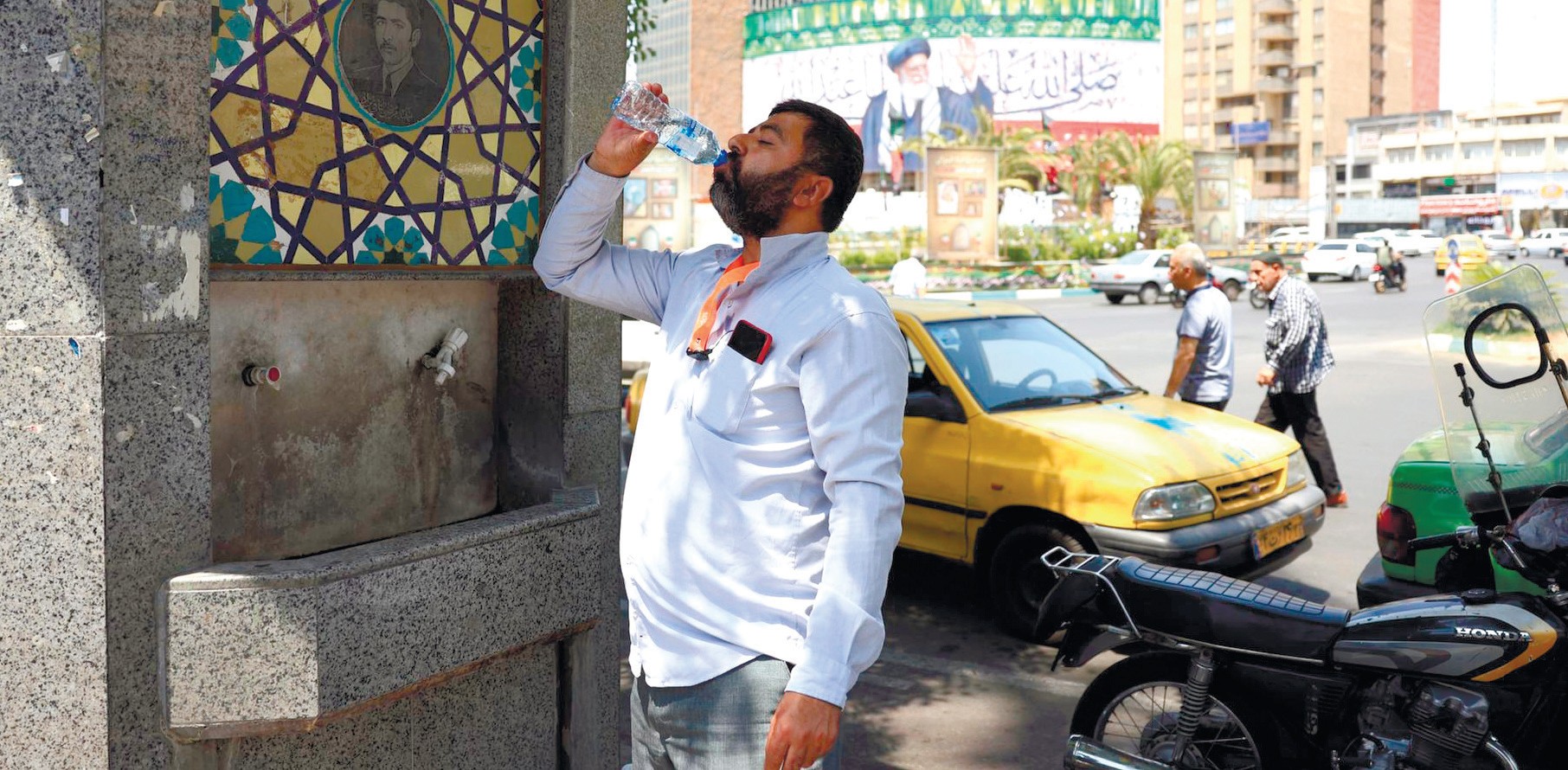
Iran also suffers from a chronic water deficit, and Tehran is located in an area with limited water resources. The main sources for the city are groundwater and water from reservoirs and canals coming from rivers in other regions, including river basins around Mount Damavand. Masoud Pezeshkian and other officials have repeatedly noted that if population and industry continue to be concentrated in Tehran, the water shortage will become critical within the next few years. For example, in the spring, Iranian authorities faced a serious water crisis in four provinces at once – Khorasan Razavi, Yazd, Isfahan, and Tehran. The cause was years of drought, leading to rivers, marshes, and reservoirs becoming shallow and drying up, and reducing the efficiency of dams. Iranian authorities determined that water supply problems are influenced not only by climatic conditions but also by dams built by Türkiye and Iran itself on the Tigris and Euphrates rivers, which play a key role in the country's water supply. Additionally, Iran has recorded a steady decline in precipitation over the past five years. In 2025, Tehran received 40% less rainfall than normal. Meanwhile, in July 2025, the thermometer rose above 50°C in various parts of the city.
Furthermore, it is known that Tehran is located on a seismic fault – experts call the city one of the world's largest metropolises under threat of strong earthquakes. The active extraction of groundwater and construction activity are causing gradual land subsidence. According to geologists' estimates, this poses a threat to the safety of millions of residents.
On top of everything, old utility networks, roads, and residential buildings require constant repair, but Tehran's capabilities are limited. Large-scale development of new areas is complicated by a lack of land and resources. Moving the capital is seen as a way to "offload the burden" and create a modern city with full-fledged infrastructure that meets 21st-century standards.
Where will be the new capital?
The Iranian government is considering several regions for relocating the capital, aiming to reduce the burden on Tehran and promote more balanced development of the country. One of the main options is said to be the southwest of the country, closer to the Persian Gulf, in the area of Bushehr province and the Makran port region on the coast of the Gulf of Oman. This choice is explained by proximity to major ports and oil and gas regions, which would facilitate logistics and economic ties. Experts predict that building a new capital in this area would stimulate economic development in the southern provinces, but would require massive investments in infrastructure and water supply, as well as solving environmental problems related to freshwater shortages.
Another option under consideration is central Iran, in the vicinity of Isfahan and Qom. Here, the seismic situation is more stable, and industry and the transport network are already developed, making it easier to organise government institutions. Analysts suggest that choosing this region would allow for faster project implementation, but would also lead to clashes with cultural and social limitations due to historically significant cities and insufficient water resources. Furthermore, relocating part of the population would require a coordinated strategy and budget expenditures.
Some specialists name northern and northeastern districts, including areas near Mashhad and Sabzevar. Here the climate is cooler, there is access to mountain water sources, and land resources allow for building a modern city from scratch. According to expert forecasts, this option would create ideal conditions for a new capital in terms of ecology and safety, but would require a longer construction period and solving problems of transport accessibility to the country's main industrial and port centres. Thus, each of the considered options has its pros and cons.
Ambitions, risks, and millions of displaced people
Relocating the capital will inevitably have a large-scale impact on Iran's economy, social life, and infrastructure. Specialists warn that building a new administrative centre will require enormous investments, but at the same time could become a stimulus for developing the regions chosen for the new centre. The relocation of government institutions, officials, and their families will create jobs and necessitate the construction of housing, roads, schools, and hospitals. This will help unload Tehran, where infrastructure has long been operating at its limit, and apartments and land remain among the most expensive in the country.
Social consequences will also be significant. Millions of capital residents will face the fact that some services and jobs will move to a new location, which could cause both inconvenience and new opportunities. Ecologists and urban planners note that moving the capital will allow for the creation of a city with modern construction standards, transport networks, and energy consumption, minimising the environmental burden.
However, specialists also warn of risks. Moving the capital is a complex logistical operation requiring decades and meticulous planning. Delays due to resource shortages, budget constraints, or political disputes are possible. At the same time, the potential benefits, including more balanced regional development, reduced overpopulation in Tehran, and the opportunity to build a modern, safe city, make the relocation idea extremely attractive to Iranian authorities.
Reactions to the possible capital relocation vary both within the country and abroad. Seismologist Bahram Akasheh, one of Iran's leading experts in geophysics and seismic safety, noted back in the early 2000s that Tehran is located on an active fault and that the consequences of a strong earthquake for the metropolis could be catastrophic. He repeatedly emphasised that a long-term solution must include planning a new safe administrative centre outside the seismic hazard zone. In turn, Iranian parliament representative Mohammad Saleh Jokar stated that the decision must be made prudently, taking into account demographic, infrastructural, and environmental factors, so that the new capital can effectively unload Tehran and provide a modern urban environment. Meanwhile, senior research fellow at the American Enterprise Institute, Michael Rubin, notes that creating a new administrative centre could redistribute economic activity, but the process of moving the capital will create temporary social and economic difficulties. In his opinion, the move is not simply a "climate solution," but a necessity arising from decades of mismanagement of water resources, and land and infrastructural problems. A representative from Cornell University, Linda Shi, believes that "climate change" is often used as a "convenient pretext" to blame natural factors for the consequences of long-term management errors and corruption. She warns that moving the capital is a political decision, not a panacea for problems deeply rooted in the system. Newsweek, citing the opinion of international geopolitics expert Banafsheh Keynoush, writes that by choosing Makran as a possible new capital, Iran seeks to compete with the seaports of Dubai and Pakistan's Gwadar, strengthen the position of the Iranian port of Chabahar despite existing sanctions, promote trade routes in the Indian Ocean, and reaffirm its role in the Persian Gulf waters. Meanwhile, Iranian journalist Ali Golhaki doubts that moving the capital will require only 25 years and $23 billion as stated: "Prepare for more than a century and hundreds of billions of dollars!" he wrote on X (formerly Twitter).
Thus, both internal and international experts agree that moving the capital is one of the most ambitious and costly projects in Iran's history, which, if implemented, could radically change not only the geography of power within the country but also its position on the world stage.
For now, one thing is clear – the future of Tehran's relocation remains uncertain and will depend on many factors, including economic capabilities, political will, and the technical implementation of the project. It is understood that the process could take decades and require multibillion-dollar investments. Whether Iranian authorities will decide to do this, time will tell. Iran's capital relocation remains an ambitious and controversial initiative. If realised, it will become one of the largest urban and state projects in the country's history, capable of not only redistributing population and resources but also changing Iran's role on the international stage.
RECOMMEND:
 220
220

