

FROM NEGOTIATIONS TO DELIVERIES
Azerbaijan to continue increasing natural gas exports to cover new countries with additional volumes
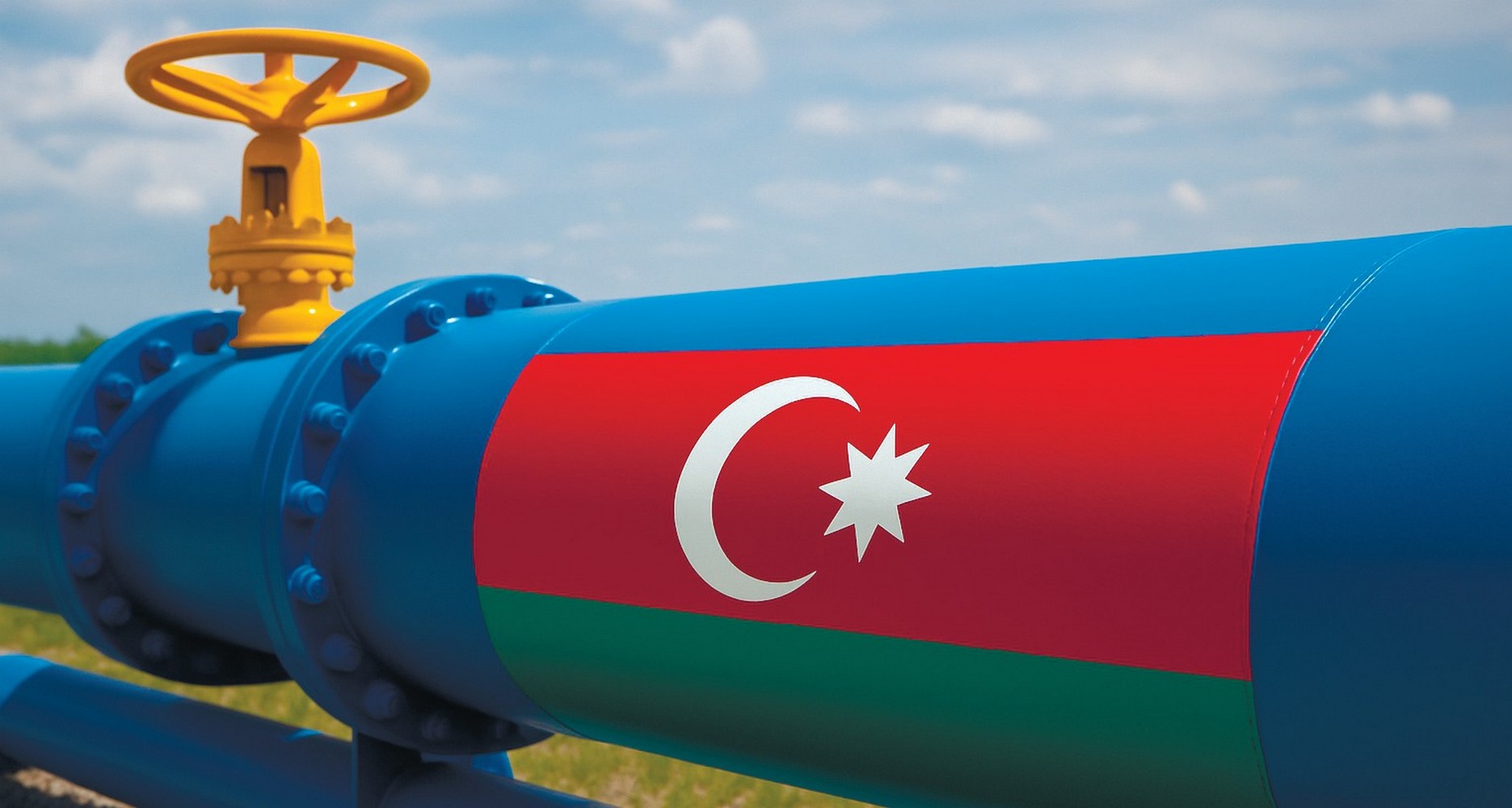
Author: Nigar ABBASOVA
Azerbaijan's energy agenda for 2026 began with the signing of a gas contract with Türkiye for supplies from the Absheron field in the Azerbaijani sector of the Caspian Sea. The agreement, concluded in the first days of January, represents a significant element in the development of bilateral energy cooperation between Baku and Ankara.
The agreement was reached amid the European Union's continued course towards diversifying energy supply sources and reducing dependence on Russian gas. In this context, the deal with Türkiye extends beyond a bilateral format and aligns with Azerbaijan's broader strategy of expanding its presence in regional and European markets, as the country's officials have repeatedly stated.
Key projects
In his interview with local television channels, President Ilham Aliyev provided an overview of the prospects for developing Azerbaijan's gas industry and the plans for 2026. He stated that the volume of Azerbaijani gas exports in 2025 exceeded 25 billion cubic metres and has the potential for further growth.
The head of state noted that additional volumes could be secured through two key factors: expanding domestic electricity production from renewable sources, which would free up gas for export, and increasing extraction at both existing and new fields.
The President emphasised that Azerbaijani gas exports are growing both in volume and geographic reach. Azerbaijan is currently supplying pipeline gas to 14 countries on a regular basis, with gas being supplied to 11 of these on a consistent and reliable basis. This is achieved through the implementation of a flexible model, tailored to meet the specific requirements of diverse market segments. "It is a kind of supply on demand: when they need it, we start supplies; when they don't, we stop. However, the geographic reach of pipeline gas from Azerbaijan extends to 14 countries, with the addition of two more European countries planned for this year," stated Ilham Aliyev.
Azerbaijan's geographic reach is a distinctive feature of its position on the global gas market. The President observed that no other country in the world supplies pipeline gas to as many countries as Azerbaijan.
Among the priority projects, he highlighted the commencement of gas production from the deep-water reservoirs of the Azeri-Chirag-Gunashli field, planned for this year, the implementation of the Shah Deniz Compression project, which will provide additional gas volumes, and the development of the prospective Babek structure, in which several investors have already shown interest.
The strategic importance of the Absheron field was also emphasised. The head of state has announced that the second phase of development is expected to yield gas volumes that are three times greater than those of the first stage, which currently stands at 1.5 billion cubic metres per year.
"So, there will be more gas for the markets. And our gas is needed both by countries that already receive it and wish to increase their purchase volumes, and by countries that do not yet receive it," stressed Aliyev.
Thus, the implementation of these projects should create the additional resource base necessary for fulfilling current export commitments and for future expansion of supply geography. At the same time, Azerbaijani gas remains in demand both from countries interested in increasing purchase volumes and from new markets.
Incidentally, in 2025, one of the new directions was Syria. The export of Azerbaijani gas to that country is helping to partially reduce the electricity deficit. By various estimates, this allows for a reduction in power outages by approximately four hours per day. The possibility of further increasing export volumes is under consideration, which aligns with Azerbaijan's overall strategy of expanding its presence in external markets.
Energy pivot
President Aliyev paid particular attention to the changing attitude towards fossil fuels in international energy policy – from predominantly negative to more pragmatic. He stated that the adjustment in approaches began, among other things, following a shift in policy in the United States.
"President Trump and his administration changed this approach. As is known, he decisively opposes renewable energy sources and supports fossil fuels. And since the US is a leading country in the world, everything that happens there creates impulses in different directions," noted the head of state.
He also pointed to the revision of policy by a number of European financial institutions, which had previously completely excluded financing for fossil fuel projects.
"I know that some European financial institutions have started reviewing their policy regarding fossil fuels, which was previously completely prohibited. Now they begin to consider the possibility of financing projects related to fossil fuels," said President Aliyev.
Similar trends are being observed among major energy companies, including those that previously changed their names to distance themselves from the oil and gas theme.
"They were simply following the general trend. Now they are returning to fossil fuels," emphasised the President.
Meanwhile, Azerbaijan, possessing significant oil and gas reserves, is simultaneously investing in the development of "green" energy, demonstrating a pragmatic and balanced approach.
"Azerbaijan is an indispensable partner for European consumers today and for many years to come. And our role as a reliable supplier from an energy security perspective will only grow. Not decline, but only grow. And if we add to this electricity, green energy and hydrogen, including green hydrogen, then our role will become even more significant," the President noted.
Betting on Absheron
The softening stance of major energy players regarding fossil fuels can be seen as a positive signal. This creates preconditions for more active and balanced decisions by European financial institutions and gas-consuming countries in Europe regarding investments in the development of gas transportation infrastructure. Against this backdrop, the role of states that are reliable suppliers of fossil fuels, capable of ensuring stable and long-term purchases, is also increasing.
Under these conditions, Azerbaijan, with its significant gas reserves, developed infrastructure, and diversified export system, is consistently strengthening its position as an important element of energy security for regional and European markets.
One practical step in this direction was the agreement between Azerbaijan and Türkiye on the transportation of natural gas from the Absheron field, signed in the first days of this year.
"The new agreement with Azerbaijan was signed on 2 January 2026 for the supply of 33 billion cubic metres of natural gas. The gas will be delivered from the Absheron field in the Caspian Sea at a volume of 2.25 billion cubic metres per year for 15 years," Türkiye's Minister of Energy and Natural Resources, Alparslan Bayraktar, announced on Turkish television.
The implementation of the agreement will begin in 2029 and continue until the 2040s. The Baku-Tbilisi-Erzurum pipeline and existing infrastructure will be used for this purpose.
"Thanks to long-term agreements and a diversification strategy, Türkiye has ensured the security of energy resource delivery and will continue to supply gas at competitive prices," stated the Turkish energy minister.
Currently, Türkiye receives Azerbaijani gas within the framework of Stage-1 and Stage-2 development of the Shah Deniz field. Meanwhile, Absheron is viewed as a new, independent source of the resource. According to initial estimates, its reserves amount to approximately 350 billion cubic metres of gas and 100 million tonnes of condensate. Development is carried out by the Joint Operating Company of Absheron Petroleum B.V., which includes SOCAR, TotalEnergies, and ADNOC. First gas from the field was obtained in July 2023. Production within the first stage in 2024 reached its peak level of 1.5 billion cubic metres per year. Upon completion of both development stages, the project envisages extracting at least 4.5 billion cubic metres of gas annually, with the launch of the second phase expected at the end of 2028 or beginning of 2029.
The gas agreement for the Absheron field clearly confirms that it is political resolve and pragmatism that allow Türkiye to consistently build up its own resource base while simultaneously strengthening its position in the regional energy architecture. European capitals have been negotiating for years, discussing parameters, conditions, and principles, often postponing concrete decisions under the influence of domestic political circumstances and ideological guidelines. Against this backdrop, Ankara's approach appears more pragmatic: Türkiye acts quickly, consistently, and without illusions, viewing gas first and foremost as a tool for economic and energy security.
Who is next in line for Azerbaijani gas?
Turning to the European direction, the main intrigue at the moment remains the question of which two European countries might begin receiving Azerbaijani gas as early as this year. Obviously, the negotiation process has not yet reached its final stage, otherwise specific decisions would already have been announced publicly.
Montenegro is interested in importing Azerbaijani gas; it is also needed by Hungary, Slovakia, and Austria – the countries most vulnerable after the cessation of gas transit to the EU via Ukraine. A two-year contract for the transportation of 800 million cubic metres was signed with Hungary in December 2025. The daily volume of Azerbaijani gas supplies to Hungary will be 1.1 million cubic metres.
"Diversification means purchasing energy from as many sources and via as many routes as possible," emphasised Hungary's Minister of Foreign Affairs and External Economic Relations, Péter Szijjártó, adding that such an approach contrasts with "Brussels' costly and narrowly focused policy."
Slovakia is increasing imports from Hungary and Poland. The issue of purchasing Azerbaijani gas was discussed in December during a visit to the country by the President of Azerbaijan.
Following negotiations with the President of the Slovak Republic, Peter Pellegrini, Ilham Aliyev expressed Azerbaijan's readiness to resume gas transit to Slovakia at any time. "Last year we started gas supplies to Slovakia. We are ready to continue at any necessary time," he said.
During a joint press statement with P. Pellegrini, President I. Aliyev stated that the development of new gas fields in Azerbaijan would provide additional resources and create an opportunity for exporting Azerbaijani gas to Slovakia and other countries.
As for Austria, it will henceforth receive gas via Germany and Italy. However, this does not rule out the possibility of exports from Azerbaijan.
Thus, the intrigue remains. In this context, the most logical candidates for new supplies of Azerbaijani gas appear to be the countries that have felt the consequences of the change in gas logistics within the EU most acutely following the cessation of transit via Ukraine. Final clarity on this issue may emerge in the very near future.
RECOMMEND:
 199
199