

BAKU'S DAVOS VECTOR
WEF demonstrates that South Caucasus stability attracts global capital
Author: Elchin HUSEYNOV
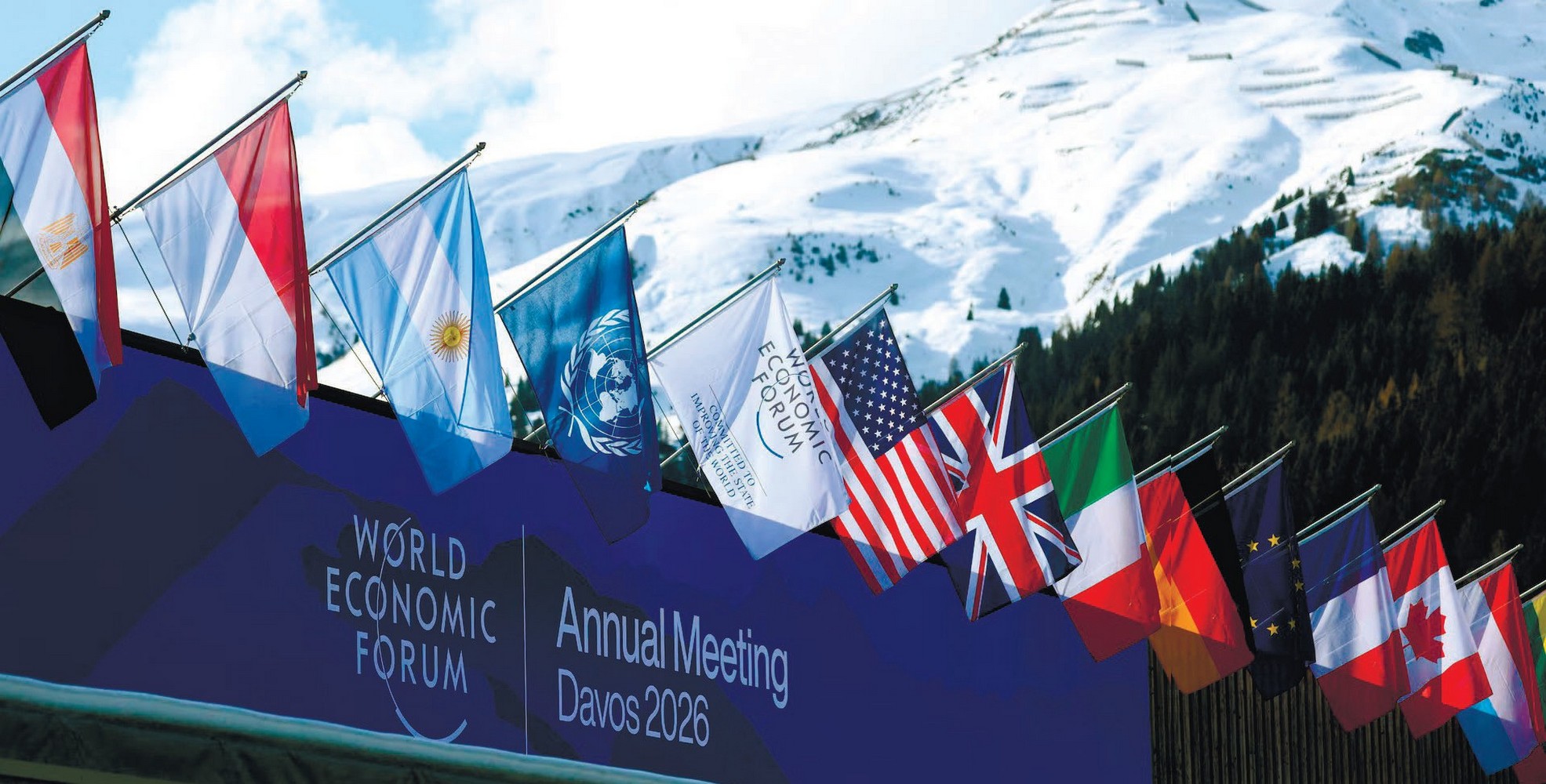
The annual forum in Davos is one of the 21st century’s most influential international platforms, where the interests of states, business, science, and civil society intersect. The World Economic Forum (WEF) was founded in 1971. Each year, it gathers world leaders in the Swiss resort town of Davos-Klosters to discuss key global challenges and find collective solutions to the most complex economic, political, and technological issues.
The 56th meeting of the WEF was held from January 19 to January 23 under the theme "A Spirit of Dialogue", reflecting a desire to strengthen cooperation and trust amidst significant geopolitical, economic, and technological shifts. This year, over 3,000 leaders from more than 130 countries were invited to participate. This included approximately 400 political figures, 65 heads of state and government, as well as 850 CEOs of the world's largest companies and 100 technological "unicorns" and innovators.
The forum addressed the most pressing issues: from climate change and artificial intelligence technologies to economic instability, commodity and financial markets, geoeconomic risks, and pressure on global supply chains. The current year is marked by active discussion regarding a change in the model of multilateralism and the necessity for dialogue in the face of growing geopolitical fragmentation—ranging from economic sanctions to security issues and technological sovereignty.
Eurasian economic identity and a peaceful breakthrough in the South Caucasus
One of the central themes of the forum was the reimagining of Eurasia’s role as a crossroads between East and West—an economic, transport, and political artery capable of shaping new formats of cooperation. In this context, the panel discussion "Defining the Economic Identity of Eurasia", in which President of Azerbaijan Ilham Aliyev participated, not only aligned with the forum's key theme but also reflected Baku's ambition to play an active role in transforming the regional architecture of peace and development. The session served not only as a platform for discussing the regional economy but also as a symbol of a new stage of peaceful and economic cooperation between Azerbaijan and Armenia.
President Ilham Aliyev emphasised the historical significance of the peace agreement with Armenia: "It was a historic achievement when the two countries initialled the peace agreement last August. Thus, an end was put to more than thirty years of war and bloodshed".
The head of state noted the uniqueness of the process: reconciliation occurred less than two years after the last bloody clash. This demonstrates that, with political will, peace is possible within a short timeframe. President of Armenia Vahagn Khachaturyan confirmed this, stating that peace and tranquillity are the results of decisive political will from the leaders: "We live in conditions of peace and tranquillity. This is truly an incredible event. The leaders of both countries have chosen the path of peace and prosperity for their peoples".
He noted that economic and cultural cooperation is already being launched, with civil societies and business circles actively interacting. "People in Armenia are already refuelling their cars with Azerbaijani petrol. Previously, a hostile stance was shown on this matter. But these are the new realities," Khachaturyan emphasised.
The session also touched upon the region's role within a broader geopolitical context. President of Serbia Aleksandar Vucic noted: "The Caucasian countries serve as a link between Europe and Asia. In fact, all three countries are members of the European Political Community". Vucic pointed to the importance of investments and direct transport connections, including future flights between Belgrade, Baku, and Tbilisi.
The economic aspect was complemented by the opinion of Ebru Ozdemir, Chairwoman of Limak Holdings: "Investments are made in any country when there is long-term stability, peace, and tranquillity. If there are peace and stability, why should investments not come?". She noted the importance of the signed agreement on TRIPP and new logistics routes for the region's growth.
Ilham Aliyev also outlined Azerbaijan's strategic role as a transport and investment hub of Eurasia: "Azerbaijan has lifted all restrictions on the transport of goods to Armenia from Kazakhstan and Russia, and we have now received a request from the Armenian side to provide transit from Armenia to Russia. Thus, we have, in effect, and unilaterally opened the corridors".
"True, transport currently passes through Georgia, but one day the route will run through Armenia. The day will come when Armenian goods pass directly through Azerbaijani territory, and that day is not far off". He emphasised that joint processes with Armenia, Türkiye, and the US create new transport corridors and strengthen regional stability and economic interconnection.
All participants noted that peace, stability, and economic cooperation create a solid foundation for the growth of the Eurasian region. The session in Davos demonstrated that the peace agreement between Azerbaijan and Armenia not only concludes decades of conflict but also opens economic and transport prospects for the entire Eurasian space, strengthening the region as a link between Europe and Asia.
Davos as a showcase for Azerbaijan's foreign policy architecture
In Davos, President Ilham Aliyev constructed not just a series of protocol meetings, but a cohesive diplomatic line demonstrating how Azerbaijan integrates itself into the system of regional and global security, economy, and humanitarian cooperation. The geography of the negotiations—stretching from Scandinavia to the Middle East—shows that Baku is operating on several foreign policy levels simultaneously.
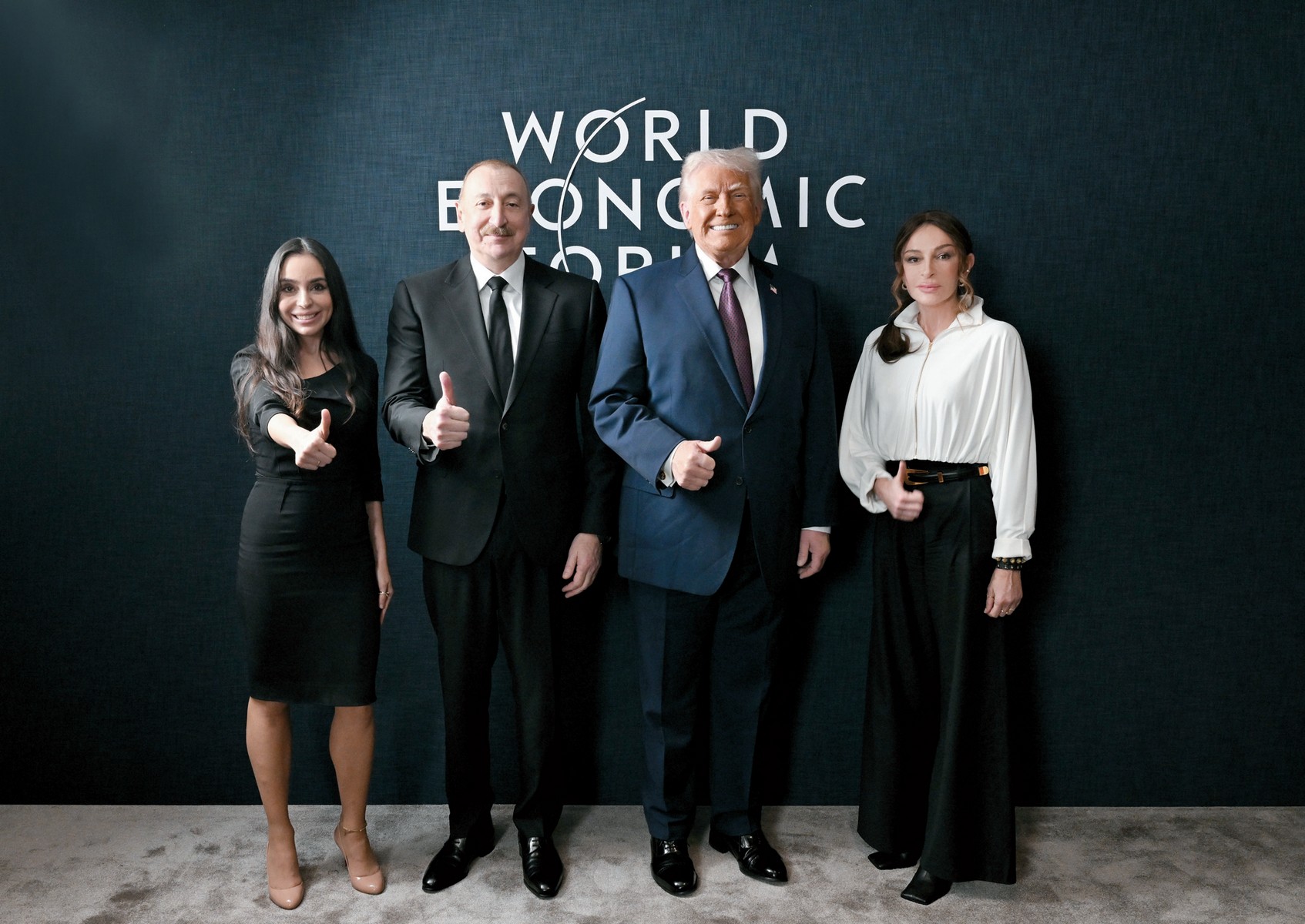
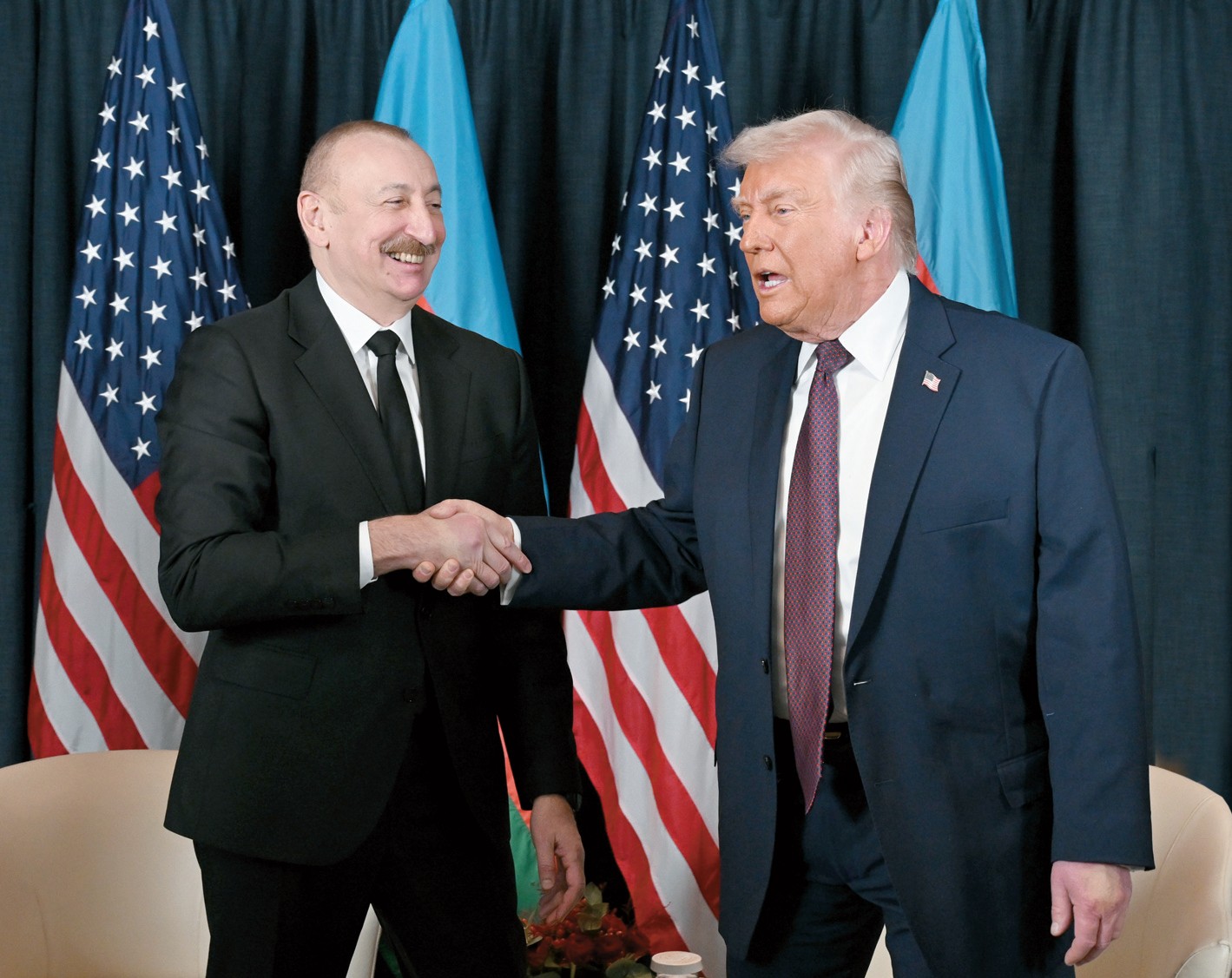
First and foremost, it is necessary to mention the meeting between the President of Azerbaijan and his American counterpart, Donald Trump, which took place immediately after the signing ceremony of the Board of Peace (BoP) Charter in Davos. Satisfaction was expressed regarding the development of ties between the two countries in various spheres following Donald Trump's return to power. His historic role in achieving the agreements reached on August 8, 2025, in Washington regarding the advancement of the peace agenda between Azerbaijan and Armenia was highlighted.
Ilham Aliyev noted that the Zangezur corridor, including the TRIPP (Trump Route for Peace and Prosperity) project, plays a vital role in terms of regional connectivity. The parties exchanged views on the prospects for bilateral ties and pointed to the role of mutual visits and contacts at various levels in deepening relations.
During the meeting with EU Commissioner for Neighbourhood and Enlargement Marta Kos, the advancement of the Armenian-Azerbaijani peace agenda, cooperation in energy, and regional transport communications were discussed, along with Baku's contribution to Europe's energy security. Marta Kos expressed the EU's readiness to support Azerbaijan in humanitarian demining, as well as projects for the restoration of the railway line in Nakhchivan.
The conversation with Finnish President Alexander Stubb marked the North European vector. The discussion on interaction with the Nordic-Baltic Eight format and the prospects for relations with the EU testifies to Azerbaijan's desire to institutionalise dialogue with Northern Europe and Brussels. This is not a one-off contact, but an attempt to embed the country within a broader European political context.
The dialogue with Masrour Barzani, Prime Minister of the Kurdistan Region of Iraq, highlighted Azerbaijan's significance as a regional link between the South Caucasus and the Middle East. The discussion covered not only bilateral ties but also the formation of sustainable humanitarian, trade, and cultural bridges in a complex geopolitical environment.
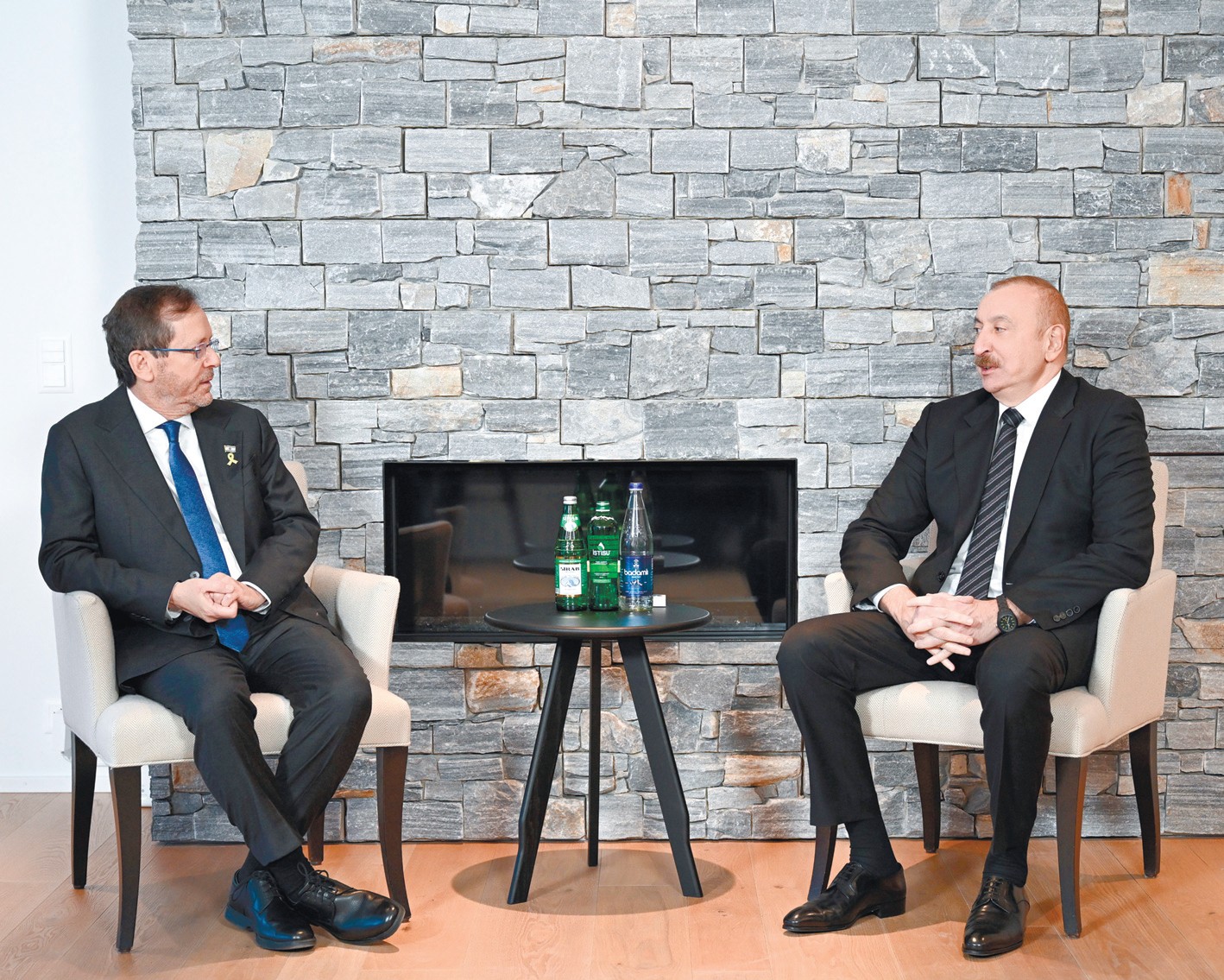
The meeting with Israeli President Isaac Herzog held a special place. Aliyev and Herzog confirmed that Azerbaijani-Israeli relations are developing "successfully in various fields"—from energy to high technology. Amidst a turbulent Middle East, this connection appears as a strategic partnership that goes beyond ordinary diplomacy.
The Czech direction served as a signal of strengthening ties with Central Europe. Conversations with Czech Prime Minister Andrej Babiš and mutual invitations for official visits show that Baku is working on a systemic reset of relations with individual EU countries—through energy, transport, and industrial cooperation.
The Qatari track highlighted the Middle Eastern depth of Azerbaijan's foreign policy. Negotiations with the Prime Minister and Foreign Minister of Qatar, Sheikh Mohammed bin Abdulrahman Al Thani, recorded not only a high level of bilateral relations but also practical cooperation—including SOCAR's participation in restoring Syria's energy supply. This is already the level of a regional player rather than just a resource exporter.
A separate humanitarian contour was marked by the meeting with WHO Director-General Tedros Adhanom Ghebreyesus. Azerbaijan's support for international projects and voluntary financial assistance during the pandemic form the image of the country as a responsible global donor, rather than just a recipient of aid.
Taken together, Ilham Aliyev's Davos negotiations project an image of Azerbaijan as a state conducting multi-vector, pragmatic, and institutionally sound diplomacy. Baku does not rely on a single centre of power; it works with the North, the West, the Middle East, and international organisations simultaneously, turning foreign policy into a tool for sustainable development.
Azerbaijan—a magnet for global capital
This year's Davos forum served for President Ilham Aliyev not just as a platform for negotiations, but as a showcase for Azerbaijan's investment model. Almost every meeting was built around one key signal: the country offers international capital not scattered projects, but a long-term development strategy—with clear rules, institutional stability, and a focus on the infrastructure of the future.
The conversation with EBRD President Odile Renaud-Basso is illustrative in this regard. The discussion covered not only traditional projects in the water sector and the renewal of municipal infrastructure but also more systemic tasks—from modernising the water supply of Baku and Absheron to supporting the "green" energy transition and transport updates in Nakhchivan. In effect, Azerbaijan offers international banks participation in the transformation of basic industries—where investments yield a multiplier effect.
The financial block of negotiations with major global players—JP Morgan, BlackRock, Brookfield, BTG Pactual—was a demonstration of confidence in Azerbaijani macroeconomics. Banker Jamie Dimon explicitly stated this, noting that Azerbaijan is a "reliable partner on international financial markets" and pursues a consistent financial policy. Importantly, the discussions concerned not only asset placement but also the expansion of cooperation in energy, infrastructure, and institutional investment.
A key event was the signing of protocols of intent between the State Oil Fund and BlackRock/Global Infrastructure Partners, as well as Brookfield Asset Management. These documents propel Azerbaijan into the orbit of global infrastructure platforms. Over 3–4 years, SOFAZ (State Oil Fund of Azerbaijan) is considering investing up to $1.5 billion in GIP funds and up to $1.4 billion in Brookfield projects—in fields such as data centres, cloud technologies, airport and energy infrastructure, renewable energy, and energy storage. Thus, Azerbaijan is positioned not as a raw material exporting country, but as a hub for the region's new infrastructural economy—with digital hubs, logistics, and the energy of the future.
Special interest was also garnered by the signing in Davos of an agreement between SOCAR and Eni S.p.A. for the acquisition of a 10% stake in the development project of one of West Africa's largest oil and gas fields, Baleine, located in Côte d'Ivoire. This agreement, while providing SOCAR with access to the rich oil and gas resources of the African continent, fully aligns with the company's strategy for global expansion and the strategic cooperation that has formed between SOCAR and Eni.
Meetings with industry companies followed a separate line: Vestas for wind energy, DP World and Vitol for port and transport logistics, and Dell Technologies for supercomputer centres, data centres, and AI infrastructure. This indicates a clear vector: the focus is not just on attracting investment, but on technological sovereignty and integration into global value chains.
Finally, the dialogue with Carlsberg and other industrial investors shows that the localisation policy in Azerbaijan is working: production, raw materials, packaging, and exports are increasingly "tied" to the country. This is no longer a set of isolated cases, but a model. In Davos, Azerbaijan emerged as a country that speaks to global markets in the same language—the language of institutions, long-term capital, and the infrastructure of the future.
Important statements for Euronews
During his stay in Davos, Ilham Aliyev gave an interesting interview to the Euronews television channel. Responding to a question about the changing world order, the head of state said that countries have faced a situation where the norms of international law have become non-obligatory for all participants of the international community.
"Today, as you noted, international relations are entering a new era; an era in which the situation is governed not by the rule of law, but by the rule of force. We can see this in different parts of the world. This reminds us once again that every country must base its strategy and policy on its own potential and establish good relations with as many countries as possible—firstly in its own region, and secondly on a global scale. And this is exactly what Azerbaijan has managed to achieve," Azerbaijani President stated.
According to the President of Azerbaijan, after more than thirty years of conflict and war, the South Caucasus is also entering a new stage of development: "We have been living in peace for only five or six months; we are learning this. Throughout our entire independent history, we have never lived in peace... Today, relations between Armenia and Azerbaijan are already evolving into cooperation".
"We have lifted all restrictions on freight transport to Armenia. Moreover, we have begun supplying critical goods to Armenia, primarily petroleum products, on which this country largely depends. And this is a win-win situation. Therefore, I believe that through the joint efforts of Armenia and Azerbaijan, including civil society, we will achieve not a long-term, but an eternal peace in the Caucasus. This is our goal," said Ilham Aliyev.
At the same time, Ilham Aliyev expressed concern regarding the destabilisation of the situation in Iran. "For us, stability, predictability, and peace in the region are the greatest assets. We have suffered from occupation and war, and have lost thousands of lives. Therefore, today, stability and security for every country are the only path to success," the head of state said, expressing hope that the situation in and around the South Caucasus would not deteriorate.
The President of Azerbaijan also noted that Baku no longer reacts to the constant criticism from the European Parliament and hopes its members "will find the courage to review their unfair policy".
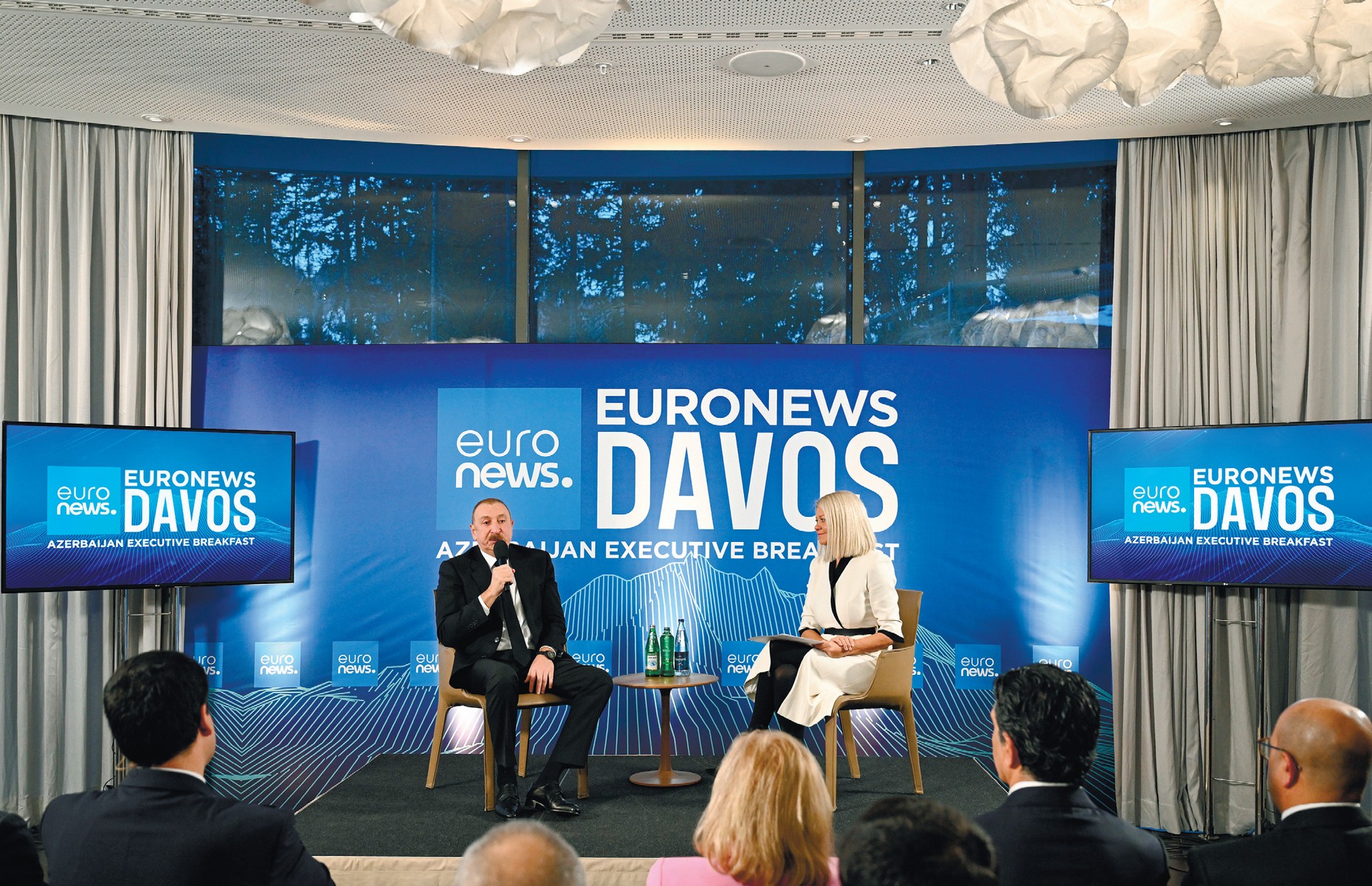
The Azerbaijani leader's responses at an event titled "Azerbaijan Executive Breakfast", organised by Euronews, were equally interesting. During the event, the head of state acknowledged that the country's economy cannot grow rapidly due to the natural depletion of oil reserves. However, the non-energy sector grew by more than 2% in 2025, and non-oil and gas industry increased by 5.5%.
"We are increasing gas production and reducing oil production, but we have plans to stabilise oil production and even increase it. Perhaps it is still too early to talk about it, but we have well-founded hopes that we could experience a second very significant oil boom in Azerbaijan if the exploration projects conducted by international energy companies yield good results," said President Aliyev.
Ilham Aliyev expressed regret that there are no substantial European investments in either fossil fuels or renewable energy sources, with the main partners being companies from the UAE, Saudi Arabia, China, the UK, and Azerbaijan. Furthermore, not a single European company has expressed readiness to become an investor. "Last year, we exported more than 25 billion cubic metres of natural gas. Almost 13 billion cubic metres were exported to Europe, and this figure will grow. This was done at the request of the European Commission," the President said, adding that this would be achieved through existing and new fields and by saving significant volumes of natural gas.
RECOMMEND:
 218
218

