

MIDDLE EASTERN GEOPOLITICS
Ankara doubles down on rapprochement with Riyadh and Cairo
Author: Ilgar VELIZADE
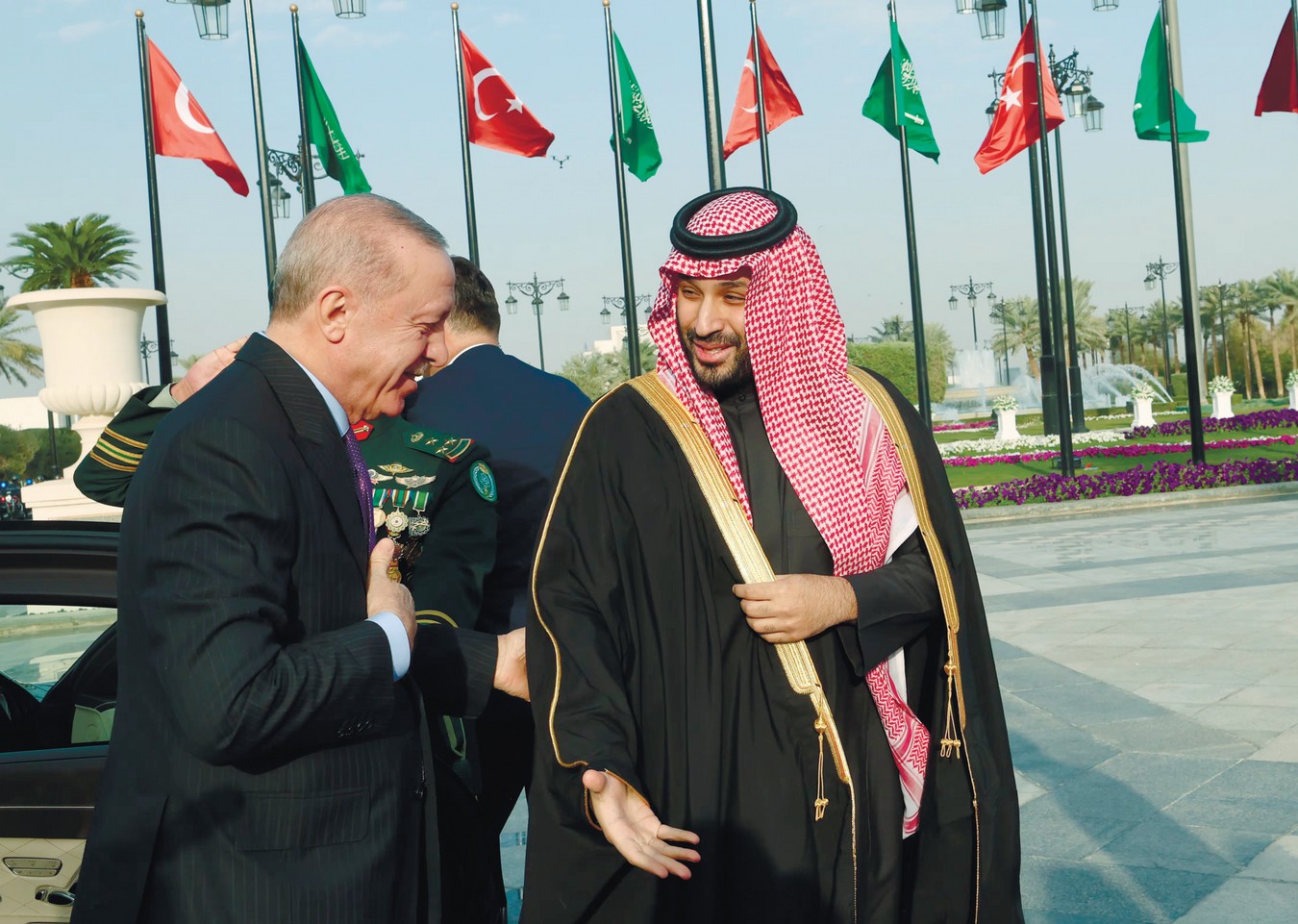
In recent months, Türkiye has made notable strides in advancing its Middle Eastern policy, working to reverse earlier missteps that had strained ties with key regional players. The visits of Turkish President Recep Tayyip Erdogan to Saudi Arabia and Egypt underscore this shift. These trips represent significant steps toward deepening bilateral and regional cooperation, following the normalisation of Ankara’s relations with both nations in 2022.
Friendship not directed at third countries
Saudi Arabia and Egypt are the Middle East’s largest powers and, in many respects, shape the region’s political agenda. For Türkiye, building stable and pragmatic relations with Riyadh and Cairo is therefore of strategic importance. Such engagement enables Ankara to advance its interests both in the Persian Gulf and the Eastern Mediterranean.
Crucially, these visits took place against a backdrop of heightened regional tensions, driven by the risk of a possible escalation involving Iran—the consequences of which could destabilise the entire Middle East. It is no surprise, then, that all three capitals—Ankara, Riyadh, and Cairo—have reacted with cautious unease to any scenario involving the use of force.
In the current phase of Turkish-Saudi relations, the emphasis has been on practical cooperation: defence industry ties, economic partnership, investment, and high technology. The approach adopted is one of gradual rapprochement, built on incremental steps rather than dramatic political gestures. Convergence is also evident in shared positions on conflicts in Yemen, Syria, Sudan, Libya, and Somalia, where both countries back internationally recognised central authorities. Against this background, some analysts have suggested that the Turkish-Saudi alignment represents an attempt to counterbalance the United Arab Emirates, which in several conflicts has backed alternative political or military actors.
Such interpretations, however, overlook the fact that Riyadh, despite its current differences with Abu Dhabi, has no intention of severing ties entirely. The two remain bound by a wide range of economic, financial, and military-political interests. In this context, Ankara is equally careful not to take sides in the ongoing rivalry. Türkiye, after all, retains substantial economic and defence-sector ties with the UAE. Among the Gulf monarchies, the Emirates remain Ankara’s main trade and economic partner, with Saudi Arabia ranking only third.
For all the political significance of the Turkish-Saudi dialogue, therefore, economic and institutional cooperation between the two remains in a transitional phase. Ankara is well aware of the pitfalls of choosing between Riyadh and Abu Dhabi, and—mindful of the Qatari crisis experience—continues to pursue a cautious, multi-vector regional policy.
Economy first
The centrepiece of the agreements signed in Riyadh is a solar energy project with a capacity of around 2,000 MW and an estimated value of $2 billion. The deal involves not only the construction of solar power plants but also broad participation by Turkish firms—from design and engineering to equipment supply and subsequent operation. For Saudi Arabia, the project aligns with its Vision 2030 strategy, boosting green energy while freeing up oil and gas for export. For Türkiye, it offers a foothold in the Saudi energy market and a long-term economic presence in the kingdom.
Defence agreements, by contrast, are measured and pragmatic. The two sides have not formed a military alliance or assumed mutual defence commitments. Instead, cooperation is limited to arms supplies, joint development projects, training, and experience-sharing. This format allows Riyadh to diversify its arms suppliers and reduce dependence on the West, without taking on rigid political obligations. For Ankara, it means increased defence exports without the risk of entanglement in regional conflicts.
Investment and trade also featured prominently. The signed documents ease business operations, protect mutual investments, and aim to boost non-oil trade—particularly in energy, construction, logistics, defence industries, and high technology.
In essence, interests align: Türkiye seeks Saudi capital, while Saudi Arabia looks to Turkish manufacturing, contracting, and engineering expertise. The package of agreements lays the groundwork for sustainable economic, technological, and institutional ties between Ankara and Riyadh. Rather than bold political gestures, the strategy relies on gradual cooperation, pragmatism, and incremental steps—an approach that minimises risk and preserves flexibility in a rapidly shifting regional environment.
It is no coincidence that Erdogan emphasised Türkiye’s desire to elevate relations with Riyadh to a new level, particularly in renewable energy, defence industries, and other strategic sectors. These were highlighted as key bilateral priorities. Crown Prince Mohammed bin Salman, for his part, expressed readiness to strengthen dialogue with Ankara on regional matters, including coordinated approaches to conflicts, humanitarian challenges, and international security. Such statements reflect a mutual interest in expanding cooperation beyond the purely economic sphere.
The economics of Turkish-Egyptian ties
The final leg of Erdogan’s regional tour brought him to Egypt—a country with which Ankara has long had a fraught relationship. Ties soured sharply after the Arab Spring, when Türkiye openly backed the protest movement that forced Hosni Mubarak from power. The brief rule of the Muslim Brotherhood under Mohamed Morsi marked the peak of Turkish influence in Egypt. The subsequent military takeover and the rise of the current administration under Abdel Fattah al-Sisi led to an effective rupture in bilateral relations.
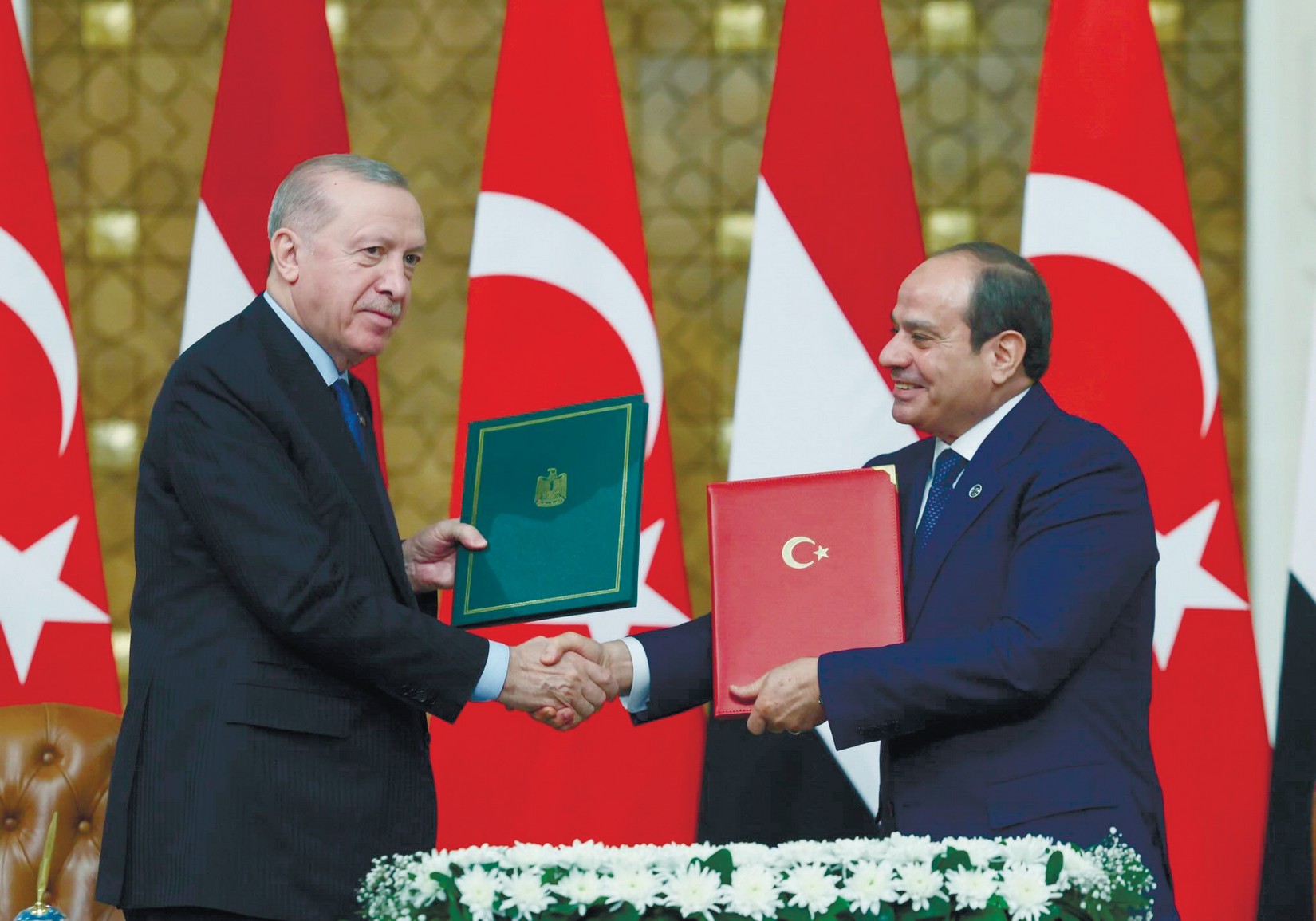
Rebuilding ties has been a slow and difficult process, requiring a shift from ideological posturing to a more pragmatic model based on shared interests. This makes the current phase especially significant for both Ankara and Cairo. The talks between Erdogan and al-Sisi, held as part of the second meeting of the High-Level Strategic Cooperation Council, marked a transition from cautious re-engagement to systematic political dialogue—covering both bilateral matters and regional issues.
As with Saudi Arabia, economic considerations took centre stage. The two sides confirmed their intention to substantially increase mutual trade, setting a medium-term target of $15 billion. By way of comparison, bilateral trade volume stood at approximately $8.8 billion in 2024, up from $6.6 billion the previous year—a steady rise against the backdrop of political normalisation. Investment ties are already well developed. Turkish investments in Egypt exceed $4 billion, with around 200 Turkish companies operating in the country, primarily in industry, construction, textiles, and home appliances. A Turkish-Egyptian business forum, focused on launching new practical projects, gave concrete expression to these commitments.
Addressing the Middle East's challenges
Regional issues also featured prominently in the Cairo talks. Discussions on Gaza, Syria, and Libya were geared toward coordination. Ankara and Cairo reaffirmed their interest in de-escalation, expanded humanitarian efforts, and political settlements to ongoing conflicts. This reflects a shared desire to bring positions closer and reduce tensions, contributing to stability in the Middle East and Eastern Mediterranean.
Erdogan noted that Ankara and Cairo are working together on initiatives aimed at establishing peace in Gaza, ensuring stability in Libya, stepping up efforts toward political conflict resolution, and expanding humanitarian aid to affected civilian populations. Al-Sisi echoed these remarks, stressing the need for continued consultation and coordination on regional conflicts, the strengthening of peace and stability, and active engagement in addressing humanitarian challenges and preventing escalation. He confirmed both sides’ agreement to develop joint efforts to reduce tensions and promote political solutions across the Middle East, while also highlighting the importance of security cooperation to prevent further destabilisation.
Learning from the mistakes and excesses of previous years, Ankara is increasingly committed to a pragmatic, less ideologically driven foreign policy—building relations with the region’s key players on the basis of shared interests rather than political sympathies. This approach broadens Türkiye’s diplomatic room for manoeuvre, reduces the risk of being drawn into regional crises, and creates conditions for gradually strengthening its economic and political position in an unstable Middle East. The visits to Saudi Arabia and Egypt offer a clear illustration of this new course.
RECOMMEND:
 168
168

