

GAS AND POWER GENERATION
SOCAR strengthens its position in Europe through a new agreement with Serbia
Author: Nigar ABBASOVA
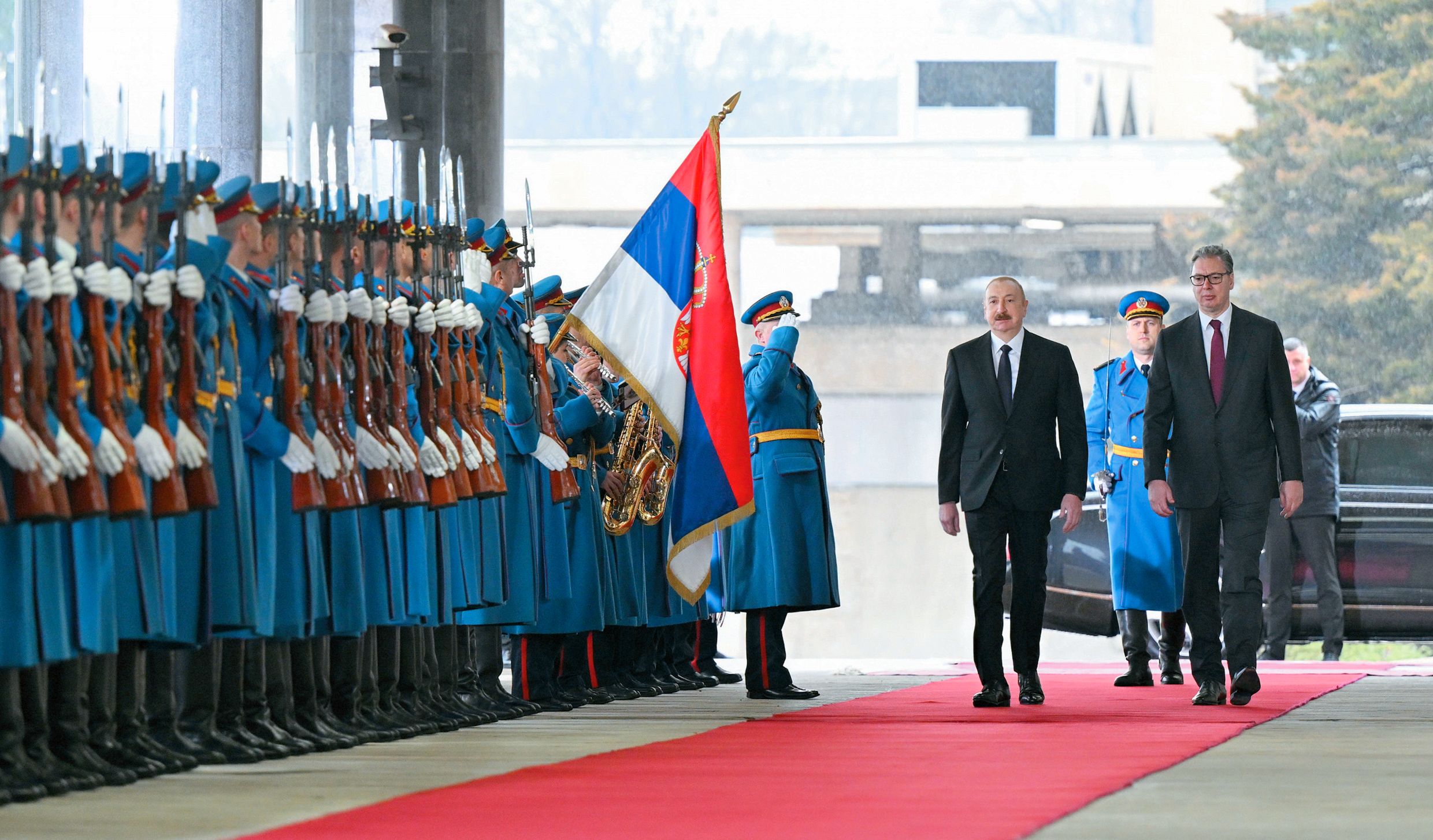
Azerbaijan's SOCAR has laid the foundation for a significant presence in Serbia by signing a Memorandum to build a gas turbine power plant in Niš—the country's third-largest city with a population of around 260,000. The document was signed during the official visit of Azerbaijan's President Ilham Aliyev to Belgrade on 15 February, emphasising the commitment of the state to the expansion of energy resources.
The Balkan region is a key component of the company's investment strategy. This is evidenced by the "Nur" project to gasify the Albanian city of Korçë, as well as initiatives to create hybrid gas infrastructure in Bulgaria and North Macedonia.
Direct flights and tomatoes from Zira
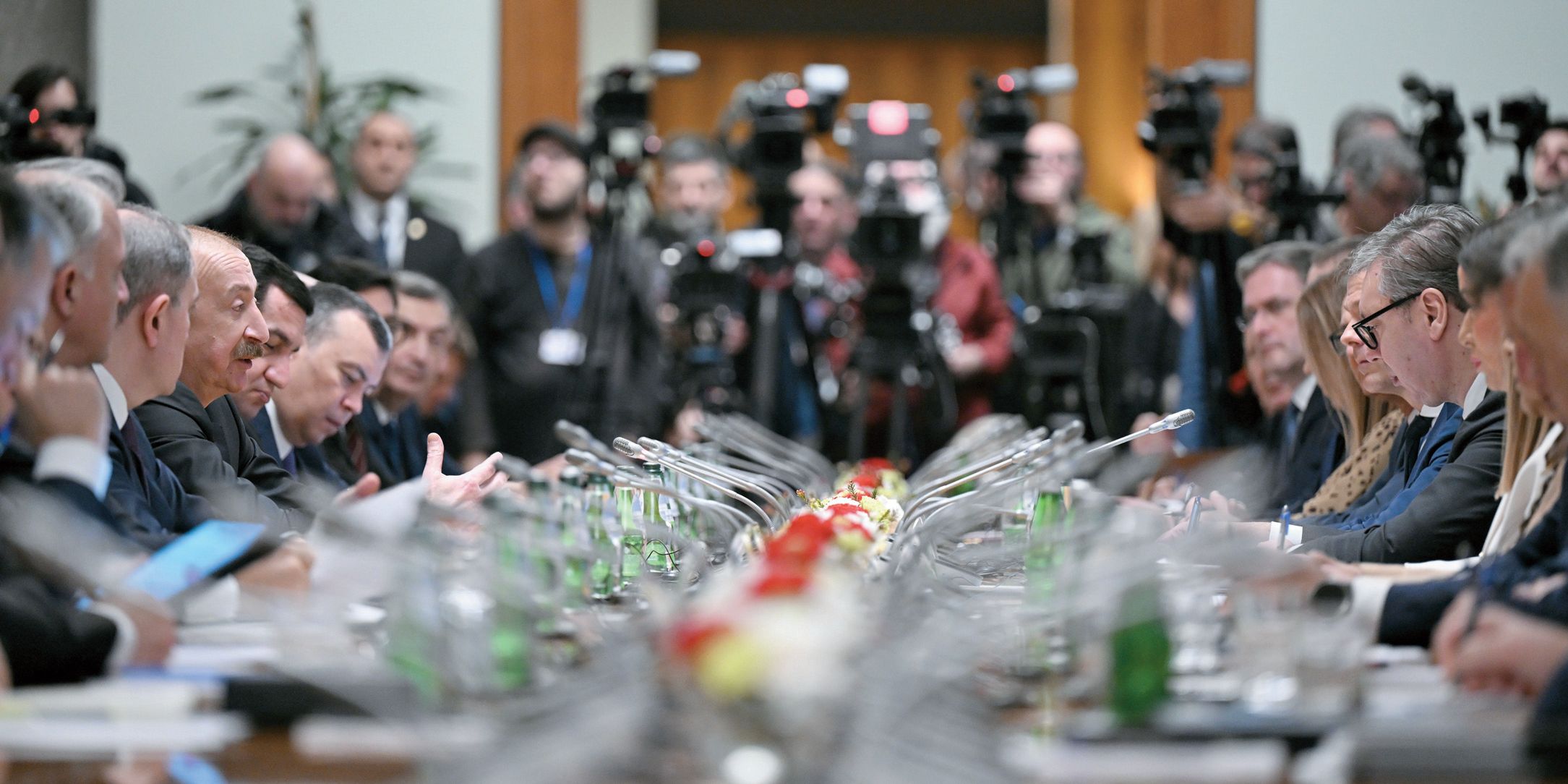
On 15 February, the first meeting of the Strategic Partnership Council between the two countries was held in the Serbian capital, with the participation of Presidents Ilham Aliyev and Aleksandar Vucic. During the meeting, both sides agreed to intensify cooperation across various sectors, including the launch of direct flights between Baku and Belgrade.
Aleksandar Vucic highlighted the symbolic nature of the Council meeting on Serbia's Statehood Day, noting that Belgrade only engages in this format of interaction with a select number of countries. "This meeting marks a significant turning point in our bilateral relations and is a clear testament to our joint political commitment to elevate the ties between our countries to the highest strategic level. I would like to reiterate that the formation of this Council was based on a shared vision and agreement with my esteemed colleague, President Ilham Aliyev," stated Vucic.
He added that Serbia intends to develop strategic partnerships with Azerbaijan across a broad range of fields, including culture, sports, the economy, agriculture, industry, and military-technical cooperation. The Serbian leader expressed his confidence in achieving the highest possible level of relations between the two countries, and announced his intention to visit Azerbaijan again in the near future.
President Ilham Aliyev, acknowledging the symbolic significance of participating in Serbia's Statehood Day celebrations, emphasised the strong level of trust and mutual understanding between the two nations. The Azerbaijani leader stated that this fact demonstrates the level of openness between the two countries, the absence of borders or time limits, and the strengthening of cooperation between the two nations.
He added that the inaugural meeting of the Strategic Council between Azerbaijan and Serbia perfectly illustrates that decisions and agreements are being implemented promptly. He urged members of the Azerbaijani delegation to approach the negotiations with the utmost seriousness, emphasising that the agreements reached would be realised in a timely manner.
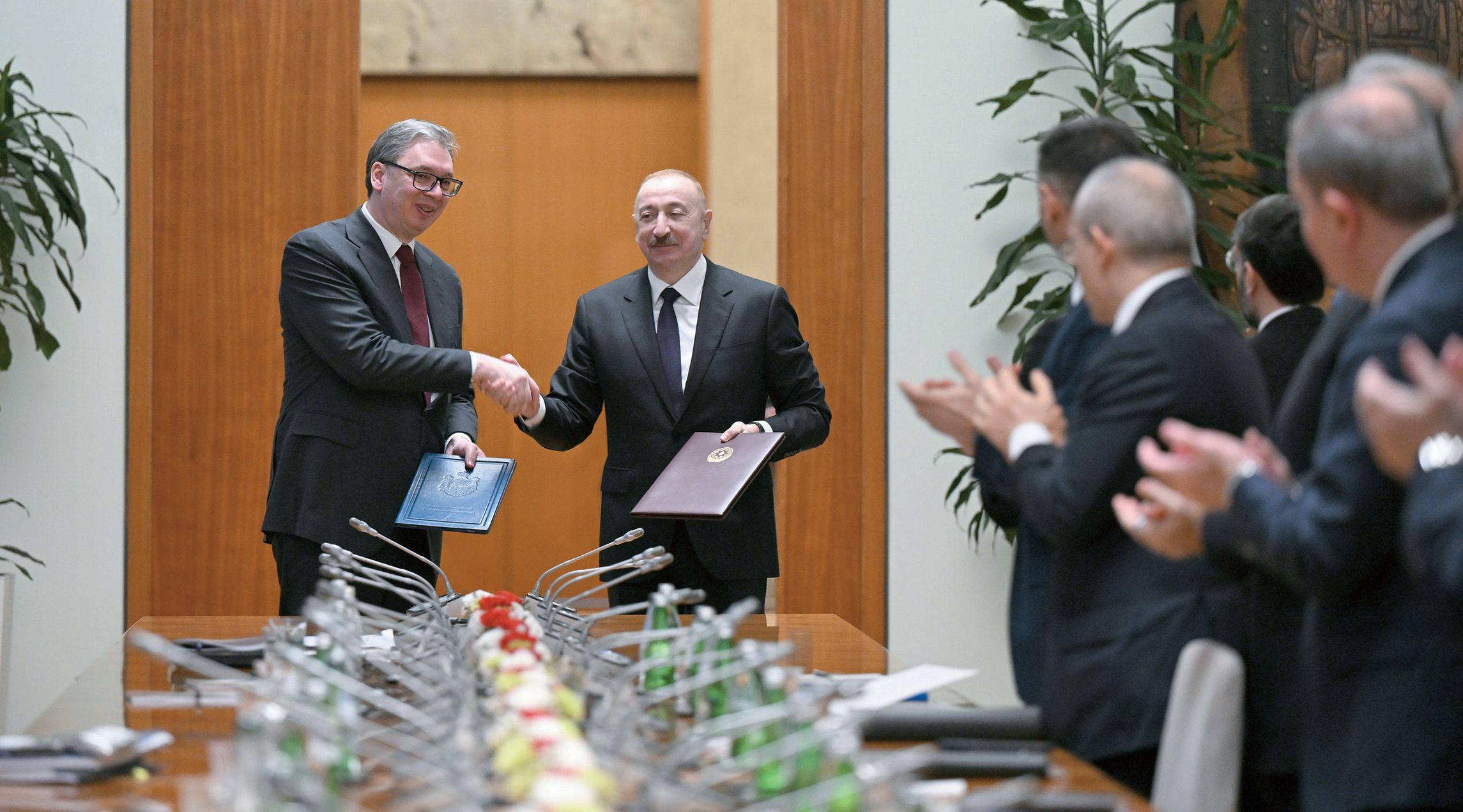
In the presence of both presidents, signed documents were exchanged covering energy, economy, food security, media, culture, sports, and medical insurance.
Furthermore, Vucic announced that direct flights between Belgrade and Baku would commence on May 3 via Air Serbia. He addressed discussions pertaining to Serbia's involvement in an investment forum scheduled for September in Azerbaijan, as well as matters concerning economic cooperation.
The Serbian leader spoke with great enthusiasm about the potential for agricultural cooperation. He acknowledged the quality of tomatoes and cucumbers cultivated in Zira village, Azerbaijan, and expressed interest in exploring the potential for importing products from the distinctive Azerbaijani region of Nakhchivan.
"When I first tasted the tomatoes and cucumbers cultivated in Zira village, and the earlier products from the Nakhchivan region, I was very impressed. I understand that, in comparison to products from other locations, Azerbaijan offers goods at a significant discount. I am curious to know whether it would be feasible to offer these products to our personnel at such competitive prices.
Continuing on this topic, the Serbian head of government has called upon his cabinet members to guarantee that citizens are provided with quality Azerbaijani products at affordable prices, and to increase supplies of Serbian goods to Azerbaijan.
"If those in government have not yet considered this, they should do so as a matter of urgency. I would like to appeal to them to resolve the issue of supplying citizens with quality goods from our Azerbaijani partners at more accessible prices. At the same time, we should consider offering our products in a similar manner. I am pleased to inform you that this has not yet occurred. I am confident that we have the capacity to supply a wide range of products to Azerbaijan. However, this has not yet been achieved, nor has it been approached with sufficient seriousness," Vucic lamented.
In terms of military-technical cooperation, Vucic was brief but accurate in his assessment, stating that "cooperation is going well" and emphasising the regular dialogue and mutual support on sensitive issues.
"Consultations are held at the level of our foreign ministries. It is evident that there are robust agreements in place and that consistent support is provided. Despite the complexity of the issues, Serbia demonstrated consistent support for Azerbaijan, offering assistance and cooperation. This will also be the case in the future. We have successfully resolved highly complex issues. We have full confidence in President Aliyev's statements. I believe he holds our country in equally high regard. We will continue these relations in the same spirit," assured Vucic.
A major energy project
A centrepiece among reached agreements was signing between Azerbaijan and Serbia governments on designing, constructing, and operating a gas turbine power plant in Serbia.
This concerns building a 500 MW gas turbine power plant (GTPS) near Niš city. Azerbaijani companies will collaborate with Serbian partners overseeing construction; both sides intend to work on a "50/50" principle.
“Today we sign a term sheet agreement (preliminary agreement), and we expect to complete all procedures within two or three months so we can shortly after begin conceptual and detailed design followed by construction—which will take just over two years. We believe we will open the power plant by 2029,” said Vucic, stressing Serbia needs new generation sources considering plans for data centres and AI development.
The plant is planned near Niš.
“President Aliyev promised me he would personally handle this matter. You might not believe it, but over two years they managed to create combined power generation capacity of 1890 megawatts. Azerbaijani companies will monitor here. Serbian companies will join. Both sides will perform 50% each,” Vucic said.
Azerbaijan’s President noted this GTPS project as an important example of diversifying cooperation between both countries in energy sector.
“We began cooperation in gas sphere; now we move to next stage—using gas efficiently for both countries to convert it into final product—electrical energy. This will be one of largest Azerbaijani investments in Europe in recent years. It also demonstrates high mutual trust because investments are made in countries with good relations and trust,” Aliyev emphasized.
He added that Serbia’s investment climate attracts foreign investors including Azerbaijan, ready for large investments.
Serbia’s Minister of Mining and Energy Dubravka Dedovic Handanovic explained that construction would be carried out by SOCAR and Serbian companies Elektroprivreda Srbije and Srbijagas.
“This is the first joint project among Elektroprivreda Srbije, Srbijagas, and SOCAR resulting from intensive work during past year as well as clear vision from presidents of both states to raise cooperation to higher level,” she said. “This project is an important step toward strengthening Serbia’s energy security and deepening strategic partnership with Azerbaijan—our first partner with whom we diversified natural gas supplies.”
Gas focus
Besides construction of power plant, agreements were reached to increase Azerbaijani natural gas supplies.
President Aliyev stated official Baku is interested in cooperating with Serbia on building renewable energy power plants.
“Our relations in energy sector are now developing multifacetedly. Some time ago we began exporting natural gas to Serbia and recently decided to increase volumes,” said Aliyev.
He stressed transforming imported gas into electricity offers environmentally friendly fuel for Serbia’s internal market and export possibilities.
The president also noted Azerbaijan’s current energy export potential is 2 GW.
“This figure will grow because we are building many renewable energy plants and ready to cooperate with Serbia in this field. By 2032, we expect additional 8 GW capacity—most for export. For this, we need new large-scale electricity transmission capabilities since our main export direction is Europe,” Aliyev summarized.
The previously signed agreement provides for annual Azerbaijani gas supplies up to 400 million cubic meters in 2024-2026 with possibility to increase to 1 billion cubic meters beginning 2027.
According to Azerbaijan’s Ministry of Energy estimates, Serbia—as largest Western Balkans country—is viewed by Baku as key regional hub for gas, energy, and electricity.
“Serbia’s annual gas consumption is about 2.63 billion cubic meters, approximately 2.2 billion imported. Within new GTPS project in Niš, Azerbaijan can occupy up to 20% of internal gas market. This is a crucial step directly contributing to diversification of supply sources—a key element of energy security,” officials say.
Conclusion
The agreements represent a new stage in the bilateral cooperation between Baku and Belgrade. In the past, these arrangements were primarily confined to the domain of gas supplies. However, they have now expanded to encompass joint investments in electricity generation infrastructure.
This strategic move will consolidate SOCAR and Azerbaijan's position in the Balkans and Europe, establishing them as key players in the energy sector and infrastructure investment.
Concurrently, the augmentation of gas supplies will fortify Serbia's energy security by diminishing its reliance on a solitary supplier. Azerbaijani gas provides an alternative import source, which lowers risks and strengthens Belgrade's bargaining position on price and contract terms. This is a key element of energy security.
Furthermore, Serbia is aiming to strengthen its position as a regional energy hub in the Balkans. The long-term agreements recently signed with Azerbaijan are expected to significantly boost its regional significance. These agreements are not just about additional fuel volumes; they are also about strengthening energy independence, economic stability, and regional influence.
RECOMMEND:
 185
185

