

BAKU'S FORMULA IN MUNICH
Azerbaijan demonstrates regional strategy
Author: Elchin HUSEYNOV
The Munich Security Conference (MSC), which has been held since 1963, remains one of the key international platforms for discussing global security and foreign policy issues. While the forum does not make binding decisions, it serves as a platform for the exchange of views between heads of state, ministers, experts and representatives of international organisations, as well as for closed-door negotiations on the most pressing geopolitical issues. This year, Azerbaijani President Ilham Aliyev was once again at the centre of the conference proceedings. He held significant bilateral meetings, participated in important discussions and actively communicated with journalists. Firstly, however, we must consider…
The proceedings of the 2026 Munich Conference
The 62nd conference was held from 13 to 15 February 2026, with attendance from hundreds of delegates from more than 115 countries. MSC-2026 covered a broad range of subjects, including: European security and EU defence reform, transatlantic relations, military conflicts and regional crises (including the war in Ukraine), multilateral cooperation issues, cyber threats and technology development, as well as energy and climate security.
The forum was attended by more than 50 heads of state and government, high-level representatives of the EU and NATO, foreign and defence ministers of key countries, as well as delegates from the UN and other international organisations. As well as public sessions, a substantial part of the discussions took place behind closed doors, where strategic initiatives and opportunities for cooperation were discussed.
Although the Munich Conference has not traditionally been a confrontational event, MSC-2026 demonstrated that sharp contradictions between global power centres continue to define the agenda. The primary source of intrigue was the transatlantic tension: European leaders emphasised the importance of strengthening their own strategic autonomy, while the US underscored the significance of NATO's role and the necessity for a unified approach to security matters.
Ukraine in particular was a key focus: Western countries discussed support and military strategies, but their approaches varied from strict coordination to calls for caution and diplomatic steps. These differences reflect a broader divide within the Western Alliance, where individual countries' interests sometimes contradict common statements.
The subjects of technology and cybersecurity, including issues of artificial intelligence and critical infrastructure protection, have become even more pertinent. Disagreements are emerging between states regarding their approaches to regulation and information exchange, which directly impacts global security strategy.
Finally, the energy and climate agendas have added new nuances. Europe is seeking reliable energy sources and sustainable supply routes, while Asian and American partners are exercising caution, trying to maintain a balance between the interests of their countries and the requirements of the climate agenda.
In conclusion, MSC-2026 demonstrated that public sessions represent merely the initial phase of a broader initiative. Behind the scenes, there is an active exchange of ideas and interests, with each country seeking the best way to strengthen its position in a changing world. The forum reaffirmed that global security is not built on declarations, but on lively dialogue, where tension, disagreements and strategic manoeuvres are inevitable.
Baku shapes the balance of power
Yes, MSC-2026 has once again demonstrated that global security is shaped at the intersection of contradictions between the leading centres of power. In this context, the participation of the President of Azerbaijan has become an example of active regional diplomacy. Baku continues to demonstrate its ability to be a reliable partner for Europe in the energy and transport sectors, while strengthening its position in the South Caucasus as a strategically important region. This participation underscores Azerbaijan's capacity to contribute to security discussions while maintaining a balanced perspective between Eastern and Western interests.
Bilateral meetings were held on the sidelines of the conference, which allowed for the strengthening of ties and the discussion of issues of transport and energy logistics, as well as regional cooperation. During the meeting with Ukrainian leader Volodymyr Zelensky, matters pertaining to the expansion of collaborative endeavours between the two nations in diverse sectors, notably the energy field, were deliberated. Zelensky expressed his gratitude for Azerbaijan's humanitarian assistance to Ukraine, with particular reference to the attention and care provided to Ukrainian children.
During discussions with Bulgarian President Iliana Yotova, the following subjects were addressed: potential areas for cooperation in the fields of energy, electricity exports, agriculture, tourism, culture, education and other sectors; the possibility of collaboration within the framework of international organisations. Bulgaria's support for the development of relations between Azerbaijan and the European Union was met with gratitude. Iliana Yotova expressed her gratitude for the support provided by the Heydar Aliyev Foundation for the restoration of the Trapezitsa Architectural and Museum Reserve in Bulgaria.
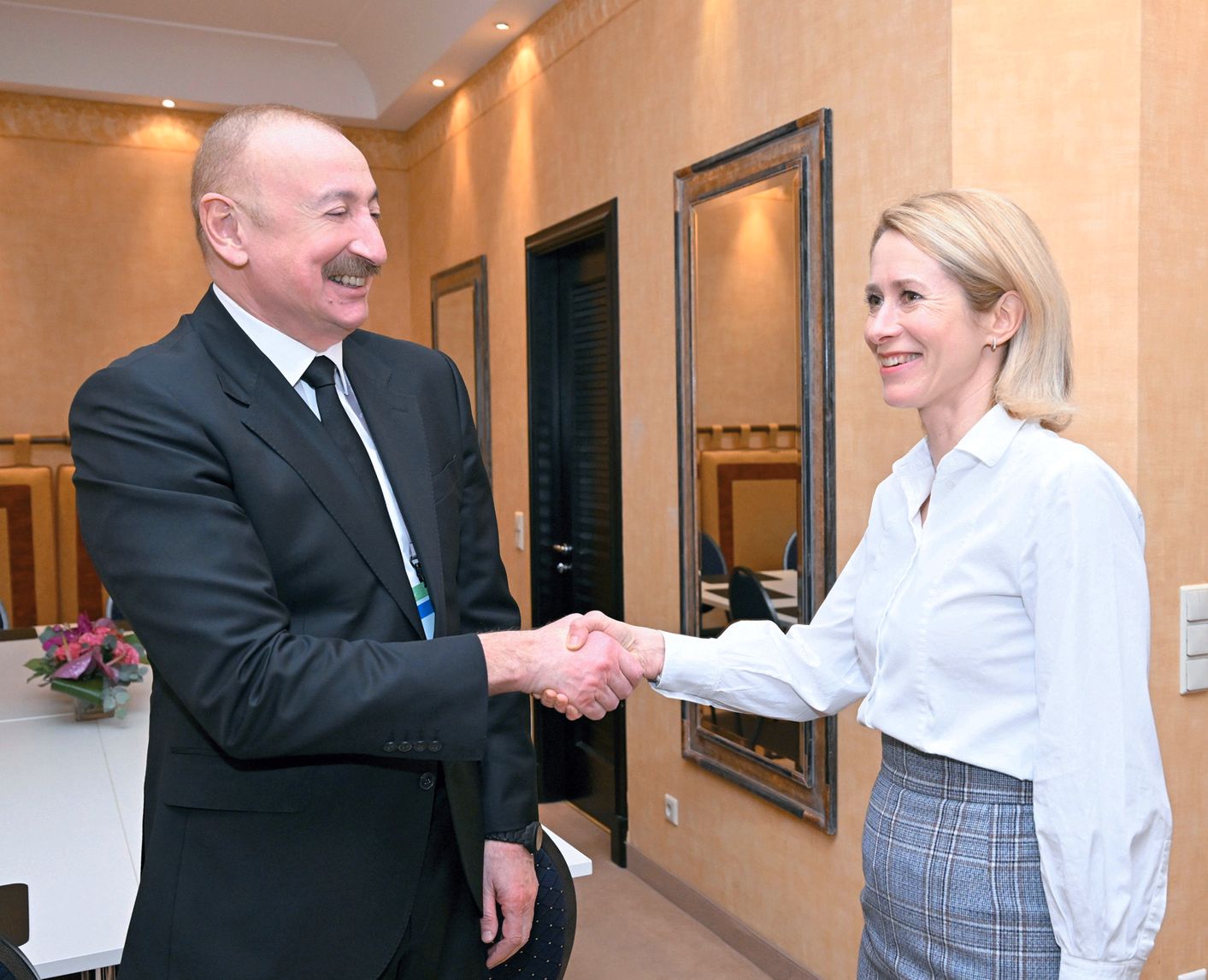
During a meeting with Ilham Aliyev, the EU High Representative for Foreign Affairs and Security Policy, Kaja Kallas conveyed the European Union's eagerness to expand its ties with Azerbaijan. The text goes on to highlight the importance of successful cooperation in the energy sector, and in this context, mentions Azerbaijan's significant contribution to ensuring Europe's energy security. It was emphasised that there are extensive opportunities for cooperation in the transport sector, as well as for ensuring lasting peace and stability in the South Caucasus region.
During Ilham Aliyev's meeting with Slovak Deputy Prime Minister and Minister of Defence Robert Kalinak, it was noted that bilateral relations, which are of a strategic partnership nature, are based on mutual understanding and mutual support, and the opportunities for expanding cooperation in various areas were highlighted. In this context, satisfaction was expressed with the development of partnership in the military-technical sphere, and views were exchanged on the prospects for this cooperation.
A meeting was held with Nechirvan Barzani, the head of the Iraqi Kurdistan region, to discuss the development of relations in the economic, trade, cultural and humanitarian spheres. The head of state extended an invitation to Nechirvan Barzani to visit Azerbaijan, which was graciously accepted.
Azerbaijan's initiatives to ensure regional peace and cooperation were discussed at a meeting with Armin Laschet, Chairman of the Bundestag Committee on Foreign Affairs. It was emphasised that the bilateral relations between Azerbaijan and Germany are developing in various areas, including politics, trade, economics, energy and others. It was noted that Azerbaijan plays an important role in ensuring Europe's energy security, and an exchange of views took place on expanding inter-parliamentary cooperation and developing bilateral relations.
During discussions with Jared Cohen, President of The Goldman Sachs Group Inc., a major international company specialising in investment and consumer banking, securities and asset management, prospects for cooperation in various sectors of the Azerbaijani economy were explored, along with broader global issues. It was emphasised that the company's successful partnership with the State Oil Fund of Azerbaijan is of great importance.
Azerbaijan's policy on technological transformation and the development of artificial intelligence was the subject of a meeting with Mike Sicilia, head of Oracle, one of the world's largest software and cloud technology corporations. It was noted that there is mutual interest in expanding cooperation with Oracle. Furthermore, it was emphasised that a framework agreement on the prospects for partnership has already been reached. In the context of long-term collaboration between Oracle and state and private enterprises in Azerbaijan, discussions were held on the provision of a range of services. In addition, there was an exchange of views on the activities of three Oracle academies in various leading higher education institutions throughout the country.
Overall, Azerbaijan's participation highlighted its active involvement in shaping regional and international security, maintaining a balance between the interests of the East and West, and strengthening its position in the global diplomatic arena.
TRIPP and the Middle Corridor: Azerbaijan as a hub for trans-Caspian connectivity
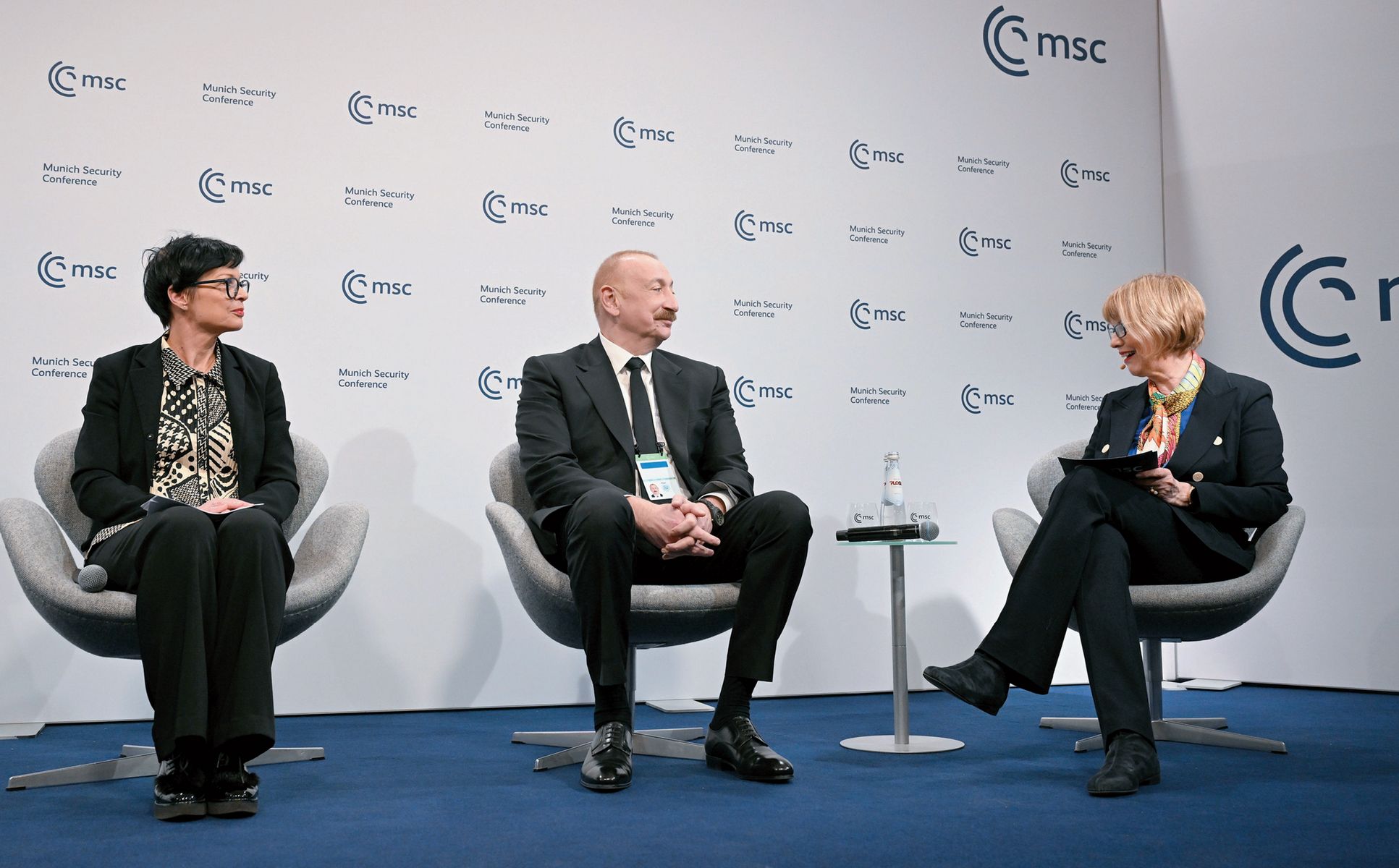
On 14 February, a panel discussion entitled "Open Corridor Policy: Deepening Trans-Caspian Cooperation" was held as part of the Munich Security Conference. The central topic of the discussions, which included the President of Azerbaijan, was the TRIPP project and the prospects for the Middle Corridor as a key transport route between Asia and Europe.
Ilham Aliyev emphasised the strategic importance of infrastructure: "Azerbaijan has primarily invested in physical infrastructure, including seaports, railways, motorways and cargo air transport. It is evident that establishing a regional transport hub is contingent on fostering positive and constructive relations with neighbouring countries. In this regard, Azerbaijan has demonstrated notable success in cultivating favourable connections with both the Western and Eastern regions. He noted the high transit figures: "Last year, a record number of TU (transport units) passed through Azerbaijan - more than 100,000. In the next few years, this figure is expected to grow to 200,000 and even 300,000, with a target of 500,000 TU. To this end, we have already begun expanding our seaport, and investments in this project are already being made."
The President of Azerbaijan also stated that connectivity projects are driven by the peace process in the region. "We are pleased to announce that we have commenced the supply of petroleum products to Armenia, which are of critical importance to them. By taking this action, we have successfully initiated a mutual trade agreement. In order to create new transport links, it is vital to consider how Trump's route for international peace and prosperity will influence this process. All countries on this route will be more integrated politically and economically."
European Commissioner for Enlargement Marta Kos noted the importance of TRIPP and regional integration: "We have specific projects for Azerbaijan, Armenia and Turkey on our agenda. You mentioned the TRIPP project, which we also consider a priority... The implementation of the TRIPP project in the direction of Nakhchivan will now change the conditions as a whole, and then access to Turkey will be gained."
Wang Huiyao, founder of the China Centre for Globalisation, emphasised the global significance of the corridor: "The Trans-Caspian route is also of significance... China is implementing effective measures to reduce barriers and create opportunities for transport connectivity. Azerbaijan is a beautiful country. I have visited the site on numerous occasions. We have always admired Azerbaijan's 'soft power'.
The discussion also covered practical steps for integrating the Middle Corridor, including simplifying customs procedures, the role of the World Bank and the EBRD, attracting the private sector, and building trust between partners. Ilham Aliyev emphasised that the TRIPP project has gained international recognition and the participation of the United States: "The fact that the TRIPP project bears President Trump's name is significant, as it indicates that this corridor will be of importance both during his administration and potentially after its conclusion. All the actions taken by the countries of the region (Azerbaijan, Georgia, our neighbours in the Caspian Sea in Central Asia) have been carried out without any practical involvement from the US. The current administration, under President Trump, has created a favourable environment for the implementation of these large-scale projects."
The MSC-2026 panel demonstrated that the TRIPP project and the development of the Middle Corridor contribute to the economic integration of the region, while also functioning as an instrument for strengthening trust, supporting the peace process and establishing long-term stability in the South Caucasus.
Important messages from Baku
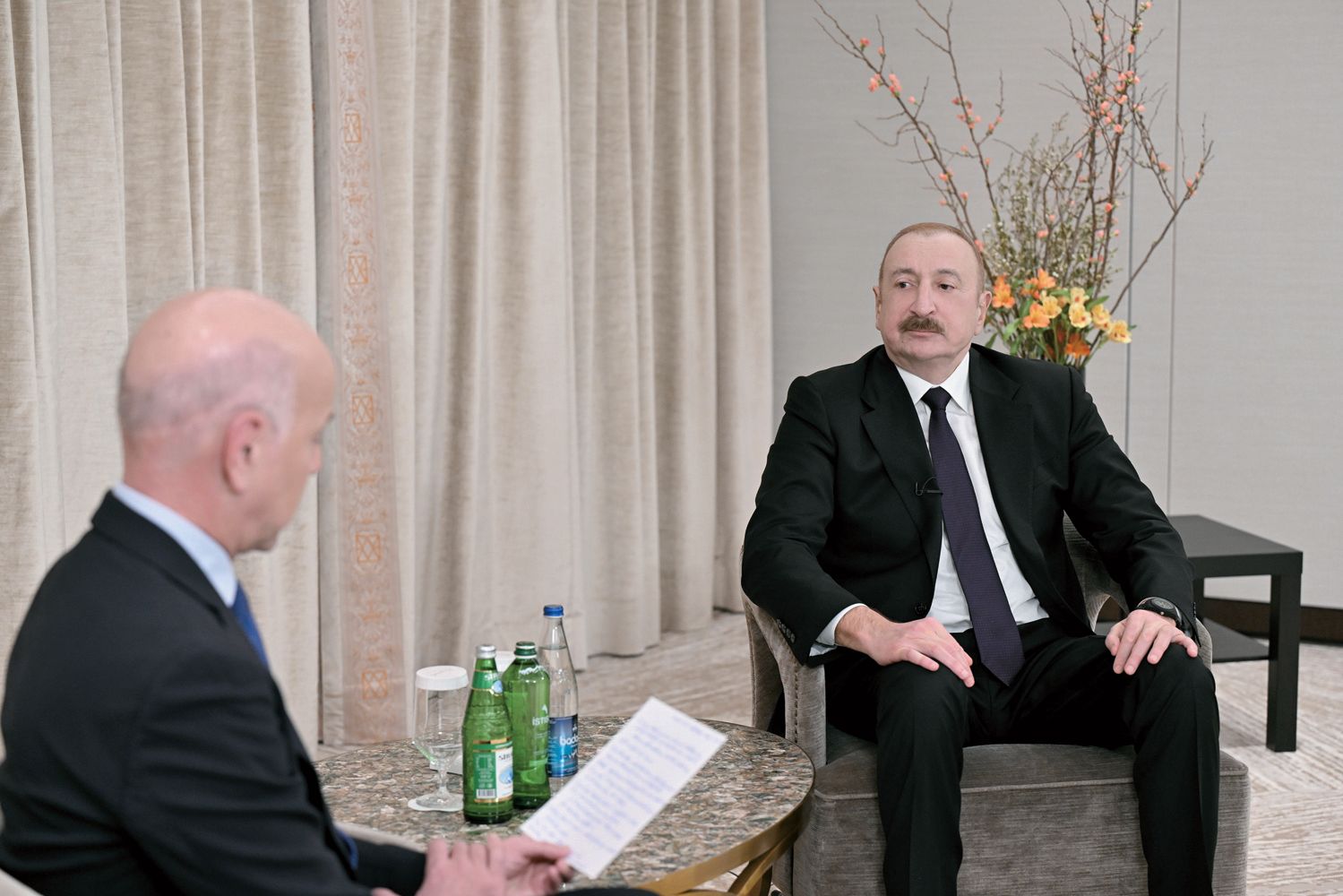
One of the highlights of Ilham Aliyev's participation in the Munich Conference was an in-depth interview with France 24, in which he provided a comprehensive overview of the current situation in the region, the peace process with Armenia and bilateral relations with France.
In response to an enquiry regarding the normalisation of relations with Armenia, the head of state confirmed that following the signing of the historic declaration at the White House in August, the conflict had come to an end and that Azerbaijan had already entered a "period of peace". "It has been more than six months since then, and the situation on the border with Armenia is very calm. There have been no further incidents, casualties or injuries. Azerbaijan has unilaterally lifted restrictions on the transit of goods to Armenia. We have also initiated the supply of petroleum products that are essential to Armenia, thereby marking the commencement of our trade relations. In summary, we can confirm that peace has already been achieved."
However, he asserts that for the agreement to be officially signed, it is necessary to amend the article of the Armenian Constitution containing territorial claims against Azerbaijan: "Without this, the peace agreement will not be signed... Once this is completed, the way will be clear for the official signing of the peace agreement." Ilham Aliyev also expressed his confidence that the official agreement could be signed as early as this year.
The President emphasised the importance of the United States' participation in the implementation of transport and economic initiatives: "One of the reasons is that, again, the United States has played a decisive role in this process. The route that will connect both parts of Azerbaijan through Armenia with subsequent access to the European continent is named after President Trump. I am confident that it will be implemented."
He also noted the significance of the visit of US Vice President J. D. Vance and the signing of the Charter on Strategic Partnership: "We are delighted to announce that we have become an official strategic partner of the most powerful country in the world, and we consider this a great success for our country... The document is divided into various sections. One of these agreements relates to the sale of defence products, but there are other aspects to the collaboration. The resolution also encompasses subjects such as energy, communications, artificial intelligence, investment and trade, and it is notable that all restrictions on arms supplies to Azerbaijan have been lifted."
The President of Azerbaijan also provided answers to questions regarding the fate of the Garabagh separatist leaders convicted by a military court in Baku: "It is evident that these individuals have committed grave crimes against humanity. Just picture in your mind the Nuremberg trials. Two months after the sentencing of the Nazi leaders to death, a request is made for their release. The gravity of their crimes even surpasses those perpetrated by the Nazis during the Second World War." The head of state confirmed that the question was raised during the meeting in Baku with the vice-president, among other issues. "I have outlined Azerbaijan's position on this issue, and that is all."
During the interview, the issue of tense relations with France in recent years was also raised. Ilham Aliyev noted that the tension did not arise on Azerbaijan's initiative, but in connection with France's support for the separatists during the Second Garabagh War: "France defends the territorial integrity of countries... However, France's position was regrettably supportive of the separatists, as evidenced by the adoption of over ten resolutions in the National Assembly and the Senate that were designed to bolster their cause. All actions undertaken on behalf of Azerbaijan were done so exclusively in response."
The President of Azerbaijan has now confirmed his intention to resolve the situation. It is my belief that both parties are now more prepared to normalise relations, particularly in light of the peace achieved by Armenia and Azerbaijan.
Thus, the 2026 Munich Conference once again confirmed that global security is not built on declarations, but on lively dialogue, where every step taken by leaders is taken with consideration for the interests of many parties. President Ilham Aliyev's participation demonstrated that Azerbaijan is not only actively involved in regional diplomacy, but is also transforming its initiatives – from transport corridors to strategic partnerships – into practical tools for strengthening peace and stability. In this context, the country continues to play the role of a reliable partner of Europe and a key player in the South Caucasus, demonstrating that a balance between East and West is possible and brings tangible results.
RECOMMEND:
 202
202

