

ENERGY: A STRATEGIC CHOICE
Baku strengthening its position as a key gas supplier by export growth through infrastructure expansion
Author: Nigar ABBASOVA
Europe's energy security, the prospects for expanding the Trans-Adriatic Pipeline and gas supplies from Azerbaijan, the energy transition and the development of 'green' energy are the issues that are now at the top of the international agenda. Let me be clear: these topics have long been raised regularly at various international forums.
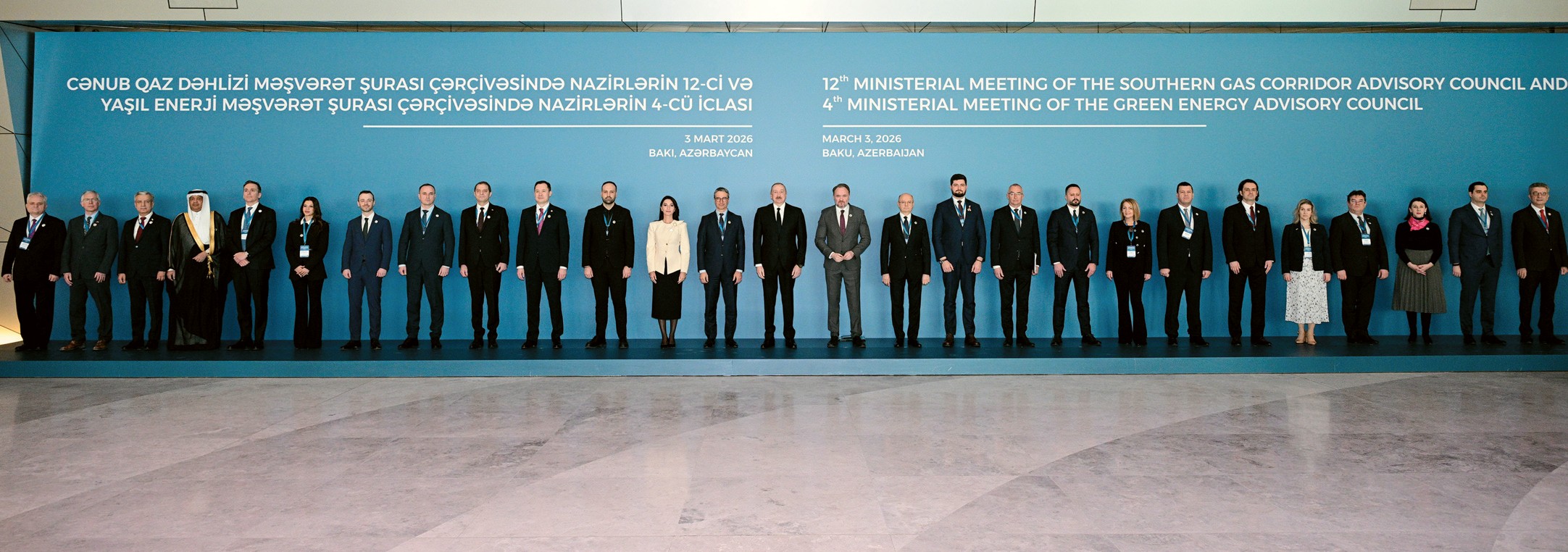
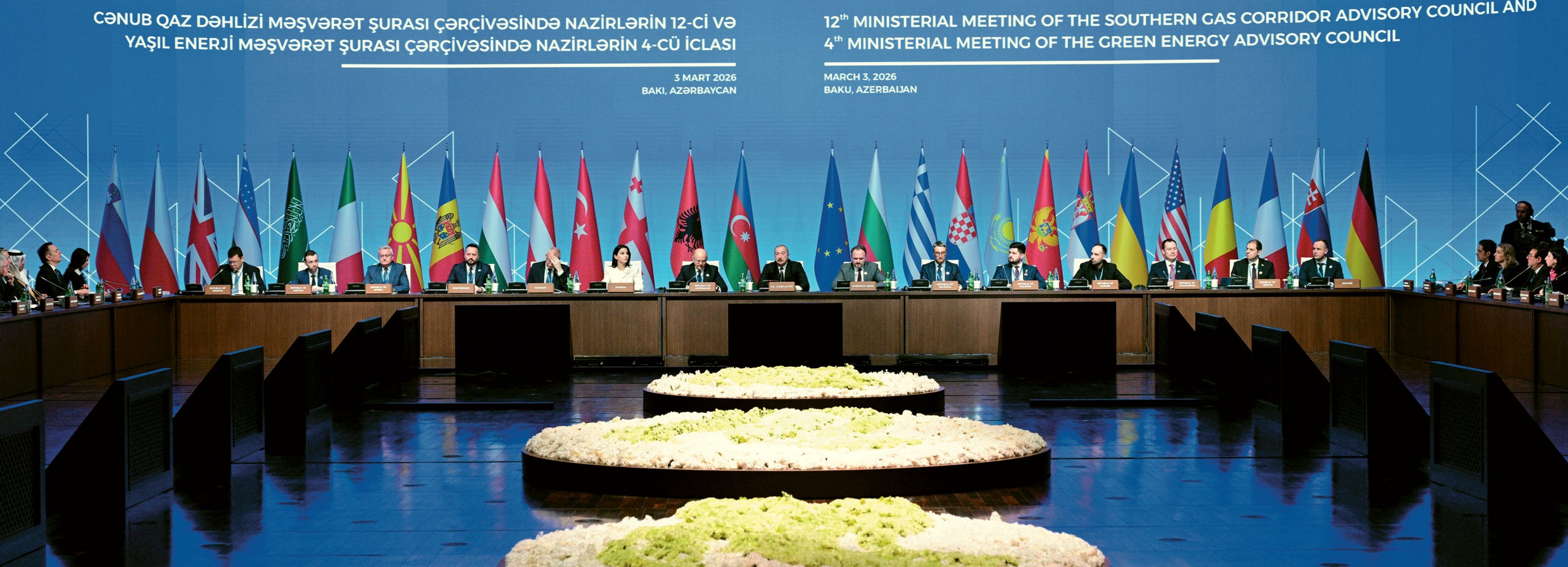
The 12th Ministerial Meeting of the Southern Gas Corridor Consultative Council and the 4th Meeting on Green Energy were held in Baku on 3 March.
Traditionally, these meetings, chaired by the President of Azerbaijan, Ilham Aliyev, bring together representatives of the governments of the countries participating in the projects, as well as heads of international energy companies and financial institutions.
New gas markets
The President of Azerbaijan began his address by clearly assessing the progress made within the framework of the Southern Gas Corridor project in the year since the previous meeting of the Consultative Council. The results are undeniably impressive and are largely due to the country's efforts.
"Last time, I spoke to this audience and made it clear that we are supplying gas to 12 countries. Azerbaijani gas is now available to consumers in 16 countries. Azerbaijan is unequivocally number one in the world when it comes to supplying pipeline gas to other countries. As I said last time, we are expanding the geography of gas supplies, and you can see that we have already achieved this," said Ilham Aliyev.
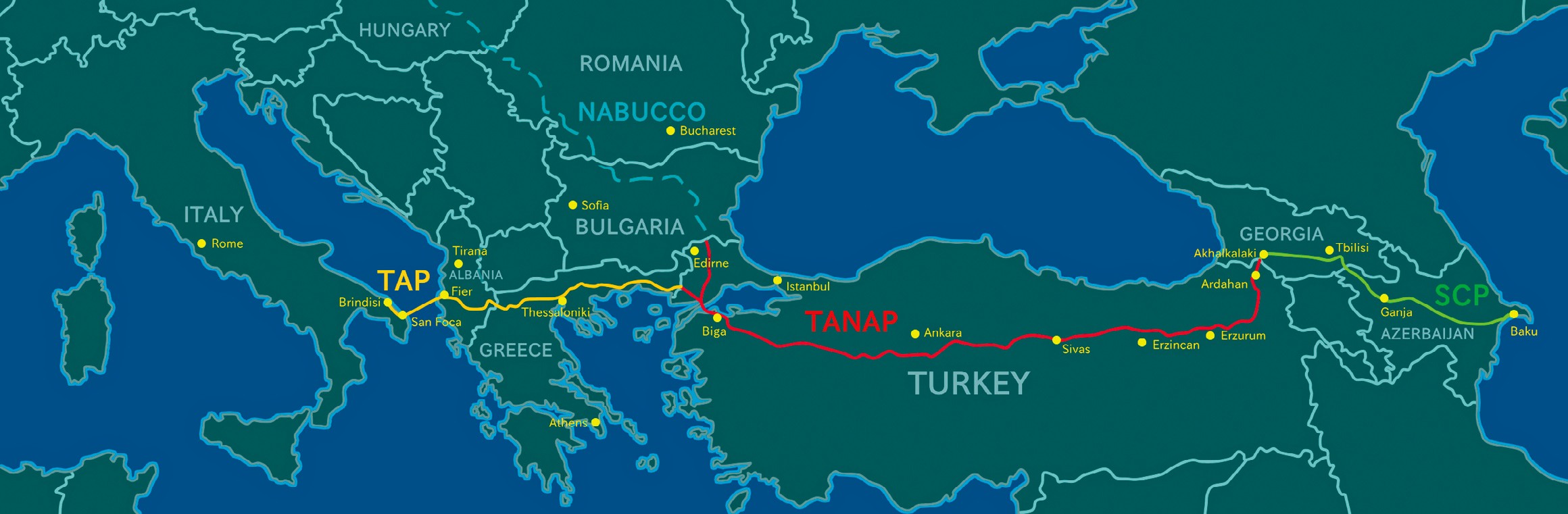
It is clear that Azerbaijani gas has now reached beyond the European market. In particular, gas supplies to Syria were organised for the first time to address the energy deficit in that country. The head of state confirmed that the export of 1.5 billion cubic metres of gas was crucial in stabilising the energy supply, a move that was vital for both the population and the smooth running of enterprises and the economy.
Ilham Aliyev was clear in emphasising the significance of diversification, stressing its importance not only for consumer countries but also for energy producers.
"We understand the challenges faced by gas-importing countries in terms of diversification. Diversification is a vital factor for producers. It is clear that there is positive momentum in the cooperation between the producer (Azerbaijan), transit countries and consumers. I know that our unity, shared interests and mutual benefits are the main reason for our success over the past ten years," he stated.
Noting that with the start of gas transit to Germany and Austria, ten EU member states are now receiving Azerbaijani gas, the President confirmed Azerbaijan’s intention to continue expanding its presence in the European energy market.
“In the coming years, taking into account the production of new volumes of gas from Azerbaijani fields, we can increase supply volumes. But to do this, we need to consider expanding the existing gas transmission infrastructure, as the Southern Gas Corridor is already operating at full capacity today,” the head of state noted.
In this context, Ilham Aliyev made an interesting statement, emphasising that the country is currently seeking other ways to expand infrastructure and develop interconnections, “so that we can supply as much as the market requires, and perhaps even more, given the current global situation. And so that we can export as much as we are capable of.”
As for increasing gas volumes, production from deep-lying reserves in the Azeri-Chirag-Guneshli block is planned for this year. Full-scale development of the Absheron field is expected in two to three years, which will triple its output. Also in the pipeline, as part of the second phase, is gas production from Umid. Work is due to begin at the Shahdeniz field in 2028.
"All these gas production projects will enable us to produce an additional 10 to 15 billion cubic metres of gas at maximum production levels. And, as I said earlier, to achieve this we will need new markets and the expansion of the existing pipeline system. And, of course, we need to think about how to diversify our gas distribution network," said Ilham Aliyev.
In summary, the President of Azerbaijan once again emphasised the need for a pragmatic approach to the global energy agenda.
According to him, in the context of rising energy consumption and climate challenges, it is important not to pit traditional energy sources against renewables, but to ensure their balanced development.
"We cannot ignore fossil fuels. To ignore fossil fuels is to live in a world of illusions. (…) I believe we should proceed as follows: a combination of fossil fuels and renewable energy sources, in particular recognising the efforts of countries such as Azerbaijan, which possesses fossil fuel reserves sufficient for itself and its neighbours for a hundred years, yet nevertheless invests billions in renewable energy," he noted.
Indeed, such a pragmatic and balanced approach, combining traditional energy resources with the development of renewable energy, is today becoming one of the key factors in strengthening energy security and sustainable development at both regional and global levels.
Strategic partnership
It emerged from European Commissioner Dan Jørgensen’s speech that, since the start of commercial supplies via the Trans-Adriatic Pipeline, Azerbaijan has earned around €24 billion from natural gas exports to EU countries. The volume of supplies has exceeded 50 billion cubic metres.
There was also discussion of future plans, primarily related to reducing Europe’s dependence on Russian gas, as well as the importance of cooperation with Azerbaijan in this regard.
As it turned out, thanks to Caspian (Azerbaijani) gas, Russia’s share of total EU imports fell from 45% in 2022 to 12% in 2025. ‘These figures will continue to decline. In less than two years, the remaining 35 billion cubic metres of Russian gas that we still import annually will disappear from our markets,” Jørgensen is confident.
According to European Commission estimates, the €10 billion a year that the EU spends on this gas will no longer go towards funding Russia and its military objectives.
“We are continuing to reduce our dependence on Russian gas, and the importance of our partnership with Azerbaijan will grow, benefiting Europe’s energy security and Azerbaijan’s economy. My visit today is an opportunity to make this clear. Gas supplies from Azerbaijan will remain a key pillar of the EU’s energy security, and the European Union will remain a reliable buyer of Azerbaijani gas for the foreseeable future, supporting structural reforms in Azerbaijan’s economy,” said Jørgensen.
He also announced a high-level energy dialogue between the EU and Baku, at which the Azerbaijani side will be represented by Energy Minister Parviz Shahbazov.
It is not difficult to guess the agenda of the upcoming event following the European Commissioner’s hints: “It is absolutely clear that the gas we can receive from Azerbaijan is extremely important to us. We are very pleased with this cooperation. There is potential to increase imports of Azerbaijani gas in the future, as well as significant opportunities to expand cooperation, including in the field of renewable energy.”
Focus on the long term
The issue of financing the expansion of the Southern Gas Corridor remains on the agenda. This time, it was raised by Azerbaijan’s Minister of Energy, Parviz Shahbazov, who began his speech by listing the achievements of recent years. Thus, in 2025, natural gas supplies from Azerbaijan to Europe increased by 56% compared to 2021, the capacity of the Trans-Adriatic Pipeline was increased by 1.2 billion cubic metres per year, and the geography of supplies expanded from South-Eastern Europe to the Middle East and Central Europe. Furthermore, XRG—a subsidiary of ADNOC from the UAE—became a shareholder in the Southern Gas Corridor.
Of the total volume of Azerbaijani gas exports last year, 25.2 billion cubic metres—around 51%—went to the European market, whilst the combined share of Türkiye, Georgia and Syria stood at 49%. In the coming years, Baku expects to increase production: between 2026 and 2029, four new hydrocarbon production projects are scheduled to come on stream.
“Azerbaijan is a reliable supplier to Europe, and demand for our gas remains high. However, institutional and financial support from the demand side for expansion is still insufficient,” he said.
Baku has firmly reminded Brussels of a simple fact: if Europe wants more gas, it will not only have to invest in infrastructure in Azerbaijan. Shahbazov asserts that a definitive long-term policy framework and specific financial mechanisms are imperative for a substantial increase in supplies.
Azerbaijan has demanded the European Union return to the practice of long-term gas supply contracts. The surge in prices for natural gas, against the backdrop of escalating tensions in the Middle East, further supports this argument. The price of gas futures on the TTF hub in the Netherlands has hit $830 per thousand cubic metres, reaching its highest level since January 2023.
It is clear that this price rise was caused by several factors. Qatar, which supplies around 20% of the global LNG market, has announced the suspension of liquefied natural gas production due to drone attacks. Shipping problems in the Strait of Hormuz are also making fuel transport difficult.
The conflict with Iran continues, creating uncertainty in the energy markets. Analysts are clear: if the standoff drags on, Europe is in for a repeat of the price shock seen in spring 2022, when gas prices rocketed to nearly $3,900 per thousand cubic metres.
“The market is gradually realising that supply disruptions across all energy sources will be prolonged,” noted Rabobank strategist Florence Schmidt. “We believe they will last for around three months.”
It seems the energy market has once again decided to remind European policymakers that the energy transition is an important process, but, as practice shows, far from always a quick one and certainly not always predictable.
Azerbaijan's arguments in favour of long-term contracts and the need to continue investing in fossil fuels and gas transmission infrastructure are resonating strongly with the European market. In times of geopolitical turbulence, such decisions are crucial for ensuring predictability of supplies and price stability.
It is clear that a number of European countries are already banking on precisely this approach. Bulgaria is a reliable partner. Despite the current volatility in energy markets, we continue to rely on long-term contracts.
At the Second Nuclear Energy Summit in Paris, Acting Energy Minister Traiko Traikov delivered a bold address, addressing the impact of the Middle East crisis on energy markets with unparalleled directness. Traikov was clear: Bulgaria is monitoring developments closely. They are keeping a close eye on the potential impact on energy exports and commodity prices. He was unequivocal in his assessment of the risks of a prolonged blockade of the Strait of Hormuz, through which 20% of the world's crude oil supplies pass. He was spot on in his prediction that this is already putting significant pressure on international markets and leading to price rises.
Bulgaria relies on diversified sources of natural gas, including a long-term contract with the Azerbaijani state-owned company SOCAR, as well as liquefied natural gas from the US via the terminal in Alexandroupolis.
Taikov stated that supplies under the contract with Azerbaijan cover almost 40% of Bulgaria's consumption and are offered at favourable prices, linked to oil indices over a longer period. This limits the impact of short-term price fluctuations.
In the face of ongoing geopolitical instability, the importance of Azerbaijani gas for Europe is clear: it is both a source of energy and a tool for predictability. Baku is clear: further increases in exports will only be achieved through investments in infrastructure and long-term commitments from buyers.
In fact, Azerbaijan is today confirming its status as one of the few suppliers capable of simultaneously ensuring Europe’s energy security and maintaining a balance between traditional energy and the energy transition.
RECOMMEND:
 137
137

