

FASTER THAN PHILEAS FOGG
What you need to know for a round-the-world trip in the 21st century


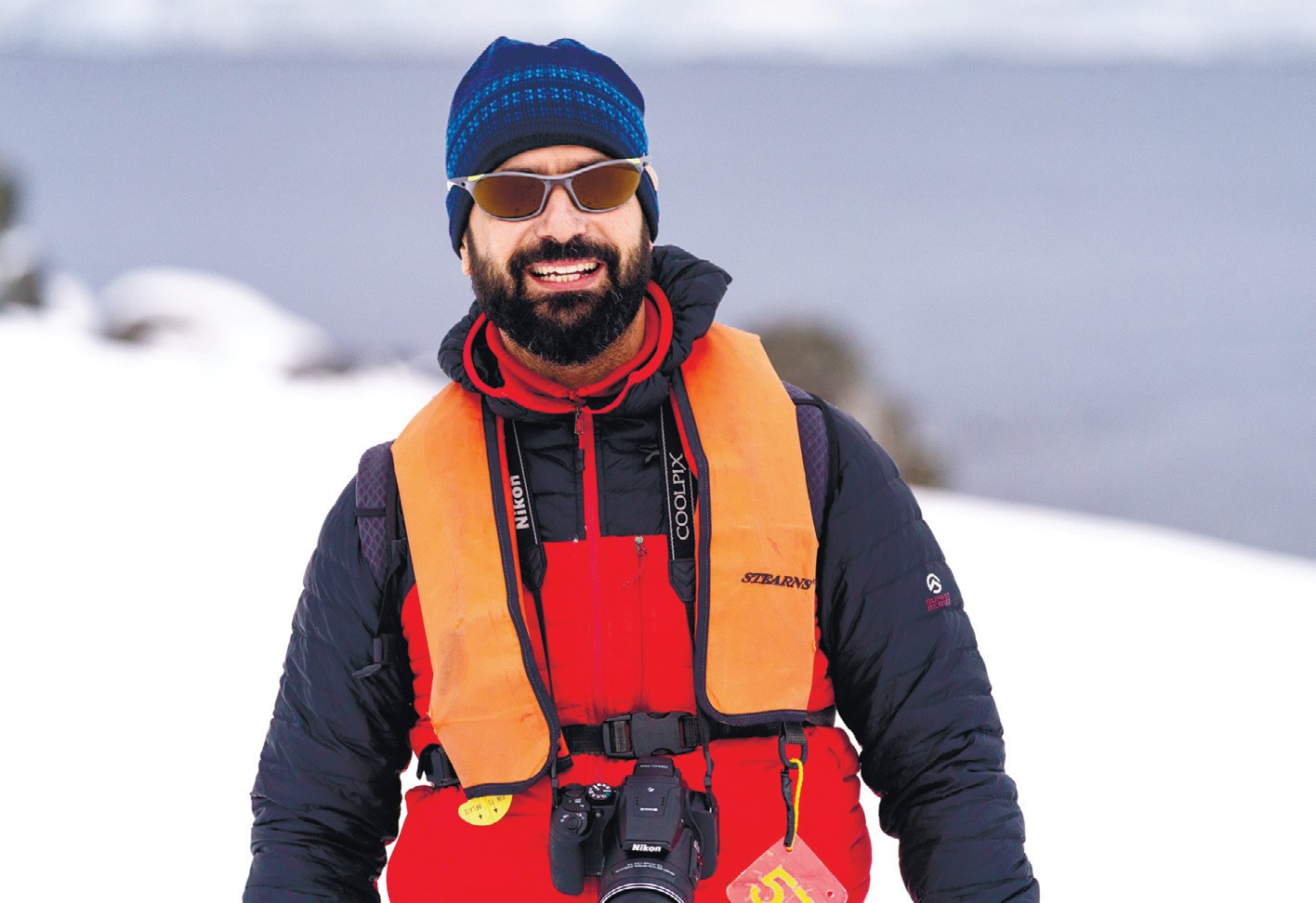
Author: Elchin HUSEYNOV
Phileas Fogg, the protagonist of Jules Verne’s novel, made a wager to travel around the world in 80 days. Crossing oceans and continents to return to London within the agreed time seemed nearly impossible. Yet today, planes can cover the same distance in a matter of hours, and online services can help plan the route in an evening. The world appears compact, borders feel conditional, and distances are merely a matter of flight schedules. But has travelling around the world truly become easier, and what does it actually take?
Who has travelled the world?
It is one thing to read about circumnavigation in a 19th-century novel, and quite another to witness real travellers who have proven this is possible in practice. American Cassandra De Pecol visited all 193 UN-recognised countries between 2015 and 2017, taking 558 days and setting several records—including the “fastest journey to all sovereign nations” according to Guinness World Records. Her project was backed by sponsors, and the entire route was documented.
Another American, Michael Zervos, set a record in 2025 for the fastest visit to 195 sovereign states, completing it in 498 days.
Graham Hughes from the United Kingdom is considered the first person to visit 201 countries without taking a single flight—using only land and sea transport. The journey, which earned him a place in the Guinness World Records, lasted 1,426 days. Over roughly four years, the Briton covered nearly 256,000 kilometres.
Azerbaijani traveller Farid Novruzi circled the Earth in 158 days during the coronavirus pandemic in 2021, visiting all six continents and using a mix of transport: car, bicycle, foot and sailing vessel. Despite lockdowns, closed borders and extreme conditions—including crossing the Drake Passage to Antarctica—he completed the route. At the time, Farid had set himself the goal of beating his own record and completing a round-the-world journey in just 70 days.
As of 2025, around 400 travellers have visited every country on the planet. Among them is Lexie Alford, one of the youngest women (aged 21) to have “conquered” all 196 countries in the world. The youngest man in history to visit every country, taking five years to do so, is British entrepreneur James Asquith (aged 24).
How much time and money does it take to travel the world?
How long it takes to travel around the world depends on the style of the trip and its objectives. Although the hero of Jules Verne aimed to do it in 80 days two centuries ago, in reality it would have required months or even years. Travellers back then moved by steamship, train and horse, which affected both speed and route.
Today, it is possible to circle the globe much faster. Some explorers, aiming to set a record, visit all the world’s countries in just over a year. For a typical tourist who wants a more comfortable round-the-world trip, such a project might take anywhere from several months to a year. This includes convenient flights, accommodation, visas and health considerations. The classic approach is to visit several continents over two to three months with a pre-planned itinerary and tickets.
There is also the option of a circumnavigation without the goal of setting a record, where the journey is built around personal interests, cities and cultures. Such a route can take from six months to several years if you make stops and explore countries in greater depth without rushing.
Today, a trip around the world can be arranged in several ways, each with its own advantages, challenges and—naturally—price tag. The main task is to choose a format that suits your goals, time frame and budget.
The first and most popular format is the RTW ticket (Round the World). Sold by major airline alliances such as Star Alliance, SkyTeam and Oneworld, it allows you to buy a single ticket covering multiple flights across the globe. Typically, such tickets offer between 12 and 16 stopovers, and travel must be in one consistent direction—either east to west or west to east. Routes are built through key countries and continents: Europe, Asia, Oceania, North America and South America, and sometimes even Africa. The RTW ticket is convenient because it provides a logical structure for the trip and helps optimise costs, especially with a well‑thought‑out route. Prices for economy class with strict fare conditions can start from $4,500, while business class starts from $12,000. The price depends on class, route, number of continents and distance. Ultimately, the real cost of a round‑the‑world journey comes down to several key expenses (flights, accommodation, meals, visas, ground transport), and these are what make the trip both expensive and substantial.
In some countries, there are also pre‑arranged round‑the‑world tours offered by travel operators. These are based on fixed dates and itineraries, and include flights and often some accommodation. Such tours can last from a few weeks to several months. Their main advantage is that the organisers handle all the logistics and coordination, sparing the traveller the need to plan a complex route independently. The downside is the high price: such packages can start at $20,000–50,000 per person, depending on the level of comfort, number of countries and time spent travelling.
Self‑planned itineraries offer maximum freedom. Travellers can combine RTW tickets, individual flights, ground transport and cruises. This option requires careful planning: visa requirements, flight seasonality, connection times and logistics between countries all need to be considered. This format allows for unconventional destinations that are not part of the classic airline alliance routes, and enables deeper exploration of countries.
Sea cruises around the world are another format. Typically lasting several months, they involve visiting numerous ports across different continents. This option suits those who want to travel without constantly switching modes of transport. The main drawbacks are the high cost, limited flexibility of the itinerary, and the extended time spent at each stage of the journey.
Planning a route around the world
When planning a round‑the‑world trip, it is important to recognise that there are several logical ways to connect continents and countries to create a convenient and realistic route. The first option is the “classic continental” route. It begins in Europe—for instance, in London or Paris—then moves on to Asia: Singapore, Bangkok, Tokyo, Seoul. Next, the journey continues to Australia and New Zealand, then across the Pacific to North America: Los Angeles, New York, Miami. From there, the route returns via South America: Rio de Janeiro, Buenos Aires, Santiago—and completes the circle in Europe. Such an itinerary covers all the main continents and allows you to experience both major cities and diverse cultures.
The second option goes across the Pacific. The starting point could be in the United States: Los Angeles or San Francisco, followed by a flight to Oceania: Sydney, Wellington, the Fiji Islands, then Asia: Singapore, Hong Kong, Tokyo, then Europe: London, Paris, Rome, and back to the US. This route is convenient for travellers who prefer to cross the Pacific first, then Asia, and close the loop via Europe.
The third option focuses on megacities and cultural hubs. It includes key cities for business, history and art: London, Paris, Moscow, Dubai, Singapore, Tokyo, New York, São Paulo, Cape Town, Sydney. It suits those who want to see the “world’s calling cards” within a limited time.
If the dream of a round‑the‑world journey still lives in you, there are now real‑world offers close to the “80 days around the world” concept. One option is round‑the‑world flight tickets from Travel Nation (a British travel agency specialising in planning round‑the‑world and complex itineraries). In roughly 80 days, you can fly to around nine countries, with prices starting from $25,000 per person. This covers only the flights, with the route and dates tailored individually.
For those who love luxury and trains, Railbookers offers the Around the World by Luxury Train tour, lasting 60 days. This opulent journey costs $125,000 and spans four continents and nine countries aboard legendary trains: the Rocky Mountaineer (Canada), the Venice Simplon‑Orient‑Express (Europe), the Maharajas’ Express (India), and the Eastern & Oriental Express (Southeast Asia). The trip includes stops in more than 20 cities, five‑star hotel accommodation, meals and excursions at key locations.
Sea travel enthusiasts might opt for the MSC Magnifica’s world cruise. The route lasts around 119 days, with calls at ports in over 30 countries across the globe. Prices are quoted individually by the agency.
There are also group tours, for instance from Contiki, aimed at young and active travellers. These cover several countries and include accommodation, some meals and flights—with an estimated cost of around $20,000 on average. For elite travellers, there are private round‑the‑world tours by plane offered by Mayel. A sample itinerary takes nearly 22 days and includes some of the world’s most interesting spots, from Antarctica to Easter Island, with flights, accommodation and VIP service included. Pricing is available on request.
Everything you need to know before departure
A round‑the‑world journey is not only a dream but also a project that demands thorough preparation. Even with a perfectly planned route, complications can arise and should be anticipated.
Today’s traveller faces the need to obtain visas for multiple countries, and entry rules can change. Some visas require advance application weeks or months ahead, and the process can be costly in certain countries. For citizens of some nations, particularly in Asia or Africa, the list of countries with visa‑free access is shorter, which complicates route planning.
Long‑haul flights, changes in climate and time zones, food and water in different countries—all of this affects health. Before travelling, it is essential to have medical insurance that covers not only ordinary illnesses but also emergency evacuation. Some countries require specific vaccinations for entry, such as against yellow fever or meningitis.
Despite RTW tickets and organised tours, flight delays, cancellations or schedule changes can occur. In some regions, finding local transport can be difficult, especially if the itinerary includes sparsely populated islands or remote countries. This calls for flexibility and built‑in buffer time.
Occasionally, conflicts, civil unrest, closed borders or unstable political situations may force a change of route. Natural obstacles are also possible: seasonal hurricanes, monsoons, or extreme heat and cold, which can make visiting certain regions unsafe at particular times of the year.
A round‑the‑world trip therefore requires a substantial budget. It is wise to set aside reserves for unforeseen expenses: replacement tickets, emergency flights, medical services or lost luggage. Insufficient financial preparation can turn a dream into a stressful ordeal.
To minimise risks, experienced travellers recommend: carefully planning the route with extra time built in, having a contingency budget, checking visa and medical requirements in advance, arranging insurance, and monitoring the political and climatic situation in the countries you intend to visit. It is also useful to have contacts for local representations and to be ready to adjust the itinerary at any moment.
Travelling the world has become easier than ever before in history, but it remains a serious undertaking that requires planning and considerable resources. Ultimately, a round‑the‑world journey is a balance of dream, logistics, finances and flexibility. With these factors in mind, the plan becomes not just a romantic adventure but a realistic project that can be successfully accomplished with good preparation and attention to detail.
RECOMMEND:
 129
129

