

STAKES HIGHER THAN EVER
Who will be Hungary's choice: the conservative Fidesz or the liberal Tisza?
Author: Natig NAZIMOGHLU
In the period leading up to the upcoming parliamentary elections in Hungary on 12 April, the rivalry between the primary political parties—the ruling Fidesz–Hungarian Civic Alliance and the opposition Tisza (Respect and Freedom Party)—has escalated further. This is not simply a victory for one party and a defeat for the other. The future path of Hungary, in terms of values and geopolitics, is to be decided. The path selected will also have a significant impact on the overall prospects for the civilisational development of Europe as a whole.
Orbán, Magyar, Brussels…
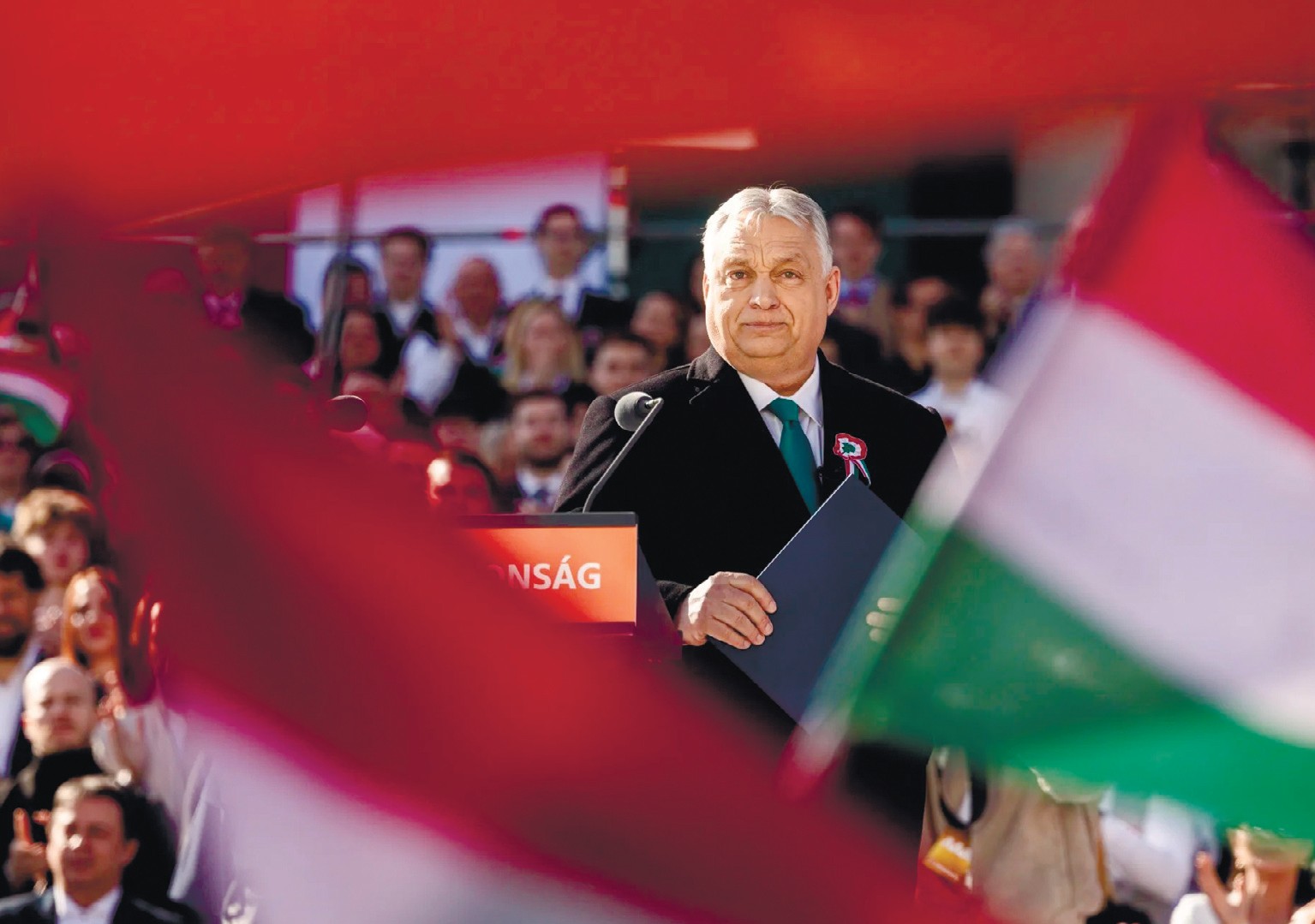
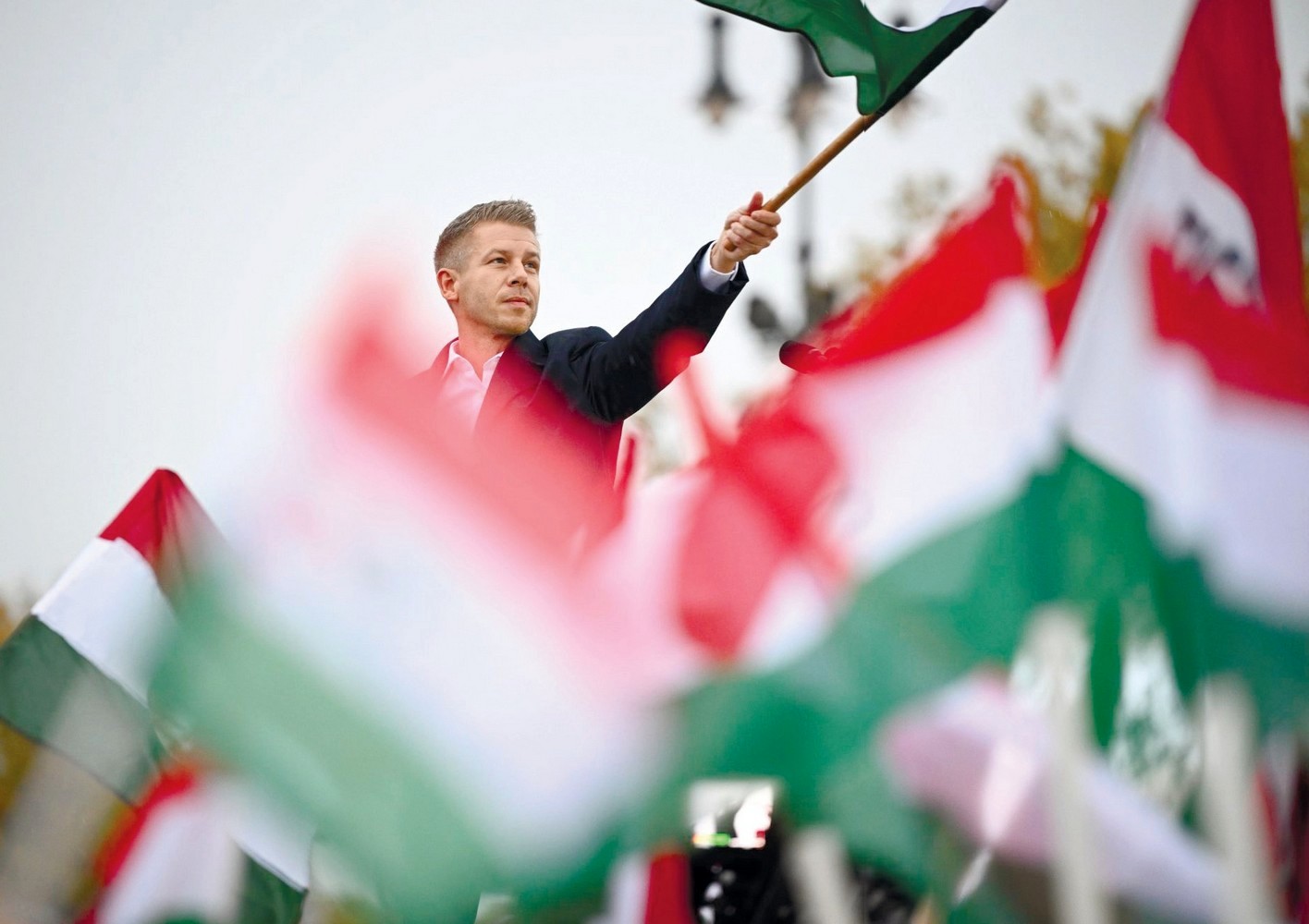
The forces led by the incumbent Prime Minister, Viktor Orbán, who has been at the helm of Hungary for 16 years, and the opposition leader, Péter Magyar, have clashed in a battle for survival. According to the majority of opinion polls, Tisza is currently leading the election race. However, this does not prevent many Hungarians, not to mention political experts, from believing that victory will most likely go to Orbán's party. The latest developments in the electoral race indicate that Tisza has reached its peak level of support in recent months, whilst Fidesz, which has been steadily stepping up its campaign as the race nears its conclusion, has a chance to fully consolidate its traditional, right-wing conservative electorate in the days remaining before the election.
Mass demonstrations by supporters of both the government and the opposition are taking place across Hungary. However, the outcome of the upcoming vote will be determined by a combination of domestic political activity and external pressure exerted by actors with a stake in the Hungarian people's choice. Of these, the European Union is particularly noteworthy.
Since Fidesz assumed power in Hungary, the EU has been critical of the party and its leader. In relation to 'systematic threats to the rule of law, the independence of the judiciary, and violations of personal freedoms'. In 2022, the European Parliament refused to recognise Hungary as a 'full democracy', instead describing its system of government as a 'hybrid regime of electoral autocracy'. Among the factors causing Brussels' dissatisfaction, a prominent place is occupied by the Orbán government's unwavering course—even amidst the war in Ukraine—towards developing close partnerships and cooperation with Russia, primarily in the energy sector.
As the Hungarian election campaign enters its decisive phase, intelligence services of key EU countries are circulating information about Moscow's support for the Orbán government. This includes the use of social media to create and manage online communities, or "armies of trolls", as they are sometimes referred to. There have even been reports of a staged assassination attempt on Orbán being prepared by the Russian security services, with the aim of boosting his support among voters.
It is also noteworthy to mention a report by the British publication the Financial Times regarding the Kremlin's approval of a disinformation campaign in favour of Fidesz. It is claimed that the objective of the campaign is to portray Orbán as a 'strong leader' and his main rival, Péter Magyar, as a 'puppet of Brussels'.
Mátyás himself has also spoken out about Russian interference in the Hungarian elections. However, Fidesz leaders have rejected such claims. Máté Kocsis, the leader of the Fidesz parliamentary group, dismissed the accusations as 'false', emphasising that European intelligence agencies 'have no concrete evidence on this matter'.
Russia, for its part, also denies reports of its interference in the Hungarian election process. It is noteworthy that both Moscow and Budapest view Brussels and Kiev as the organisers of such an information campaign. This can be seen as one of the ambiguous manifestations of the attitude towards the Russian-Ukrainian war that has taken shape in Europe, with Hungary standing almost alone (apart from Slovakia, which has shown solidarity) in opposing Brussels' unconditional support for Kiev.
At the EU summit held in Brussels on 19 March, Orbán confirmed Hungary's veto on the provision of a €90 billion loan to Ukraine as military aid. Budapest has issued a warning that it will block the provision of aid until Kiev restores the transit of Russian oil through Ukrainian territory via the Druzhba pipeline. In response, the European Commission has postponed the approval of a loan plan for Hungary under the Security Action for Europe programme, which aims to strengthen the defence capabilities of EU countries.
The fundamental cause of the discord between Brussels and Budapest—or rather, the Orbán government, which EU leaders are eager to see replaced following the upcoming elections—is an acute ideological rift. A rift has emerged between traditionalist conservatives and modernist liberals, the outcome of which will determine the future shape of European civilisation. Furthermore, the fault line is now even clearer given the overt and covert presence in this intra-European drama of a powerful transatlantic power—the US.
The right, Trump and the fate of civilisation
US President Donald Trump has publicly expressed his support for Viktor Orbán, encouraging Hungarians to 'participate in the electoral process' by voting for the incumbent prime minister. He characterises Orbán as 'a truly strong and powerful leader with a proven track record of achieving significant outcomes'.
Viktor works tirelessly to protect Hungary, ensure its economic growth, create jobs, develop trade, combat illegal immigration and uphold law and order. The administration has overseen a significant enhancement in the relationship between the two nations, with notable success, largely attributable to Prime Minister Orbán's leadership," Trump stated. He added: "I was proud to support Viktor during his re-election in 2022, and it is an honour for me to do so again."
In essence, Trump, who is openly and vocally against neoliberalism, is once again making it clear that conservative leaders such as Orbán are much closer to his own political standpoint than the leaders of most European countries and the EU itself. It is clear that Trump is prepared to continue engaging with Orbán, including on the issue of Europe's return to its civilisational identity, which is of fateful importance for the continent.
The current White House administration's support for Orbán's government was also evident during the Conservative Political Action Conference in Budapest. This event, regarded as a gathering of the American right associated with the MAGA movement – inspired by Trump himself – was already the fifth of its kind. The host is invariably the Centre for Fundamental Rights, which is funded by the Hungarian state. In a video message to the participants of the current conference, which included right-wing conservative political figures from Europe as is customary, the US President reaffirmed his support for the Hungarian leader.
In his speech, Orbán outlined his vision for modern European conservatism, positioning himself as a counterpoint to the 'progressive globalists' within the Western elite. Orbán paid tribute to Trump for his return to the White House, citing the strengthening of gender and social differences, the embrace of Christianity with pride, and the end of progressive censorship. He also highlighted the ongoing right-wing realignment on a global scale. He noted that the United States is the epicentre, with Hungary acting as Europe's outpost. It is evident that "the EU institutions represent the last bastions of the progressive left worldwide, where they have become firmly established." Orbán has stated that Hungary has been the strongest bastion of national-conservative forces in the European Union for 16 years. Therefore, the most significant victory for the progressives would be the destruction of this bastion. On this basis, Orbán declared, "The stakes are higher than ever: if we win here, we will not only defend Hungary, but also break down the progressives' gates in Brussels."
The visit of US Vice-President J.D. Vance to Budapest, scheduled for 7–8 April, is also set to demonstrate US support for the current Hungarian government. The State Department has already suggested that the US and Hungary must cooperate to 'save Europe from threats to Western civilisation'.
The upcoming Hungarian elections will therefore be of great interest, not only in terms of the outcome and the resulting political landscape, but also in terms of the reactions of international players such as Washington and Brussels. It is important to note that Moscow is also interested in maintaining the current Hungarian leadership's hold on power.
RECOMMEND:
 146
146

