

THE ILLUSION OF ACCESSIBILITY
On the ramps in Baku, which remain invisible barriers for people with disabilities
Author: Kamilla BABAZADE
A modern city is not just a collection of buildings and roads; it is a complex ecosystem, whose effectiveness is increasingly measured by inclusivity. A report by the Office of the Ombudsman of Azerbaijan, based on monitoring the accessibility of Baku's urban environment, has exposed a problematic situation. The Seaside National Park, Fountain Square, and the approaches to the Maiden Tower—sites that should symbolise hospitality and openness—have become exclusion zones for many citizens.
A "friendly" city
The scale of the problem is evident when reviewing the stark statistics. According to the Ministry of Labour and Social Protection, the current registered disability population in Azerbaijan stands at approximately 498,400, including over 43,000 children. These figures represent real individuals whose daily mobility is directly influenced by the friendliness of their city. When we talk about accessibility, we are talking about the fundamental right to freedom of movement, which in our reality often collides with formal building practices.
At present, the scientific approach to this challenge is dictated by global centres of expertise. For instance, the research network C40 Cities, which unites nearly 100 leading megacities worldwide, emphasises in its inclusive planning guidelines that accessibility is not an "add-on" but a foundation for sustainable development. At the Urban Computing Laboratory at Washington University, advanced tools are being developed that use artificial intelligence and satellite image analysis to detect "micro-barriers"—such as missing tactile paving or incorrect ramp incline—even at the design stage.
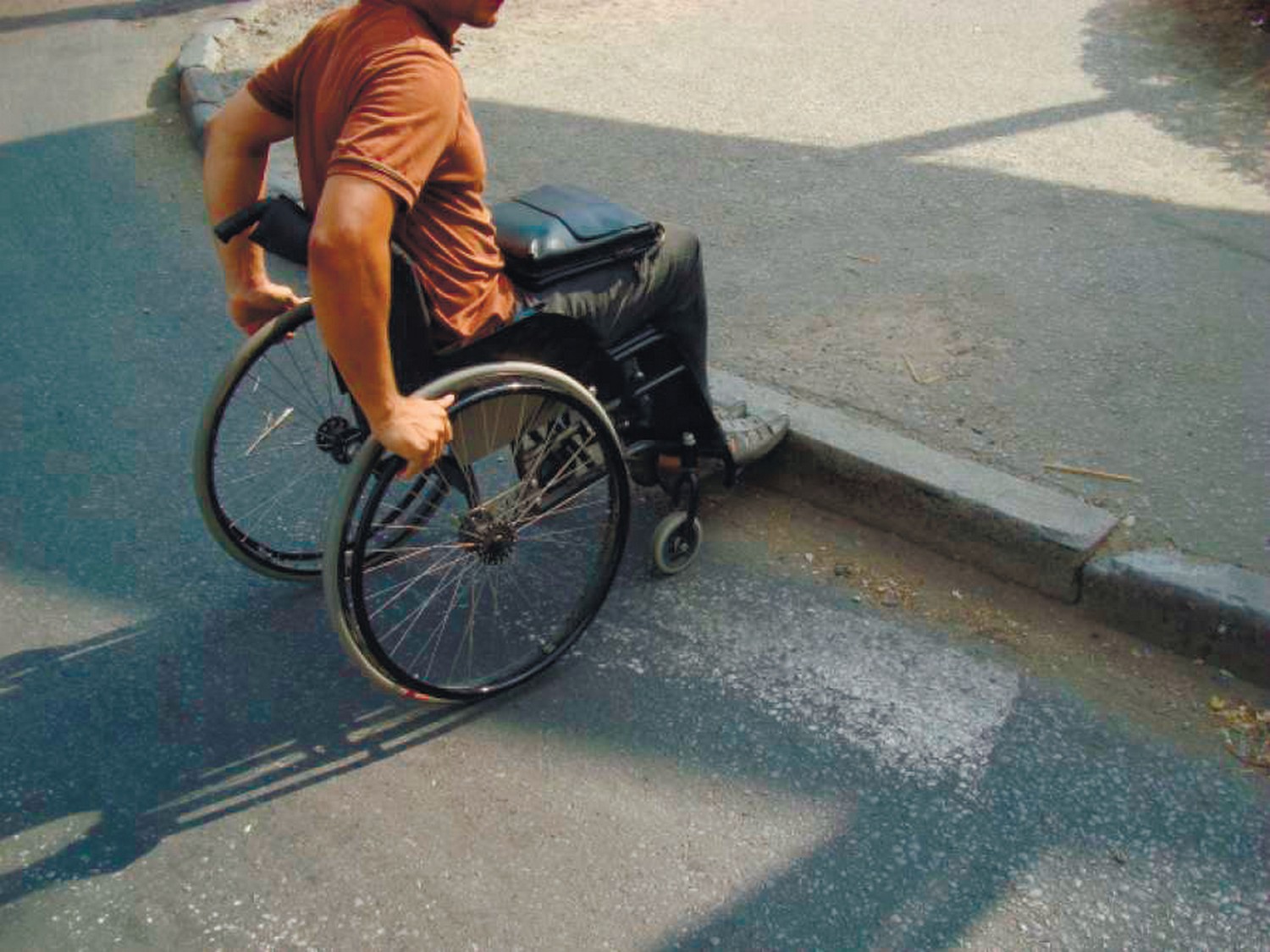
Meanwhile, experts analysing the situation in Baku have identified a fundamental issue: infrastructure supposedly created for people with disabilities is often physically unusable. Ramps installed in underpasses and entrances can sometimes be an "architectural charade" due to steep slopes, slippery marble surfaces, or a lack of necessary turning platforms. As Davud Rahimli, president of the Azerbaijan Union of Disabled Organisations, has noted, many of these constructions are purely formal and symbolic. It is common for builders to disregard construction standards, resulting in accessible environments that are essentially just declarations where laws appear to exist but enforcement mechanisms remain unclear.
If such conditions exist in the very heart of the capital, where administrative and financial resources are concentrated, then it is only natural and worrying to ask: what is the true situation in Azerbaijan's regions? If the country's "showcase" does not pass accessibility tests, then away from the capital's monitoring, the problem risks becoming almost insurmountable for thousands of citizens with mobility impairments or vision and hearing disabilities.
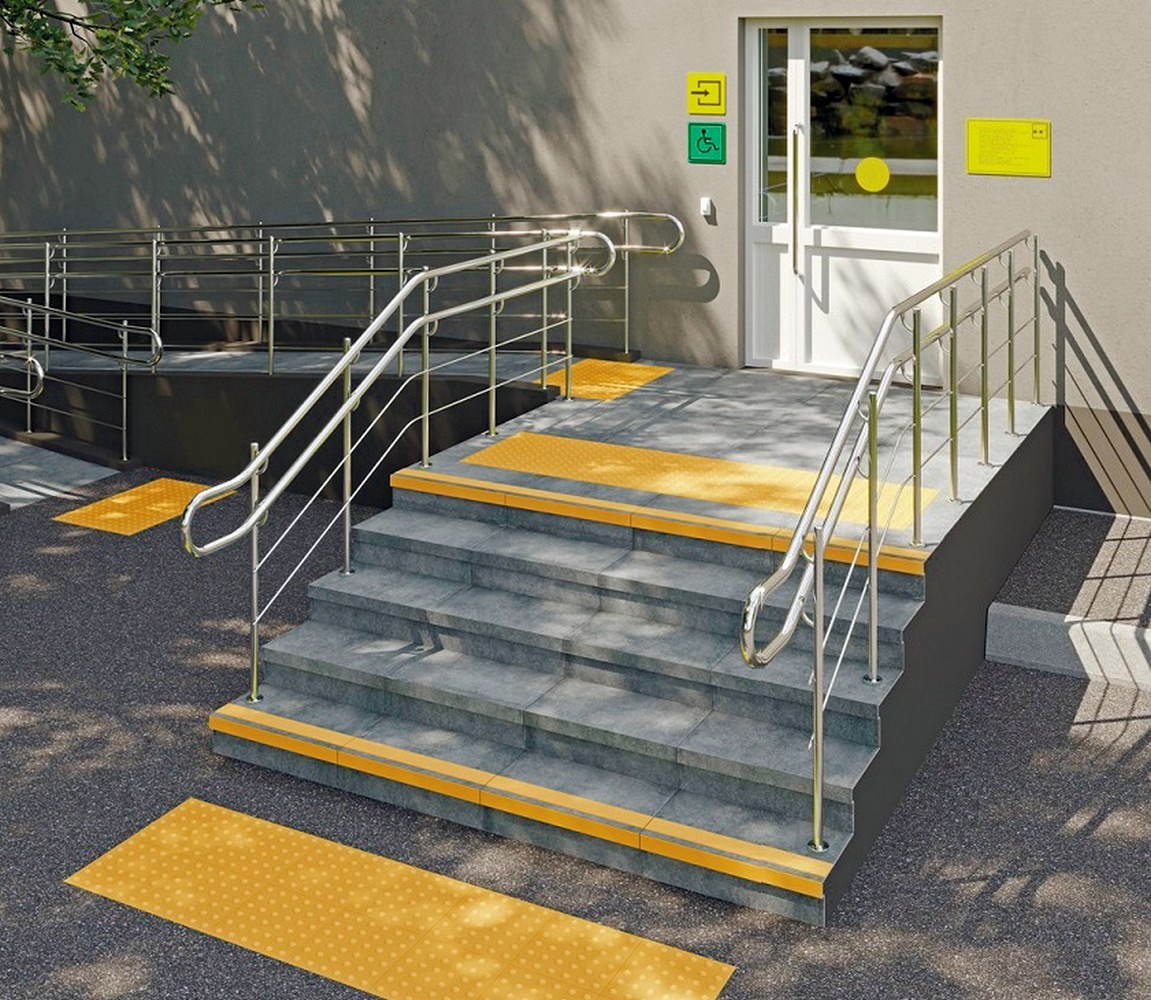
However, barriers extend beyond physical obstacles. For blind and visually impaired people, the city can become a hazardous environment due to the lack of sensory cues. Although tactile paving is present in Baku, it is often installed without consideration for practical logistics, with guiding lines sometimes ending abruptly at poles or trees, or even stopping in the middle of a pavement.
Control is necessary
Drawing on global experience, it is evident that effective solutions are rooted in "sensory" design. Many countries are focusing on integrating smart traffic lights with adaptive auditory signals and information beacons. These work in tandem with smartphones to announce users' locations. In Baku, however, systems are still lacking: even on public transport, automatic stop announcements are often absent or malfunctioning, depriving visually impaired individuals of basic orientation tools.
With regard to ramps, it is important to note that world engineering standards define them not simply as inclined surfaces, but as precisely calculated safety elements. According to international standards—which largely align with Azerbaijan’s Construction Norms and Rules—the optimal ramp slope should be about 5%, or 1:20. In situations of extreme space constraints, a maximum slope of 8%, or 1:12, is permitted but only if accompanied by rest platforms. When the incline exceeds these limits, ramps become dangerous obstacles impossible to use independently. Key requirements also include non-slip surfaces, a minimum width between handrails or side barriers of 900–1000 mm, and mandatory flat turning platforms measuring no less than 1500 by 1500 mm.
Thus, creating an accessible environment is not a matter of charity but one of urban planning. In countries such as Denmark or the Netherlands, accessibility is integrated at the primary design stage of neighbourhoods where tactile paving, metro lifts, and smooth road architecture are standard rather than upgrades. The problem of accessibility is certainly not unique to Azerbaijan—many developing and developed economies face it as well, especially where older building stock demands significant adaptation efforts. The difference lies in approach: countries with advanced experience emphasise strict construction control and mandatory involvement of people with disabilities themselves in acceptance processes.
Following monitoring results from Baku’s urban environment, appeals have been sent to relevant authorities—an important step acknowledging the problem. However, transforming the environment from formal to functional requires shifting from ad hoc fixes to systemic strategy. An independent body for quality control of construction standards must be established where convenience assessments are based not on mere presence of structures but on the real possibility for safe, independent movement by every citizen. Only then will urban architecture cease to be a collection of barriers and truly open itself to all.
RECOMMEND:
 120
120

