

THE ENERGY OF PARTNERSHIP
The Baku–Rome alliance reaches a new level
Author: Nurlana GULIYEVA
In recent years, relations between Azerbaijan and Italy have evolved into one of the most stable and multifaceted forms of cooperation. While the initial bilateral agenda was shaped primarily by energy projects, the partnership between Baku and Rome now encompasses virtually the entire spectrum of strategic areas, including political dialogue, transport connectivity, the defence industry, investment, education and humanitarian cooperation.
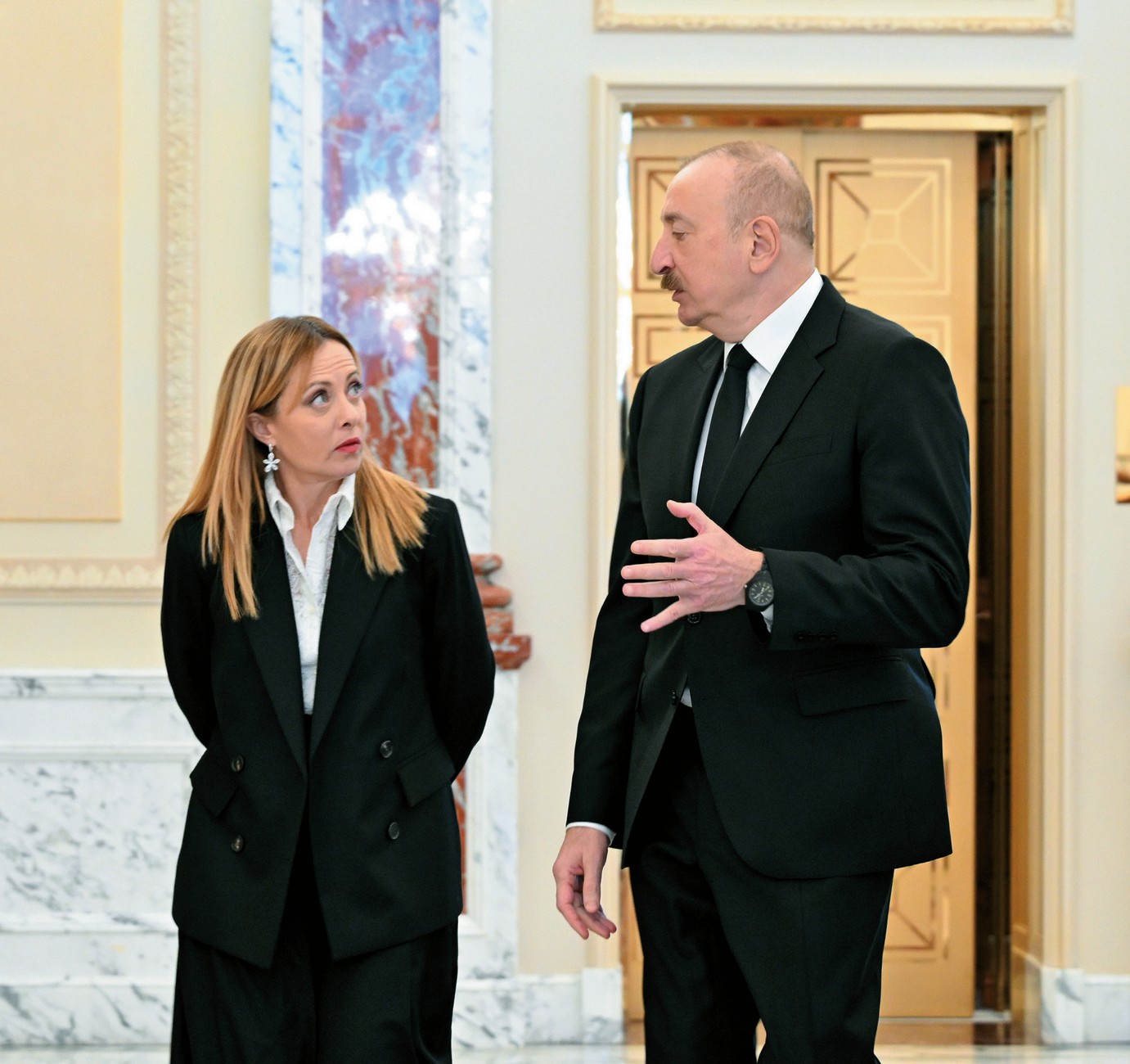
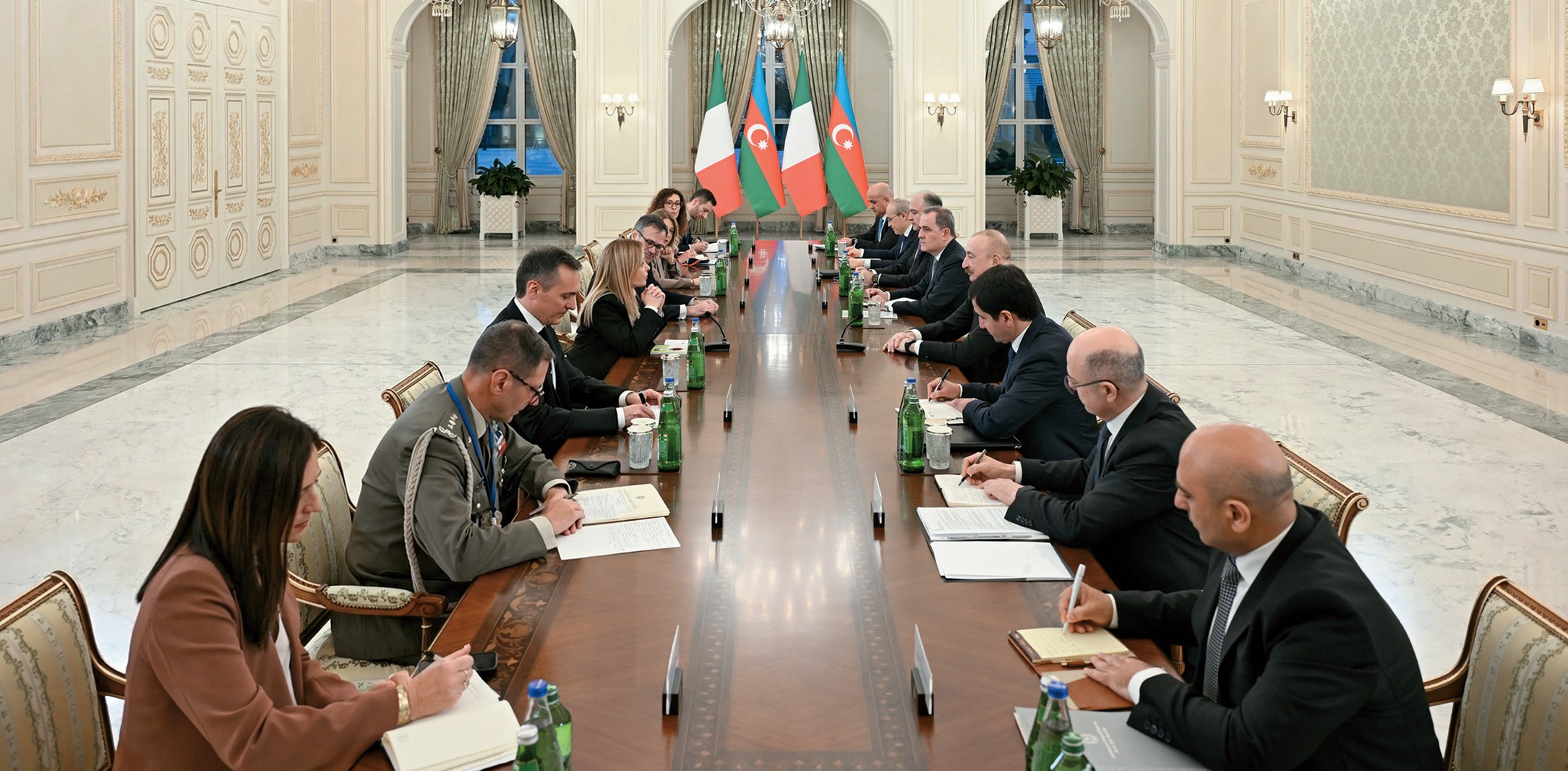
In this context, the visit of Italian Prime Minister Giorgia Meloni to Baku took on particular significance. In essence, this is not just a matter of high-level diplomatic contact; it is also a confirmation of the course towards long-term strategic rapprochement.
Europe's energy axis
The symbolism of the Italian Prime Minister's visit was further highlighted by the fact that Meloni arrived in Azerbaijan immediately after attending a multilateral event in Armenia. In Baku, this was interpreted as a demonstration of Rome's commitment to a balanced approach in the South Caucasus, while simultaneously highlighting the unique nature of its relations with Azerbaijan.
Giorgia Meloni made the following statement prior to the visit: I am currently en route to Azerbaijan, which is another strategic partner for us in terms of both gas and oil supplies. These words reflect Azerbaijan's role in Europe's energy architecture.
The current stage of Azerbaijani-Italian relations did not develop overnight. An important foundation for this was laid by President Ilham Aliyev's visit to Italy in 2020, the regular dialogue between the Azerbaijani leader and Giorgia Meloni, as well as meetings at international forums, including in Copenhagen. The consistency of political contacts is becoming a key factor in expanding cooperation across virtually all areas.
Italy has become Azerbaijan's first strategic partner among the major European powers. This has been facilitated by consistent political dialogue between the leaders of the two countries, as well as shared interests in energy security, regional stability and the development of transport routes between Europe and Asia.
During a joint press conference in Baku, President Ilham Aliyev highlighted the following points: "Italy is Azerbaijan's primary trading partner. Last year, our trade turnover amounted to almost $12 billion. Azerbaijan is the second-largest supplier of oil to Italy, and also the second-largest supplier of gas. These figures are particularly significant against the backdrop of the ongoing transformation of the European energy market following the outbreak of the Russia-Ukraine war.
The TAP pipeline supplies Italy with between 8 and 10 billion cubic metres of gas per year, accounting for 16–18% of the country's gas imports. In the oil sector, Azerbaijan's share of Italian purchases has remained stable at 12–16%, making Baku one of the key suppliers of crude to Mediterranean refineries. The TAP plays a pivotal role in facilitating the supply of Azerbaijani gas to the Italian market and beyond, positioning Italy as a crucial hub for the distribution of gas throughout Southern Europe.
Ilham Aliyev separately noted the need to further expand the supply infrastructure: "To this end, it is naturally necessary to expand the TAP project, which forms part of the Southern Gas Corridor. The programme has already been expanded to a certain extent, but further growth is essential for the company's continued success.
It should be noted that, with the expansion of TAP to 11.2 billion cubic metres, Italy could receive an additional 1 billion cubic metres of gas.
Giorgia Meloni acknowledged the strategic importance of Azerbaijan's energy resources for the country. "In light of Russia's aggressive war against Ukraine, oil and gas exports to Italy play a pivotal role in ensuring the energy security of the country I have the honour of representing. We discussed ways of strengthening these ties," she said.
It is noteworthy that the energy agenda is gradually being complemented by industrial integration. The completion of SOCAR's deal to acquire Italiana Petroli marks a new era for Azerbaijan in the European market. Baku is set to benefit from enhanced access to refining and logistics infrastructure, as well as to one of Europe's most significant retail fuel markets. Azerbaijan is increasingly establishing itself as a significant player in the European energy sector, demonstrating a strong commitment to vertical integration.
It is also important to note that energy cooperation between Baku and Rome is now closely linked to the future transport and infrastructure configuration of Eurasia. Italy is keen to strengthen Azerbaijan's role as a transit hub between Europe and Asia, and energy routes are becoming part of a broader connectivity strategy. In this sense, the Southern Gas Corridor is gradually evolving into a political and economic platform for long-term partnership between Azerbaijan and the European Union.
Investment, technology and defence
Azerbaijan and Italy have a long-standing cooperative relationship that extends beyond the energy sector alone. Italy continues to be one of Azerbaijan's most significant foreign investors and technological partners, with Italian companies playing an active role in the country's infrastructure and industrial projects.
Their role is particularly noticeable in the liberated territories of Garabagh and Eastern Zangezur. Italian companies are involved in infrastructure construction, the implementation of energy and architectural projects, as well as in the development of concepts for the Victory Museum.
Ilham Aliyev noted: "There are currently around 130 Italian companies operating in Azerbaijan. I would like to see a greater number of them."
Concurrently, developments are underway in the military-technical sphere. In recent years, there has been a notable increase in the level of activity in contacts between the defence ministries of the two countries. Aviation and the supply of military transport equipment to the Azerbaijani Air Force is one of the most discussed areas.
The President of Azerbaijan described military-technical cooperation as "promising": "This issue was also discussed today. We have specific ideas regarding the implementation of joint projects and the organisation of joint production," he said.
Giorgia Meloni also stressed the significance of this area. "Another crucial sphere is defence and security. We are keen to strengthen our collaboration in this area."
At the same time, Italy is offering Azerbaijan not only the supply of products, but also deeper industrial cooperation—ranging from aerospace technologies to joint projects in the field of critical infrastructure security.
Humanitarian dimension
It is precisely this sphere that is gradually establishing the long-term social foundation of the partnership between the countries.
The opening of the Italian-Azerbaijani University in Baku is a significant symbol of this new phase in relations. The project is being implemented with the participation of five prestigious Italian universities and is already regarded as one of the most successful examples of Azerbaijan's educational integration with the European academic sphere.
Ilham Aliyev emphasised: "According to the information provided to us, the student body at this institution currently consists of more than 500 members." The President has stated that these students will become the new "natural ambassadors of Azerbaijan in Italy and of Italy in Azerbaijan".
The development of cultural cooperation with Italy is of broader significance for Baku. The project will involve the establishment of sustainable cultural and intellectual ties with one of Europe's key states.
Italy's role in fostering Azerbaijan's relationship with the European Union is of equal importance. Rome has historically adopted a pragmatic stance within the EU on matters relating to contacts with Baku, advocating for the enhancement of dialogue in the energy, transport and investment sectors.
It is noteworthy that a meeting of the Intergovernmental Commission took place in January this year, which serves as further confirmation of the systematic nature of bilateral cooperation. This format allows the parties to move beyond political declarations and translate cooperation into practical action.
The current state of affairs between the two countries cannot be adequately characterised in purely diplomatic or economic terms. The formation of a full-fledged strategic partnership based on shared long-term interests is of paramount importance. Italy is emerging as a pivotal ally of Azerbaijan within the European Union, while Baku is strategically consolidating Rome's stance within the energy and transport infrastructure of Eurasia.
Against this backdrop, Giorgia Meloni's visit to Azerbaijan can be seen as an important signal that bilateral relations are entering a new phase. This phase is characterised by the continued importance of energy in facilitating cooperation, but with the expansion of its scope. Political dialogue between the leaders of the two countries continues to create the conditions for deepening the partnership in virtually all areas, from the economy and industry to education, security and humanitarian ties.
REGIONAL NEWS
BP acquires 40% stake in PSA with SOCAR for six blocks in Uzbekistan.
The British company BP has joined a Production Sharing Agreement (PSA) covering six oil and gas blocks in the North Ustyurt region of Uzbekistan.
According to BP Azerbaijan, the agreements encompass the Boyterak, Terenkuduk, Birgori, Kharoy, Karakalpak and Kulboy blocks.
The documents were signed in Tashkent during the 'Uzbekistan Oil and Gas Conference 2026'. The signatories were Uzbekistan's Minister of Energy, Jurabek Mirzamahmudov; the Chairman of the Board of JSC 'Uzbekneftegaz', SOCAR President Rovshan Najaf; and BP's Regional President for Azerbaijan, Georgia and Türkiye, Giovanni Cristofoli.
Uzbekistan's Minister of Energy stated that the project had been made possible thanks to strong political will and the comprehensive support of the countries' leadership. He noted that BP's accession to the PSA was a direct indicator of international investors' confidence in the reforms being implemented in Uzbekistan.
SOCAR President Rovshan Najaf observed that the project would make a substantial contribution to the development of energy cooperation between Azerbaijan and Uzbekistan. He emphasised that BP's involvement in the project, with which SOCAR has maintained a close and effective partnership for many years, opens up extensive opportunities for collaboration.
BP's Regional President, Cristofoli, expressed his satisfaction at participating in the first project in Uzbekistan.
Abdulgani Sanginov, Chairman of the Board of Uzbekneftegaz, stated that the participation of a global player such as BP confirms the attractiveness of Uzbekistan's energy sector for investment.
BP is joining the PSA with a total stake of 40%, acquiring 20% from each of the existing partners—SOCAR and Uzbekneftegaz (each of which previously held 50%).
Following BP's entry, the shares are distributed as follows: BP—40%, JSC "Uzbekneftegaz"—30%, SOCAR (operator)—30%.
The PSA was originally signed between SOCAR, Uzbekneftegaz and the Ministry of Energy of Uzbekistan on 24 July 2025. The project is currently in its initial stage, with seismic surveys underway.
RECOMMEND:
 98
98

