

SCHENGEN'S BIOMETRIC CRISIS
The digital future of borders sets chaos at airports
Author: Zaur HASANOV
The European Union has long been synonymous with a region of free movement, where borders are more formalities than barriers. However, the new biometric control system at the external borders of the Schengen area has revealed that while digitalising borders enhances security, it simultaneously creates tangible problems.
The Entry/Exit System (EES) is a project which the EU has undertaken in an effort to control migration. It involves the collection of biometric data from all third-country nationals. However, this large-scale technological experiment immediately confronted significant tourist flows, logistical constraints and unprepared infrastructure.
Due to unprecedented levels of passenger traffic, with queues at airports and delays at border checkpoints, the European Commission has taken the unprecedented step of allowing member states to temporarily suspend or ease the system during peak periods. The tool designed to streamline border control has, instead, led to increased tension at Europe's frontiers.
The first failure
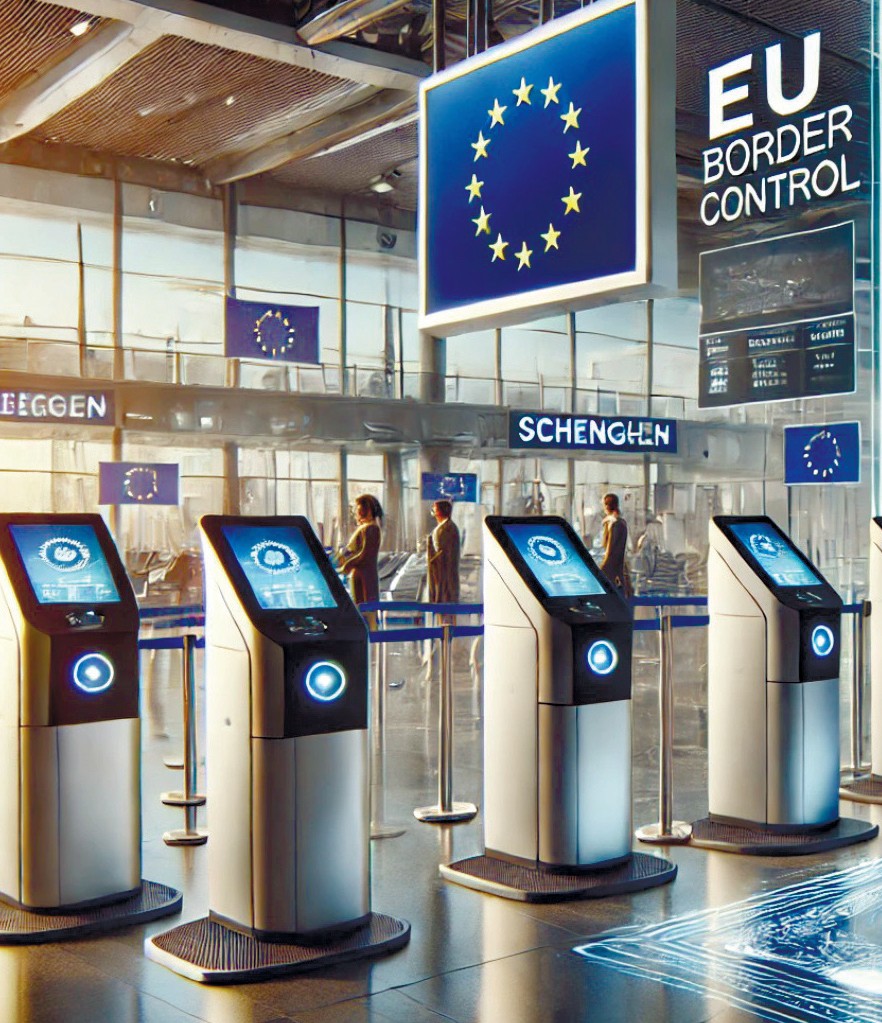
The European Union began the phased rollout of the EES on 12 October 2025, and on 10 April 2026, it was officially declared fully operational throughout the Schengen area. This represented a significant technological advancement. Europe transitioned from a paper-based passport stamp system to a comprehensive biometric tracking process, which involves photographing, fingerprint scanning, and digitally recording every entry and exit. In practice, third-country nationals, including those from Azerbaijan, are now required to complete preliminary registration at self-service kiosks. This process involves answering around 10–15 questions and providing biometric data both on entry and exit. Only upon completion of the aforementioned steps may the individual proceed to the border officer for the customary final inspection.
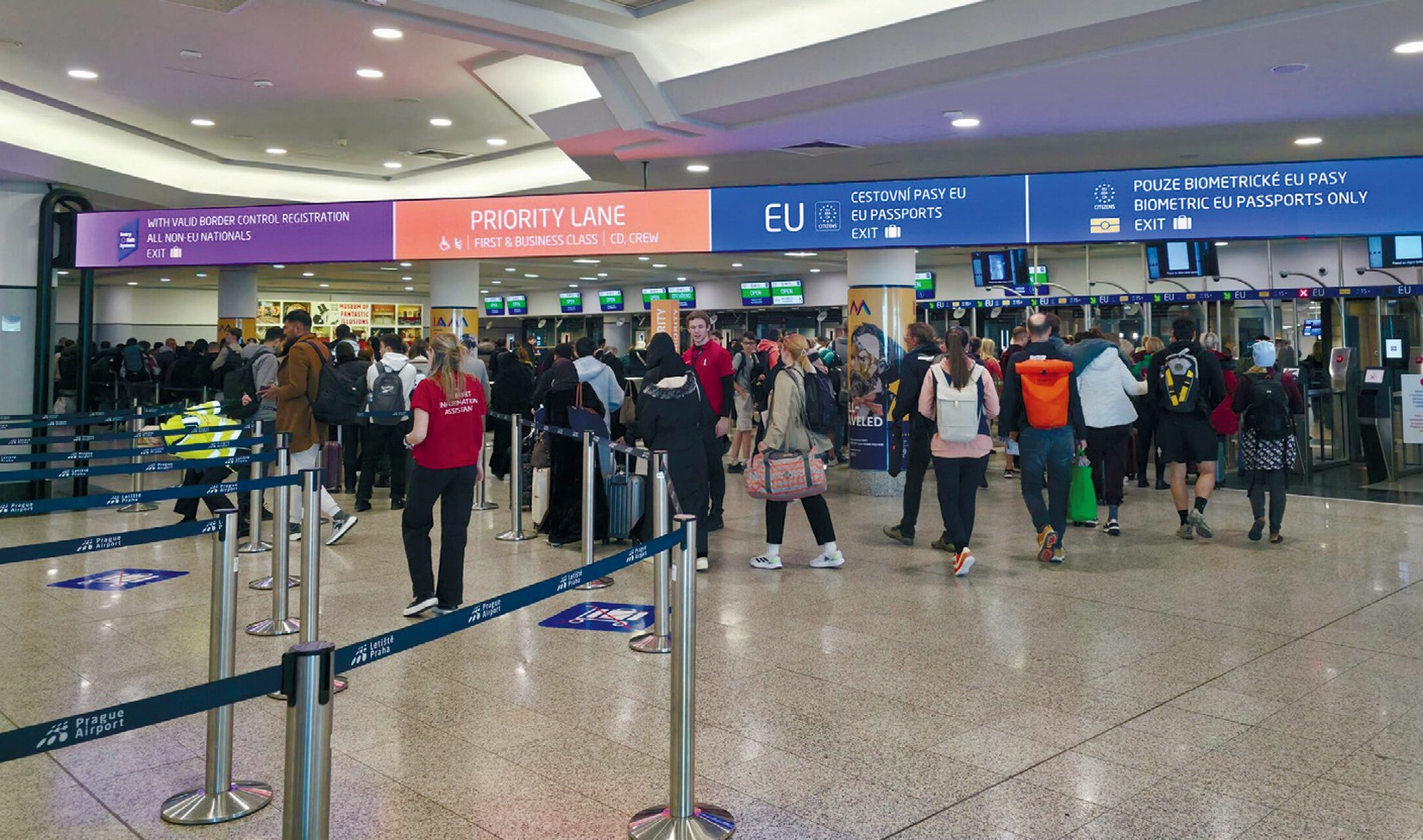
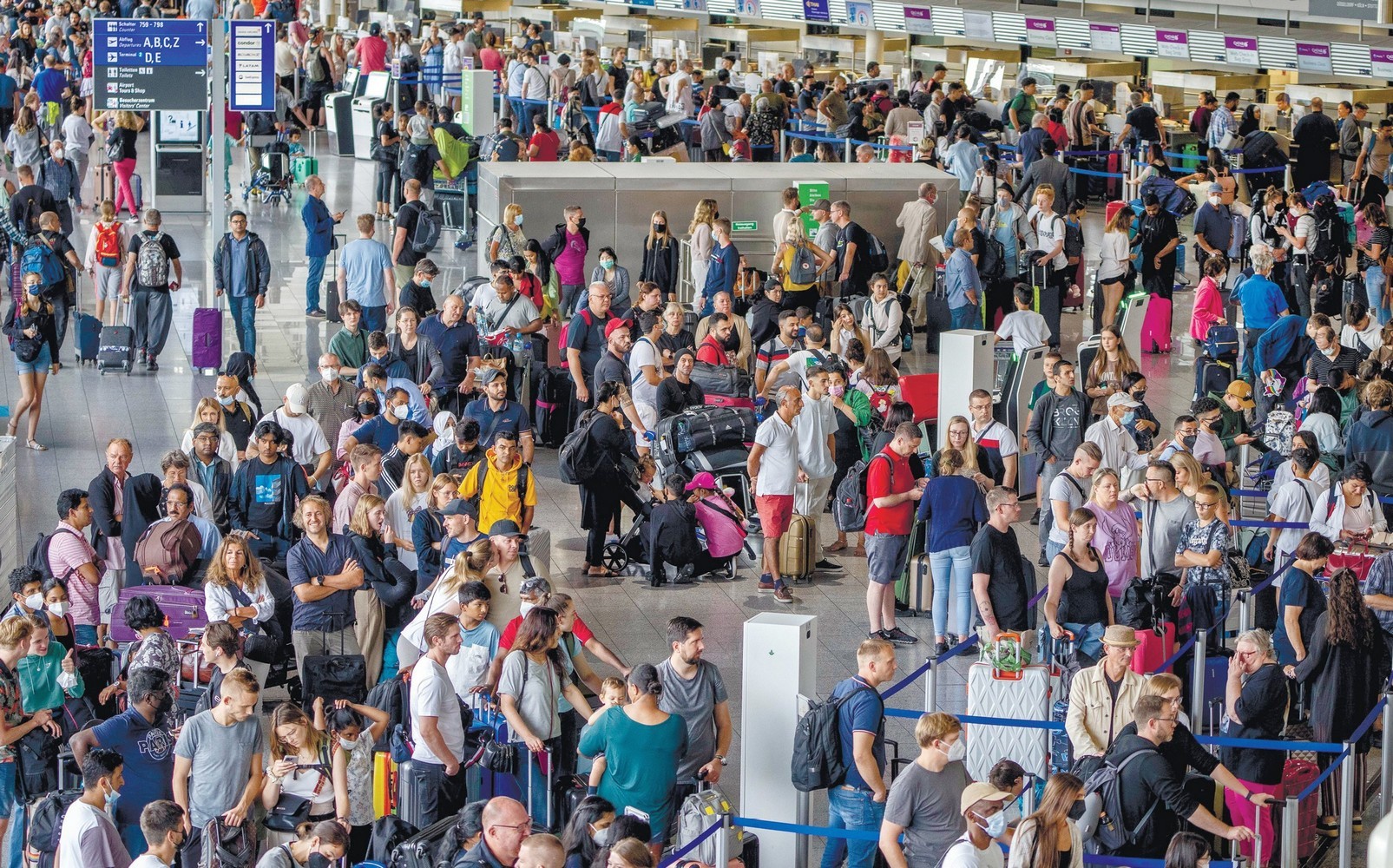
However, the reality following the much-vaunted "digital future of borders" was very different. Within weeks, Europe's largest airports were operating at capacity. According to media reports and aviation associations, border control times have increased to three to four hours, effectively disrupting the usual logic of air travel, where checks are expected to fit within tightly defined time frames.
In certain instances, the situation escalated to a critical level. Passengers arriving at airports well in advance – sometimes as much as three to four hours before departure – found themselves unable to complete the biometric procedure in time. This resulted in missed connecting flights and missed boarding deadlines. Reports from Germany, France and the Netherlands have noted incidents where dozens, or even over a hundred, passengers from a single flight have failed to clear border control before the gate closure, resulting in flights departing without some of their registered passengers. While airlines have acknowledged this, they have also highlighted that the primary cause of these delays was the airport border infrastructure.
The system, designed to accelerate and automate checks, quickly produced the opposite effect – delays, malfunctions and infrastructure overloads. Major airports have identified that the implementation of digital control systems has the potential to impact the very model of mass air travel.
According to aviation associations and operators, the system effectively became a "stress test at the limit of capacity," exposing shortages in staff, technical issues, and uneven readiness among EU countries. In some cases, several European airports had to make immediate changes to the system in its early days to avoid collapse at border points.
In light of these findings, it is evident that certain hubs have demonstrated a higher level of flexibility in their process management. For instance, Budapest Airport sought to manage passenger flow by implementing mobile teams equipped with portable terminals. These teams conducted biometric registration directly in queues, photographing travellers, taking fingerprints, and scanning passports, reducing the procedure to one or two minutes per person.
In response, the European Commission had to allow temporary suspension or easing of the system during peak loads and partial returns to manual border checks.
Reality pressure
The complexity of border procedures has raised significant concerns within Europe's aviation sector. Representatives from the airport and airline sectors are not referring to temporary issues, but rather to a fundamental mismatch between the design of the airport and the reality of its operation.
Olivier Yankovets, Director of Airports Council International Europe, emphasises: "There is a marked difference between the perception of the efficiency of the EES system held by EU institutions and the reality experienced by non-EU citizens, who often encounter significant delays and inconveniences." He observes that the issue is not just isolated failures, but rather a systemic incompatibility between the digital control model and the actual infrastructure capacity.
Industry associations representing airports and airlines, including Airlines for Europe, have issued a further critical response: "Three-hour waits at border control are not a 'teething problem' for EES but a systemic failure."
This necessitates a fundamental reassessment of the system's implementation, moving from a focus on seamless digital transformation to a more realistic acknowledgement of infrastructure limitations. Aviation bodies such as the International Air Transport Association have warned that without urgent changes, conditions could deteriorate sharply during peak periods. "Without immediate action, wait times could exceed four hours or more during peak summer traffic."
Europe's largest low-cost carrier Ryanair has urged governments of all 29 Schengen countries to postpone full EES deployment until after the summer season. The airline has issued a warning that premature implementation could lead to significant delays and airport congestion, resulting in extended wait times for passengers during periods of high tourist traffic.
Greece was the first country to abandon mandatory biometric checks. Following this, both Paris airports, Charles de Gaulle and Orly, have formally requested a full suspension of the system for the summer season. Switzerland, Germany, Portugal, and Spain have intermittently switched equipment to manual mode during peak hours, disabling biometric controls; meanwhile Italy has begun testing a mobile app allowing pre-registration before arriving at international airports.
Brussels under pressure
Faced with mounting pressure from the aviation sector and early signs of border infrastructure overload, the EU has been compelled to adopt a more flexible approach to EES implementation.
Formally, EES remains a key element in strengthening control over Schengen’s external borders. However, the European Commission has acknowledged the need for temporary adjustments—allowing relaxation or suspension of biometric procedures during peak periods, especially at airports and busiest crossings.
Brussels stresses that these measures are temporary and aimed at ensuring smooth passenger flow. The Commission also announced weekly monitoring of the situation and stated it could reinstate mandatory biometric registration once infrastructure improvements—such as additional kiosks and staff recruitment—are completed.
Digital borders and limits of control
The EES experience demonstrates that while digital border control can offer efficiency benefits, it can also create challenges during periods of high demand. Queues and delays are the result of clashes between technological models and real-world constraints, such as limited infrastructure capacity and seasonal traffic surges.
Temporary concessions effectively highlight a key lesson: even the most ambitious digital reforms require flexibility and adaptation.
For countries outside the EU, including Azerbaijan, the consequences are tangible. Complicated procedures directly impact regional citizens, increasing burdens on travel, business, and tourism mobility between the South Caucasus and Europe.
EES is not merely a technological project; it is also a test of how to manage mobility limits in today's world, where digital systems still depend heavily on very "analogue" realities. Looking ahead, Brussels maintains its commitment to further digitising border systems, including the introduction of next-generation Schengen visas and entry authorisation, scheduled for October 2026. The question of whether this timeline will be met remains to be seen.
RECOMMEND:
 116
116