

WORLD CUP XXL
Football shifts to a new format, with 48 national teams, sensors, and a Super Bowl-style show
Author: Sanan SHAFIZADE
The absolute highlight of the sporting calendar in 2026 will undoubtedly be the FIFA World Cup. The World Cup, which kicks off on June 11, is set to be radically different from previous tournaments. It is poised to go down in history due to its unprecedented scale, format, and geographical reach. This World Cup, jointly hosted by the US, Mexico, and Canada, also stands out because the concept of a clear favourite appears far more blurred than in previous years. For decades, the World Cup has remained the ultimate pinnacle of global football. Every four years, the planet's strongest national teams gather, with only one ultimately lifting the most prestigious trophy in world football above their heads. The previous World Cup, held in 2022, is remembered for the triumph of the Argentina national team led by Lionel Messi.
In three countries
North America has a strong track record in hosting World Cups; the tournament was last held in the US in 1994, an event that proved pivotal in the development of football in the country. The majority of matches, including the final, will take place in the US, which will host 78 games in total. Mexico will make history as the first nation to host the World Cup on three occasions. Having successfully organised the World Cups of 1970 and 1986, it will now host an additional 13 matches. The opening match will also be held at the renowned Azteca Stadium. Canada will be hosting the men's World Cup for the first time, with 13 matches scheduled to take place there. The country has previously hosted the Women's World Cup, most recently 11 years ago. The 2026 World Cup will feature 48 national teams for the first time in history. Following the aforementioned change, the number of matches is to be increased from 64 to 104. This format expansion has attracted both praise and controversy. It is clear that this will be the largest and most grand World Cup in history.
Main contenders and possible sensations
One of the most intriguing aspects of the tournament is the lack of an obvious favourite, with several teams regarded as genuine contenders for the title. The Argentina national team, captained by Lionel Messi, will attempt to defend its crown. European champions Spain also look formidable, driven by an ambitious new generation of players spearheaded by Lamine Yamal. France, Portugal, and England possess immense potential, while traditional footballing powerhouses like Germany, Brazil, and the Netherlands enter the tournament, as always, with lofty expectations. One of the tournament hosts, the US national team, has shown considerable progress in recent years. Managed by Argentine specialist Mauricio Pochettino and led on the pitch by Christian Pulisic, the squad is fully capable of pulling off major surprises. The Canada national team also expects a strong showing, thanks to its young and talented crop of players. Among the African contingents, Morocco and Senegal attract particular interest, while Colombia and Ecuador are viewed as dangerous contenders from South America.
Stars of the tournament
World Cups have always provided a stage for footballing greatness, and Cristiano Ronaldo will set a new milestone by appearing in the global tournament for a record sixth time in his career. The tournament will feature headline acts including Kylian Mbappé, Ousmane Dembélé, Harry Kane, Jude Bellingham, Vinicius Junior, Erling Haaland, and Mohamed Salah. Spain's teenage sensations, Lamine Yamal and Pedri, are poised to deliver a spectacular performance for the fans. Meanwhile, Luka Modrić will have the opportunity to represent Croatia at a World Cup for the fifth time.
The number of fans and the ticket issue
FIFA forecasts indicate that the 2026 World Cup will be the most highly attended edition in history, with over 2 million tickets already sold. It is anticipated that total attendance at the stadium will reach approximately 6.5 million spectators, significantly surpassing the previous record set in 1994. However, there is a possibility that these projections may not fully reflect the actual costs, as the World Cup has already been designated as the most expensive in history. The cost of tickets, even for the group stage matches, has been the subject of much debate, with fan associations expressing their discontent. Consequently, several supporter groups have appealed to FIFA to enforce stricter price controls and simplify the ticketing process.
Calendar issue
According to the schedule, the opening match is scheduled to take place on 11 June at the Azteca Stadium in Mexico. The final showdown is scheduled for July 19 at the MetLife Stadium in the US state of New Jersey. This will be the first time that the showpiece match of world football has been held in the New York metropolitan area.
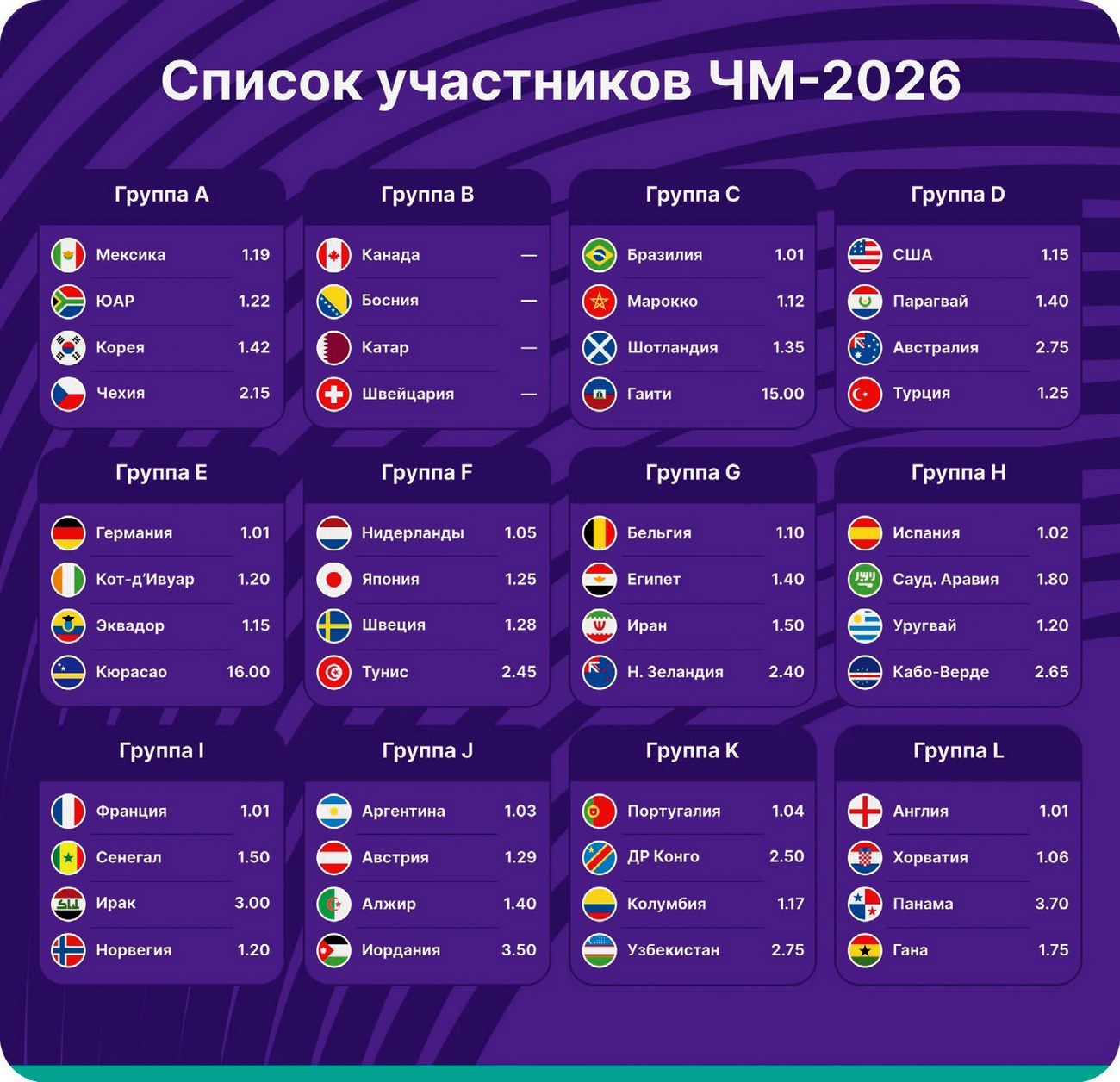
The most significant change to the 2026 World Cup is the expansion of the participant list to include 48 national teams. The teams will be divided into 12 groups of four teams each. Following the group stage, the top two teams from each group and the eight best third-placed finishers will advance to the round of 32.
This adjustment increases the total number of matches from 64 to 104 and extends the tournament's duration to approximately 40 days. In order to be awarded the trophy, the eventual champions will now have to navigate a total of eight matches, as opposed to the customary seven.
The logistical challenge of staging the tournament simultaneously across three vast nations and multiple time zones is considerable. Furthermore, Mexico's high-altitude venues and Canada's varied climatic conditions will directly test the physical endurance of the players.
FIFA intends to group host cities into regional zones – West, Centre, and East – to minimise travel times and mitigate the effects of jet lag. However, it is inevitable that long-distance flights across the continent will be necessary once the knockout stage commences.
Permitting 32 teams to enter the knockout rounds presents a valuable opportunity for lesser-known teams to cause unexpected results against established footballing heavyweights. This eight-match marathon will be an exhausting ordeal for elite players coming off the back of a gruelling domestic season.
Following the guidance of FIFA President Gianni Infantino, the tournament final will feature a grand, Super Bowl-style entertainment show for the first time. Following a review of the current half-time interval, it has been decided to extend it from the usual 12 minutes to around 20–25 minutes. Additionally, FIFA plans to trial new disciplinary rules on the pitch, such as restricting communication with the referee exclusively to team captains.
Balls with sensors
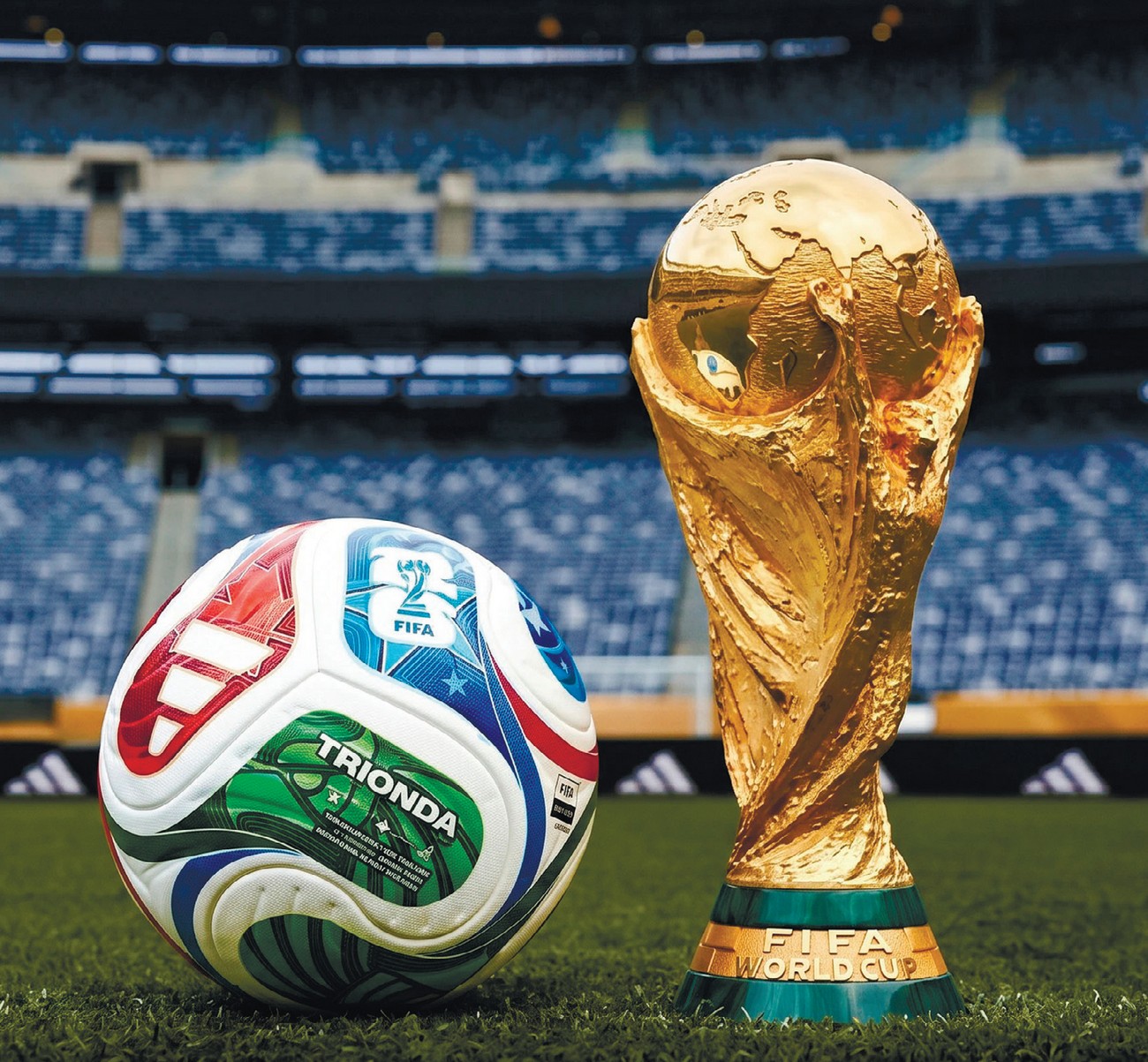
At the World Cup, next-generation footballs will be introduced. These footballs will be embedded with specialised sensors. The internal sensor will track the precise point and timing of every touch on the ball.
For record, at the 2022 World Cup, the sensor was suspended inside the ball using a system of wires. In this updated version, the device is integrated directly into the internal layer of the ball's outer casing.
The collected data will be synthesised with tracking feeds from 12 specialised cameras positioned around the stadium. These cameras will track the positions of both the ball and every player 50 times per second. This real-time stream of information will be fed directly into the Video Assistant Referee (VAR) system to assist with offside decisions and controversial goal-line reviews. The sensor is reportedly so lightweight that players cannot feel it, and its battery can run for up to six hours.
Debutants
The expansion of the World Cup to 48 participants has had a significant impact on the structure and geography of the competition. The 2026 edition will welcome four debutant nations simultaneously: Uzbekistan, Jordan, Cape Verde, and Curaçao.
It is equally compelling to note the return of several national teams to the global stage after many years of absence. Consequently, the upcoming World Cup is already distinguished as one of the most unconventional tournaments in history with regard to its lineup.
The Uzbekistan national team is a particular focus among the newcomers; the "White Wolves" successfully qualified for the World Cup on their eighth attempt. This milestone is not an accident, but the culmination of long-term, systemic football development within the country.
On 5 June 2025, the Jordan national team successfully secured its first-ever World Cup berth, a significant achievement that further enhances its standing in the international sporting arena. They triumphed over Oman with a decisive 3–0 victory, with Ali Olwan achieving a hat-trick, before securing their historic qualification with South Korea's subsequent victory over Iraq. For Jordan, this marked their eleventh qualifying campaign. Remarkably, they will not enter the tournament as underdogs, having improved significantly in recent years to prove their pedigree on the Asian stage.
Cape Verde has emerged as a noteworthy debutant, securing the top position in their African qualifying group with a four-point lead over Cameroon. This small island nation, with a population of approximately 600,000, has made a strong impact on the competition. The decisive qualification fixture concluded with a resounding 3–0 win over Eswatini. This achievement is particularly noteworthy given that the team did not merely benefit from the expanded format, but truly earned their place through fierce competition.
For Azerbaijani fans, there is an added layer of intrigue: Cape Verde's squad includes midfielder Leandro Andrade, who plays his club football for the Agdam-based side Qarabağ FK. The outcome of his candidacy for a position in the final World Cup squad will be revealed in the coming weeks.
Curaçao represents the most exotic debutant at the 2026 World Cup, breaking through to the global stage for the first time while holding the distinction of being the smallest participant nation by population. The team's qualifying campaign was a resounding success, with a perfect record that saw them finish top of their group. Furthermore, the Curaçao squad is heavily populated by players with Dutch footballing backgrounds, yielding a highly disciplined and tactically well-organised side.
Return after decades
Alongside the newcomers, due recognition must be given to the teams making a return to the World Cup after prolonged absences. For instance, Haiti will compete at the World Cup for the first time since 1974, marking only their second appearance in the competition's history. The team successfully qualified in the face of significant challenges, having to play all their home fixtures abroad, a testament to their resilience and dedication.
The Congo national team (formerly Zaire) is also returning to the World Cup for the first time since 1974. Their path was among the most dramatic of all: the winning goal in the intercontinental play-offs was scored during extra time, after the referee was replaced due to severe cramps.
Iraq is also experiencing a resurgence, qualifying for the World Cup for the first time since 1986 after successfully navigating multiple play-off rounds. This milestone is of great significance to the nation, both in a sporting sense and in terms of national pride.
New Zealand will also return to the global stage for the first time since 2010. It is interesting to note that during their previous World Cup appearance, the team remained unbeaten yet failed to progress past the group stage. This is widely considered one of the most unusual statistical anomalies in tournament history.
The national team of Türkiye is making its return to the World Cup for the first time since 2002. Having previously secured bronze medals, they have now booked their place in the play-offs, thus confirming their status as a formidable force in European football.
So, the 2026 World Cup is shaping up to be a tournament defined not just by prominent names, but also by remarkable narratives. The debutants arrive with great ambition, while the returning nations are fuelled by a strong sense of motivation. It is precisely these narratives that contribute to the World Cup's vibrant and unpredictable nature.
Despite the ongoing debates surrounding the geopolitical landscape and entry visa regulations for the US, the participation of the Iran national team has been officially confirmed. FIFA President Gianni Infantino has explicitly stated that the Iranian squad will face no obstacles in playing their scheduled matches in the US.
US authorities have also confirmed that the athletes will be granted entry into the country. In an effort to streamline the visa application process, the Football Federation of Iran dispatched the squad to a training camp in Antalya, Türkiye. In addition, with the approval of FIFA, the team's tournament base camp will be relocated from the US to the Mexican city of Tijuana.
It is unfortunate that the Azerbaijan national team has not yet achieved the opportunity to participate in a World Cup tournament. While the realisation of this goal appears unlikely in the near future, Azerbaijani football fans will still be present in the stands. It is estimated that approximately 200 supporters are planning to travel to the US to attend matches.
Huge prize pool
The total prize fund for this World Cup has reached an unprecedented and record-breaking high of $871 million. Of this sum, $703 million will be distributed as direct, performance-based prize payouts to the participating national teams. The winners of the tournament will receive a prize of $50 million, representing an increase of $8 million compared to the 2022 champions. The runners-up will receive $33 million. A prestigious football festival, watched by a global audience, is about to commence. We hope you enjoy the tournament.
RECOMMEND:
 82
82

