

ALL ROADS LEAD TO BEIJING
China cementing its status of the key architect of the new world order amidst the US-Russia rivalry
Author: Samir VELIYEV
The final weeks of May were marked by a series of significant political events, the repercussions of which will be felt for many months to come. Undoubtedly, the visits by the US and Russian presidents to China occupied a central position on the global political agenda.
'Aircraft diplomacy,' Chinese style
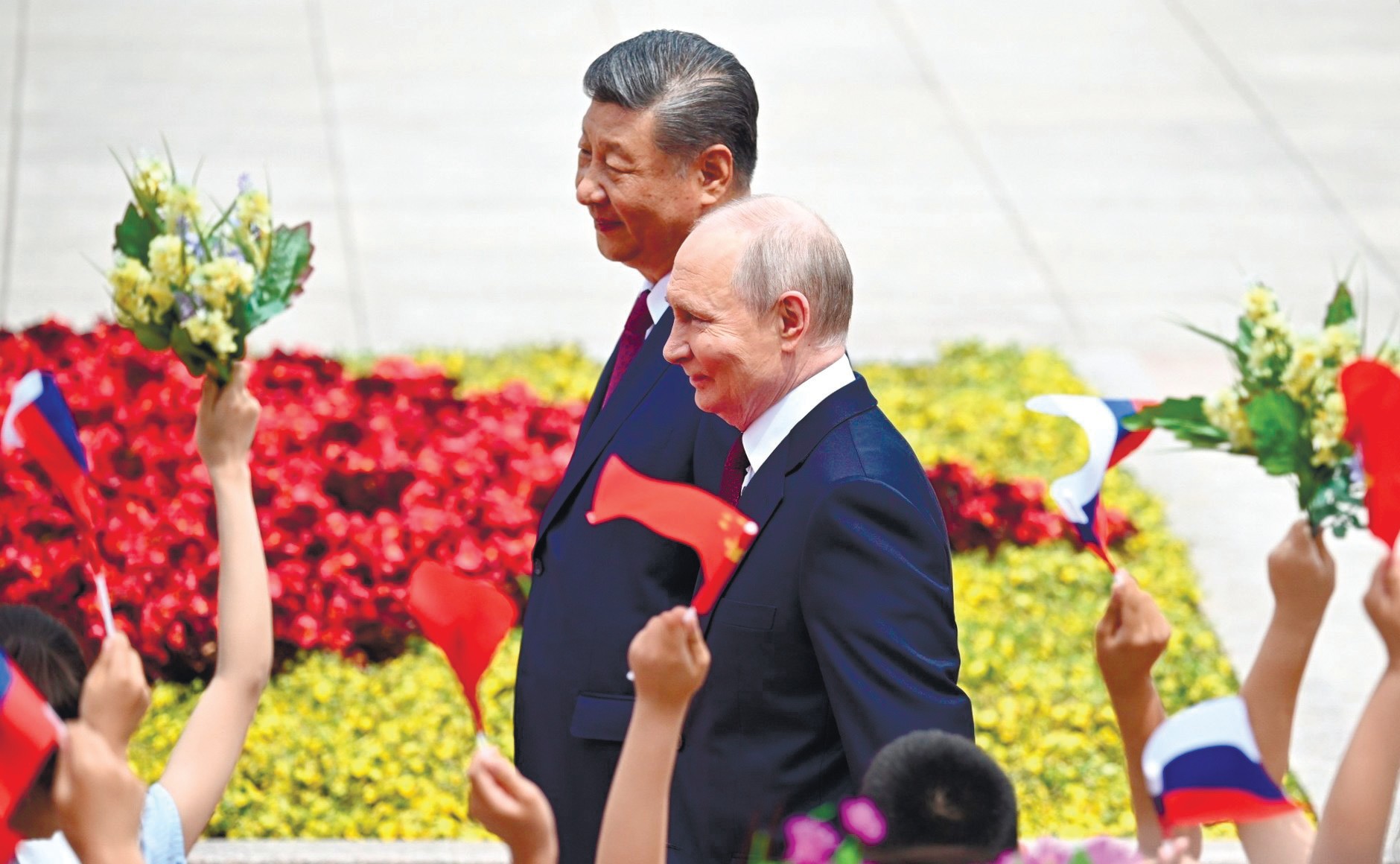
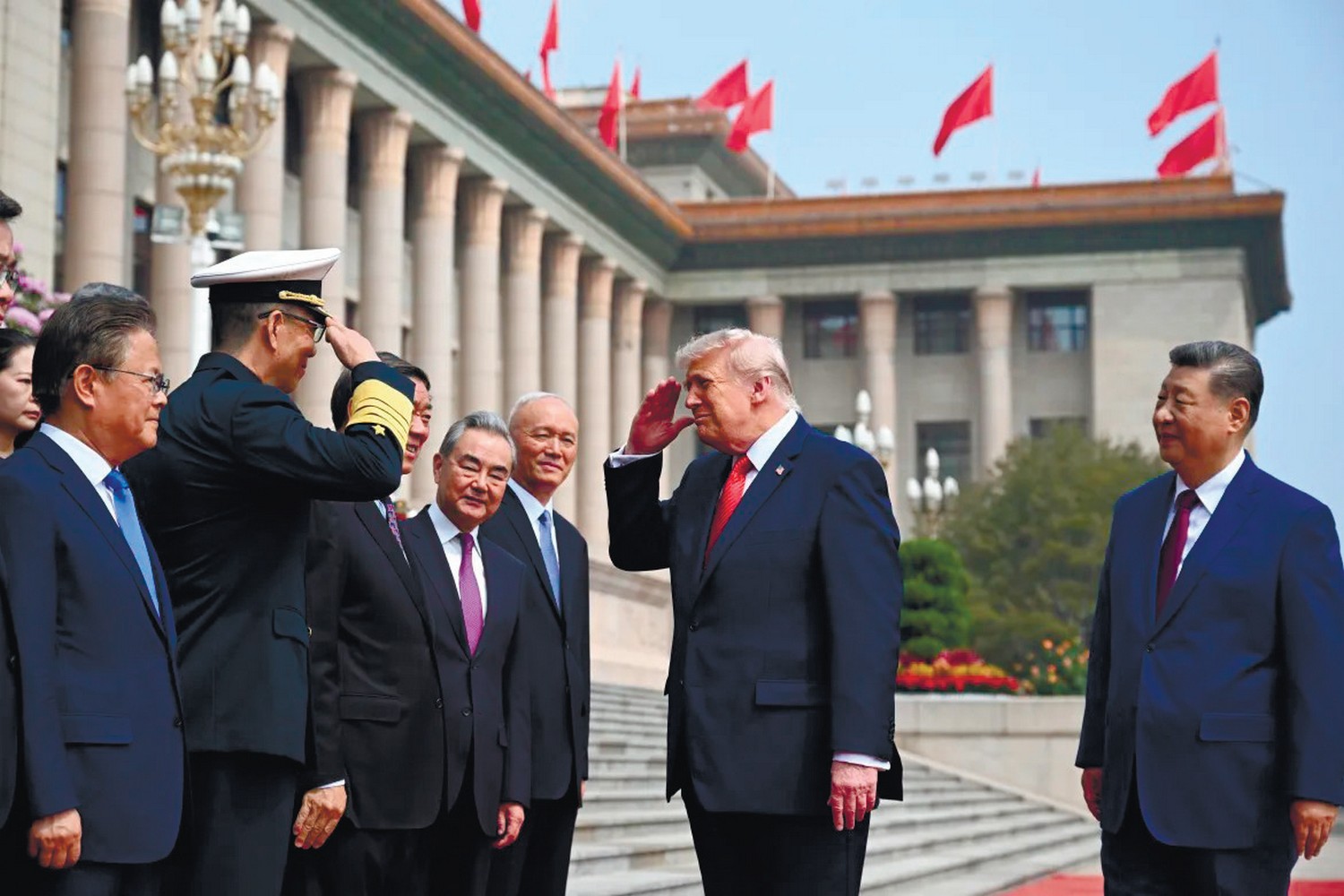
The planes carrying Donald Trump and Vladimir Putin landed at Beijing Capital International Airport within a week of each other. The differences in the welcoming ceremonies were noted by numerous observers and experts. For instance, the Russian president was met at the airport by Chinese Foreign Minister Wang Yi, whilst President Donald Trump was met by Chinese Vice-President Han Zheng.
From a formal or protocol perspective, Vice-President Han Zheng is considered to hold a higher state rank than Foreign Minister Wang Yi. Han Zheng is a member of the Chinese state leadership and holds the position of Vice-President, whereas Wang Yi is the head of the foreign ministry and concurrently a member of the Politburo of the CPC Central Committee.
However, in the Chinese political system, such protocol details should not always be interpreted literally. Wang Yi continues to be one of the most significant figures in Chinese foreign policy, effectively serving as the primary coordinator of China's diplomatic agenda. In addition to his role as Foreign Minister, he heads the General Office of the CPC Central Committee's International Affairs Commission, which oversees the strategic management of China's foreign policy course.
In contrast, Han Zheng, despite his high official status as Vice-President of the People's Republic of China (PRC), primarily fulfils representative and ceremonial duties. Since his departure from the Politburo Standing Committee, his actual political influence has diminished significantly.
In this context, the fact that Wang Yi met with Putin is indicative of the close and highly respectful nature of the strategic cooperation between Moscow and Beijing. In contrast, the meeting held by Donald Trump appeared to be a clear ceremonial gesture.
This is another symbolic gesture. The Chinese side demonstratively scrambled PLAAF fighter jets to escort the Russian presidential aircraft over Chinese territory, which was widely presented as a special symbol of the strategic partnership between Moscow and Beijing. In the case of the American president, however, Beijing did not make such a symbolic gesture.
While these may appear to be minor details, in Chinese political culture, they often reveal significant information about the true nature of relations.
Beijing and Moscow
In recent years, there has been a marked shift in the nature of relations between Moscow and Beijing. During the 2010s, the two sides largely maintained the format of a 'pragmatic partnership'. However, following 2022 and the significant deterioration in Russia's relations with the West, the Russian-Chinese alliance has effectively become one of the central elements of the emerging multipolar order. Faced with substantial sanctions pressure, Moscow has accelerated its strategic shift towards the East, while China has seized the opportunity to significantly strengthen its position in the Russian economy, energy sector and logistics.
At present, China is Russia's largest trading partner. By the close of 2025, trade turnover between the countries had surpassed $260 billion, whereas in 2020 it stood at approximately $108 billion. Consequently, the volume of mutual trade has increased substantially, more than doubling within a five-year period. At the same time, it is important to note that the structure is rather disproportionate. Russia is increasing its supply of oil, gas, coal, agricultural products and metals. Meanwhile, China is stepping up its exports of industrial equipment, cars, electronics, telecommunications products and dual-use components.
Energy was a key issue during the visit. Russia is firmly establishing itself as one of the key overland suppliers of energy resources to the Chinese economy. By the end of 2025, Russian oil supplies to China had exceeded 110 million tonnes, whilst gas exports via the 'Power of Siberia' pipeline had approached the planned 38 billion cubic metres per year. Simultaneously, the parties proceeded with their deliberations on the 'Power of Siberia 2' project, which possesses the capacity to augment annual supplies by a further 50 billion cubic metres via Mongolia.
At the same time, Beijing is not in a rush to offer Moscow terms comparable to those of the European energy market in previous years. Negotiations on the 'Power of Siberia 2' project have been ongoing for several years, due to ongoing disagreements regarding price, volumes and commercial terms. China is attempting to proceed with caution. It is understood that Moscow has limited options available to it, which means there is still ample room for negotiation.
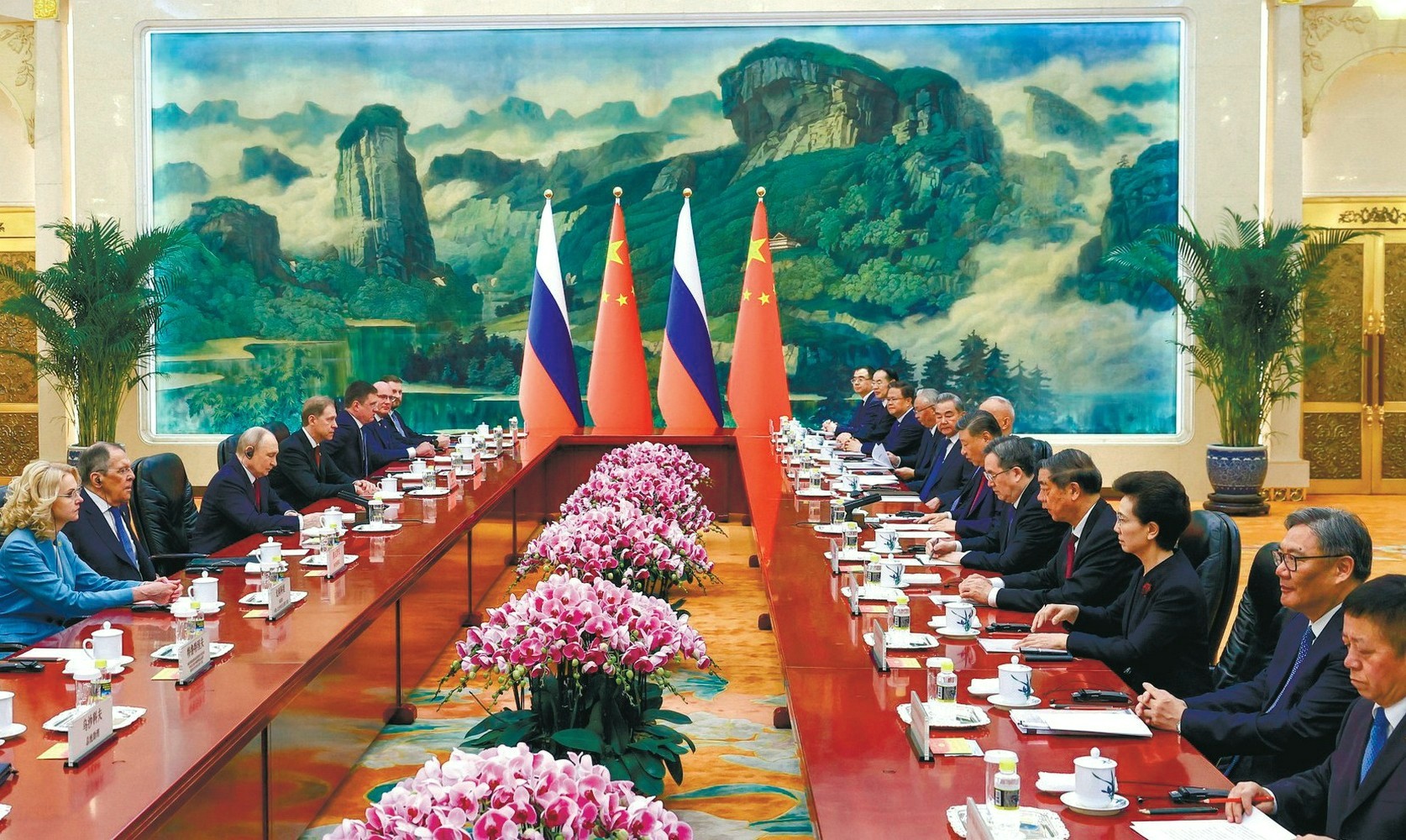
In this context, the recent visit did not result in any major new deals, but it did highlight a notable trend: the ongoing development of a stronger institutional relationship between Russia and China. During the talks, the parties signed approximately 24 documents in the fields of industrial cooperation, science, education, logistics, digital technologies, transport connectivity, financial settlements and humanitarian cooperation.
In effect, Moscow and Beijing are today jointly shaping an alternative Eurasian economic space, less dependent on Western financial and logistics hubs. This encompasses not only trade, but also the gradual development of their own payment infrastructure, transport routes, digital platforms and technology supply chains.
In a broader sense, Putin’s visit to China reflected the ongoing geopolitical shift towards Eurasia. The world is gradually moving away from a model of unconditional dominance by a single centre of power and towards a more complex system of competing blocs, logistical spaces and technological spheres of influence. Against this backdrop, the Russian-Chinese rapprochement is becoming one of the key factors in the new global tectonics, exerting a direct influence on energy, international trade, transport routes, the financial architecture and the overall balance of power in world politics.
The Geopolitics of US-China dialogue
The US President's first state visit to China in nine years was undoubtedly one of the major geopolitical events of the year, clearly demonstrating the scale of the ongoing restructuring of the global system and the growing significance of Sino-American rivalry for the future architecture of international relations.
Prior to this, Donald Trump had paid an official visit to Beijing in 2017—during his first presidential term. It is noteworthy that Joe Biden has not paid an official visit to China during his entire time as US President.
It is common knowledge that the talks between the two leaders took place against a backdrop of high geopolitical tension. This tension is linked simultaneously to the crisis surrounding Iran, the continuing instability in the Taiwan Strait, security threats in the Strait of Hormuz, the deepening technological rivalry between the two powers, and the overall transformation of the global economic architecture. Concurrently, China has clearly defined its 'red lines' with regard to Taiwan. Beijing has communicated unequivocally that it will respond firmly to any external entities, particularly the US, seeking to provide the insurgent island with cutting-edge weaponry. Washington had hoped to secure Beijing's more active involvement in containing Tehran. The objective was to ensure the stability of energy supplies from the Strait of Hormuz region. However, China has historically adopted a cautious stance, refusing to support direct pressure on Iran.
Despite extensive diplomatic preparations for the visit and the respectful reception accorded to the American president in Beijing, the summit did not result in any fundamental compromises on key strategic issues. In fact, the meeting demonstrated that the US and China are gradually moving towards a model of so-called 'managed rivalry', in which both sides continue to compete fiercely whilst simultaneously attempting to maintain mechanisms to control escalation.
As anticipated, Taiwan was a key topic of discussion, given its potential to be a significant point of tension between Washington and Beijing. The Chinese leadership has adopted a firm stance on the matter, emphasising that Taiwan is exclusively within the jurisdiction of the People's Republic of China (PRC). They have expressed strong sensitivity to any form of military or political support for Taiwan from the United States. For Beijing, the supply of US arms to Taipei, military contacts and efforts to expand Taiwan's international participation appear to be a gradual push towards the island's political secession.
For its part, the Trump administration has formally confirmed its continued support for Taiwan and the continuation of military-technical cooperation. However, Washington has sought to avoid overly strident public rhetoric regarding possible direct US military intervention in a potential conflict over the island. Many interpreted this as an indirect signal that the current US administration seeks, above all, to manage its rivalry with China rather than allow the situation to escalate into a direct war between the two nuclear powers.
Managed competition
The economic section of the talks was the most pragmatic. Despite the high level of interdependence between the two economies, Washington and Beijing continue to hold fundamentally different views on the structure of global trade and technological competition. For the Trump administration, the significant trade imbalance remains a central concern. By the end of 2025, the US trade deficit with China was approximately $202 billion.
The US side has accused China of providing large-scale state support to industry, stimulating exports and restricting foreign companies' access to certain segments of the Chinese market. However, in contrast to the approach taken during the first trade war, the current US administration is now focusing less on radical economic decoupling from China and more on a more managed model of competition.
Thus, the expansion of Chinese purchases of American products – primarily LNG, oil and agricultural goods – was a key topic of discussion during the negotiations. According to several media reports, the potential acquisition of approximately 200 Boeing aircraft by China was also a topic of discussion. This could potentially serve as a significant political signal to Washington, particularly in the context of competition with Airbus and the expanding aspirations of the Chinese aviation industry.
The composition of the US delegation was also noteworthy. Representatives of the US's largest financial, industrial, energy and technology firms arrived in Beijing alongside Trump. Their involvement clearly demonstrated the presence within the American elite of highly influential groups interested in maintaining access to the Chinese market and opposed to a full-scale economic break with China.
Nevertheless, the fundamental causes of the US-China confrontation remain. This is no longer simply a matter of the trade deficit; it is also a struggle for technological leadership, control over artificial intelligence, microelectronics, telecommunications and the architecture of the future global economy.
The primary outcome of the discussions between President Donald Trump and President Xi Jinping is, in essence, a demonstration of the two nations' commitment to maintaining channels of communication and ensuring that their competitive dynamic remains within acceptable limits. At this stage, both Washington and Beijing have expressed a preference for a controlled competition, with a view to reducing the risks of direct confrontation, as opposed to a sharp escalation of the standoff.
The world is moving inexorably towards a new global order, in which China is becoming not merely one of the centres of power, but a key element in the emerging Eurasian and global tectonics. Therefore, the well-known phrase 'all roads lead to Rome' may be more accurately expressed as 'all roads lead to Beijing'.
RECOMMEND:
 80
80

