

TRUMP’S "HEIRS"
Which of the favourites can keep the MAGA coalition together without splitting the Republican Party?
Author: Irina KHALTURINA
The next US presidential election will not take place until November 2028. However, the question of who will be the Republican Party's candidate and inherit Donald Trump's movement is becoming ever more pressing. Trump himself has effectively ruled himself out of the race, having virtually excluded the possibility of running for an unconstitutional third term.
Although Trump's overall support among Americans is slipping, a Washington Post-ABC News-Ipsos poll conducted earlier this year found that 71% of Republican voters believe party leaders should follow Trump's example. Given the growing divisions among Republicans on a number of substantive issues, including Iran, relations with China, the economy and others, the 2028 intrigue is set to intensify.
The magnificent duo
It is interesting to note that in public discourse, the current head of the White House most frequently cites Vice President J.D. Vance and Secretary of State Marco Rubio as potential successors. Trump frequently praises both, calling them "magnificent" and "talented", while steering clear of an unambiguous choice. However, he does suggest that if they were to collaborate, they would be a formidable team. "It is highly improbable that anyone would consider running against those two. If they were to collaborate, it would be extremely difficult to prevent."
Vance and Rubio themselves appear to be more focused on their current roles, though some of their statements and actions are widely seen as a possible early start to presidential campaigns.
We are aware of no public statements from JD Vance that would indicate an intention to seek the nomination. The 41-year-old vice president is widely regarded as the most ardent champion of the Trump line, enjoying strong support among the electorate, ties to Donald Trump Jr., and the loyalty of many MAGA activists (MAGA—Make America Great Again—is Donald Trump's main political slogan, which has become the symbol of a large-scale conservative political movement in the US).
In an effort to align himself more closely with his superior, he has even revised convictions he previously defended strenuously, for instance on the war in Iran. It is evident that the developments in the Middle East will have a significant impact on the future of both Trump and Vance.
The vice president's detractors also question his capacity to maintain the coalition that Trump has established, given that a significant segment of voters are loyal to Trump personally rather than to the Republican Party as a whole. It is evident that this represents a significant challenge for any successor. Vance has clearly adopted Trump's combative tone and populist style; when faced with challenging questions from the media, he displays a similar demeanour to his boss. However, it should be noted that he does not yet possess the personal charisma or deal-making skills that are characteristic of Trump. Vance's future in Republican politics is an open-ended one. He is the youngest candidate on the list of possible contenders and one of the youngest vice presidents in history.
Marco Rubio, for instance, is a seasoned professional: he was once regarded as one of the rising stars of the Republican Party and ran for the Republican nomination in the 2016 election. At that time, the politician presented himself as a young, forward-thinking conservative leader, using the slogan "A New American Century". Following his defeat to Trump in the Florida primary, he withdrew from the campaign.
Rubio's current public statements increasingly echo the themes of his 2015 campaign, including generational change, the American dream, optimism about the country's future, and a hint that he could serve as a "bridge" between the various Republican factions. His standing has risen markedly as a result of his work as Secretary of State.
From the stage at the White House, Rubio stated that his own efforts, along with those of his colleagues, are focused on ensuring that the United States of America "remains a place where anyone from any country can achieve anything". As has been previously observed, the sentiments expressed in these uplifting words are reminiscent of the narratives that were a central feature of his former presidential campaign. It is widely acknowledged that he is skilled in promoting Trump's policies to an international audience.
The Secretary of State has made it clear that, should JD Vance decide to stand in the 2028 presidential election, he would offer his support rather than stand against him. However, recent polls indicate that Rubio is rapidly narrowing the gap with Vance among Republican voters. Insiders are of the opinion that Rubio would be better placed to "maintain the coalition's cohesion" without dividing it. His natural approach to politics is closer to that of traditional conservatism than to MAGA ideology. This has led to speculation that Rubio may be a potential candidate should an opening occur, for example if Vance were to make an error.
Potential rivals
Another possible alternative specifically to Vance is Senator Ted Cruz of Texas, a prominent conservative politician in modern America. His visits to states holding early voting and his appearances on national podcasts are widely seen as early preparation for a presidential campaign.
In 2016, Cruz became Donald Trump’s main rival in the Republican primaries. The campaign involved deeply personal clashes between them, but Cruz later became a Trump ally and backed many of his initiatives. Now, observers once again note occasional divergences between the president and the senator on certain foreign policy and party strategy issues. Cruz generally defends a more traditional Republican hawkish approach, whereas Trump favourite Vance is associated with the restrained America First wing of the party.
The senator has privately criticised Vance’s foreign policy views as too isolationist and has also clashed publicly with influential MAGA figures. If a contest develops between Vance and Cruz, it would mean that the essence lies in competing visions of what the Republican Party should look like after Trump. According to prediction markets, the Texas senator trails far behind Vance and Rubio, but his advantages remain high name recognition and a solid donor network. So he could well step onto the stage if the frontrunners falter for some reason.
Another “reserve option” is Defence Secretary Pete Hegseth, an army veteran and former television presenter. He belongs to the national-conservative wing of the Republican Party and is very popular on the far right thanks to his uncompromising evangelism. As is well known, evangelicals played a key role in Donald Trump’s 2016 victory and remain his most loyal electoral group.
Hegseth's political stance includes advocating for increased military strength, the reduction of diversity and inclusion initiatives, a stringent approach to migration policy, and an 'America First' foreign policy approach. During his tenure, the Pentagon has undergone significant changes, including the dismissal, resignation, or reassignment of senior officers, as well as interference in promotion processes. These actions have drawn criticism, as have his speeches linking military themes with cultural and religious arguments.
Furthermore, he has openly criticised EU countries for "coming under assault from other dangerous ideologies", which he interprets as illegal migration. For the time being, he is more often referred to as a prominent figure in the Trump administration than as an outright leader in the presidential race. Nevertheless, he continues to be considered as a potential candidate.
It is also worth noting that Florida Governor Ron DeSantis, a fierce defender of conservative values who ran against Trump in the 2024 primaries, is a potential contender for the White House in the future. DeSantis enjoys a high level of popularity among conservatives, thanks to his positions on education, immigration, gender issues, cultural debates, and his executive experience. His term as governor is due to end in 2027, so he would need to accelerate his preparations to run for president without holding public office. However, Trump's recent public praise for Sessions, including the possibility of appointing him as Attorney General, has led to speculation about the potential implications of such a move. In terms of style, DeSantis is often perceived as a blend of Trump's conservative ideology with more traditional experience in government and military service. In the post-Trump era, he is undoubtedly one of the most intriguing figures among Republicans.
Also among the most promising and controversial figures on the list of possible candidates is businessman Donald Trump Jr., the head of the Trump Organization, a prominent campaign surrogate, and an active MAGA supporter. Trump’s eldest son has never held public office but has long served as an adviser and confidant to his father. In other words, his influence is almost entirely derived from family ties and his standing in the MAGA movement rather than from elected positions. Trump Jr. enjoys high name recognition among Republican voters and does not rule out running for president in the future. He is, moreover, clearly working on gradually crafting a “presidential” image.
Finally, one of the possible candidates is undoubtedly the famous former Fox News host Tucker Carlson. He himself has not ruled out the possibility, though he has not announced a run. Carlson has effectively broken with Trump, largely over the war in Iran, but for now he retains media support thanks to his outstanding oratorical skills. That is, he has managed to build a large audience independently of elected office, and should the situation arise he would not have to defend a record in office.
Incidentally, a worsening situation in the Middle East for the US is thought to potentially create good prospects for Carlson to enter the 2028 presidential race. As journalist Jason Zengerle, author of a recent biography of Carlson, said in an interview with Poynter, “he will be able to hang this war around JD Vance’s neck, around Marco Rubio’s neck…” The disadvantages attributed to Tucker Carlson include a paucity of executive experience and a multitude of varied public statements that could potentially have a negative impact on his professional reputation.
In addition, the list of possible candidates includes Arkansas Senator Tom Cotton, who has a strong base among national conservatives and the military; Missouri Senator Josh Hawley, who also enjoys support among national conservatives; and Alabama Senator Katie Britt, regarded as one of the "rising stars".
The current political landscape indicates that all potential candidates will have to consider the balance between loyalty to MAGA and their own identity. As the party continues to be heavily personalised around the figure of Trump, the risks to the coalition he built are widely understood.
Vance's primary objective is to demonstrate his ability to continue Trump's course. In the event of the vice president's inability to fulfil this task, the leading role is likely to be assumed by Rubio, with the focus being placed on his experience in senior executive positions and foreign policy.
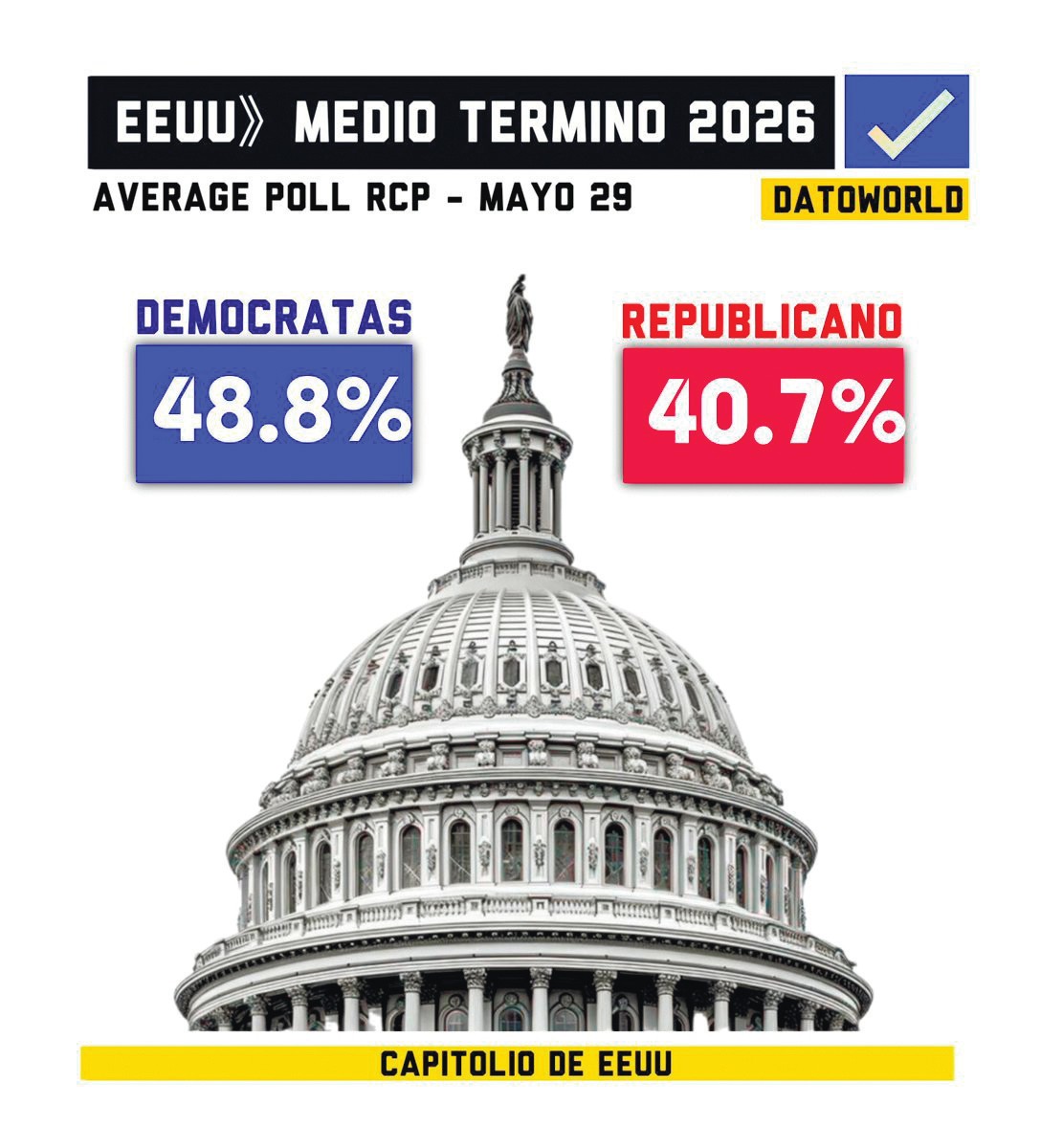
It is highly likely that the partnership between Vance and Rubio will endure, irrespective of the circumstances. Both individuals possess the necessary talents and youth to ensure a long-term career within the party. Key areas for observation include the effectiveness of Vance and Rubio in their respective roles, the outcomes of the midterm elections, and the potential scenarios for Trump's departure. In the immediate future, the 2026 midterms look particularly important, as some experts believe the Republicans could lose their majority, at least in the House of Representatives. Whilst an early departure by Trump (for health or other reasons) is not imminent, it is a possibility. If it were to happen, Vance would gain a significant advantage for 2028.
The balance of power within the party, and for each of the potential candidates, could also be radically altered by the international environment in 2026–2028. The likelihood of new bright stars emerging on the Republican horizon by 2028 appears low, though all outcomes remain possible.
RECOMMEND:
 110
110

