

FOUR SEAS—NINE CORRIDORS
The new geo-economic map of Eurasia and its nexus
Author: Namig H. ALIYEV
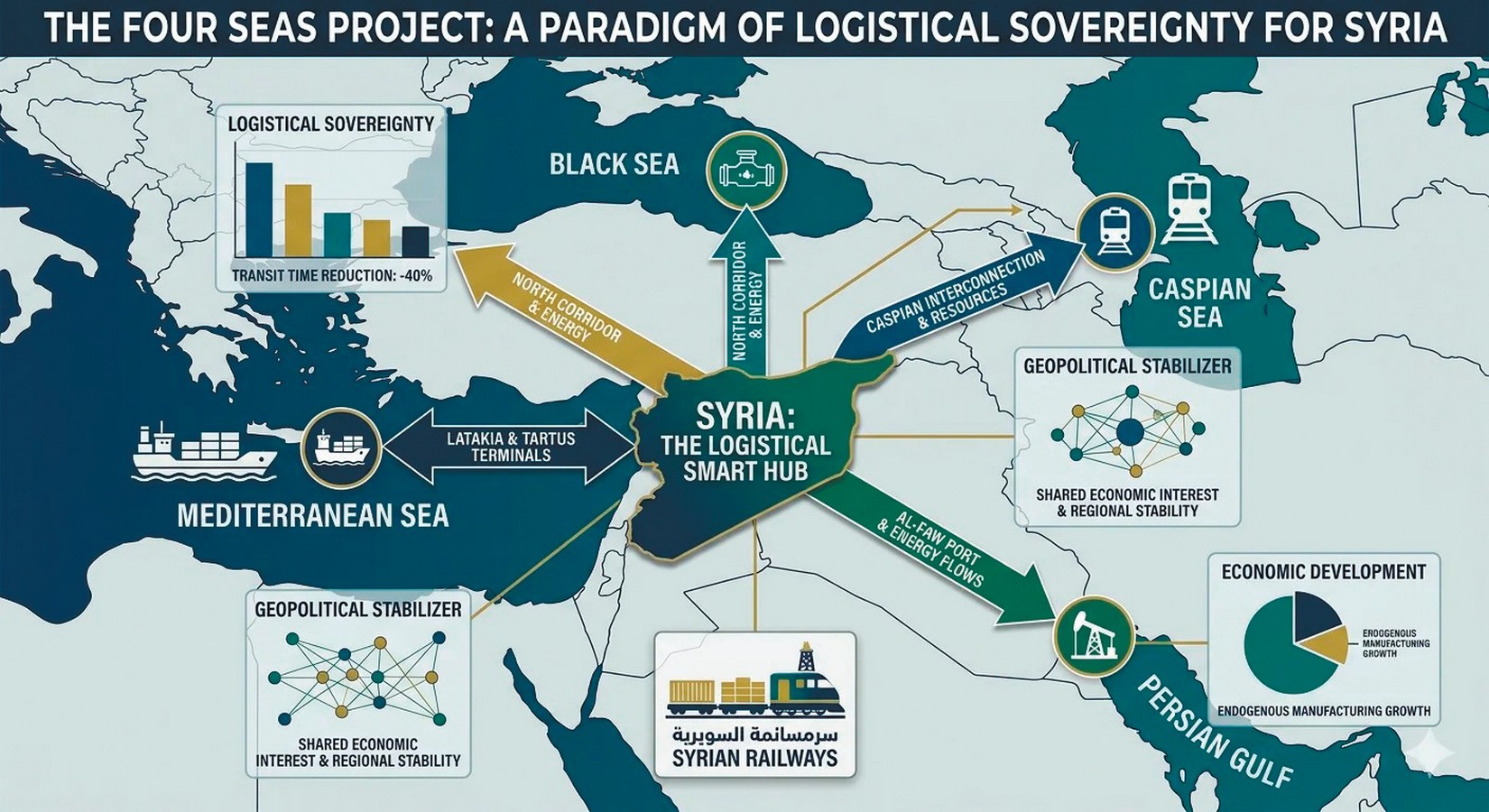
In the context of Eurasia's evolving geopolitical and economic landscape, Türkiye is asserting its position as a prominent logistics hub on the global stage. The 'Four Seas—Nine Corridors' project, which Ankara is developing jointly with Syria, represents a significant undertaking that extends far beyond the scope of a conventional transport initiative. The project represents an attempt to establish a new system of trade links capable of uniting the Persian Gulf, the Middle East, the Caucasus, Central Asia and Europe into a single economic space.
While Türkiye previously positioned itself primarily as a bridge between East and West, it is now aspiring to become an independent hub for global freight flows, controlling key routes between the world's largest markets.
The geography of the new transport space
The 'Four Seas - Nine Corridors' concept is a proposal for the creation of a large-scale network of maritime, rail, road and pipeline routes linking the Mediterranean, Black and Caspian Seas with the Persian Gulf.
According to the information that is currently available, the European section of the future corridor is set to cover the following countries: Azerbaijan, Türkiye, Armenia, Iraq, Syria, Qatar, Jordan, Oman, Saudi Arabia and the United Arab Emirates. In effect, this initiative involves the creation of a new transport axis. The aim of this axis is to link Asia's manufacturing centres and the Middle East's energy resources with European markets.
In the context of escalating risks to established global trade routes, this initiative assumes particular significance. Recent events have highlighted the vulnerability of maritime routes through narrow geographical chokepoints, such as the Suez Canal and the Strait of Hormuz. This is precisely why countries in the region are investing more and more actively in the development of land transport corridors.
Türkiye’s strategy: from a transit country to a logistics superpower
The project should be considered as part of Ankara's long-term strategy to establish the country as a central hub for Eurasian trade.
Over the past two decades, Türkiye has consistently invested in the development of transport infrastructure—modernising ports, building high-speed railways, and developing international motorways and energy pipelines. All these elements are now being integrated into a unified system.
Ankara seeks to leverage its unique geographical position not only to generate transit revenues, but also to strengthen its political influence. In today's globalised business environment, effective control over transport infrastructure and logistics has emerged as a key driver of geo-economic competitiveness. The greater the reliance of states on a particular route, the more significant the political influence of the country through which that route passes.
This underscores the significance of the 'Four Seas - Nine Corridors' initiative within Türkiye's foreign economic strategy.
Azerbaijan—a key link in the Caspian route
Turkish experts regard Baku as the starting point for the Caspian segment of the future transport system.
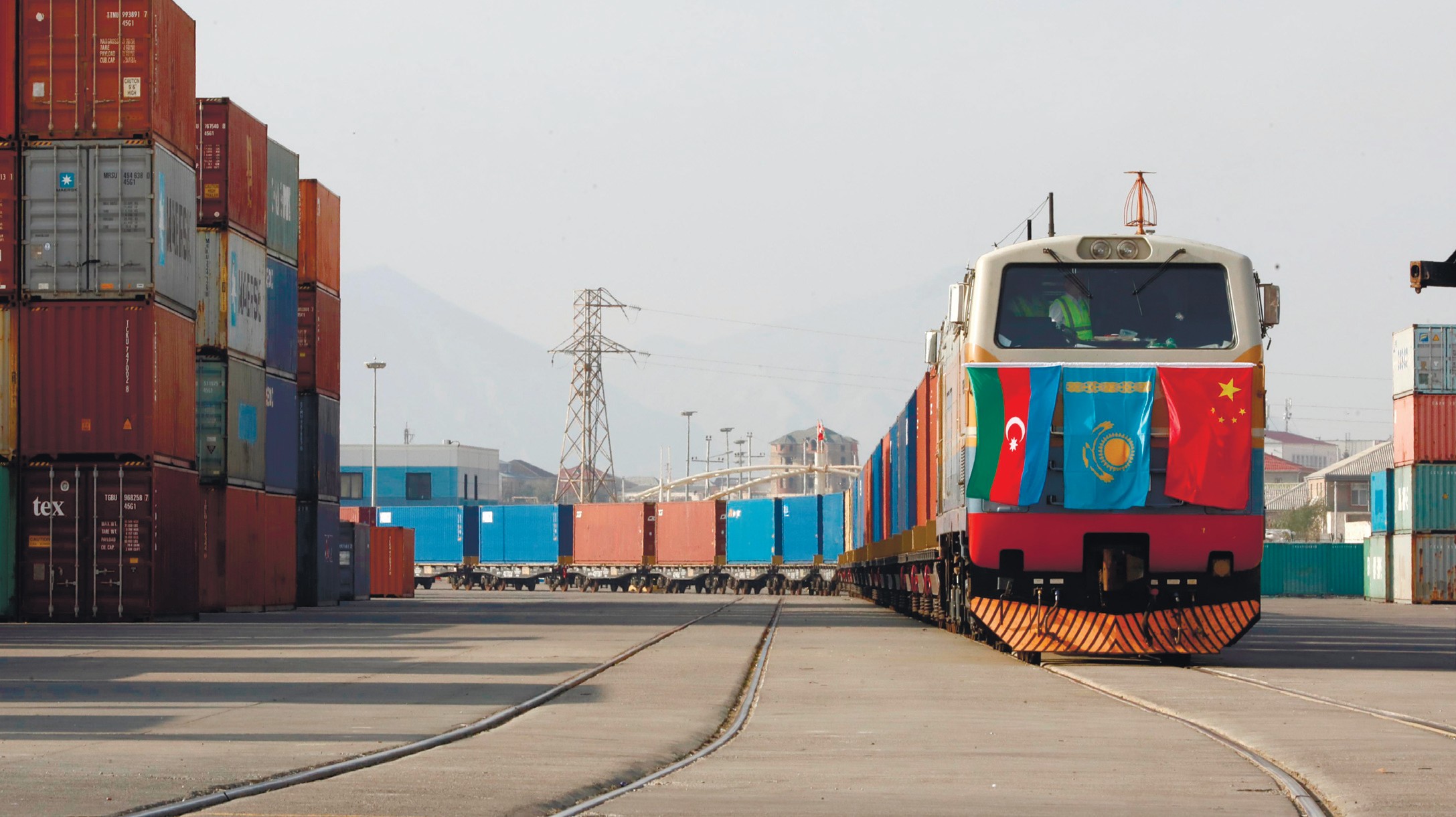
This approach is entirely logical. Azerbaijan is already a vital element of the Middle Corridor, which links China and Central Asia with Europe via the Caspian Sea, the South Caucasus and Türkiye. The country's strategic location, with modern seaports, railway infrastructure and well-developed international transport links, positions it as a natural logistics hub for the region.
Meanwhile, Azerbaijan's significance within the new project extends beyond the South Caucasus. The potential exists for the Central Asian states to be connected via the Caspian Sea, with the result that Baku could become one of the main distribution centres of the entire Eurasian transport system.
Azerbaijan's strategic position at the crossroads of Central Asia, the Middle East and Europe is set to be further solidified. For the national economy, this means not only additional transit revenues, but also expanded investment opportunities, the development of industrial logistics and the strengthening of international economic ties.
The Middle Eastern dimension
The involvement of the Arab states of the Persian Gulf is also of note. It has been reported that the US, Saudi Arabia, Qatar and the UAE have already expressed their willingness to support the financing of the initiative.
If this information is confirmed in practice, the project will take on not only regional but also global significance. The financial capabilities of the Gulf monarchies enable them to undertake infrastructure projects worth tens of billions of dollars, whilst Washington's support significantly enhances their international stability.
In addition, Arab countries are interested in diversifying their export routes and reducing their reliance on traditional sea routes. For the Gulf states, the development of land transport links with Europe is becoming a key element of economic security.
The first phase
Despite the scale of the overall concept, experts note that the most realistic project in the short term remains the restoration and modernisation of the Hejaz Railway.
This railway has a long and significant history, with a direct line connecting Damascus to cities on the Arabian Peninsula. It was widely regarded as the most vital transport artery in the region. Today, there is a resurgence of interest in it, with regard to its potential as an alternative to routes reliant on the Strait of Hormuz.
For Ankara, the Hejaz Railway could serve as a pilot project of sorts, enabling it to test mechanisms for regional cooperation, attract investment and lay the foundations for the subsequent expansion of the network.
It is noteworthy that the Turkish authorities have openly disclosed their intention to incorporate this line into the expanded 'Four Seas—Nine Corridors' system in the future.
A new centre of Eurasia?
At present, the project remains at the conceptual stage, and it is too early to speak of a timeline for its full implementation. However, it is already clear that this is not merely a matter of building new roads and railway lines.
A new geo-economic logic is taking shape in the region, in which transport corridors are becoming a tool for political influence, economic integration and ensuring the security of trade flows.
For Türkiye, the project presents a significant opportunity to consolidate its position as a major logistics hub within the Eurasian region. For the Arab states, it presents a valuable opportunity to establish new channels of access to European markets. For Azerbaijan, this project presents a valuable opportunity to consolidate its standing as a pivotal transport nexus, connecting the Caspian Sea, Central Asia, and Europe.
It is important to note that the 'Four Seas - Nine Corridors' initiative should be viewed not only as an infrastructure project, but also as an attempt to reshape the map of economic ties across the region stretching from the Persian Gulf to the Caspian Sea and beyond, towards the European continent. If the project receives the necessary political support and funding, it could become one of the most significant geo-economic projects of the coming decades.
RECOMMEND:
 109
109

