
BAKU'S FINANCIAL DIPLOMACY
Islamic Development Bank opens a new chapter of cooperation with Azerbaijan
Author: Ilaha MAMMADLI
The hosting of the 51st annual meeting of the Islamic Development Bank (IDB) Group in Baku, under the motto "Regional integration for sustainable prosperity," effectively confirmed the country's role as one of the key venues for international financial diplomacy. These meetings are not only an opportunity to discuss project financing, but also to shape the architecture of economic cooperation between the Middle East, Central Asia, the Caucasus, and Europe.
Azerbaijan has successfully hosted the IDB Group's annual meetings on two occasions, with the first taking place in 2010.
Symbolically, just two weeks after this large-scale event concluded in Baku, another international financial forum took place—the 28th annual meeting of the Board of Governors of the Black Sea Trade and Development Bank (BSTDB), chaired by Azerbaijan.
The attraction of financial diplomacy
In recent years, Azerbaijan has consolidated its position as an organiser of major international events and is increasingly regarded by international financial organisations as a neutral and convenient platform for discussing global development issues. This is indicative of the high standard of organisation of the forum, as well as the growing political and economic role of a country located at the crossroads of Eurasia's main transport routes.
"As you are no doubt aware, Azerbaijan is hosting the annual meeting for the second time, which clearly demonstrates the close ties between us, the level of cooperation, and the scale of joint activities. I recall with clarity the year 2010, when we initially assumed the role of hosts. The annual meeting provided a significant boost to our partnership with the Group, as well as to the reforms Azerbaijan committed to in order to diversify its economy, implement reforms, and reduce its reliance on the energy sector," stated President Ilham Aliyev during the opening ceremony of the IDB Group's 2026 annual meetings.
IDB Group President Muhammad Al-Jasser described Baku as a true crossroads of civilisations, emphasising that development is impossible in isolation, while Azerbaijan practically demonstrates the benefits of regional integration.
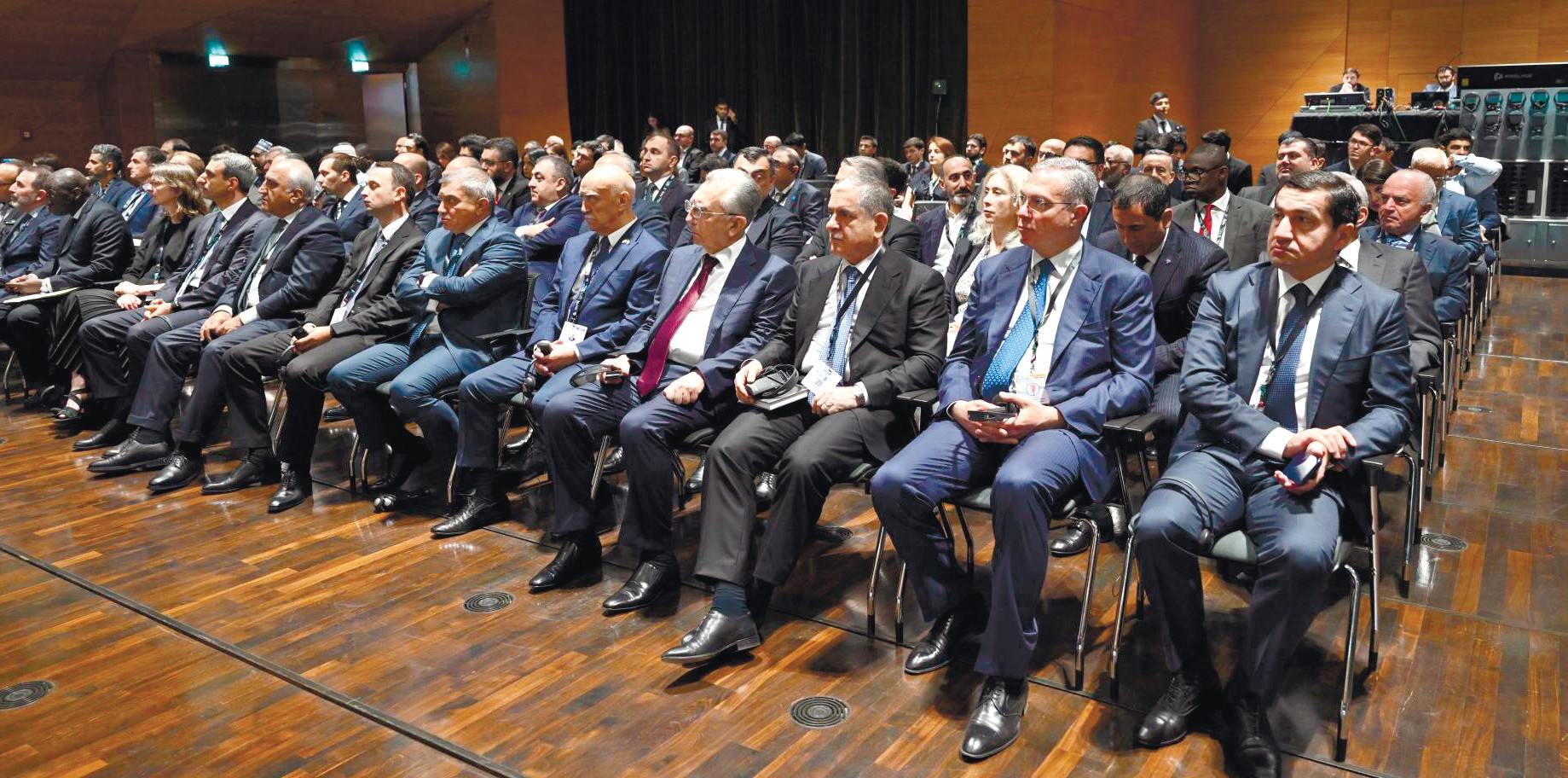
Representatives from 57 member states of the bank, international financial organisations, governments, and business communities met over four days to discuss new approaches to development financing, infrastructure investments, and regional integration.
The main political outcome of the Baku meetings was the official launch of practical implementation of the IDB's new ten-year strategy for 2026–2035. As Al-Jasser noted, Baku marked the beginning of the transition from strategic planning to tangible action.
A year ago, member countries defined long-term development priorities for Algeria. In Azerbaijan, these were transformed into five-year corporate programmes and specific investment projects.
The central theme of this year's meetings was regional integration, since IDB leadership believes that transport connectivity, energy corridors and joint infrastructure projects are the main drivers of economic growth for member countries. "Baku is a vital milestone in the first year of implementing the updated framework programme," Al-Jasser stated.
In other words, Azerbaijan was the first country where the new IDB strategy was practically realised through new financial solutions, investment agreements, and partnership initiatives.
Concrete projects
The new strategy was confirmed by the signing of 67 agreements worth approximately $6 billion. "These agreements target crucial sectors and confirm our unwavering commitment to delivering highly efficient development solutions as a united IDB Group," declared the bank's head.
Among the largest initiatives are construction of the Malaba-Kampala railway in Uganda, the Northern railway crossing in Istanbul, the modernisation of a highway in Tajikistan, the development of solar energy in Nigeria, and the upgrading of Ivory Coast's energy system. Projects have also been financed in Bangladesh, Palestine, Benin and Gambia.
This investment distribution aligns with the core principle of the new IDB strategy, which is to fund projects with the potential to generate long-term economic impact across multiple states in a simultaneous manner.
At the same time, the Board of Executive Directors approved a new financing package worth $2.8 billion. This is to be used to implement nine major new projects in transport infrastructure, energy, food security, climate resilience, and digital connectivity.
Ahmed Rostom, Egypt's Minister of Planning and Economic Development, informed participants of the significant funding shortfall for infrastructure development in Organisation of Islamic Cooperation (OIC) member states.
"While global demand for infrastructure investment is estimated at around $6.9 trillion annually until 2030, there is a significant financing gap of about $2.5–3 trillion per year. For OIC member countries, this problem is particularly critical, with a funding shortfall of around $290 billion annually. Rostom stated that a significant portion of this deficit is concentrated in the roads sector (approximately 53%), as well as the telecommunications, power generation and water supply sectors, which account for around 38% of the infrastructure gap.
He emphasised that, without innovative approaches and a reduction in this gap, recovery will be extremely challenging. He called for developing joint mechanisms and combining the potential of the Islamic Development Bank Group with other multilateral financial institutions to overcome this barrier.
A new stage of cooperation
Minister of Economy Mikayil Jabbarov has reported that both sides have finalised the Partnership Strategy for 2027–2031, which is fully aligned with Azerbaijan's national programme "Azerbaijan-2030" and the IDB's new strategy.
Jabbarov stated that over the next five years, the focus of their cooperation would be on priority areas such as economic diversification, increasing investment in human capital, developing green and sustainable infrastructure, and expanding regional coordination.
He stated that their joint portfolio currently comprises 11 projects with a value of approximately $640 million. Since Azerbaijan joined the IDB, 84 projects with a combined value of almost $1.8 billion have been financed. A particular focus is placed on the process of restoring liberated territories. The IDB is involved in the financing of projects for the Garabagh main irrigation canal and the "Gyz galasy" reservoir, with the aim of significantly improving agricultural efficiency in the Jabrayil and Fuzuli districts.
Following the liberation of the Garabagh region, Al-Jasser noted a significant expansion in cooperation between the bank and Azerbaijan. "We are currently engaged in a significant project with a budget in excess of $430 million, the aim of which is to enhance the management of water resources, restore outdated canals and reduce water losses," he stated.
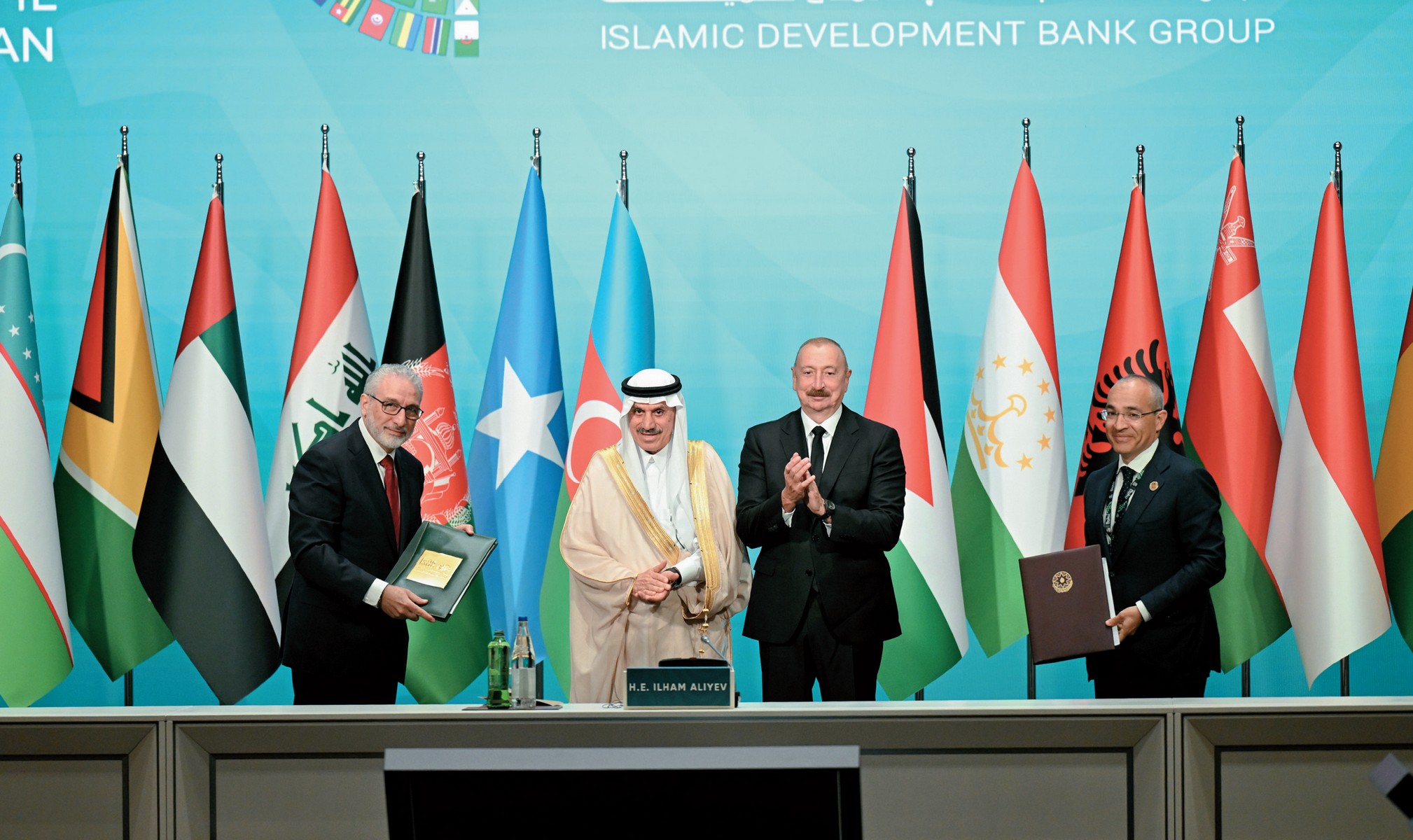
During the course of the meetings, a series of documents were signed, with the aim of securing financing for the reconstruction of Garabagh's primary irrigation canal. The cost of this project is estimated to be in excess of $430 million, and will also cover the development of associated water infrastructure.
Consequently, cooperation is gradually shifting from traditional infrastructure projects to comprehensive restoration of the Garabagh economic region.
"IDB is not only a financial partner, but also one of Azerbaijan's key partners in generating ideas and implementing projects," Jabbarov concluded.
The country's economic development is marked by a transition from a state-dominated model towards an economy where the private sector plays a leading role. In this context, IDB financial instruments are especially important as they help Azerbaijani companies adapt to international standards, enter foreign markets and integrate into global value chains, he said.
Focus on private sector
Another notable feature of this year's meetings was a clear shift from traditional state financing towards supporting business.
The Islamic Corporation for the Development of the Private Sector (ICD), the International Islamic Trade Finance Corporation (ITFC) and the Islamic Corporation for Insurance of Investment and Export Credit (ICIEC) signed dozens of agreements with Azerbaijani banks, government institutions and major companies.
Of particular note were ITFC's new agreements, which are valued at almost $3 billion.
ITFC has announced a collaboration with Rabitabank and TuranBank with a view to increasing the availability of Islamic financial instruments to small and medium-sized enterprises in Azerbaijan. The Azerbaijani Business Development Fund is to receive framework financing to the value of ₼200 million.
Meanwhile, ICD signed an agreement with SOCAR to jointly explore public-private partnership projects in both Azerbaijan and other member countries.
In essence, this necessitates the establishment of a comprehensive Islamic finance infrastructure to facilitate the growth and development of Azerbaijani businesses.
A significant part of the discussions focused not only on investments but also on trade development among Organisation of Islamic Cooperation countries.
ITFC CEO Adib Al-Aama is convinced that trade finance continues to be one of the most effective tools for economic growth.
According to him, ITFC's transaction volume reached a record $9.3 billion in 2025, with nearly $8 billion dedicated to financing trade between OIC countries.
The corporation has announced its intention to prioritise the development of a project designed to enhance trade turnover between Azerbaijan, Central Asian countries and other regions.
In 2025, ICIEC CEO Khalid Khalafalla reported that his corporation had provided insurance coverage for trade and investment operations within IDB member countries, amounting to $17.7 billion. He announced plans to expand activities in Azerbaijan and Central Asian countries, in cooperation with other bank structures and multilateral financial institutions.
Khalafalla said that since Azerbaijan joined ICIEC in 2023, it has supported insurance operations in Azerbaijan totalling more than $165 million.
Most operations involved trade finance; however, ICIEC also participated in projects attracting foreign direct investment into Azerbaijan’s telecommunications sector.
A new economic model
The central theme of this forum—regional integration—is of great significance. The IDB Group President believes that countries in the region have overcome most political barriers that long hindered mutual trade and infrastructure development over recent years. "Countries in this region have realised that integration is their only effective way forward. Despite geographical challenges, they have begun strengthening ties with neighbours and implementing transformative projects benefiting the entire region," Al-Jasser stated.
He emphasised that successful hydropower development, transport corridors and energy connections require close cooperation among neighbouring states. For this reason, IDB intends to continue focusing on projects with cross-border effects.
Azerbaijan's role in the region has been to develop the Middle Corridor, international railway routes, Baku International Sea Port and Alat Free Economic Zone. All of the above factors serve to make it an essential hub within Eurasia's transport system.
One of the key topics discussed at the forum was the further development of the global Islamic finance industry, which is currently valued at approximately $4 trillion.
Sami Al-Suwailem, the acting Director General of the IDB Institute, observed that the IDB Group's assets amount to approximately $40 billion, representing a modest share of the global Islamic finance market. "Leadership is defined not by size but by quality," he emphasised.
The group's position at the forefront of this sector for over 50 years can be attributed to its commitment to innovation, the development of new financial instruments and continuous engagement with member states.
Following the meetings, the chairmanship of the IDB Group's Board of Governors was passed from Azerbaijan to Burkina Faso. The next annual meeting is scheduled for 2027 in Jeddah city.
The key result of the Baku meeting was the signing of multibillion-dollar agreements, as well as a shift in Azerbaijan's position within the international financial architecture. While in the past it was primarily a recipient of resources from international financial institutions, today it serves as a platform where agendas for their future development are formed.
RECOMMEND:
 88
88