
STAKING ON FORCE AGAIN?
Arrests, raids and new risks of political crisis after the elections in Armenia
Author: NURANI
The parliamentary elections in Armenia are now over and the vote count is complete. It is clear that a political lull should have set in. It is clear that forming a government coalition in Armenia is not on the agenda. The votes secured by the incumbent prime minister's 'Civil Contract' party unequivocally allow him to form a single-party government.
The opposition camp must conduct a 'post-mortem analysis' to determine why, after losing two wars and the conclusion of the Washington agreements, which essentially amounted to Yerevan's capitulation, the opposition failed to bring down Nikol Pashinyan.
Meanwhile, the election campaign in Armenia continues with the same sniping, mutual recriminations, arrests and raids on opposition party offices.
Voter costs
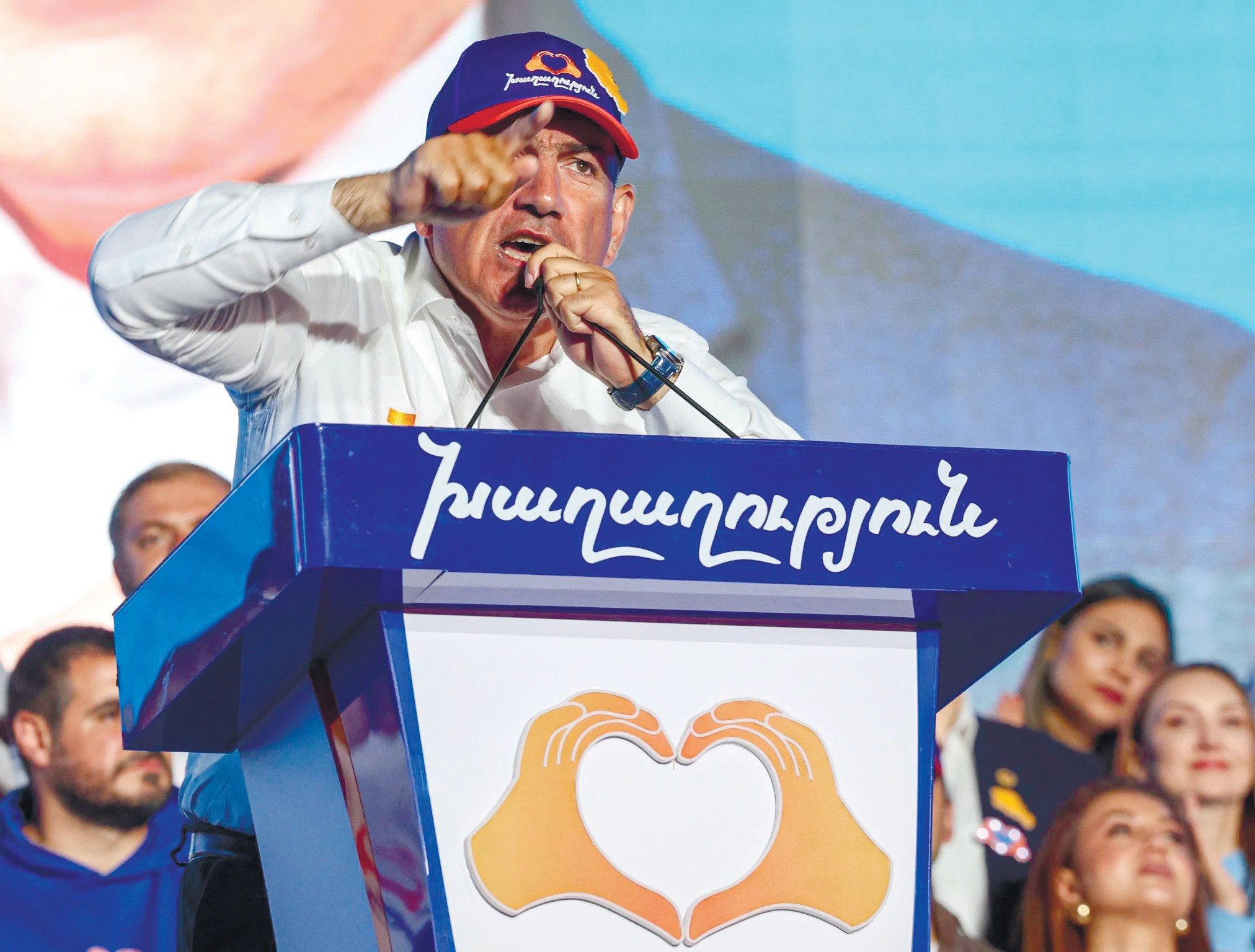
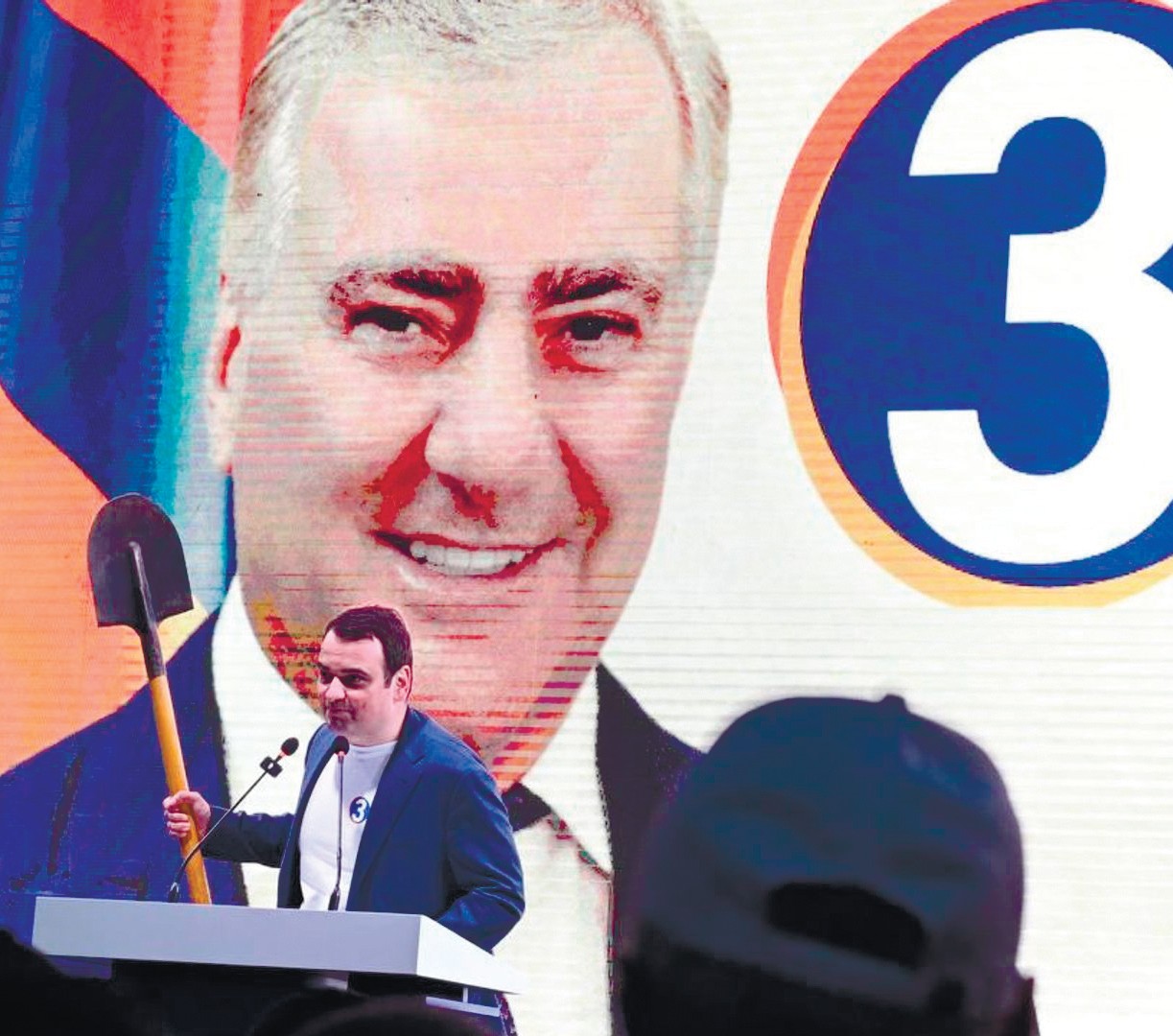
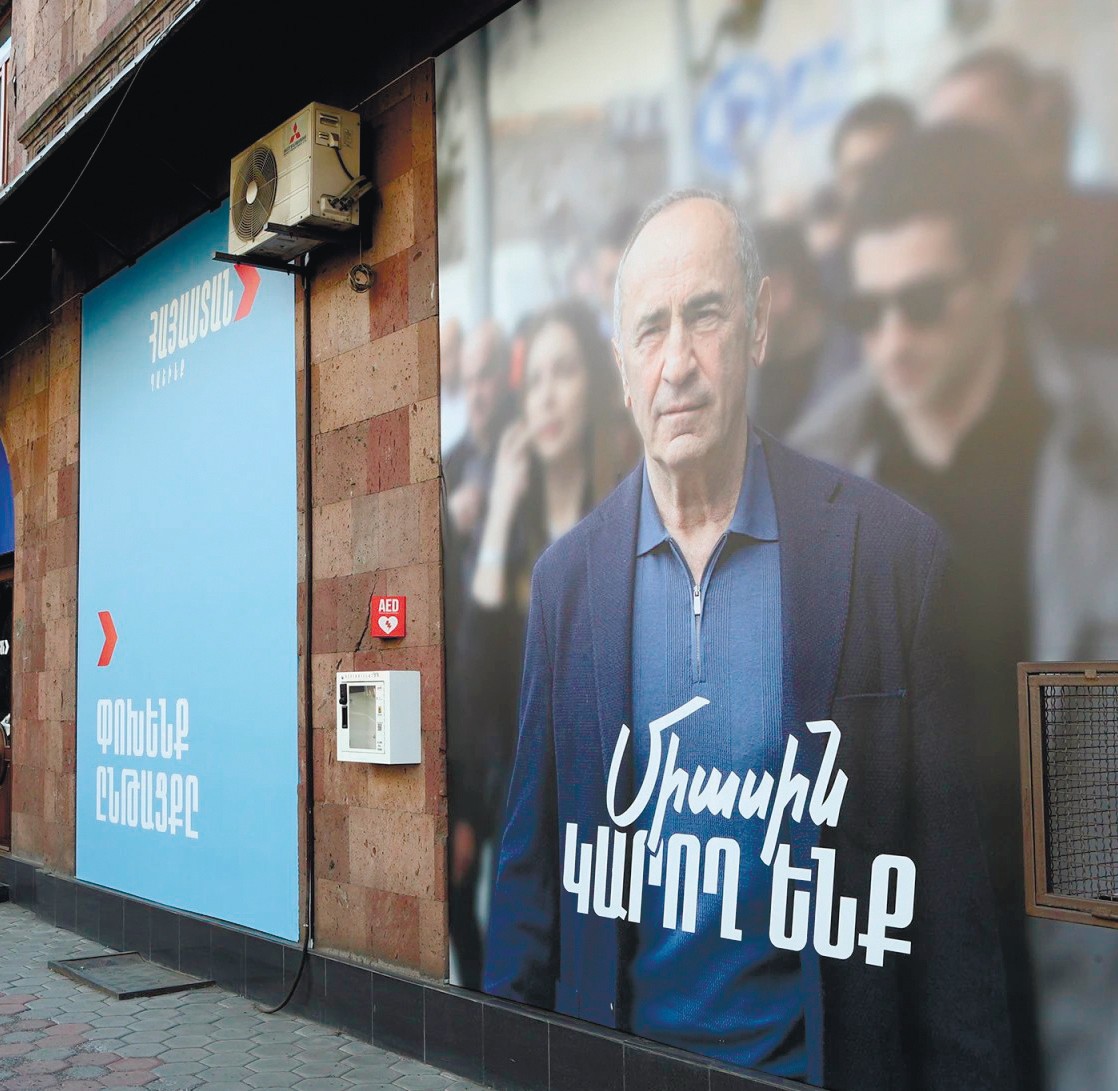
The accusations against opposition activists are standard: vote-buying. The Telegram channel 'Baghramyan 26' is the official mouthpiece of the incumbent prime minister's team. It regularly publishes intercepted phone conversations. These show 'Strong Armenia' of Samvel Karapetyan, 'Armenia' of Robert Kocharyan, or 'Prosperous Armenia' of Gagik Tsarukyan distributing election bribes. The Armenian authorities prevented the opposition 'big three'—Samvel Karapetyan, Robert Kocharyan, and Gagik Tsarukyan—from leaving the country when they tried to fly to Russia.
Another accused is Avetik Chalabyan, the coordinator of the 'Hayakve' civic initiative, who has been detained. The court placed him under arrest for two months. His wife stated that the judges categorically ignored Chalabyan's health problems. She is convinced that they want to isolate him ahead of the Constitutional Court's consideration of the lawsuits filed by opposition forces challenging the election results.
It is a big question whether opposition politicians should place their hopes on this court. Pashinyan had already begun to build a regime of personal dictatorship in Armenia even before the 2020 war. He brought the country's Constitutional Court under his control, as has been noted many times. It is highly improbable that a verdict will be unfavourable to the Prime Minister.
Election bribes and vote-buying are a longstanding problem in Armenia. In the days of the 'Garabagh clan', the means of bribery included expired jam and cheap kerchiefs popular with elderly women. It was to be expected, given that electricity in Armenia's regions was paid for with chicken eggs. The price of votes has now risen—payments are made in cash rather than in kind.
European observers, who turn a blind eye to violations of election legislation in Armenia, were forced to acknowledge election bribes in previous plebiscites.
Breaking the law must have consequences. Even if fighting election bribes resembles tilting at windmills. But Pashinyan is hardly concerned about the integrity of the electoral process. He has won, secured a parliamentary majority, and extended his tenure in the prime minister’s chair. Opposition leaders constantly stress that this will not last long. Yet how they intend to remove him remains unclear. The opposition is in no hurry to reveal specifics.
Against this backdrop, two more significant events occurred. Firstly, the criminal case and the refusal to allow Robert Kocharyan to leave the country. And secondly, searches at the office and flat of Ishkhan Saghatelyan, the leader of the Dashnaktsutyun party in Armenia.
Military coup?
The charge against Robert Kocharyan is standard: violation of election legislation. It is interesting that the criminal case against Armenia’s second president—a war criminal, an accomplice to the Khojaly genocide—emerged only the day after he was barred from leaving for Russia. Kocharyan, with his ‘Armenia’ bloc, which received 10% of the vote, easily passes the 5% threshold, and he cannot be pushed out of parliament. At the same time, he is unlikely to pose an ‘electoral’ threat to Pashinyan and his team.
The point is different. Kocharyan is an experienced political player who began his career in the Komsomol structures of the former USSR and knows very well how things are done in the offices and corridors of power. Pashinyan, although he has been prime minister for more than eight years, has not yet managed to become adept at such intrigues.
Moreover, Kocharyan is the undisputed leader of the ‘Garabagh clan’. And this is not just the remnants of the overthrown occupation junta who fled from Khankendi. Over the 20 years that the Armenian presidency was held first by Kocharyan and then by Serzh Sargsyan, a great many Garabagh Armenians entered Yerevan’s power structures. Yes, Pashinyan periodically carried out ‘purges’, but how effective were they?
And most importantly, Kocharyan is not just an experienced and cynical player. He is also, we remind once again, not squeamish about the means he uses. And he resorts to terror and political assassinations without any hesitation.
As is well known, a cult of terror has existed in Armenia for many years, indeed decades. In the 1990s, Armenia openly applied this practice against Azerbaijan. It is impossible to forget the bombings of trains, the Baku metro, and so on. And one would have to be naïve to believe that terrorists, having returned from Azerbaijan, could become model citizens. Such a nature sooner or later begins to manifest itself at home as well.
Thus, in April 1992, Artur Mkrtchyan, the first leader of the Garabagh separatists, was killed by a grenade thrown through a window. It was his death that allowed Kocharyan to assume the top positions in the Garabagh movement. The murder was never solved; none of the versions was confirmed.
The next wave of terror hit Armenia in 1997-1998, during the ‘creeping coup’ that removed first president Levon Ter-Petrosyan from power. At the time, Yerevan residents spoke of terrorists who had arrived from Garabagh and cars with Garabagh licence plates. Kocharyan, who was then prime minister, moved into the presidential chair. And a year later, in October 1999, an unprecedented event took place in Armenia: five gunmen stormed the parliament session hall and carried out a massacre. Among others, parliament speaker Karen Demirchyan and prime minister Vazgen Sargsyan were killed. By sheer coincidence (?), they were Kocharyan’s most dangerous political opponents. What ‘power levers’ Armenia’s second president has today is anyone’s guess. But it seems that at 26 Baghramyan Avenue they have grown seriously nervous.
In principle, Pashinyan could bring Kocharyan to trial and put him behind bars for a long time. In practice, he has already arrested Kocharyan but was forced to release him. Moscow put considerable pressure on the prime minister. Kocharyan is a friend of Vladimir Putin. The case never reached a verdict; the trial had to be wound down.
Today, relations between Yerevan and Moscow are strained to the limit. Armenia’s dependence on Russia, despite all the emotional gestures from the European Union, has not disappeared anywhere. And this is not only about exporting strawberries but also importing oil, gas, and uncut diamonds at internal prices.
The force option minus Kocharyan
Pashinyan's team is well aware that Kocharyan will not lead the way with a rifle in one hand and a flag in the other. He will not personally assemble his own army. His job is to create intrigues and find executors. And such people exist.
Pashinyan's opponents have people to rely on in the army and security forces. Despite purges, the Garabagh clan is still well represented. The army in Armenia has always been and continues to be a pro-Russian bastion, despite all attempts by official Yerevan to flirt with NATO.
A Russian military base is also stationed in Armenia. The bilateral treaty on military cooperation with the Russian Federation is still in place. Finally, the joint groupings of ground forces and air defence forces continue to operate.
Experts tell us that there has already been one attempted military coup in Armenia, following the 44-day war. It was clearly more of a militaristic operetta than a genuine military rebellion. The coup participants were not supported by the Armenian units that are part of those very joint groupings with Russia. Events will unfold differently this time. Be prepared, because things are going to get very ugly.
The Dashnaks are another asset. The Armenian 'traditional parties'—Dashnaktsutyun, Ramkavar Azatakan, Hunchak—practised terror as far back as the late nineteenth century. Ramkavar and Hunchak are currently invisible on the political scene in Armenia, while the Dashnaks continue to operate. Young members of this party still swear an oath of allegiance on the graves of their predecessors, with their hand on a weapon.
Dashnaktsutyun has extensive foreign connections, from which they can send both money and, if necessary, fighters. For a real war, that would be too few, but for a campaign of terror, it's perfect.
A force option in Armenia definitely remains a possibility.
RECOMMEND:
 120
120