

ANATOMY OF TWO WHEELS
Azerbaijan tightening legal grip on moped traffic
Author: Kamilla BABAZADE
The streets of Baku are now synonymous with the distinctive hum of small-capacity engines. Two-wheeled transport, once seemingly an attribute of a romantic southern lifestyle or a purely utilitarian tool for delivery services, has quietly morphed into a powerful socioeconomic phenomenon. The introduction of mopeds has undoubtedly enhanced urban mobility, however, it has also exposed a significant crisis in road safety. The Milli Majlis's third-reading adoption of amendments to the laws "On Highways", "On State Duty" and "On Compulsory Insurance" is not merely a bureaucratic step. This initiative by the state aims to restore order to a domain where a perilous illusion of libertinism has prevailed for an extended period.
The illusion of easiness and the laws of physics
The main issue with light two-wheeled transport is how it is perceived. The general perception of a moped is that it is a sophisticated form of bicycle that does not require any particular expertise to operate. However, from the standpoint of biomechanics and injury kinematics, this is a catastrophic misconception. Extensive road safety research indicates that motorcyclists and moped riders face a 20-30 times higher risk of fatality per kilometre travelled in road accidents than car drivers. Physics is unforgiving: in a collision, a car absorbs a significant portion of kinetic energy through its crumple zones and airbags. The moped rider, however, is effectively deprived of a protective shell—every impact is transmitted directly to the body. Furthermore, in accordance with the international "crash mitigation" concept, even at 40 kph, a collision for an unprotected person is equivalent to a fall from the height of a third-floor building.
Azerbaijan's statistics for last year, which recorded 43 serious accidents involving two-wheeled vehicles and 12 fatalities, vividly illustrate this theoretical postulate. The trend in Baku during the first few months of this year, where within a short span five lives were cut short and one person was injured, confirms that chaos has escalated into a systemic threat. Notably, in early June alone, the capital's authorities identified 79 motorcycles and mopeds whose riders lacked driving licences and state registration plates, as well as vehicles on which equipment had been installed or modified in violation of regulatory requirements. These were then transferred to secure parking facilities, where the riders were dealt with in accordance with the law, as reported by the Baku State Traffic Police.
Prohibition and stringent regulation
The issue faced by Azerbaijan is not an isolated one. Urban planners and transport researchers worldwide have long been seeking a balance between micromobility and safety. In the past, there have been two main approaches to resolving this issue.
The first of these is the radical Asian approach. In several Chinese megacities, such as Guangzhou and Shenzhen, there was a time when outright bans on motorcycle and moped traffic in central districts were imposed due to critical fatality rates and environmental pressures. However, in Baku's context, where mopeds play a vital logistical role and provide employment for thousands of young people, such a path would lead to social tension.
The second is the European approach, grounded in the Vision Zero concept—zero fatalities. It is precisely these principles that are evident in the current Milli Majlis reforms. In EU countries, notably France and Germany, mopeds with engine capacities of up to 50 cc have for decades been integrated into a comprehensive system of strict oversight. In this country, vehicle registration is not the only mandatory requirement; an AM category licence is also required, which includes a theoretical traffic rules exam and a practical test. Scientific medical journals analysing road traffic injuries in Europe demonstrate that the introduction of mandatory certification and training reduces adolescent and youth two-wheeled injuries by an average of 40%. Discipline is established in contexts where there is personal legal liability, supported by a state-issued registration plate.
Helmet as a remedy
The legislative framework, which requires an A1 category licence and number plates, establishes a legal foundation. However, safety is ultimately determined by behavioural norms and physical protection. In Baku, with its dense parking zones along pavements and narrow central streets, one of the most insidious road hazards is the sudden opening of a parked car door. It is important to note that moped riders are often unable to react to a split-second gesture from a careless motorist, due to the proximity of the motorist to the obstructed right-hand lane. Even at speeds of 30-40 kph, the force of such an impact can lock the steering, with the potential to catapult the rider out of the saddle and straight under the wheels of oncoming traffic.
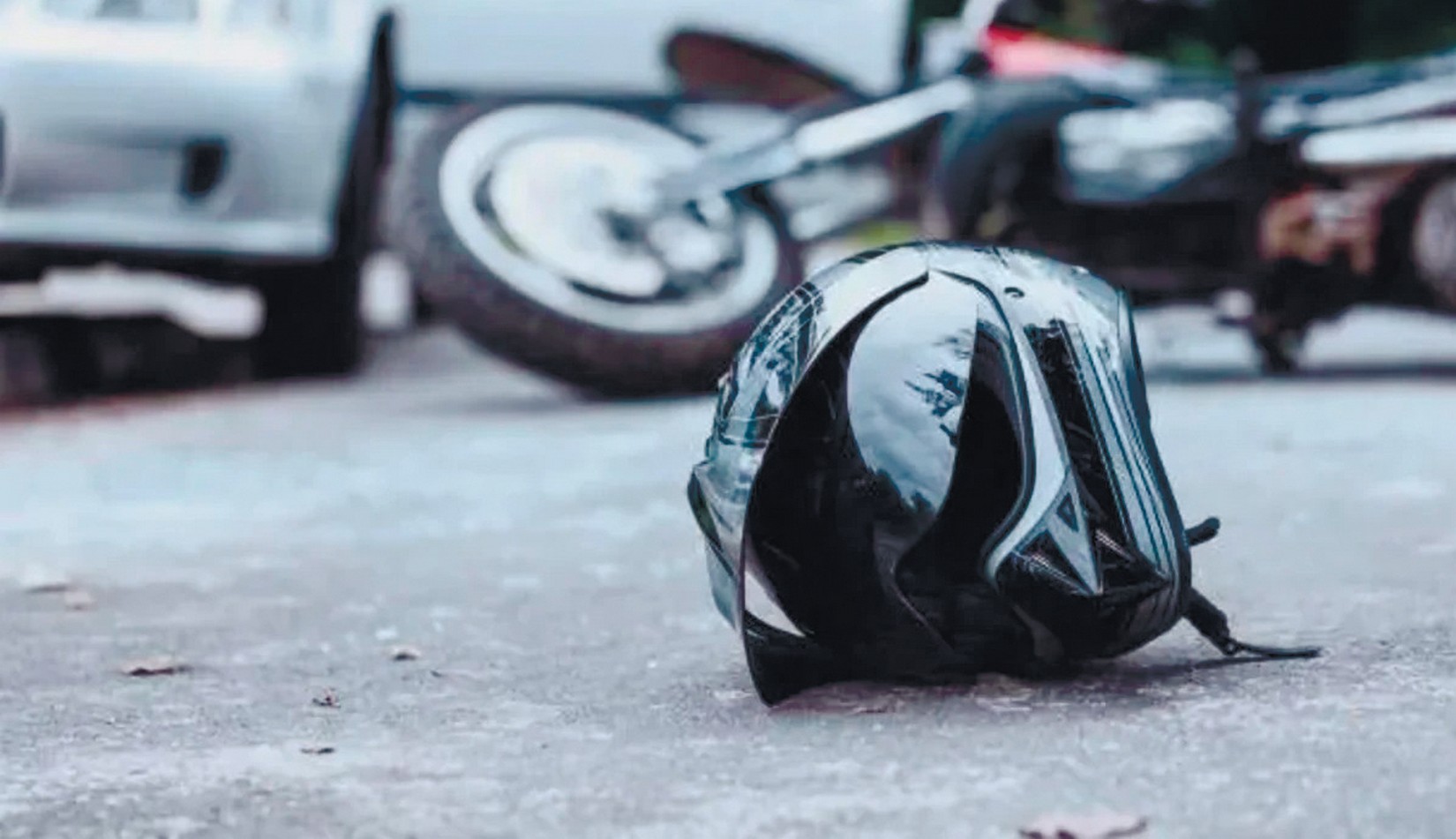
Passive safety remains paramount, and the helmet plays a pivotal role in this regard. According to data from the WHO, the correct use of a high-quality motorcycle helmet can reduce the risk of head and brain injuries by 69%, and the likelihood of a fatal outcome by 42%. In Baku's conditions, characterised by strong winds and complex terrain, the stability of two-wheeled vehicles is reduced, making the risk of falls even higher.
Visibility is also a key concern. At dusk and in the evening, the human eye perceives silhouettes with a delay. The use of reflective vests is not a traffic police whim but a scientifically grounded necessity, increasing the distance at which a moped rider is detected in headlights from a meagre 30 metres to a safe 150 metres, giving the driver behind time to brake.
Taboo on driving children
The most sensitive and emotional aspect of the new reform lies beyond pure logic—it concerns our children. It is evident that a significant number of underage individuals can be observed traversing the streets of Azerbaijani cities, often in close proximity to vehicles. Adhering to each other without protective headgear or apprehension, they regard the descent as an exhilarating fairground attraction.
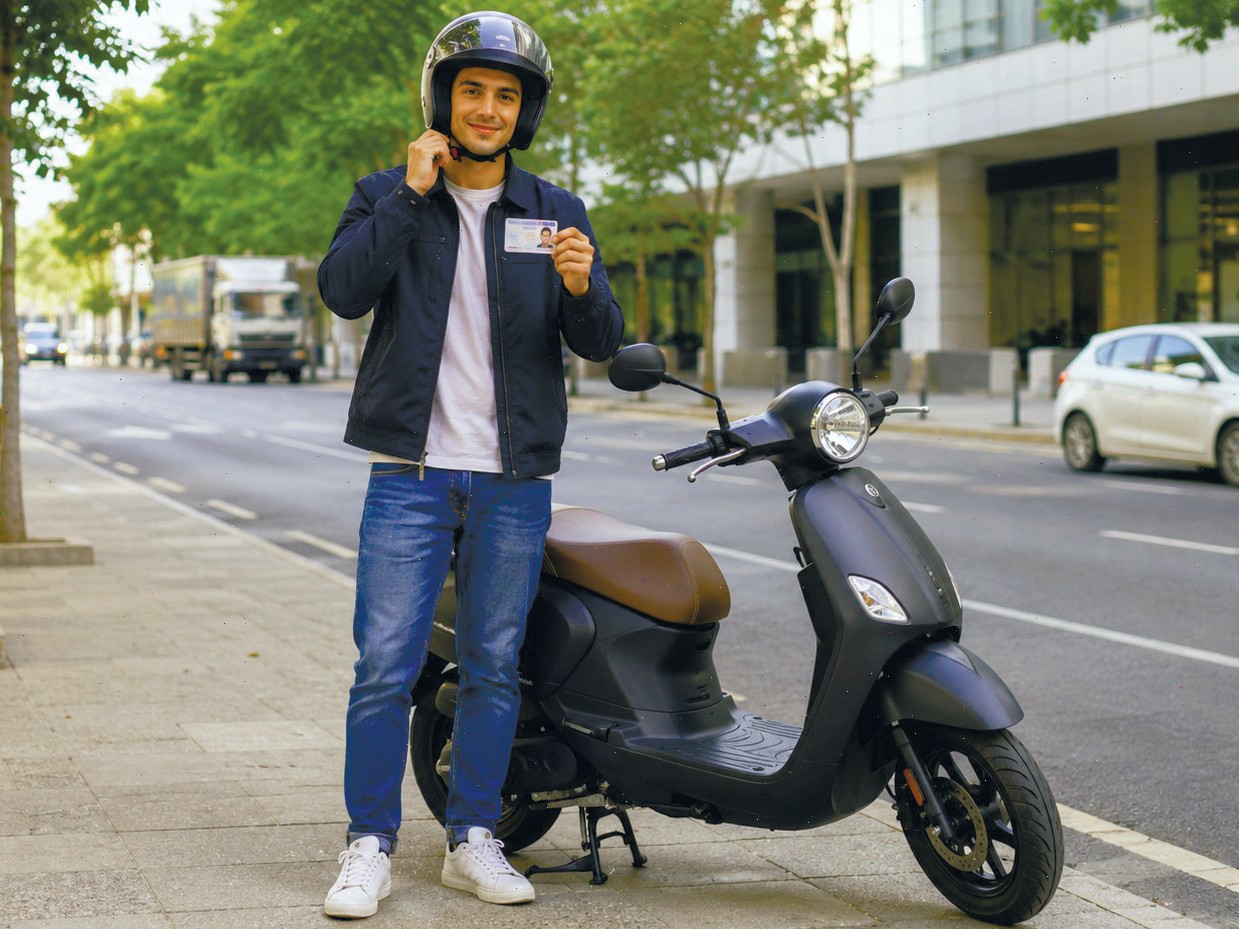
The new law provides a definitive resolution to this matter. Following the introduction of the driving licence requirement for mopeds, it is now illegal for the underage to use these vehicles. In terms of legal implications, riding a moped without a licence is now viewed as equivalent to driving a car without one.
This highlights the crucial role of parental responsibility and vigilance. It is unacceptable and reprehensible to purchase a child a deadly dangerous "toy", under the pretext of a short trip to the corner shop for bread. The road does not divide routes into long and short, and the laws of physics are equally applicable on a high-speed highway and a quiet residential street. It is imperative for parents to recognise that accommodating their children's every whim in such situations poses a direct threat to their own child's well-being. The moped has evolved from a mere scooter substitute to a fully independent vehicle. As such, it demands maturity, discipline, and the legal right to operate it.
The angle of visibility
Integrating mopeds into Azerbaijan's legal framework is an acknowledgement that they are fully fledged participants in the road ecosystem. Introducing this type of vehicle into the legal domain will put an end to the practice of "invisibility", whereby those at fault in an accident could flee the scene unidentified due to the absence of number plates.
The logical outcome of this reform should be a qualitative change in the urban environment. It is imperative that the moped cease to be a source of heightened anxiety for pedestrians and motorists alike. The new rules are not a repressive measure aimed at restricting business or freedom of movement, but a protective mechanism. The road does not forgive recklessness, and the price Baku has paid for the regulatory pause has proved too high. The imminent era of stringent registration and compulsory training represents a pivotal shift in the paradigm of two-wheeled transportation, transforming it from a mere risk factor to a symbol of a modern, fast and, above all, safe capital.
RECOMMEND:
 86
86

