

GREEN ENERGY ROUTES
Regional connectivity strategy
Author: Nurlana GULIYEVA
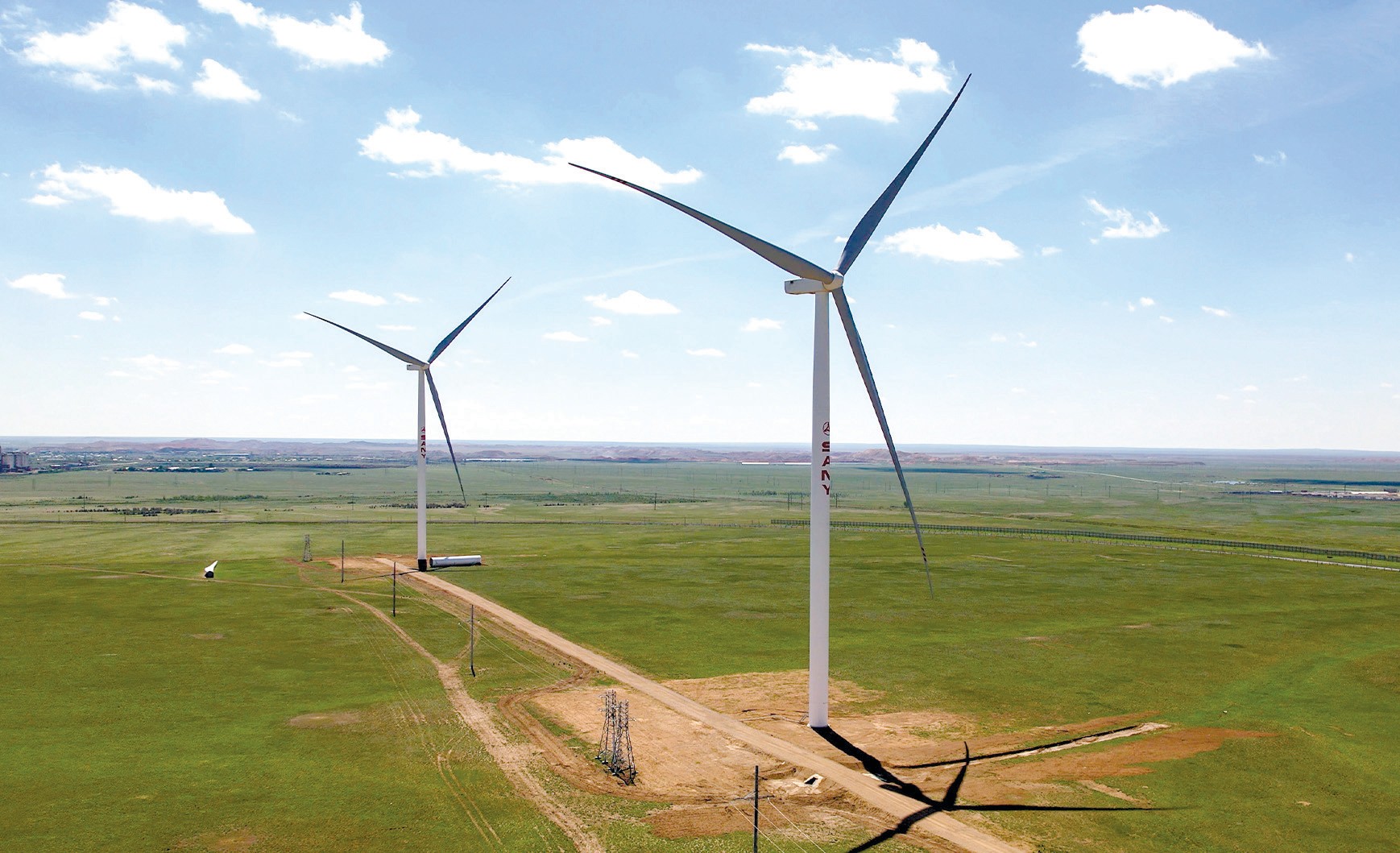
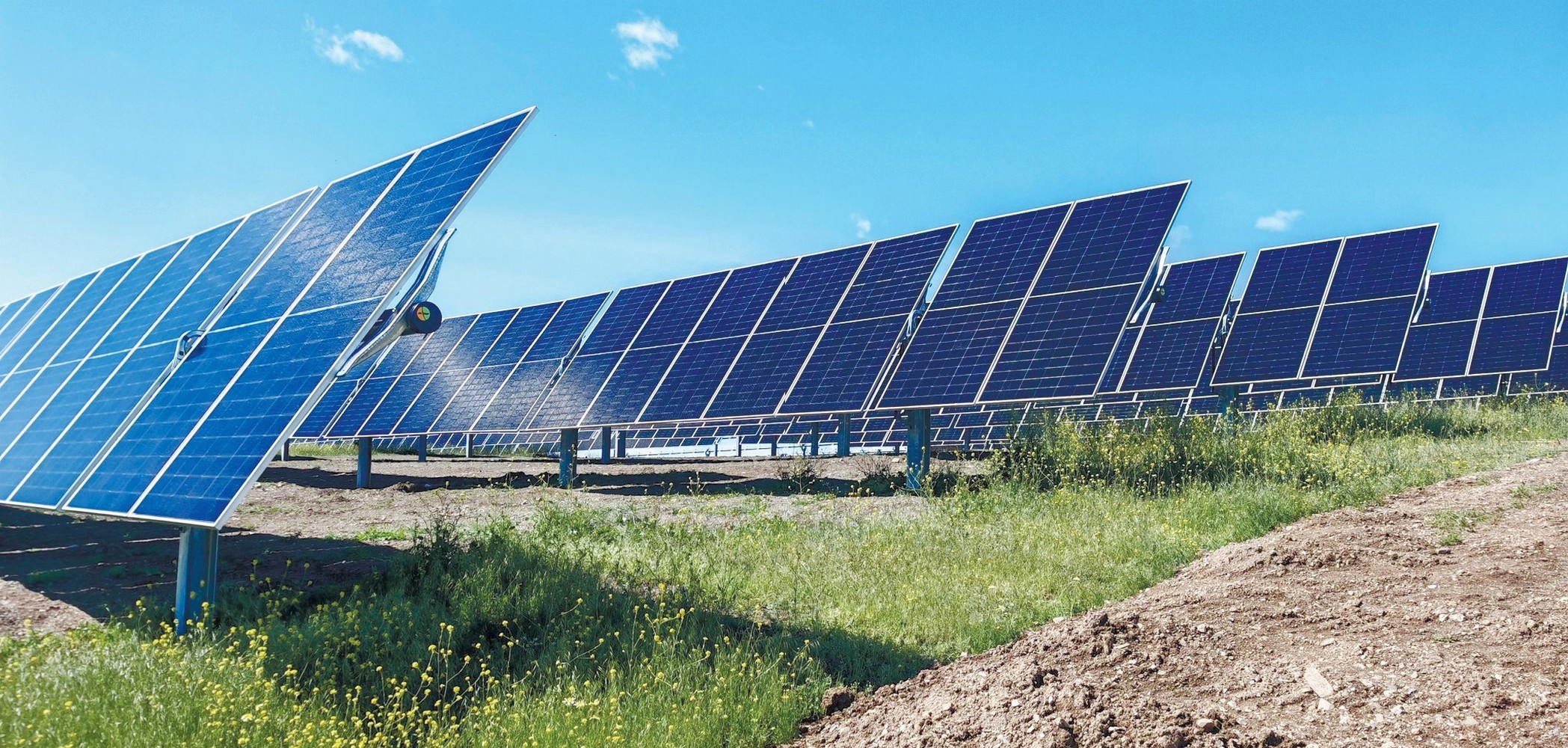
The development of renewable energy sources (RES) in Azerbaijan is gradually transcending the boundaries of the climate agenda, evolving into one of the key drivers of the country's long-term economic strategy. While the primary focus just a few years ago was on building solar and wind power plants, today the focus has shifted to international energy corridors, the export of green electricity, and the creation of new regional infrastructure.
These very issues were the central topic of the 12th meeting of the Steering Committee under the Strategic Partnership Agreement between Azerbaijan, Georgia, Hungary, and Romania.
Long-term strategy
Over the past two years, Azerbaijan has arguably taken its most significant step in advancing its green agenda. While the initial priority was to develop generation capacity and attract leading international investors, the emphasis is now gradually shifting towards building export infrastructure. In other words, the country is moving from producing renewable energy to creating a new model for its transportation and international trade.
In this regard, recent statements by President Ilham Aliyev of Azerbaijan should be considered, as they have effectively outlined a long-term strategy for the sector.
Speaking after a meeting with European Commission President Ursula von der Leyen, the head of state emphasised that cooperation with Europe is already extending far beyond traditional natural gas supplies. "A relatively new area in our relations with the European Commission is renewable energy. We discussed this matter in detail with the President, including Azerbaijan's potential in solar, wind, and hydropower, as well as existing power lines and those yet to be built. From this standpoint, we can also become strategic partners," he noted.
At the same time, this is no longer about future prospects but about specific commitments to bring new capacity online. "I informed Ms President that contracts already signed with foreign and local companies will enable us to achieve 8GW of solar and wind energy over the next 5-6 years. This covers only what has already been signed, representing a contractual obligation. But certainly, this is not the limit," Ilham Aliyev added.
Even more significant is the economic dimension of the energy transition. Speaking at the 4th Shusha Global Media Forum, the President of Azerbaijan stressed that the development of RES is not seen as an alternative to the traditional oil and gas sector. On the contrary, both industries should reinforce each other: "At the same time, work is underway related to renewable energy. This will allow us to save gas. By 2032, we will increase renewable energy capacity to 8 GW, which will enable us to save 2-3 billion cubic metres of gas per year," the head of state said.
From potential to export
The practical implementation of the new strategy is now taking on increasingly concrete shape. The Steering Committee meeting officially announced the completion of the feasibility study for the "Caspian Sea–Black Sea–Europe: Green Energy Corridor" project, which marks the initiative's transition to the next phase of implementation. As Energy Minister Parviz Shahbazov noted, "The successful completion of the feasibility study moves the project from the planning stage to the development and implementation phase."
The project, as outlined in the feasibility study, involves the construction of a high-voltage submarine cable across the Black Sea. The cable will have a total length in excess of 1,150 km and an initial capacity of approximately 4 GW per year. Following the completion of the feasibility study phase, the project company, GECO, has been assigned the task of preparing a detailed roadmap for the project. In parallel, the participating countries are expected to enhance their coordination among national energy regulators and finalise preparations for the final investment decision.
At the same time, it should be noted that the Black Sea energy corridor is not the only export route that Azerbaijan is currently developing. Concurrently, the Azerbaijan-Georgia-Türkiye-Bulgaria energy corridor project is underway, with the objective of supplying green electricity to Southeastern Europe via land-based infrastructure. Therefore, the focus has shifted from a single project to the creation of multiple complementary export routes for clean energy to the European market. Furthermore, the potential to increase the capacity of the Azerbaijan–Türkiye interconnector from the initial 1 GW to 3 GW is under consideration, which would lead to a substantial expansion of the country's export capabilities.
The eastern direction is also being developed concurrently. A feasibility study is currently being prepared for the Central Asia–Azerbaijan energy corridor, which would connect the Central Asian countries, which are rich in renewable energy resources, with the South Caucasus and, from there, with the European market.
Uzbekistan's Deputy Minister of Energy, Umid Mammadaminov, has stated that this project is of strategic importance for the entire region. "Central Asia possesses vast renewable energy resources, particularly significant potential for wind and solar generation. The green energy corridor is designed to unlock this regional potential and strengthen energy connectivity between Central Asia and Europe," he stated.
Azerbaijan is thus becoming a pivotal component of a novel international energy communications infrastructure, connecting the Caspian region, Central Asia, the South Caucasus, and the European Union.
Abdullah Zayed, Director of Business Development and Projects at Masdar, highlighted the new role for the country. Azerbaijan is poised to become a pivotal player in fostering energy interconnectivity, both within the region and beyond its borders. From his perspective, the country boasts numerous competitive advantages, including significant potential for solar and wind energy generation, a favourable regulatory framework for foreign investors, a strategic geographical position, and an established reputation as a reliable energy partner.
The economics of transition
According to the International Energy Agency, global energy investment will reach $3.4 trillion in 2026, with approximately $2.2 trillion—or almost two-thirds—directed towards clean energy projects. As noted by Huseyn Huseynov, advisor to Azerbaijan’s Minister of Economy, for every dollar invested in the oil and gas sector today, about $2 goes into solar and wind generation, grid development, and energy storage technologies.
At the same time, he said, the main challenge is no longer a shortage of capital but a lack of sufficient reliable and investor-attractive projects... "It is precisely this gap that Azerbaijan is purposefully and systematically striving to close," Mr Huseynov said.
For this reason, special attention is currently being paid to creating a modern regulatory framework, developing energy infrastructure, and establishing conditions that allow large international investors to implement major projects in the country.
Masdar continues to be a key partner to Azerbaijan in this area, with several solar and wind generation projects. However, the expansion of green energy production will require the parallel modernisation of the national power grid.
As Deputy Energy Minister Elnur Soltanov has reported, integrating just 2 GW of new renewable energy facilities will require approximately $500 million in investment for grid development. "Masdar from the UAE is currently our strategic partner in this area," he informed us. "However, integrating these 2 GW of renewable energy into the grid requires substantial investment — on the order of $500 million."
The region's high investment appeal is also evidenced by the growing international interest in renewable energy projects. According to Rafael Grossi, Director General of the International Atomic Energy Agency (IAEA), the agency has already received over 600 proposals for renewable energy projects from Azerbaijan and the Central Asian countries. "Central Asia is an important region in the global energy transition, with significant potential in the field of renewable energy and growing investment attractiveness," he emphasised.
Grossi believes that further development of the sector requires closer coordination among the region's states, as it is joint projects that can provide the necessary scale to attract international capital.
It is important to recognise that such large-scale programmes necessitate continuous technological advancement. Elchin Targuluyev, Director of the Technology and Innovation Department at SOCAR Green, believes that the next stage of renewable energy development will be more concerned with enhancing power grid stability than with increasing installed capacity. Hybrid energy complexes combining solar and wind generation with energy storage systems will therefore play an increasingly important role. In the longer term, green hydrogen and ammonia production projects, which are already under development, could also become important elements of the energy transition.
The next stage
One of Azerbaijan’s chief advantages remains its unique natural potential. According to SOCAR Green’s estimates, the country possesses 157 GW of technical and approximately 38 GW of commercial potential for offshore wind energy, placing it among the world leaders in opportunities for offshore wind generation.
As claimed by Elchin Targuluyev, Director of the Technology and Innovation Department at SOCAR Green, research into bio-energy and geothermal resources is also continuing. However, wind and solar energy will remain the cornerstone of the country's green transformation in the coming years, given their high investment appeal and commercial efficiency.
According to estimates by the World Bank, by 2030 Azerbaijan should have rooftop solar panels with a total capacity of 512 MW installed, which would account for about 18% of the target volume of distributed solar generation.
The potential for these projects is significant. As reported by Javid Abdullayev, Director of the State Agency for Renewable Energy, a recent study conducted across the country's nine largest cities has identified a technical potential for rooftop solar power plants of 9.4 GW. This would enable the annual production of over 11.8 TWh of clean electricity.
"The potential for distributed solar generation in Azerbaijan remains largely untapped; at the same time, it is one of the most promising opportunities for accelerating the decarbonisation process while involving the general public and the business sector in the energy transition," he added.
The development of distributed generation is becoming particularly relevant with the creation of green energy zones in Garabagh, East Zangezur, and Nakhchivan. The government is committed to the active deployment of rooftop photovoltaic systems in this area, integrating new infrastructure construction with modern energy solutions.
Such assessments indicate that Azerbaijan is gradually shaping a new model of energy development, in which traditional hydrocarbons and renewable energy do not compete with each other but instead become complementary elements of a unified strategy.
This combination of resource potential, export infrastructure and a traditional energy base is gradually becoming Azerbaijan's primary competitive advantage, strengthening its position not only as a reliable supplier of conventional energy resources but also as one of the key players in the emerging low-carbon energy landscape of Eurasia.
RECOMMEND:
 79
79

