

AMERICA AFTER 250 YEARS
On the evolving role of the US and the South Caucasus becoming central to Washington’s future strategy
Author: Irina KHALTURINA
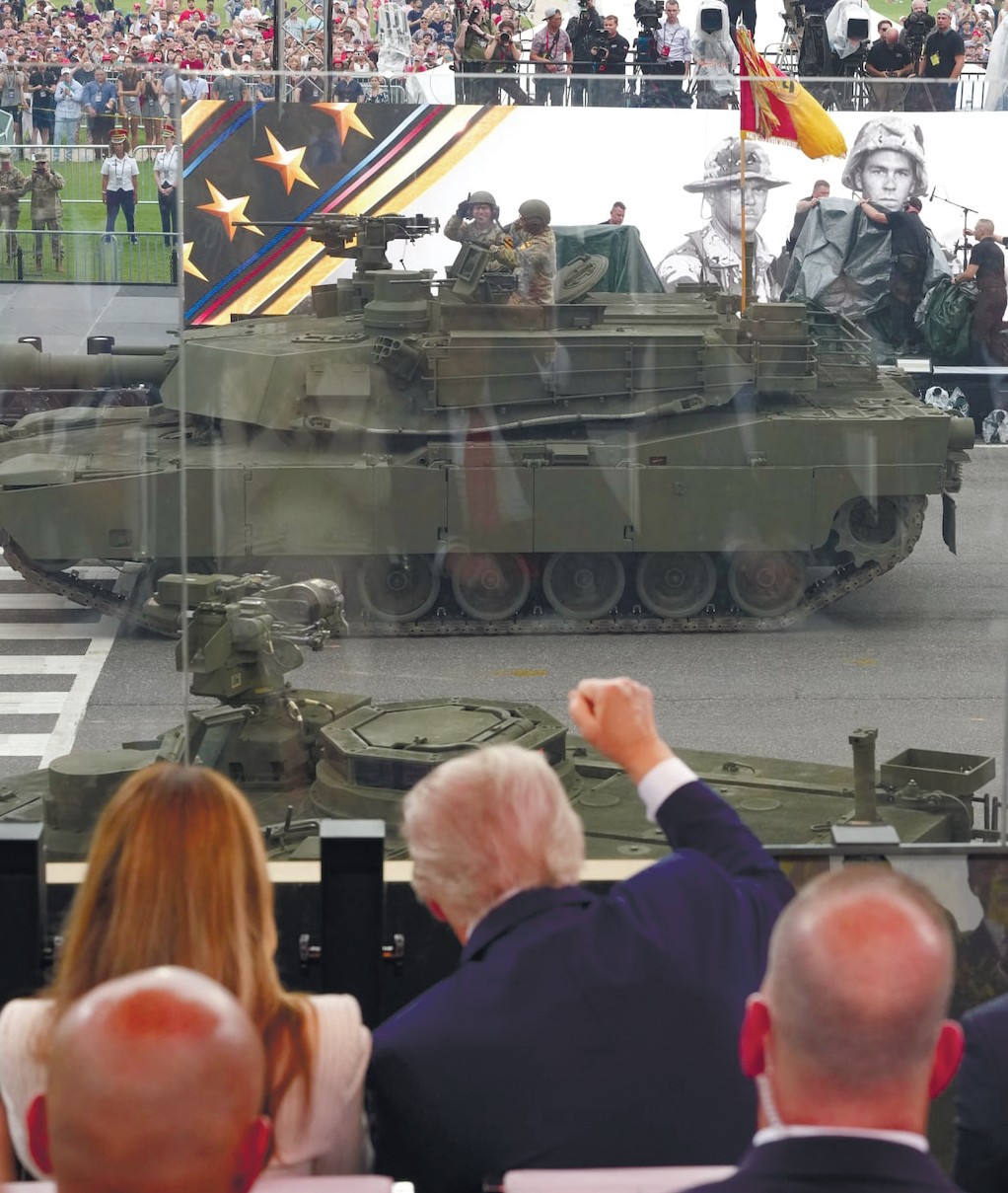
On July 4, the United States marked a monumental milestone—the 250th anniversary of its independence. Far more than a simple national celebration, this landmark event emerged as one of the year’s most significant political moments. Well ahead of the festivities, the Donald Trump administration launched an extensive nationwide campaign, culminating in a dazzling concert, an impressive airshow, military ceremonies, and a spectacular fireworks display that lit up the sky.
A journey shaped by centuries of change
In his address, Donald Trump hailed the United States as "the greatest nation in human history," underscoring that America is embarking on what he called a "new golden age". The President linked the founding ideals of American independence with today’s pressing internal challenges, focusing particularly on defending national sovereignty, combating illegal immigration, strengthening the armed forces, and preserving traditional values.
From its origins as a coalition of thirteen British colonies, the United States has, over two and a half centuries, transformed into the world’s largest economy and a military superpower—a pivotal architect of the current international order. Azerbaijani President Ilham Aliyev echoed this historic journey in his congratulatory message to Donald Trump and the American people: “The United States has travelled an illustrious path of development and today stands as a strong and influential nation in all respects on the global stage.” Through these words, he drew a direct line connecting America’s 250-year legacy to the ongoing shaping of a new world order and Washington’s expanding global influence.
Today, the state of the US economy and the foreign policy choices made by the White House rank among the most consequential factors influencing international stability. With the world’s largest defence budget, a sprawling network of military bases spanning continents, and an extensive web of alliances covering Europe, the Asia-Pacific, and the Middle East, American influence permeates nearly every major global crisis. Through NATO and a multitude of bilateral security agreements and partnerships, Washington’s decisions resonate far beyond its borders. Thus, economic health, election outcomes, and diplomatic directions in the US have long ceased to be matters confined within its own frontiers.
Envisioning the future of the South Caucasus
Washington’s engagement in regional affairs is not just about diplomacy; it is deeply entwined with issues of security and maintaining a delicate balance of power—factors that ripple across all other regional dynamics. Whereas early in the 2000s America’s focus centred on military operations in Afghanistan, counter-terrorism efforts, and securing logistical pathways for coalition forces, the withdrawal of US troops has gradually ushered in a new era for the South Caucasus. Today, Washington increasingly views this region as a dynamic space ripe for development through enhanced transport connectivity and the creation of new trade corridors bridging Europe and Asia. Energy security remains a key concern—with emphasis on diversifying supplies of traditional fuels alongside fostering alternative energy sources—and there is growing attention to harnessing artificial intelligence and expanding digital infrastructure.
However, Washington faces tangible challenges. Geographically distant from South Caucasus and Central Asia, the US encounters inherent difficulties in implementing large-scale infrastructure projects across these territories.
Competition among external powers adds another layer of complexity. Russia maintains a substantial security presence; China aggressively invests in infrastructure and commerce; meanwhile Iran, Türkiye, and the European Union pursue their own regional interests. Yet despite this crowded field of influence, Washington’s trajectory is clear: it is committed to supporting the independence and sovereignty of South Caucasus and Central Asian states while promoting development of transport and logistics networks. This includes railways, maritime routes through the Caspian Sea, and advancement of the Middle Corridor project. Notably, backing such initiatives aligns not only with American objectives but also those of Europe’s partner nations.
Moreover, collaboration in clean energy technologies and digital innovation is rapidly emerging as a cornerstone of foreign policy—on par in importance with traditional sectors like energy and transportation.
Baku’s pivotal role as a partner
Despite decades-long ties across energy cooperation, security collaboration, and countering international terrorism, relations between Baku and Washington have weathered significant challenges. Disagreements over Garabagh peace negotiations, complications related to the US legislative 907th amendment, divergent perspectives on specific regional developments, and various other factors have at times strained bilateral ties.
Yet recent years have brought a notable shift in tone and momentum. Following multiple high-level engagements culminating in a historic trilateral meeting at the White House on August 8, 2025, relations between Azerbaijan and the US have accelerated markedly. That landmark event saw President Ilham Aliyev of Azerbaijan meet with Prime Minister Nikol Pashinyan of Armenia under Donald Trump’s auspices in Washington. The discussions concluded with the signing of documents paving the way for peaceful resolution between Baku and Yerevan. Reflecting this progress, President Aliyev expressed gratitude to Donald Trump for his "decisive efforts in advancing a peace agenda" and highlighted how that trilateral summit forged "an entirely new and positive atmosphere" in the region.
Unquestionably, Washington has recently shifted away from abstract rhetoric about democracy towards a more pragmatic focus on infrastructure development, transit routes, security matters, and concrete agreements. A prime example is the promotion of TRIPP—the Trump Route for International Peace and Prosperity—which aims to connect mainland Azerbaijan with its Nakhchivan exclave through Armenian territory. This corridor is envisioned as a vital new transport link between Asia and Europe via the South Caucasus, offering an alternative route that is reliable and secure. Beyond facilitating trade flows, it lays groundwork for economic integration in this post-conflict period.
Building on this momentum, a Strategic Partnership Charter was signed between Azerbaijan and the US in February 2026. This document led to a significant expansion of the bilateral cooperation frameworks, elevating their relationship to an unprecedented level.
Energy collaboration remains a cornerstone of the Baku-Washington dialogue, however, promising new areas such as digital economy development and artificial intelligence are rapidly gaining prominence. For Washington, increasing technological collaboration in the region strengthens its foothold; for Azerbaijan, it accelerates economic diversification beyond its traditional reliance on oil and gas. Collectively, these developments signal a new model for bilateral relations—energy contracts remain important but no longer dominate the entire agenda.
The prospects for deeper cooperation naturally depend not solely on political will between leaderships but also on broader international dynamics, including US relations with Russia, China, Türkiye, Iran, and the European Union, as well as sustained stability in the South Caucasus peace process. As the region's security and stability improve, the probability of large-scale infrastructure investments will increase.
The partnership between Baku and Washington is poised to rise to new heights, potentially becoming one of the key pillars that will shape a revamped architecture of cooperation across the South Caucasus. The United States' 250 years of independence are a significant milestone that should be celebrated and used as a basis for reflection on the country's future direction.
Washington today is embracing pragmatic interests coupled with tangible actions. In this context, the South Caucasus – and Azerbaijan in particular – may well exemplify this evolving model as America steps into its next chapter.
RECOMMEND:
 64
64

