

UNKNOWN ITALY: GENOA
The city of Columbus, Paganini, pesto and medieval labyrinths
Author: Elchin HUSEYNOV, Baku–Genoa–Baku
Most Italian cities have one quality in common—they know how to captivate you at first sight. Rome overwhelms you with its grandeur, Venice looks like the set of a romantic film, and Florence delights with its museums and squares. Genoa works differently. It does not try to please you. In fact, your first encounter with the city may even leave you slightly puzzled.
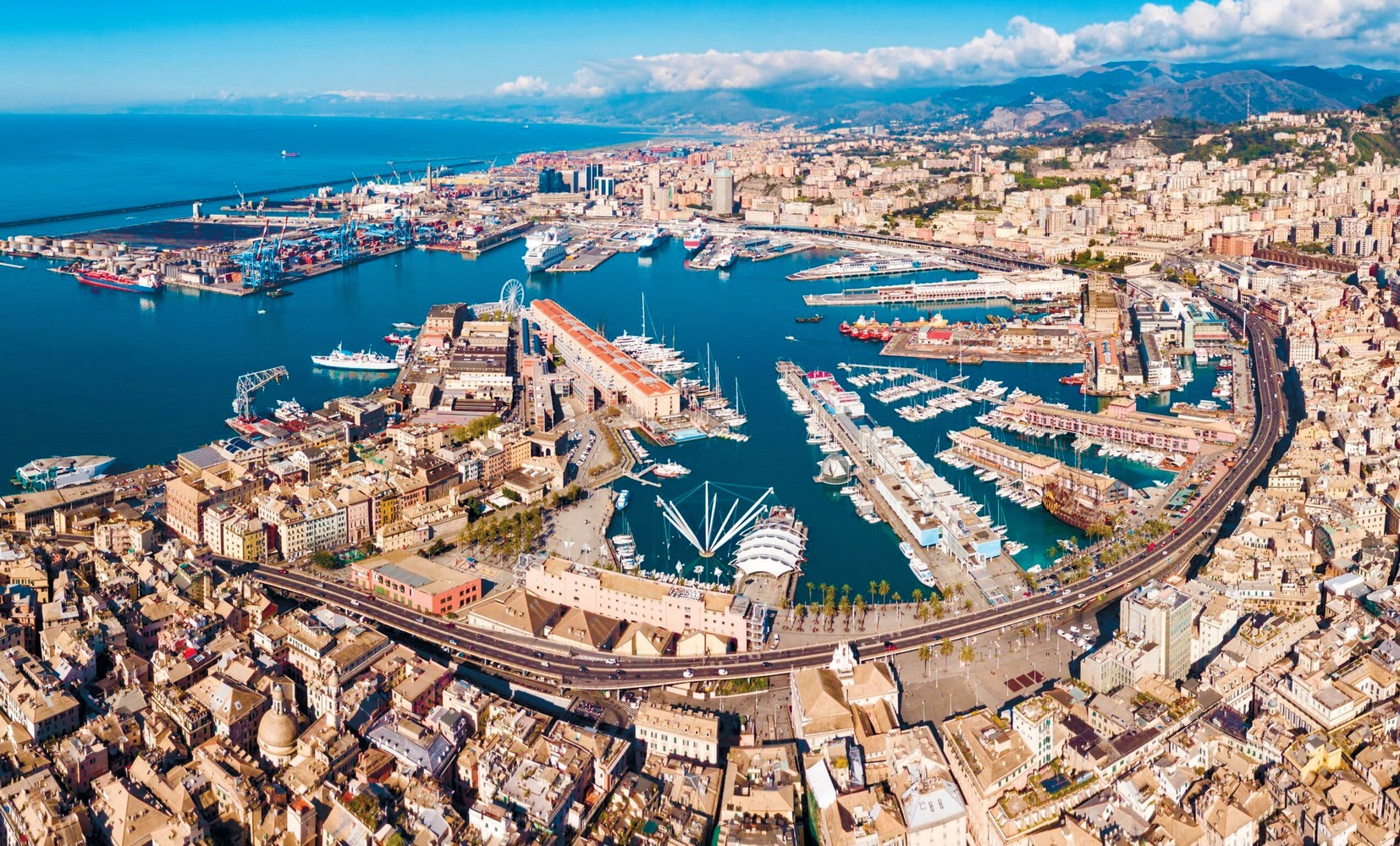
Whether you arrive by plane or train, you enter Italy’s largest port—a city that has lived by the sea for centuries and still makes no attempt to hide its industrial character. There is no single postcard-perfect panorama. Instead, your eye first catches sight of endless quays, cargo cranes, ferries, container terminals and a busy harbour where life never stops, day or night. Genoa immediately makes it clear that this is not an open-air museum but a genuine, living city.
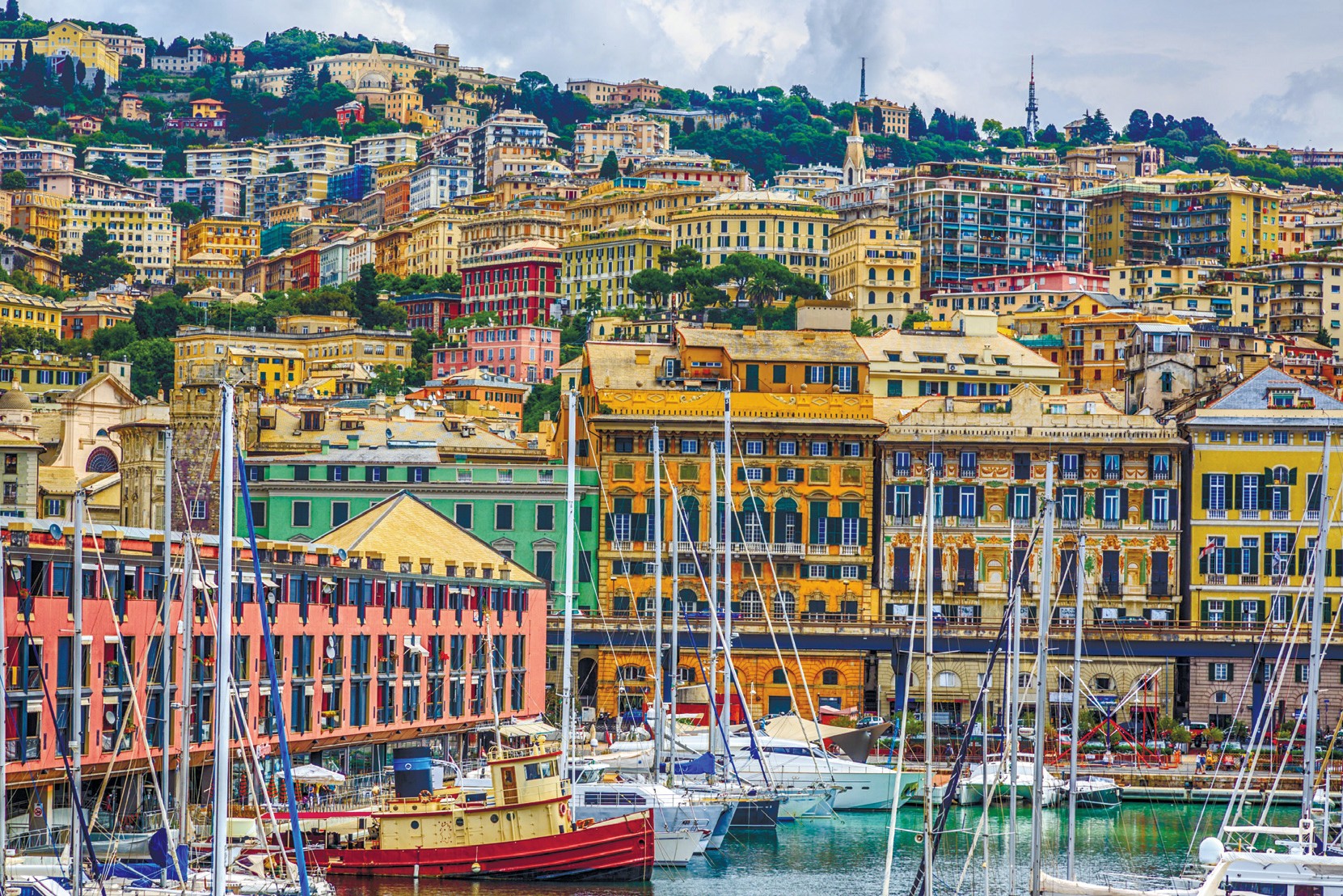
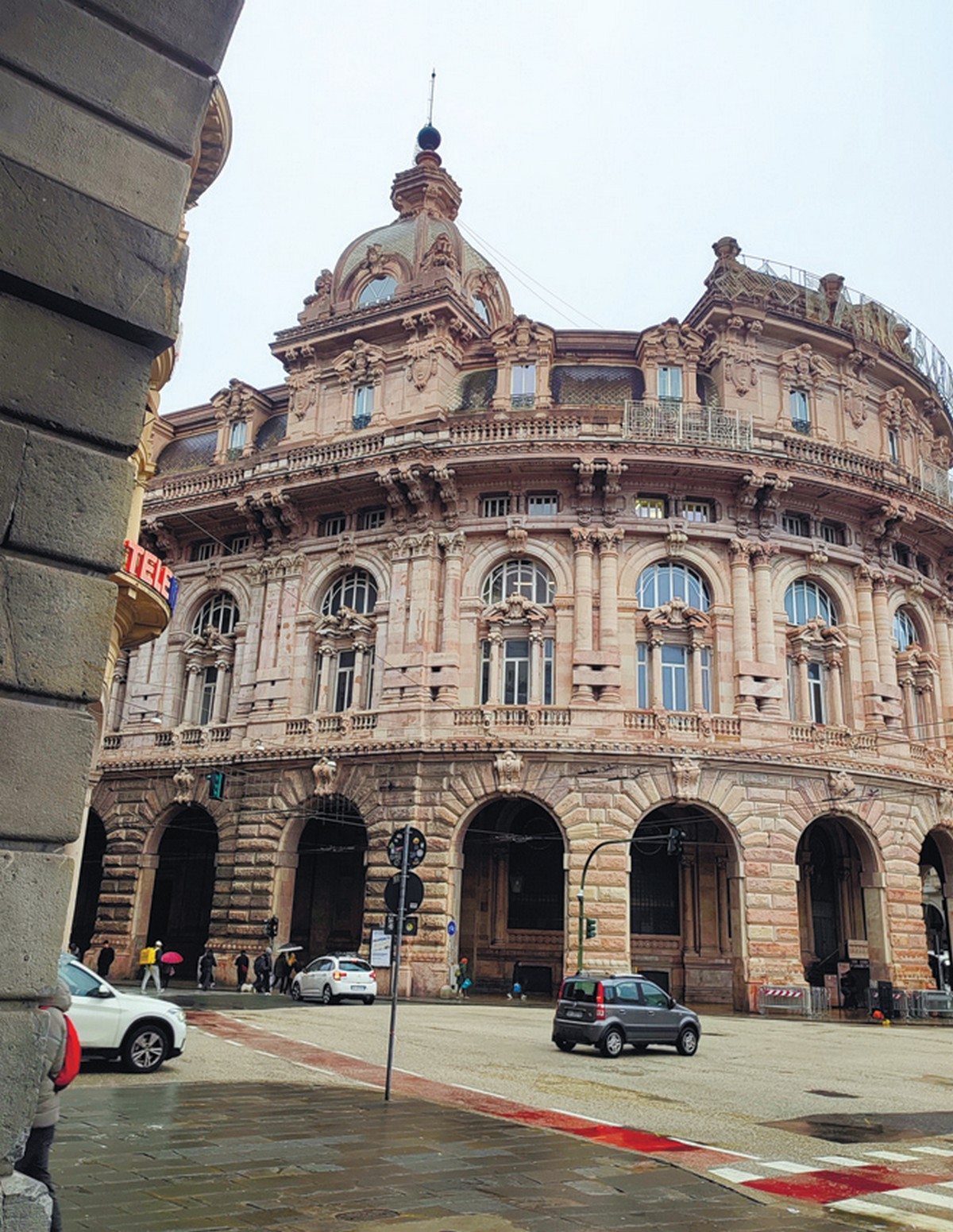
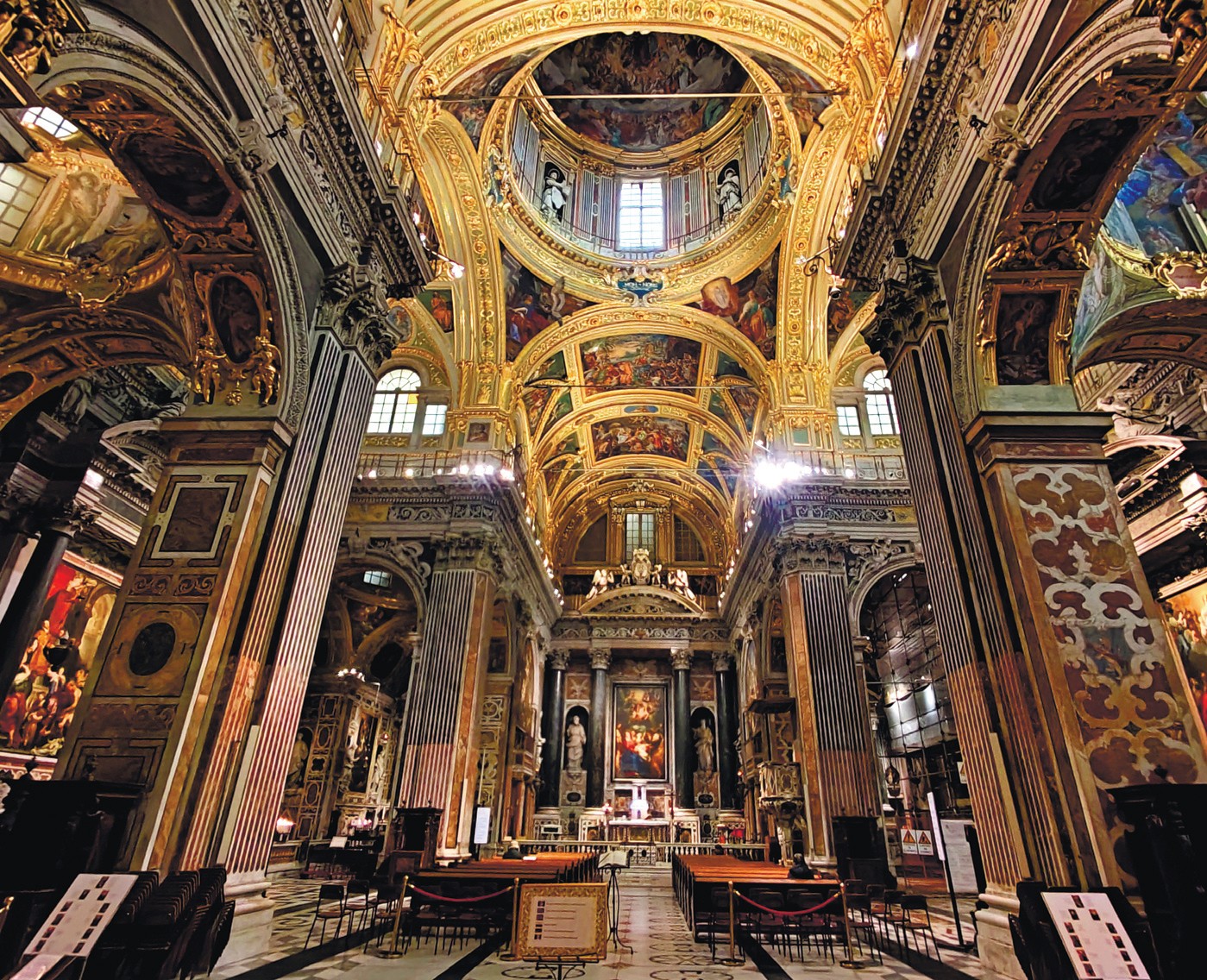
Yet take a few steps away from the port and the scenery changes unexpectedly. Behind the austere façades lie magnificent palaces built by Genoese aristocrats during the period when the maritime republic was one of the wealthiest powers in the Mediterranean. Narrow lanes suddenly lead to splendid churches, courtyards and marble staircases, while unassuming gateways conceal real treasures whose existence you would never suspect from the street.
This is the main difference between Genoa and Rome, Venice or Florence. Its beauty is not displayed for all to see. You have to search for it, gradually discovering the city layer by layer. Genoa does not try to make an immediate impression, but it generously rewards those willing to leave the usual tourist routes and give it some time.
Perhaps this is why many travellers admit that they do not truly fall in love with Genoa at once, but only after several days, when the noise of the port, the smell of the sea, the labyrinth of medieval streets and the grandeur of the old palaces come together to form a single image. That is when it becomes clear that Genoa is not one of those cities that tries to please everyone. But those who manage to appreciate its character find it difficult to leave.
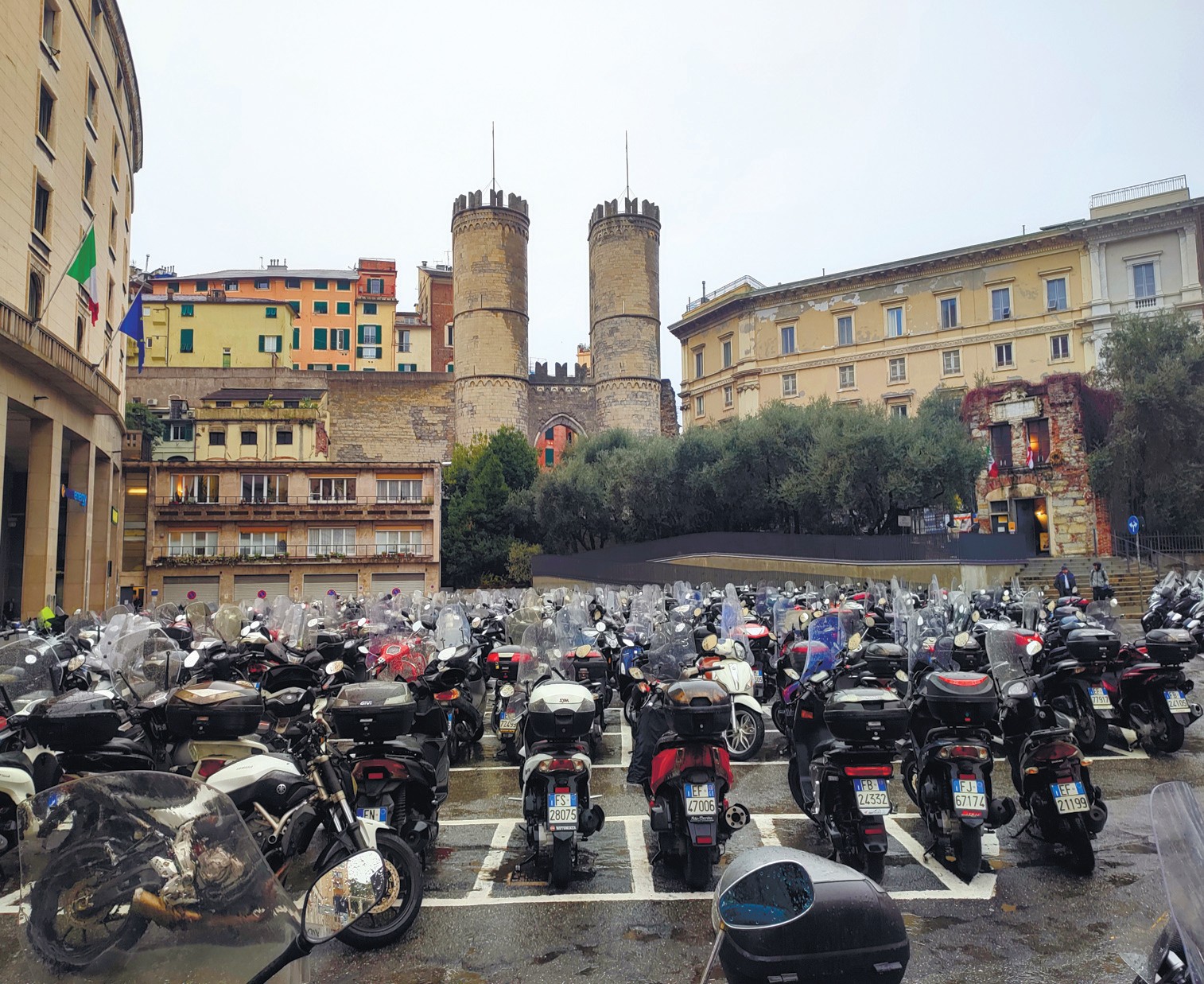
Another feature of Genoa that immediately catches the eye is the enormous number of motorcycles and scooters. It is no coincidence that the city is often called one of Italy’s motorcycle capitals. Because of its hilly terrain, narrow medieval streets and chronic shortage of parking spaces, two-wheeled transport has long been part of everyday life. Students and office workers, elderly people and businesspeople all travel by scooter here. At times, it seems that Genoa has almost as many motorcycles as cars, and the characteristic roar of their engines has become as integral to the city as the smell of the sea, the cries of gulls and the aroma of freshly baked focaccia.
In the maze of the caruggi
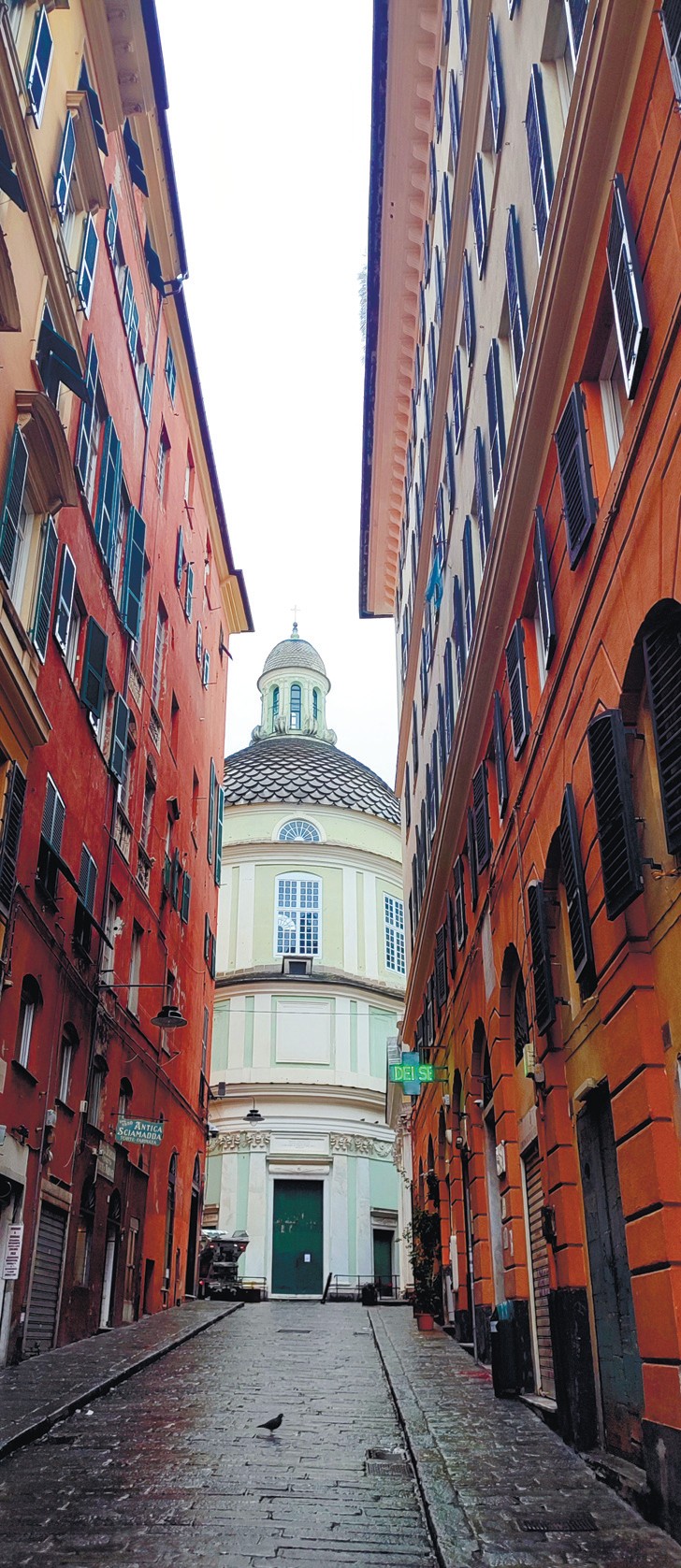
People say that the real Genoa begins neither on the broad avenues nor even at the famous old port. Its heart is hidden in the caruggi—the name locals give to the endless network of narrow medieval lanes that form one of Europe’s largest historic centres. It is impossible to move in a straight line here, and maps and sat-navs can sometimes prove useless. Even Genoese people joke that getting lost in the old town is perfectly normal.
Some lanes are so narrow that two people can barely pass each other, while the buildings on either side almost meet overhead, leaving only a thin strip of sky. Sunlight reaches these streets for just a few hours a day, creating an atmosphere in which modern Italy seems to give way to the Middle Ages. Stone arches, old shop signs, washing hanging between the buildings, tiny squares and shops where several generations of the same family have prepared focaccia or sold spices—all of this is the real Genoa.
But the caruggi are not simply romantic. For centuries, these neighbourhoods were home to sailors, merchants, smugglers and adventurers. Deals were struck in taverns, while in the dark lanes it was easy to lose your purse. The port attracted not only traders but also people living on the margins of the law. Brothels flourished here in the nineteenth and twentieth centuries, and some areas acquired a distinctly dubious reputation. Incidentally, echoes of that past can still be felt today in certain central districts of Genoa.
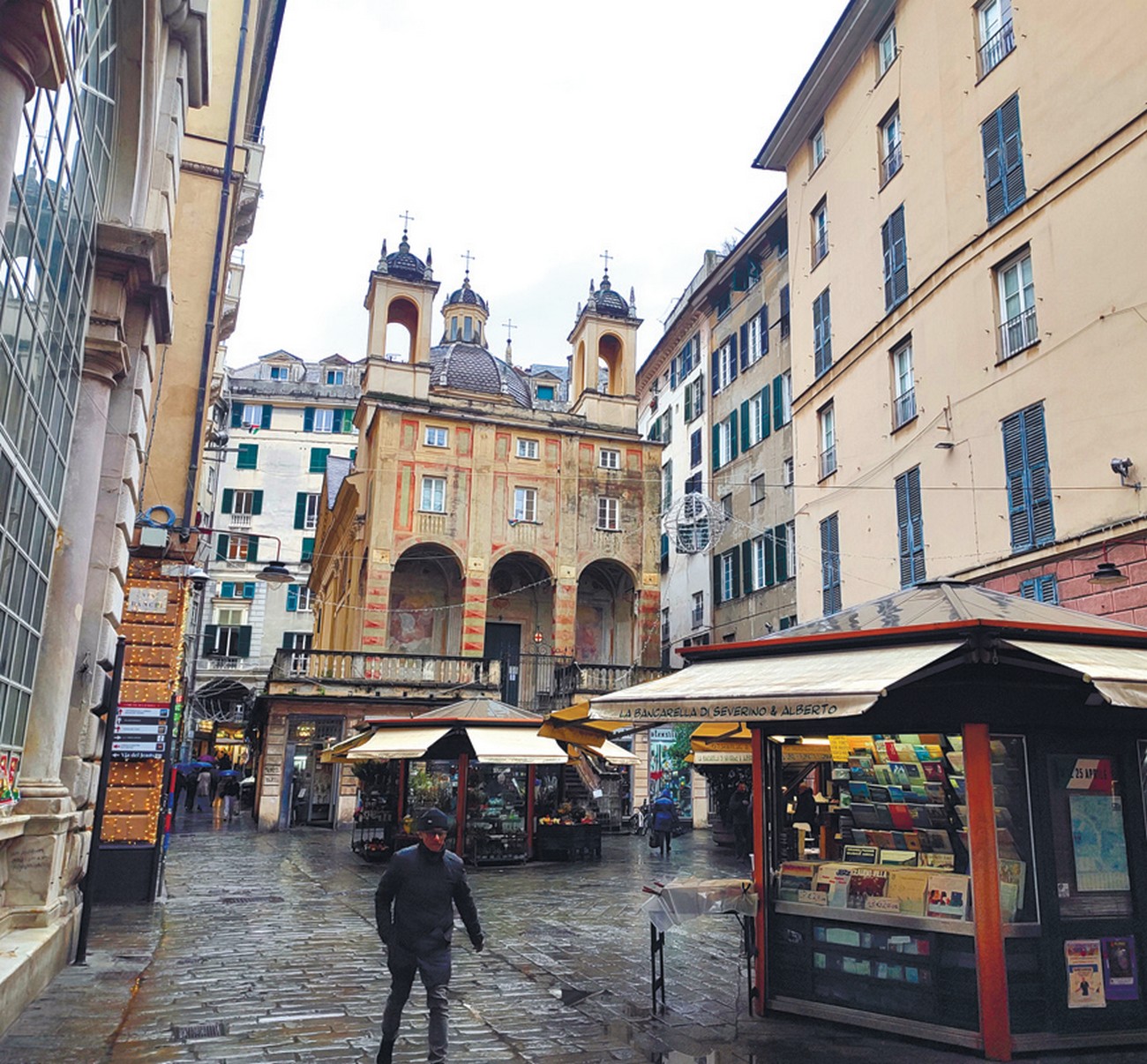
In recent decades, the historic centre has undergone substantial change. Many old buildings have been restored, while inviting bars, restaurants and artists’ studios have appeared. Genoa remains, however, a city of contrasts. In one lane, you may come across an elegant café, only to find yourself a few dozen metres later in a neighbourhood with an entirely different atmosphere. This is why local residents advise tourists to explore the old town during the day or in the early evening, and to avoid the most secluded lanes late at night in the areas around Piazza Banchi, Via Pré and some of the neighbouring districts.
Yet it is precisely in these confusing labyrinths that you find what cannot be discovered in perfectly restored tourist centres. Genoa does not conceal its history, try to look perfect or turn the past into theatrical scenery. The caruggi live their own life—loud, slightly chaotic and remarkably authentic.
People here say that the best way to get to know Genoa is to forget about itineraries and simply allow yourself to get lost. Sooner or later, one of the countless lanes will lead you to a small square, an old church, a bustling market or an inviting trattoria, and you will understand why so many people consider the old town Genoa’s greatest treasure.
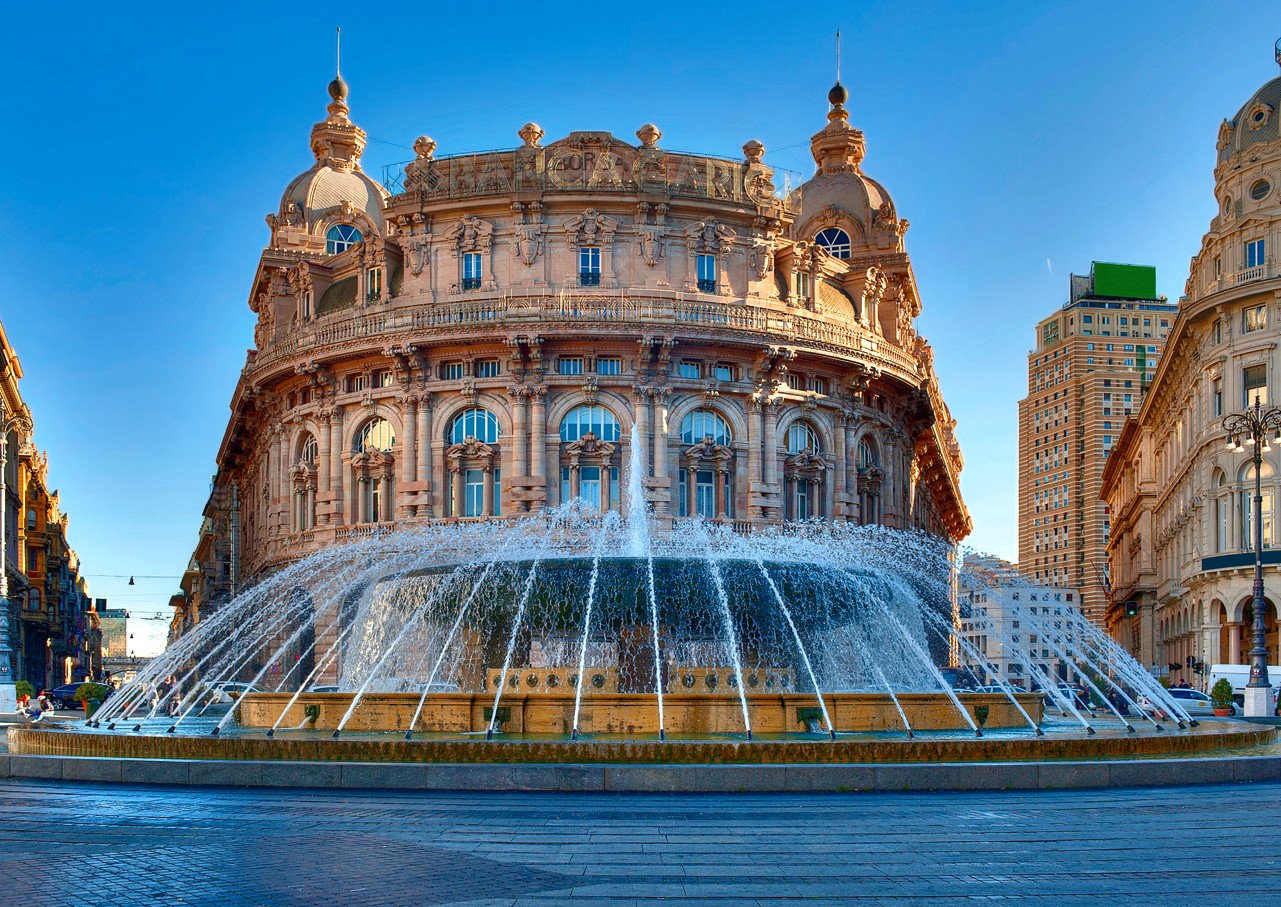
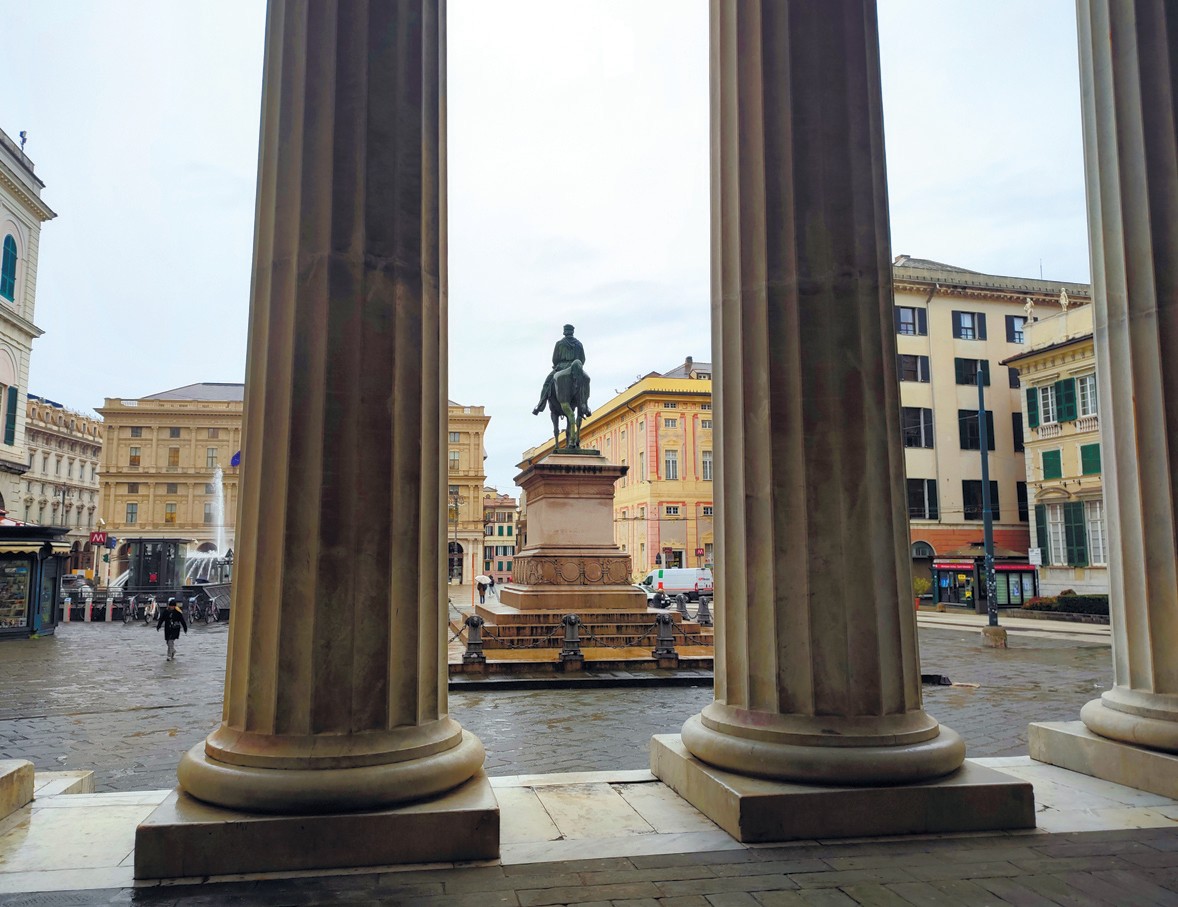
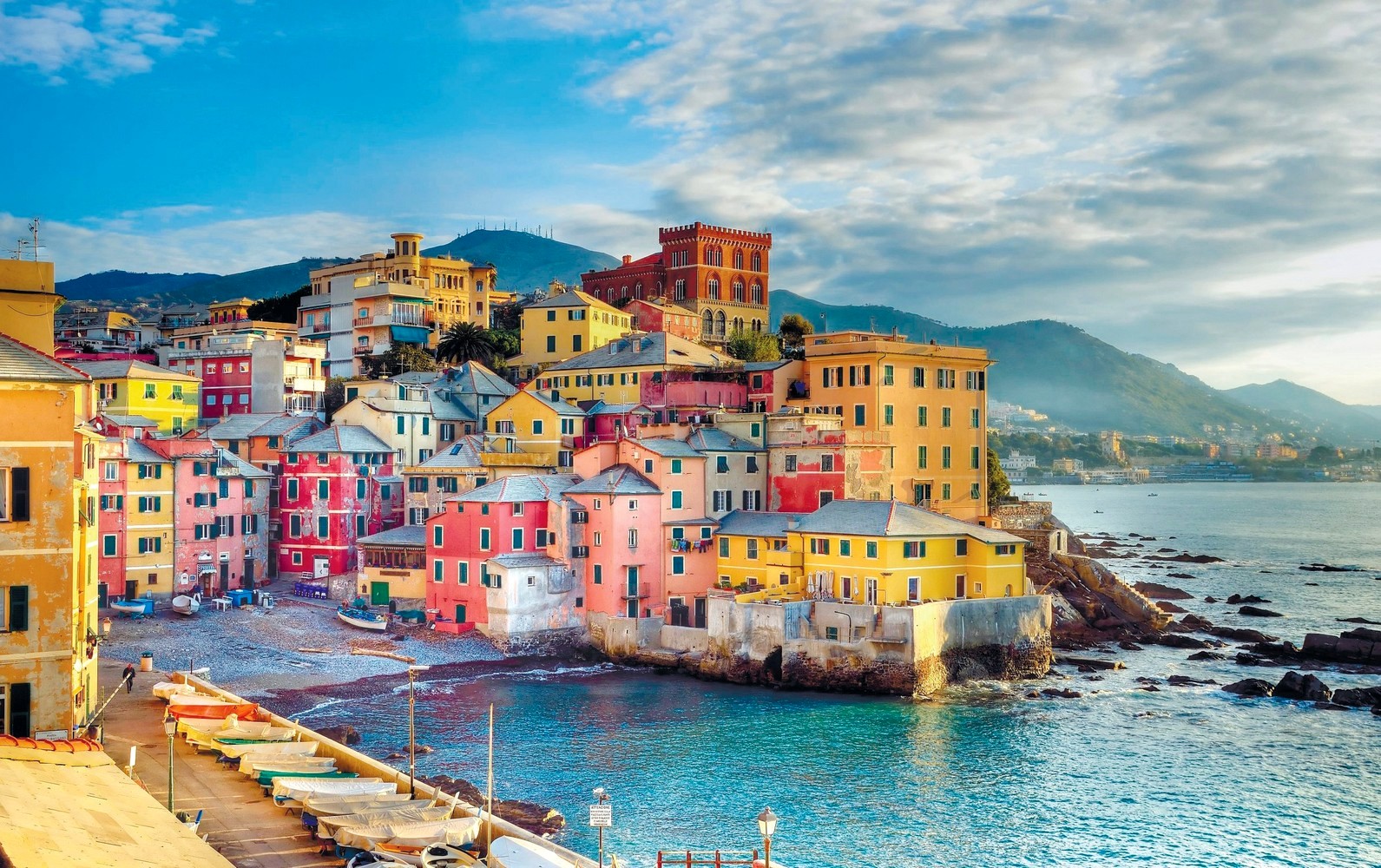
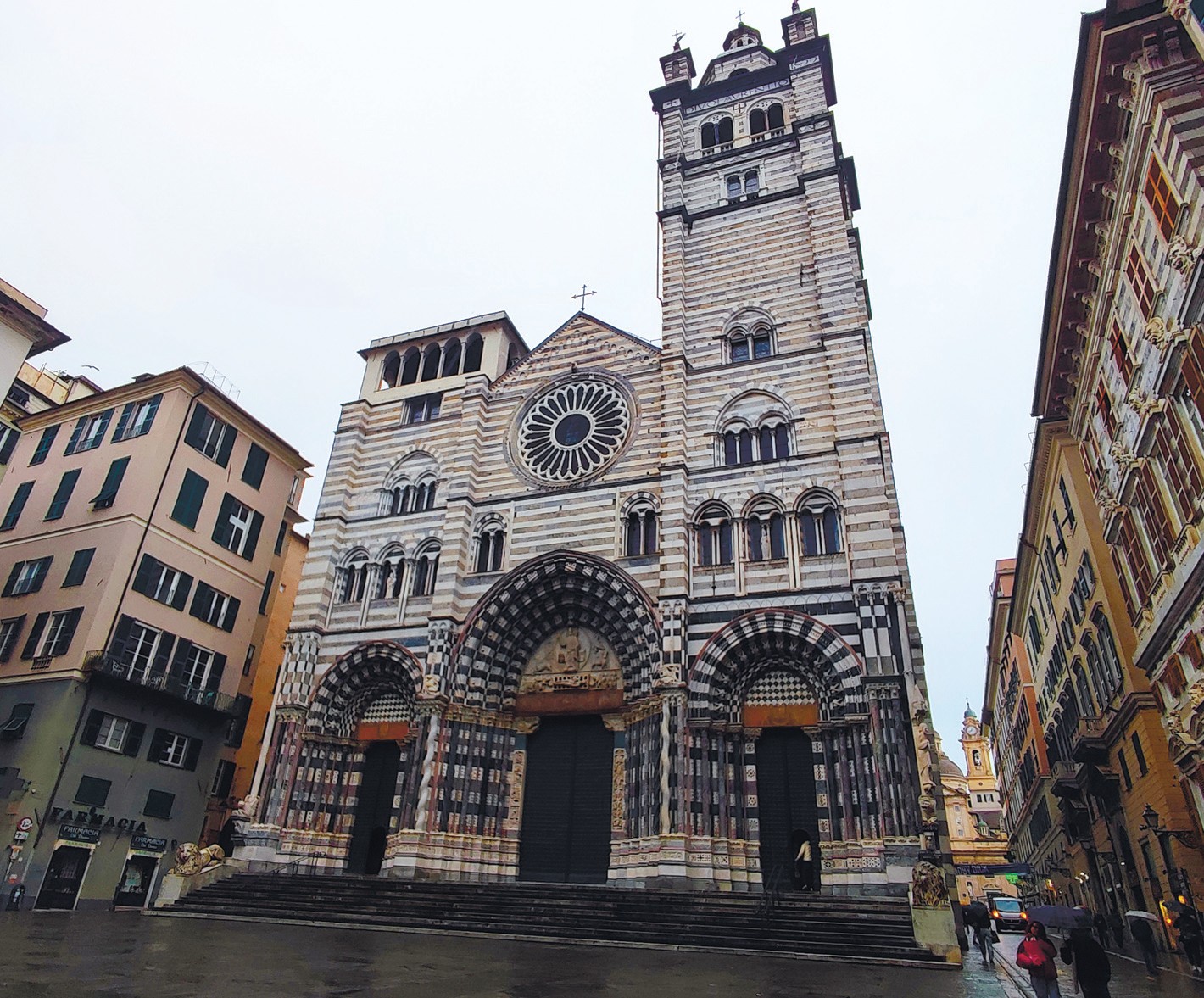
Alongside the caruggi, Genoa offers plenty of traditional attractions. The city’s symbol is the Lanterna, one of the world’s oldest working lighthouses, which has towered over the port for almost a thousand years. It is well worth walking through the renovated old port, Porto Antico, home to Italy’s largest aquarium, the Aquarium of Genoa, as well as the Bigo panoramic lift. The historic centre is centred on Piazza De Ferrari and its famous fountain; the Doge’s Palace and the Teatro Carlo Felice opera house stand nearby. Among the city’s architectural jewels are the magnificent Palazzi dei Rolli, listed as a UNESCO World Heritage Site, along with the Royal Palace and the Cathedral of San Lorenzo. Those seeking beautiful views should climb to the Castelletto hill, which offers one of Genoa’s finest panoramas. Anyone wishing to see the city from the sea should head to Boccadasse, a picturesque neighbourhood that resembles a miniature fishing village.
From Columbus to Paganini: two geniuses who changed the world
Genoa gave the world people whose names are known even to those who have never visited Italy. One changed humanity’s understanding of the world, while the other transformed the world of music.
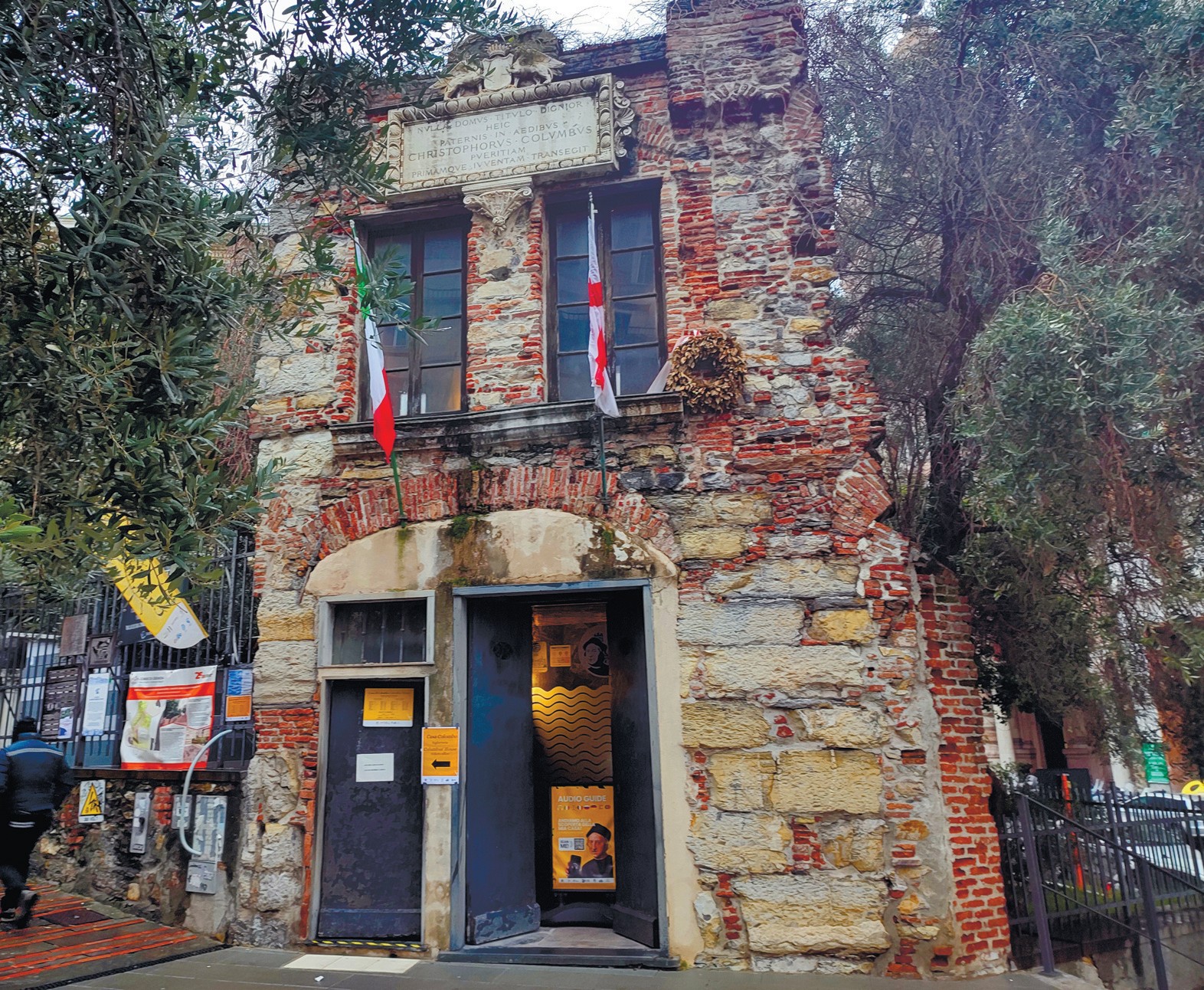
According to the generally accepted version, Christopher Columbus was born in Genoa in 1451. The great navigator entered history as the man who opened up the New World to Europeans. Today, reminders of the famous Genoese can be found in his tiny house museum near the Porta Soprana gate, in numerous monuments and even in the spirit of a city that lived by the sea and distant voyages for centuries. Columbus’s modest, rather inconspicuous home contrasts sharply with the stature of the man who changed the map of the world. The city carefully preserves the memory of the great navigator, although debates about his origins continue to this day. Local people settled the question long ago in their own way: to them, Columbus was—and remains—Genoese.
Three centuries later, Genoa gave the world another genius—Niccolò Paganini. The violinist’s extraordinary skill so astonished his contemporaries that many seriously believed he had made a pact with the Devil. Thin, long-fingered and possessed of an almost mystical gaze, Paganini seemed like a man from another world. After his death, the Church refused for a long time to allow the musician to be buried, and his remains travelled around Europe for decades.
Genoese people like to say that Columbus discovered a new world, while Paganini discovered new possibilities in human talent. Although centuries separate them, both somehow reflect the character of their native city—independent, slightly mysterious and utterly unlike any other.
Genoa, a city of surprises
Genoa is one of those cities that knows how to surprise you. The longer you stay, the more often you find yourself thinking that it is nothing like the Italy you thought you knew.
Few people realise that Genoa’s historic centre is one of the largest in Europe. It covers more than 100 hectares, and its network of medieval streets and lanes is so confusing that getting lost is remarkably easy. Local residents insist that there is nothing wrong with that—in Genoa, getting lost means discovering something new.
Another surprise awaits those accustomed to level streets. Genoa quite literally climbs its hills, so the city long ago came up with an unusual solution. Alongside buses and the metro, residents use public lifts, funiculars and even a rack railway every day. For Genoese people, these are ordinary forms of transport; for tourists, they offer another way to see the city from an unusual angle.
In Italy, Genoese people have a reputation for being exceptionally frugal. In the number of jokes about Ligurian thrift, they can rival the famously parsimonious Scots. It is said that a true Genoese person can spend an entire hour to save one euro. These are, of course, merely good-natured jokes, but a fondness for sensible economy is genuinely regarded as a virtue here.
The city’s main feature, however, lies elsewhere. Genoa seems deliberately reluctant to display its wealth. Many buildings look remarkably modest from the outside, while behind heavy doors lie luxurious palaces with marble staircases, inner gardens, frescoes and rooms fit for royal residences. Genoa has never been a place where people display their wealth to passers-by. True luxury has always been kept out of sight.
Another pleasant surprise for travellers is the cost. Compared with Rome, Milan, Venice or Florence, Genoa remains one of the country’s more affordable major cities. Hotels are not particularly cheap, but restaurant prices and everyday expenses are more moderate. This means that you can experience the real Italy without seriously damaging your budget.
The cost of a taste of Liguria
In Genoa, food is neither a cult nor a gastronomic performance, but part of everyday life. People do not rush here, and many recipes have remained virtually unchanged for centuries. The first thing a traveller encounters is the aroma of fresh focaccia drifting through the city from early morning.
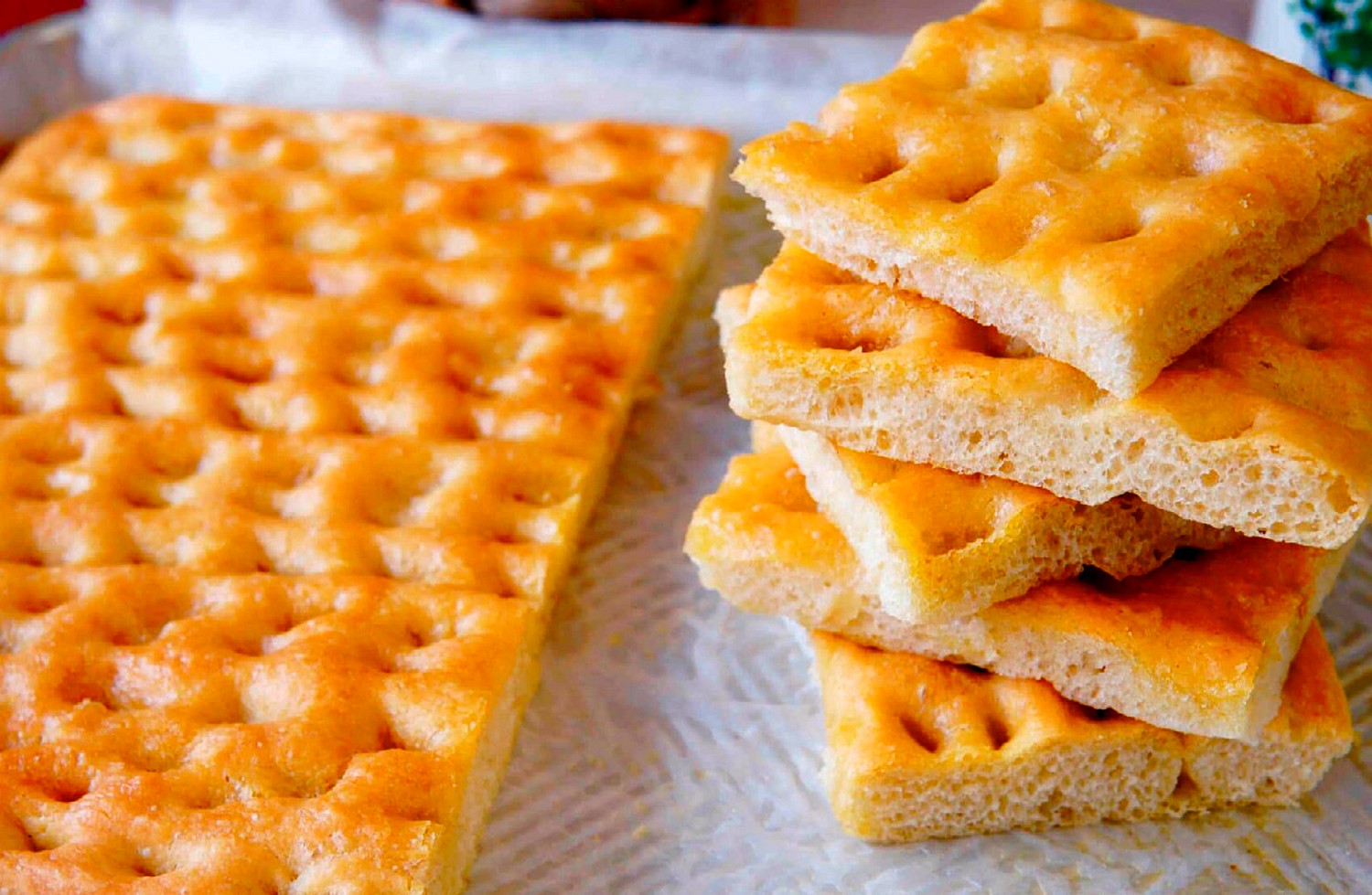
For Genoese people, focaccia is not simply bread but almost a national symbol. They eat it for breakfast with a cappuccino, take it to work, buy it for their children after school and serve it with lunch instead of bread. The simplest classic focaccia costs €2–4 for a large piece, while versions with olives, onions or cheese cost €4–7. Liguria’s particular speciality is focaccia di Recco—a wafer-thin dough filled with delicate melted cheese. A portion costs €8–12 in a café.
Genoa’s main gastronomic treasure, however, is its famous pesto. Pesto alla Genovese was born here and has little in common with most shop-bought alternatives. Authentic pesto is made from Ligurian basil, pine nuts, Parmesan, pecorino, garlic and extra-virgin olive oil. The best producers still grind the ingredients in marble mortars.
The price of high-quality pesto may come as a surprise. A small jar weighing around 90–100g costs €6–10, while products from well-known producers or artisan shops may cost €12–18. Some varieties, prepared by hand with DOP basil and the finest cheeses, are even more expensive. Local people therefore joke that good pesto in Genoa is valued almost like an expensive perfume.
Pesto is traditionally served with trofie—short, twisted pasta considered a gastronomic symbol of Liguria. In an ordinary trattoria, a plate of pasta with pesto costs €12–16, while in popular tourist establishments the price can reach €18–20.
Another dish that should not be missed is farinata. At first glance, it resembles a thin pancake or flatbread, but it is made from chickpea flour and olive oil. Despite its simplicity, farinata is considered one of Genoa’s signature dishes. A portion costs €5–8.
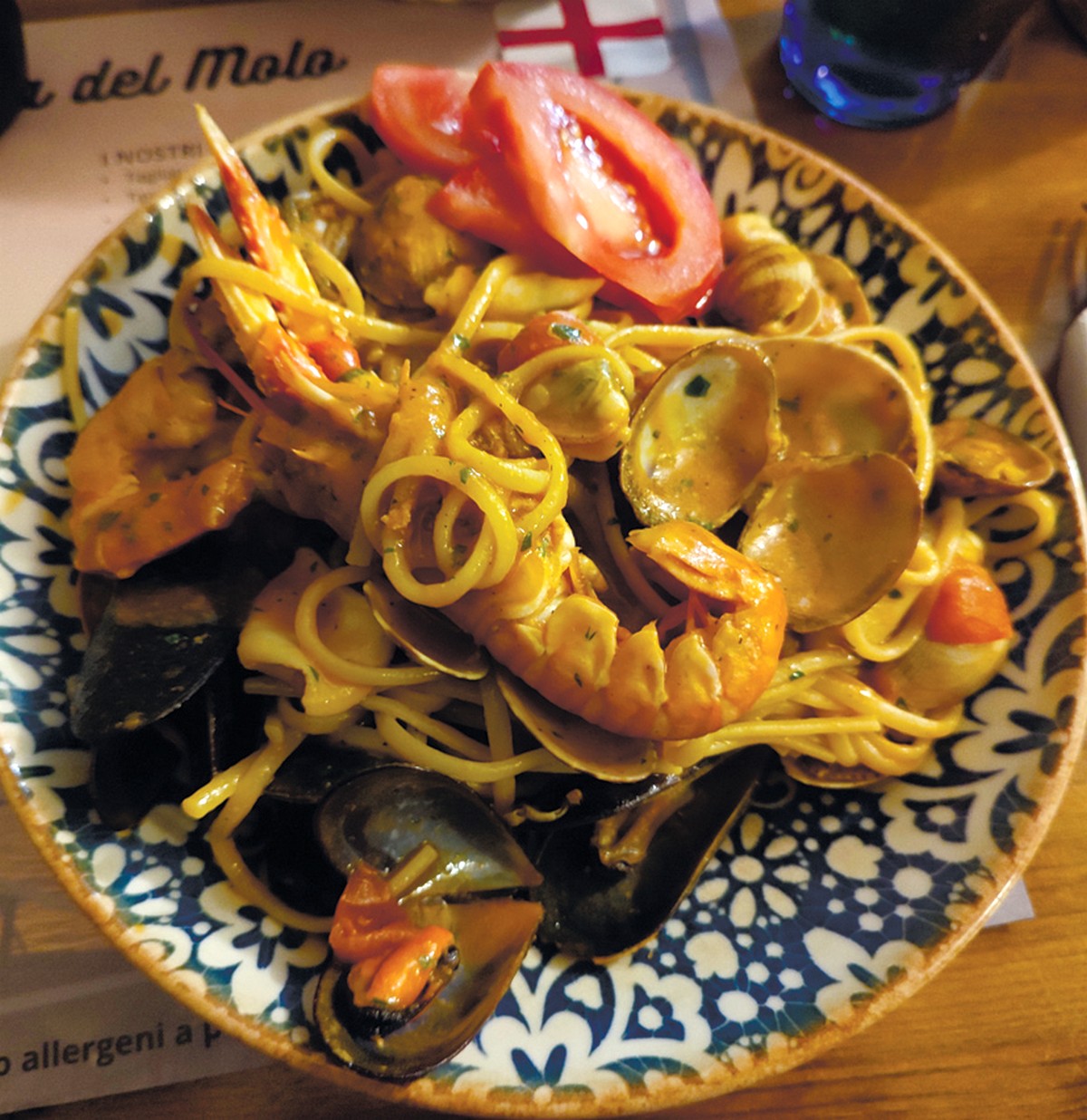
The city also has plenty of surprises in store for seafood lovers. Fried squid, anchovies, octopus, mussels and fresh fish are available almost everywhere. A large takeaway cone of seafood costs €10–15, while a full fish dinner with a glass of wine at a good restaurant costs €35–50 per person.
The Mercato Orientale deserves special attention. This is where Genoese people themselves buy their food. Fresh cheeses, olive oil, spices, vegetables and seafood are noticeably cheaper here than in tourist shops. You can also buy good olive oil for €15–25 a bottle, while jars of quality pesto are available at more reasonable prices.
Contrary to the stereotypes, Genoa remains one of Italy’s more affordable major cities. An espresso at the counter costs €1.30–1.80, a cappuccino €2–3, a glass of local wine €5–7, and a full meal in a trattoria rarely exceeds €20–25 per person.
It is in Genoa that you particularly understand that authentic Italian cuisine is not fine dining or restaurants with white tablecloths, but simple ingredients, time-tested recipes and the pleasure of ordinary things—even a piece of warm focaccia bought from a small bakery on the next street.
Boccadasse: a small village within a large city
If you ask Genoese people where to go for the most beautiful “postcard view”, many will name Boccadasse without hesitation. This old fishing neighbourhood bears little resemblance to the noisy port city just a few kilometres away. It feels as though someone carefully cut out a piece of Cinque Terre and placed it directly inside Genoa.
Narrow streets unexpectedly lead to a tiny cove surrounded by brightly coloured houses that seem to hang over the sea. Fishing boats bob near the shore, while the noisy promenades have given way to an extraordinarily peaceful atmosphere. People come to Boccadasse not for museums or famous sights, but simply to sit by the sea, listen to the waves and forget the bustle of the city for a few hours.
The best time to visit is towards evening. As the sun begins to sink towards the horizon, the small square and stony beach gradually fill with local residents. Some arrive with a glass of wine, others with a bag of fresh focaccia, while some simply sit on the rocks and watch the sunset over the Ligurian Sea. The atmosphere is so relaxed that time seems to pass more slowly.
Boccadasse is one of those places where it is particularly pleasant to indulge in small gastronomic pleasures. A scoop of ice cream at one of the local gelaterias costs about €3–4, a portion of takeaway seafood €12–15, and a cup of coffee €2–3. A glass of local white wine at a bar costs €6–8, while dinner at a restaurant overlooking the cove costs around €35–50 per person.
Despite its popularity, Boccadasse has managed to retain its simplicity. Fishing nets still hang out to dry, fishermen return with their catch, and elderly Genoese people discuss the news while sitting on benches by the sea. That is precisely what makes the neighbourhood special. Unlike glamorous Portofino, where everything has long been geared towards tourists, Boccadasse remains a place for local people.
Getting there is also very easy. From central Genoa, you can take a bus, which takes approximately 20–30 minutes, or walk along the sea via the Corso Italia promenade. This is considered one of the city’s most pleasant walks, especially in the evening, when the heat subsides and the sea takes on golden and pink hues.
Many travellers admit that Boccadasse becomes their favourite place in Genoa. There are no famous cathedrals, luxurious palaces or major museums here. What it does offer is something that cannot be measured by guidebooks—the feeling of authentic Liguria: calm, unhurried and remarkably beautiful.
Genoa is therefore not a postcard and does not strive to make an impression in its first few minutes. It is noisy and slightly chaotic, harsh in places and far from perfect. But that is precisely where its appeal lies. Behind the façades of old buildings are hidden palaces; around the next corner in the narrow caruggi, inviting squares appear; and the noise of Italy’s largest port combines in a remarkable way with the tranquillity of fishing-village Boccadasse and the aroma of fresh focaccia.
Perhaps this is why Genoa is not a one-day city. You do not try to “conquer” it in a weekend, as you might Rome or Florence. Genoa reveals itself gradually, as you return to it again and again. And the more you learn about the city, the more clearly you understand that some places do not try to please everyone. They simply remain true to themselves. That is precisely why they stay with you forever.
RECOMMEND:
 75
75

