

MARCHING TOWARDS THE FOURTH REPUBLIC
On increasingly bitter struggle between Pashinyan’s government and the Armenian opposition

Author: Natig NAZIMOGHLU
The political processes in Armenia, where parliamentary elections were held almost three months ago, are entering a period of heightened political activity. It pledges further progress against the backdrop of the government's proclaimed end of the "Third Republic" and, crucially, the Azerbaijani-Armenian settlement entering a decisive stage.
Former leaders held to account
August was a month of significant developments in terms of establishing the new political landscape in post-election Armenia. The newly elected parliament has begun its work, and a new government has also been formed. Despite the ruling Civil Contract failing to secure a constitutional majority in the elections, it has once again remained a one-party government under the leadership of Nikol Pashinyan. Concurrently, the domestic political struggle, evolving as an uncompromising confrontation between the "former" and current authorities, is assuming increasingly harsh forms.
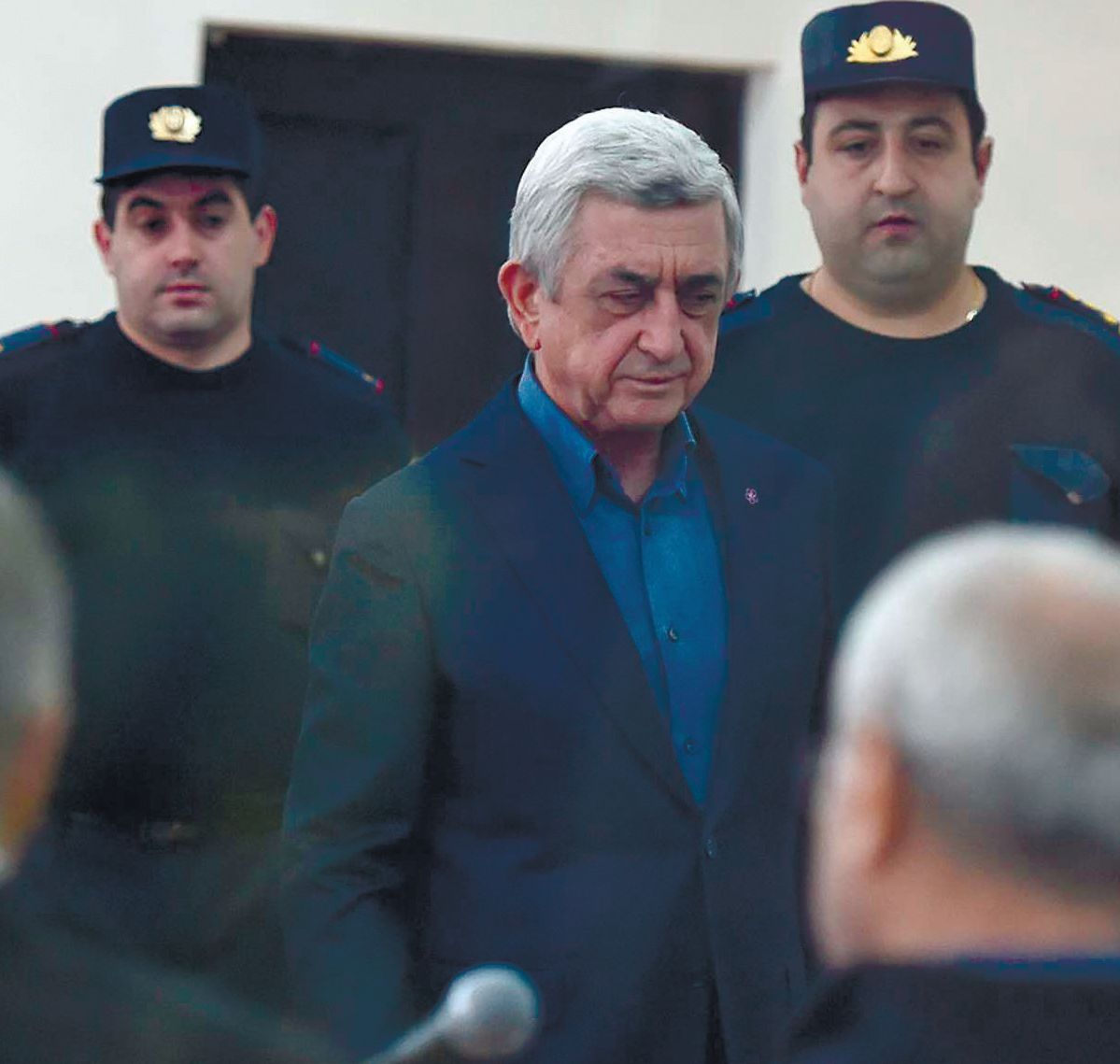
A pertinent example is the criminal prosecution of former President Robert Kocharyan, who stands accused of abuse of office, accepting bribes and money laundering on an especially large scale. The court has ordered the arrest of Kocharyan and his son, Sedrak, for a period of two months.
This is not the first time Kocharyan has been detained during the tenure of the Civil Contract administration. Another former president, Serzh Sargsyan, is also implicated in the case, but he has been placed under a travel ban, having repeatedly become the subject of criminal proceedings since the change of power in Armenia in 1918.
Prime Minister Pashinyan is addressing the issue of returning to the state all property acquired illegally, particularly by the Kocharyan family. "All assets acquired illegally must be repatriated to the Republic of Armenia and its people, in accordance with the established protocol, including the return of every cent, euro, and kebab. There is no other option," the head of government stated. At the same time, he stresses that figures such as Kocharyan and Gagik Tsarukyan should live exclusively on their legitimate income and pensions.
This brings us to Tsarukyan. Following the arrest of this oligarch, criminal prosecutions against individuals accused of high-profile crimes and known main political opponents of the current Armenian authorities began. During the election campaign in May, Pashinyan publicly threatened for the first time to strip Tsarukyan, leader of the opposition Prosperous Armenia party, of his property. The party did not succeed in reaching the electoral threshold for parliamentary representation, and shortly after the election, its leader faced a significant personal setback. In early July, a series of searches were conducted at Tsarukyan's mansion and business premises, after which he was arrested.
Among the opposition politicians against whom criminal cases have been opened or investigations launched are Ishkhan Saghatelian, leader of the Dashnaktsutyun party; Avetik Chalabyan, coordinator of the Ayakve platform; and Narek Karapetyan, an elected deputy from the Strong Armenia party. The latter is the nephew of Samvel Karapetyan, a Russian-Armenian oligarch and leader of Strong Armenia, who had already been placed under house arrest long before the election.
The ongoing conflict between the Armenian authorities and the Catholicosate continues. The criminal cases against Catholicos Garegin II and six other members of his inner circle, including bishops and archbishops, concern, among other things, the internal persecution of opponents of the Armenian supreme pontiff.
Despite the clearly pronounced law-enforcement and anti-corruption dimension of the political developments unfolding in Armenia, it is obvious that the current events are not merely episodes in a struggle for power. To a considerable extent, they will determine the future of the Armenian state, although that future is contingent on maintaining peaceful relations with Azerbaijan. It is precisely the political opponents of the current Armenian government who are opposed to peace and the peace process. They are the very forces grouped around the former presidents and inspired to undertake new "feats" by the Armenian Church, which is the traditional "brain" behind anti-Azerbaijani and Turkophobic activity.
Peace as a chance for salvation
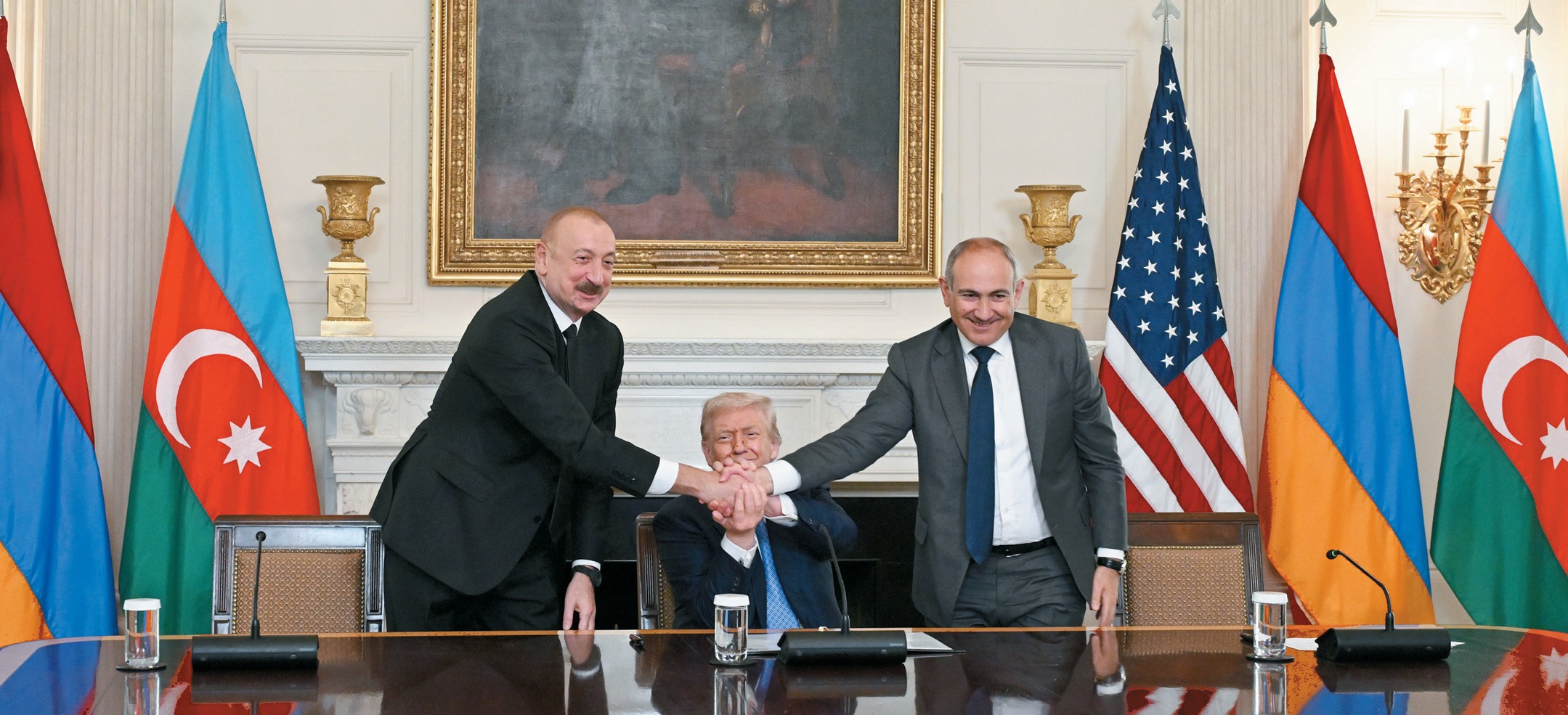
In general, August 2026 was marked by significant developments in the process of settling Azerbaijani-Armenian relations. A significant date was particularly notable in this regard: the first anniversary of the initial signing of the peace agreement between Azerbaijan and Armenia at the Washington Summit.
On 8 August, Azerbaijani President Ilham Aliyev and Armenian Prime Minister Nikol Pashinyan held telephone conversations with US President Donald Trump. During these conversations, the leaders of the three countries gave high ratings to the contribution of the American leader to the peace process. Furthermore, the Armenian prime minister also held a telephone conversation with the Azerbaijani head of state. During this conversation, the two leaders reaffirmed their commitment to establishing lasting peace. This is a significant indication that the region has entered a post-conflict period.
The same applies to the joint statement issued by Azerbaijan, Armenia and the US on the occasion of the first anniversary of the Washington Summit. The parties involved have confirmed their commitment to carry on with the established approach that brought to an end decades of conflict and paved the way for a more prosperous future for the South Caucasus. They have also confirmed their unwavering support for the sovereignty, territorial integrity and jurisdiction of Armenia and Azerbaijan within their internationally recognised borders. It was emphasised that Armenia and Azerbaijan are taking concrete steps to build confidence, normalise relations, delimit the border and ensure long-term stability.
Overall, Azerbaijan and Armenia, as well as the United States, which helped facilitate the achievement of fundamentally important agreements between them, are unanimous in stating that peace and stability have been secured in the region over the past year. This is evidenced by the establishment of trade and economic ties between the two countries, including the export of Azerbaijani petroleum products to Armenia, as well as the movement of transit cargo through Azerbaijani territory. In addition, practical steps are being taken to establish the TRIPP route, intended to connect mainland Azerbaijan with its Nakhchivan Autonomous Republic through Armenia.
Against the backdrop of all these obvious advances in the peace process, the sole obstacle standing in the way of concluding the interstate treaty that is to form the basis of peace and cooperation between Azerbaijan and Armenia becomes even more conspicuous. At a meeting in Baku in early August with the current OSCE Chairperson-in-Office, Swiss Foreign Minister Ignazio Cassis, Azerbaijani Foreign Minister Jeyhun Bayramov stated that Azerbaijan’s position on signing the peace agreement remained open and consistent, while further progress in the peace process depended on steps to be taken by Armenia.
There is no doubt that this refers to amending Armenia’s Constitution, which contains territorial claims against Azerbaijan. And, judging by all indications, the Armenian government is determined to resolve this issue in the foreseeable future. Pashinyan has repeatedly stated recently that constitutional reform is being prepared and, in particular, that the “Declaration of Independence of Armenia” will not be mentioned in the Basic Law. This fully corresponds to Azerbaijan’s requirement for concluding an interstate peace treaty, since the “national objectives” referred to in that document envisaged the annexation of part of Azerbaijan’s territory.
However, since Pashinyan’s Civil Contract party does not have a constitutional majority in the new parliament, alternative ways of putting a draft of the new Armenian Constitution to a referendum—ones not based on the will of the supreme legislative body—are being considered. According to Armenian media reports, one possible option is to collect the signatures of 300,000 citizens, which would automatically allow the draft Basic Law to be put to a referendum.
The expected constitutional reform in the country is fully consistent with the Pashinyan government’s declared “rejection of the ideology of the Third Republic”. The prime minister has stated that “Armenia is entering a new historical stage based on the concept of a ‘Real Armenia’ and the logic of regional peace”. The government programme for 2026–2031 is aligned accordingly, with the country set to enter the “Fourth Republic”. As follows from Pashinyan’s statements, the latter is turning away from the “Garabagh movement” and is “being formed in the logic of peace”, because “the greatest obligation to the people is to create the opportunity for the peaceful development of the region and the Republic of Armenia”.
According to the programme, the Armenian government is committed to pursuing the signing and ratification of the peace agreement, as well as the establishment of interstate relations with Azerbaijan. The process of delimiting and demarcating the state border is also to be continued. The programme also includes the establishment of diplomatic and trade and economic relations with Türkiye and the opening of the Armenian-Turkish border.
Pashinyan acknowledges that he himself previously adhered to the ideas of the "Third Republic", which were aimed at war with Azerbaijan. It is now evident that the Armenian prime minister and his government have recognised the detrimental consequences of an aggressive policy towards Azerbaijan for Armenia itself. This is one of the most significant consequences of Azerbaijan's Great Victory.
We are currently witnessing a truly historic opportunity to establish peace in the region following the end of the Armenian-Azerbaijani conflict. This peace is of paramount importance for both Azerbaijan and Armenia, especially in light of the current global geopolitical turbulence. For Armenia, peace with Azerbaijan also represents a dual guarantee: the strengthening of its sovereignty and the survival of the state as such. Achieving both objectives requires a thorough rejection of the "legacy" of the policy pursued by Armenia during the 30 years of occupation of Azerbaijan's territories, as well as of the politicians who implemented it. It is evident that Armenia would face significant challenges in surviving another war with Azerbaijan, which would be inevitable if it were to adopt an aggressive stance.
RECOMMEND:
 86
86

