

COMPREHENSIVE ALLIANCE
Rapprochement between Baku and Tashkent goes beyond bilateral relations, reshaping the region’s political geography
Author: Elchin HUSEYNOV
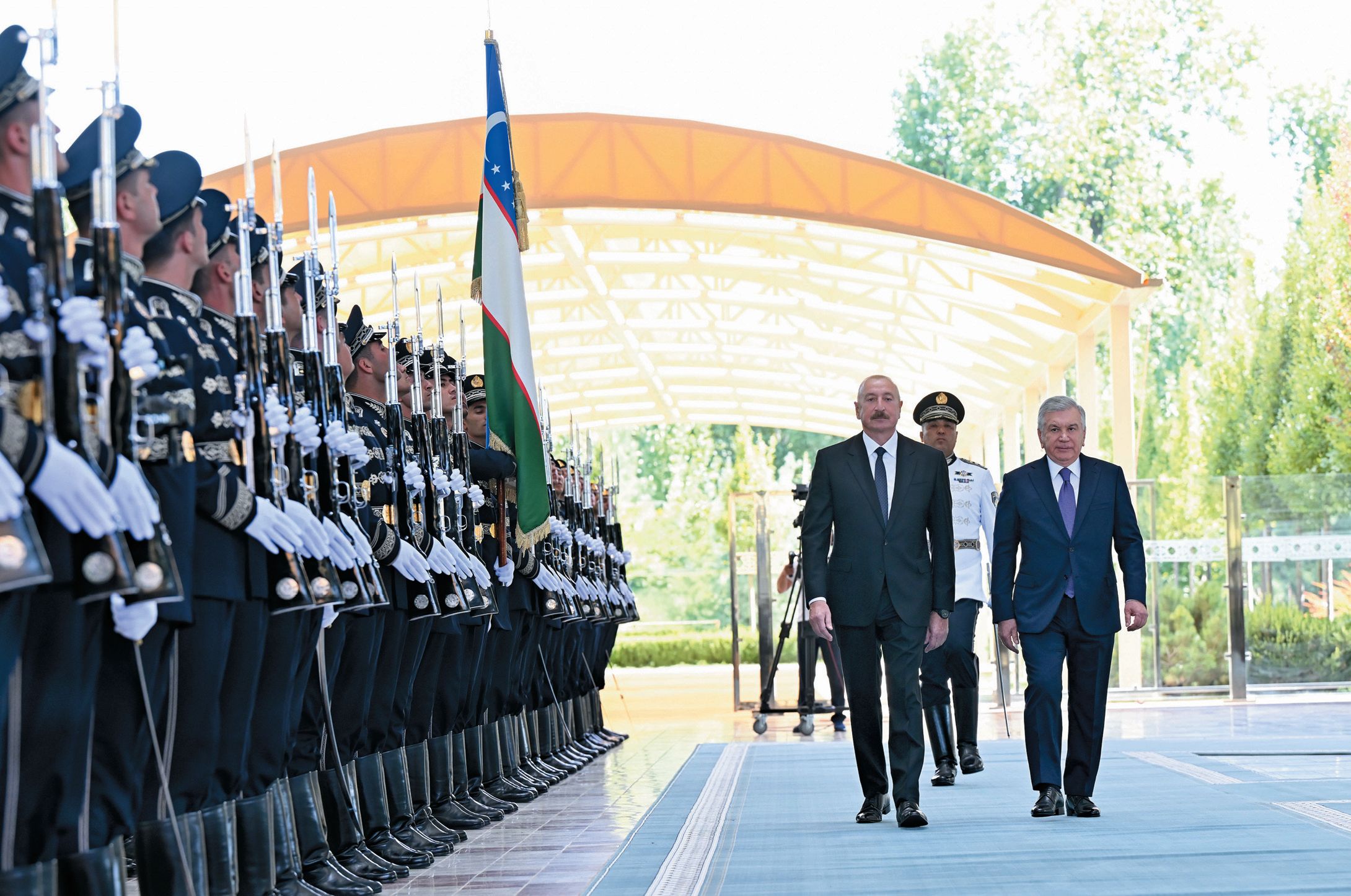
Over the past five years, there has been a marked change in the scope and substance of relations between Azerbaijan and Uzbekistan. It is noteworthy that during this period, there have been 15 reciprocal visits at the highest level. The visit by Azerbaijani President Ilham Aliyev to Uzbekistan on 23–24 August is further evidence of the political rapprochement between the two countries.
This latest meeting is significant not only as confirmation of the special closeness between Baku and Tashkent. The signing of the Treaty of Eternal Friendship, the third session of the Supreme Inter-State Council and the agreements reached demonstrate that Azerbaijani-Uzbek relations are entering a new phase. Furthermore, their significance is gradually extending beyond the bilateral agenda, taking on an increasingly prominent regional dimension.
A treaty that strengthens the alliance
If one were to identify the main political significance of Ilham Aliyev's visit to Uzbekistan, it would undoubtedly be linked to the signing of the unique Treaty of Eternal Friendship between the two countries. The title of the document itself speaks to its unique status. However, the foundation upon which it is built is of even greater importance. As Ilham Aliyev noted in an interview with the UZA news agency, relations between Azerbaijan and Uzbekistan 'have entered a phase of unprecedented development' and have reached the highest level—that of an alliance.
Therefore, the Treaty of Eternal Friendship does not initiate a new process; instead, it strengthens the existing level of political trust between Baku and Tashkent. The President of Uzbekistan, Shavkat Mirziyoyev, also drew attention to this, stating after the signing of the document: "It is important to consider the high level of relations already in place between the regions, businesses and governments and parliaments. This is not merely a document; it is a reflection of our shared aspiration to deepen interaction, expand opportunities for cooperation and build a common future."
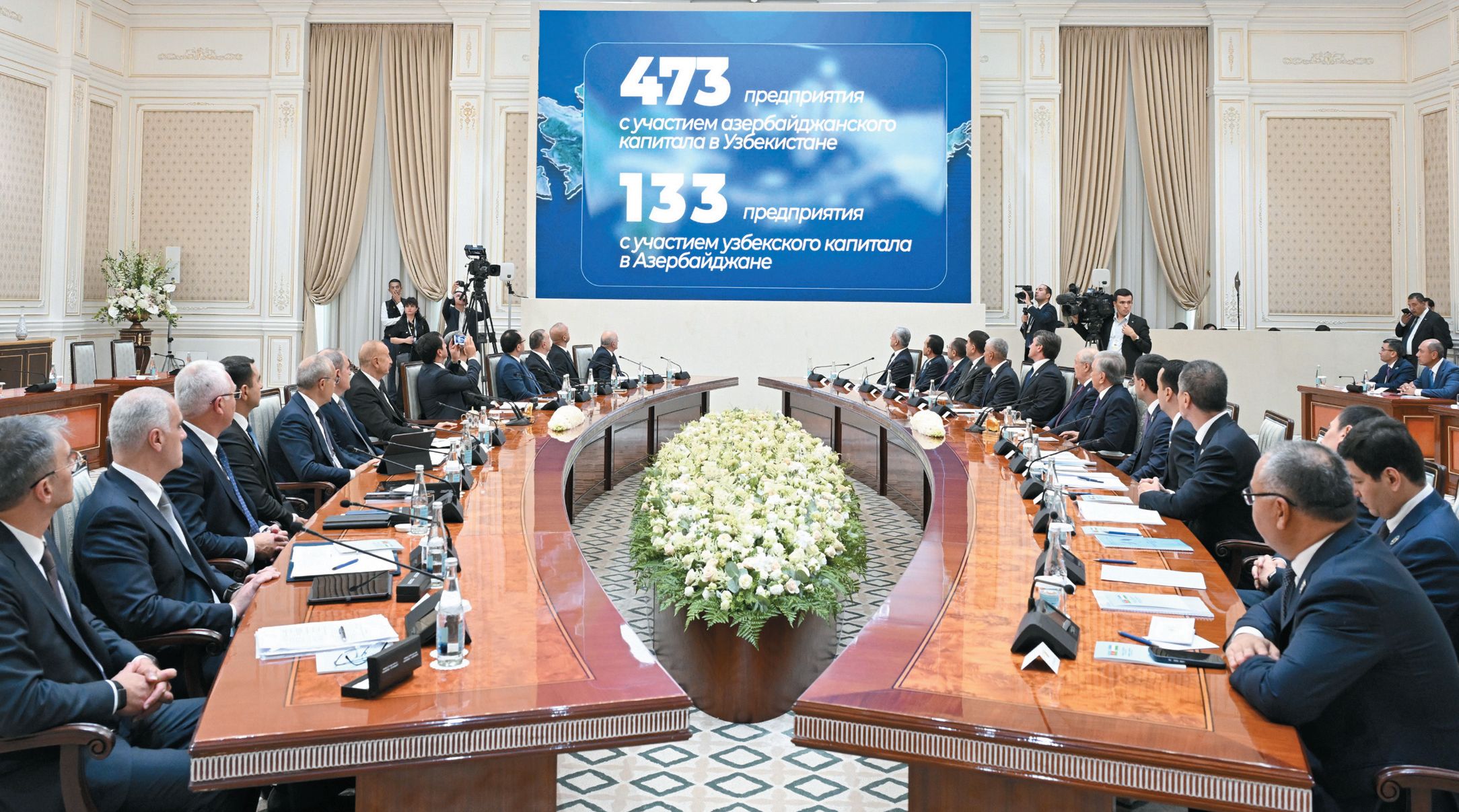
However, the agreement proved to be only part of a packed political programme. On the same day, the third meeting of the Supreme Inter-State Council—the main mechanism for coordinating relations between the two states—took place in Tashkent. According to Mirziyoyev, this was "the main event of the state visit": the presidents discussed the full spectrum of bilateral relations in detail, heard reports on key areas and agreed to strengthen political dialogue, as well as contacts between parliaments and governments, sectoral ministries and regions.
Another key outcome of this initiative is the creation of a new roadmap. During his address to the press, Mirziyoyev stressed the following points: "We have adopted a new strategy and agreed to increase trade turnover to one billion dollars. It should be noted that this is not the limit."
Therefore, the current summit has established several levels of political framework for the bilateral relationship. The Treaty of Eternal Friendship formally recognises the unique nature of the relationship, the Supreme Inter-State Council provides a permanent mechanism for their coordination, and the new roadmap sets out specific guidelines for further progress. This is no longer merely an exchange of political declarations; it is a system designed to ensure the consistent implementation of the agreements reached.
At the same time, Ilham Aliyev has repeatedly emphasised in his assessments that the current level of relations is the result of purposeful work over recent years. Consequently, on 23 August in Tashkent, a political framework for a new phase was established: eternal friendship as the long-term formula for relations, and alliance as their practical substance. We can now move on to consider a broader question: what are the reasons for the growing significance of the alliance between Azerbaijan and Uzbekistan, in relation to the relations between the two states?
Central Asia opens out onto the Caspian Sea
The regional dimension is becoming increasingly prominent, and this is lending a distinctive character to the current phase of these relations. In this regard, the potential of Uzbekistan to support Azerbaijan cannot be overstated. Ilham Aliyev had previously observed that one of the most significant aspects of the contemporary relationship between the two countries is their role in fostering the expansion of Azerbaijan's ties with Central Asia.
This assessment has been confirmed on specific terms. At the third meeting of the Supreme Inter-State Council, Ilham Aliyev emphasised the role of his Uzbek counterpart in involving Azerbaijan in the consultative meetings of the heads of state of Central Asia. The decision regarding Baku's full participation was taken in November 2025 in Tashkent. At the time, Shavkat Mirziyoyev described this as a historic event and emphasised that Azerbaijan's participation would help build a solid bridge between Central Asia and the South Caucasus. This process has now continued at the bilateral level.
This is one of the most interesting political developments of recent years. Azerbaijan is playing an increasingly active role on the Central Asian agenda, whilst Uzbekistan, in turn, has the opportunity to use its relations with Baku to strengthen Central Asia's ties with the South Caucasus. A cooperative environment is emerging in which the Caspian Sea no longer appears as a dividing boundary. Conversely, it is becoming an important link between the two regions.
Furthermore, this is not simply a question of formally expanding the membership of any given organisation. Azerbaijan and the Central Asian countries are gradually developing an independent system of political contacts, transport interconnectivity and interregional cooperation. It is significant to note that the presidents have agreed to adopt a roadmap for interregional cooperation. This is of particular importance in the context of Ilham Aliyev's remarks that the parties have a 'very clear action plan' and that each project is backed by concrete details.
At the same time, the political dimension here extends far beyond individual projects. Uzbekistan and Azerbaijan find themselves in different but complementary geographical positions: Tashkent is one of the key centres of Central Asia, whilst Baku occupies an important position on the Caspian Sea and in the South Caucasus. Their closer cooperation objectively creates additional opportunities for linking the two regions—politically, in transport logistics and in the humanitarian sphere.
Therefore, the current visit should not be viewed solely through the prism of bilateral alliance. The most important question is what role this alliance can play in forging a closer sphere of cooperation between Central Asia and the South Caucasus. And here, Tashkent’s position is particularly important: Uzbekistan has consistently supported the expansion of ties with Azerbaijan, whilst Ilham Aliyev himself directly links this cooperation to the process of bringing Azerbaijan closer to Central Asia. This is where the very ‘wide reach’ of the Azerbaijani-Uzbek alliance becomes apparent.
The Turkic factor
Another feature of the Azerbaijani-Uzbek alliance is that it is developing simultaneously within several multilateral frameworks. The Organisation of Turkic States (OTS) occupies a special place amongst these, where Baku and Tashkent act not merely as two member states, but as active advocates for the further deepening of cooperation between Turkic countries.
Prior to the meeting, Ilham Aliyev underscored the significance of this sector. He emphasised the significance of cooperation between Azerbaijan and Uzbekistan within the framework of the Organisation of Turkic States. The President also highlighted a broader objective—strengthening the unity of the Turkic world and enhancing its political, economic and military potential. Ilham Aliyev has noted that both Azerbaijan and Uzbekistan view the OTS not only as a platform for interstate cooperation, but also as a union bound by a shared history, culture and spiritual values.
The political transition currently taking place within the OTS is significant in this regard. Until fairly recently, discussions on Turkic integration were mainly connected to humanitarian and cultural links. The agenda is becoming more extensive. It now includes political dialogue, transport interconnectivity, coordination on international platforms and the joint promotion of common interests. These are gradually forming a closer sphere of interaction.
Azerbaijan and Uzbekistan are key players in this process due to their advantageous geographical positions. One is located at the intersection of the Caspian Sea and the South Caucasus, while the other is situated in the centre of Central Asia. Their cooperation is therefore significant for two main reasons. Firstly, it creates additional opportunities for connecting different parts of the Turkic world.
It is noteworthy that transport interconnectivity is emerging as a key instrument in this broader integration process. Ilham Aliyev highlights the potential of integrating the China–Kyrgyzstan–Uzbekistan railway project with the Middle Corridor and TRIPP, linking this to the creation of new economic and transit opportunities for the region.
Here, it is not so much the list of transport projects itself that is important, but rather their political significance. The more direct links there are between states, the closer their sphere of interaction becomes. In this respect, the Middle Corridor now functions not only as a transport route, but also as one of the material foundations of the emerging connectivity between Central Asia, the Caspian Sea, the South Caucasus and the west.
And here, the Azerbaijani-Uzbek alliance takes on a truly broad scope. Baku and Tashkent are not creating any new political bloc, nor are they positioning themselves in opposition to other states. On the contrary, the aim is to expand opportunities for cooperation—through the C6, bilateral relations, regional formats and international organisations.
Ilham Aliyev himself links Azerbaijan’s participation in the ‘C6’ consultative political and economic platform precisely to this broader perspective. In his view, the new mechanisms for cooperation serve not only to develop inter-state relations, but also to ensure ‘peace, stability and sustainable progress across the entire Eurasian space’.
The alliance takes on a tangible form
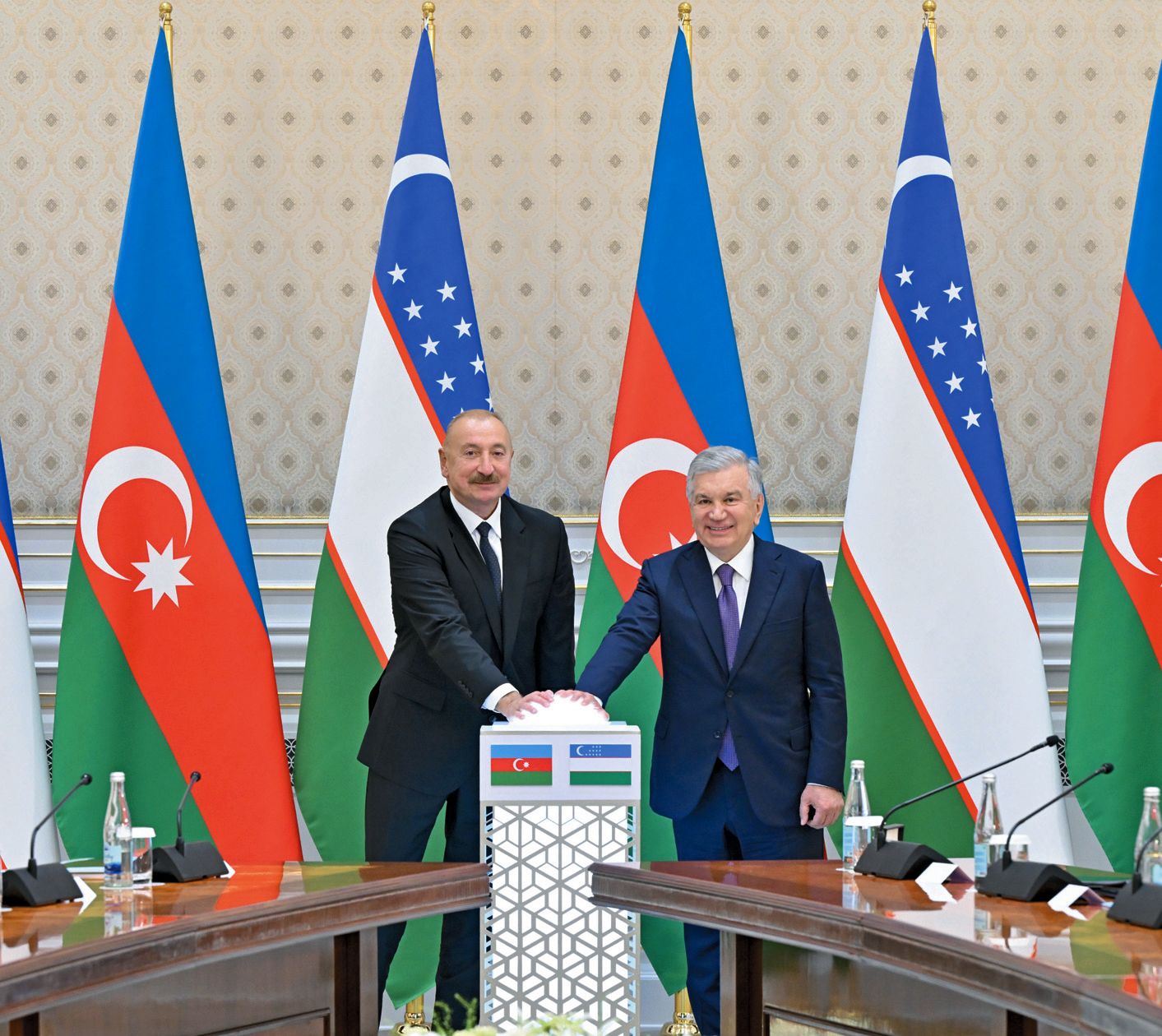
The political rapprochement between Azerbaijan and Uzbekistan is becoming increasingly evident. This was clearly evident during the current visit, when Ilham Aliyev and Shavkat Mirziyoyev took part in the opening and ground-breaking ceremonies for a whole series of Azerbaijani projects in Uzbekistan.
The opening of Davr Bank, the 'Matanat-A' gypsum plant and two Landau STEAM schools in Tashkent is to be celebrated. Concurrently, the foundations were laid for five new SOCAR petrol stations, the Sea Breeze Uzbekistan residential and resort complex, the Baku City residential complex, a silver-bearing ore processing plant and a fruit orchard project. Azerbaijan's presence in Uzbekistan is thus becoming increasingly diverse and long-term. The scope of this initiative has expanded beyond individual investment initiatives to encompass a wide range of sectors, including banking, industry, education, fuel infrastructure, housing construction, tourism and agriculture.
In this sense, the ceremony on 23 August constituted a practical follow-up to the political decisions taken on the same day. The Treaty of Eternal Friendship, the work of the Supreme Inter-State Council and the new roadmap define the political framework of the relationship, whilst the projects currently being implemented demonstrate how this framework is gradually being filled with concrete substance.
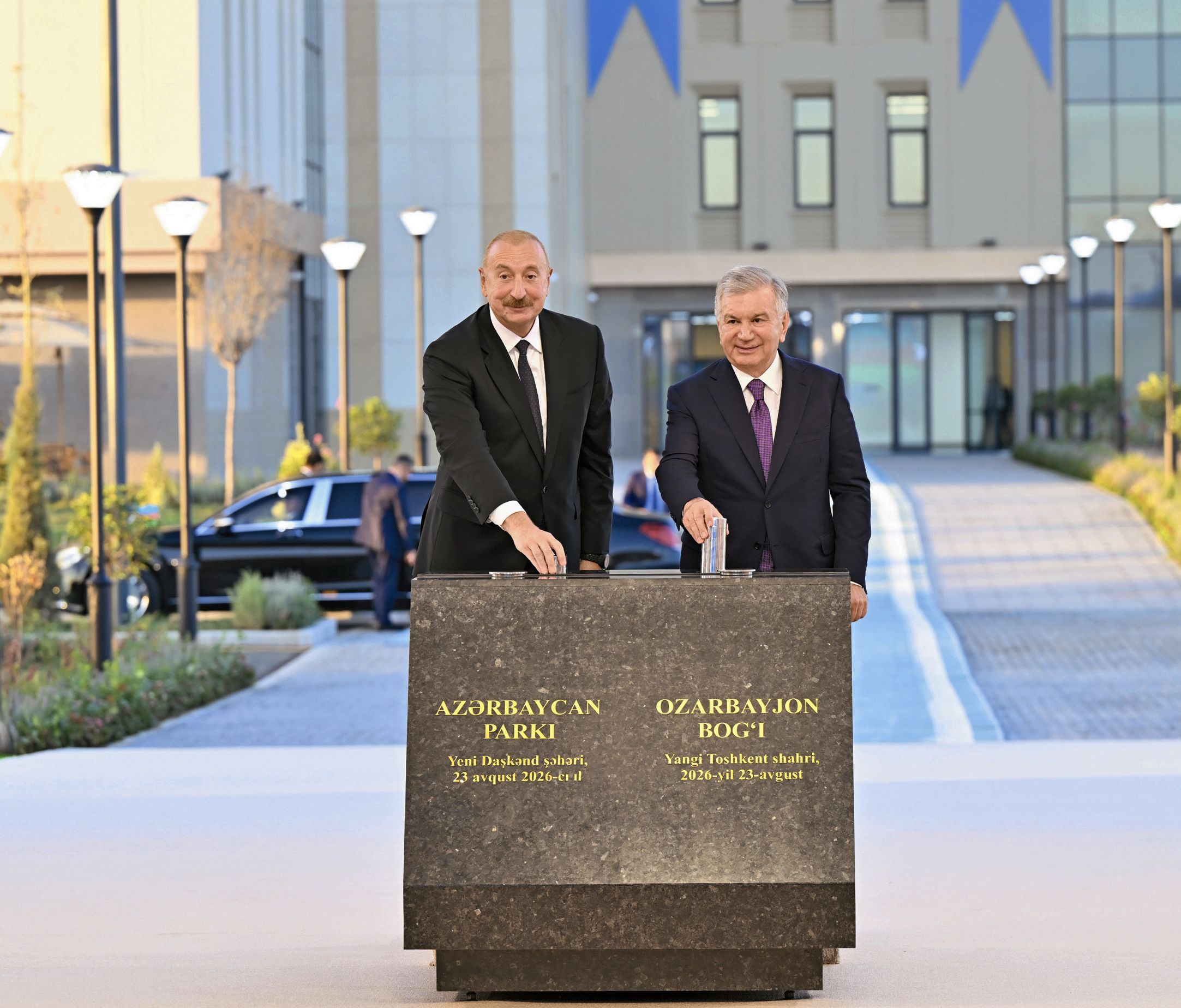
It is significant that, in addition to industrial and commercial projects, educational facilities are included in this agenda. The opening of the Nizami Ganjavi National Pedagogical University also took place in Tashkent, whilst in New Tashkent the presidents laid the foundation stone for 'Azerbaijan' Park. This represents another aspect of the alliance – its presence not only in the business sphere, but also in the educational, cultural and public spheres.
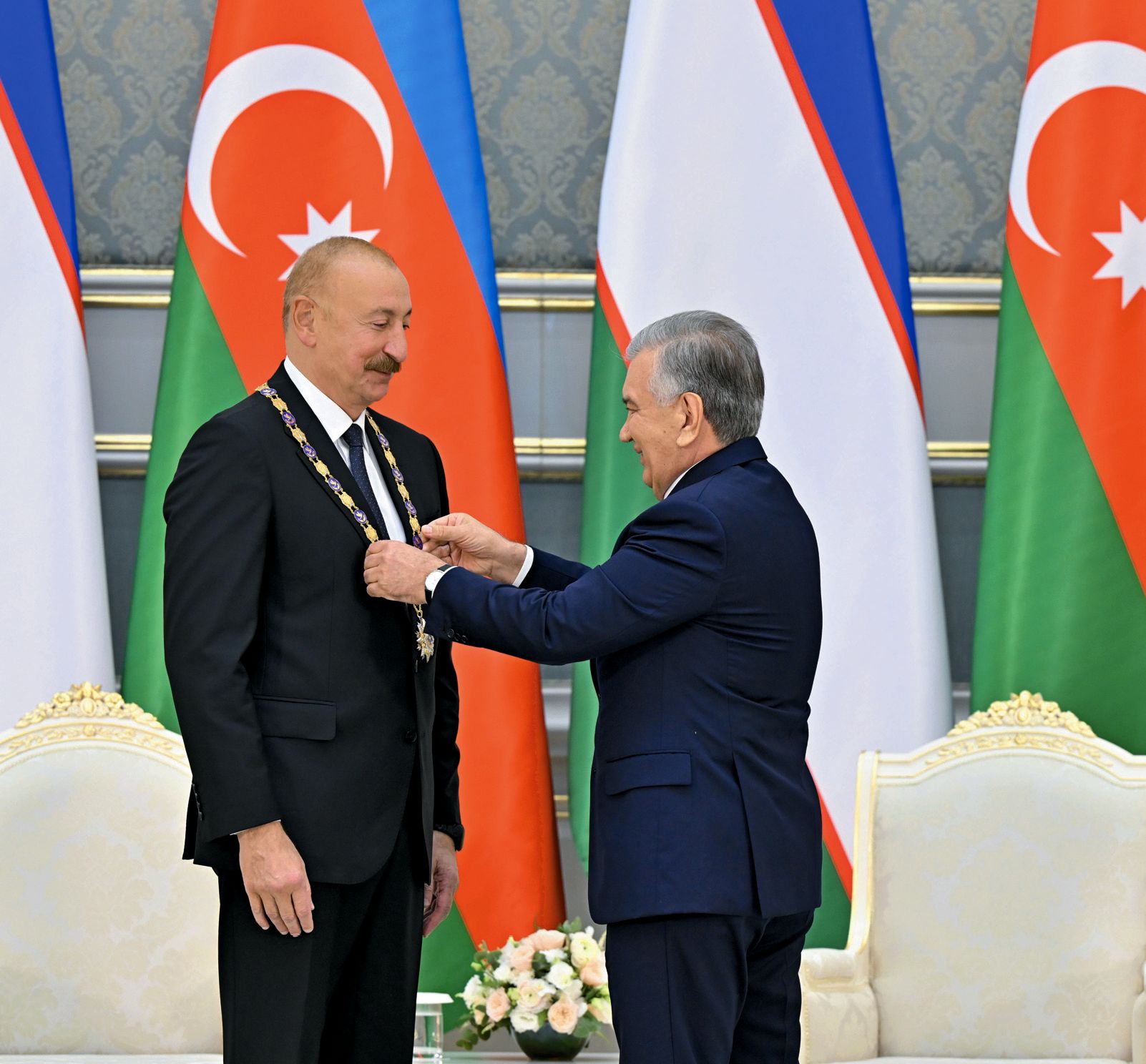
Incidentally, the award ceremony for the presidents also lent a special symbolic significance to this current phase: Ilham Aliyev was awarded the Order of ‘Dustlik’ of the highest class, whilst Shavkat Mirziyoyev received the Order of ‘Heydar Aliyev’. These awards served as yet another official expression of recognition of the two leaders’ personal contributions to the development of relations between the two countries.
Thus, the political substance of the state visit found its practical and symbolic continuation. But perhaps the most important aspect of the trip’s outcome lies not in individual documents, projects or ceremonies. Taken together, they demonstrate just how deep the network of ties between Baku and Tashkent has become, and why its significance now extends far beyond the bounds of ordinary bilateral diplomacy.
A new geography
Over the past five years, relations between Azerbaijan and Uzbekistan have evolved from an intensive strategic partnership to an alliance, which has now taken on yet another form: that of eternal friendship. However, the significance of this visit is not limited to this.
The Treaty of Eternal Friendship, the third session of the Supreme Inter-State Council, the new roadmap, the deepening of cooperation within the Organisation of Turkic States, and Azerbaijan's participation in the Central Asia cooperation framework are all elements of a single process. Ilham Aliyev's reference to the unprecedented nature of the current stage in relations is therefore notable. The substance of this approach is already considerably broader than that of traditional bilateral diplomacy.
Another key point to consider is the impact of the project on the company's reputation. Baku and Tashkent are not merely strengthening their own alliance. Recent cooperation has resulted in increased connectivity among regions that were previously viewed as isolated entities, namely Central Asia, the Caspian Sea and the South Caucasus. In this sense, Azerbaijani-Uzbek relations are becoming one of the channels for forging closer regional interconnectivity.
The results of the visit are measured not only by the number of documents signed, new projects initiated or ceremonies held. In Tashkent, the already established political level of relations was demonstrated, whilst at the same time the potential for its further expansion was highlighted.
The alliance between Baku and Tashkent has indeed demonstrated a significant reach. In the contemporary business environment, the definition of this concept extends beyond the geographical distance between the two capitals, encompassing the potential for collaboration and cooperation between them.
RECOMMEND:
 109
109

