

MAPPING NEW STREAM
Azerbaijan and Türkiye apply long-tested oil and gas model to electricity sector
Author: Ilaha MAMMADLI
The energy partnership is evolving in terms of scale and scope. The oil and gas routes established over three decades remain its foundation, but today Baku and Ankara intend to link not only fields and markets, but also national electricity systems. The new agenda includes interconnectors, the export of 'green' energy, energy storage, digital management and artificial intelligence.
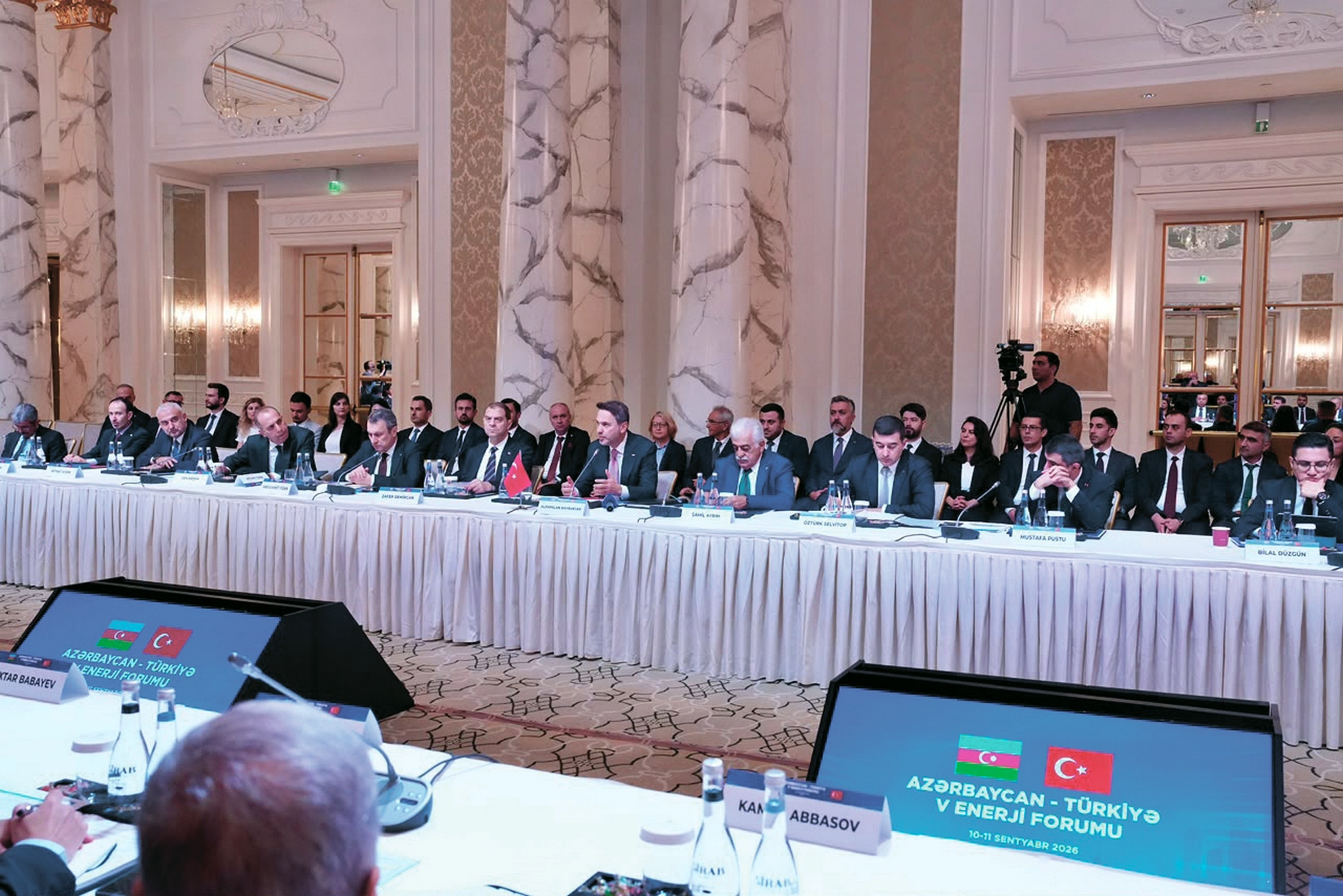
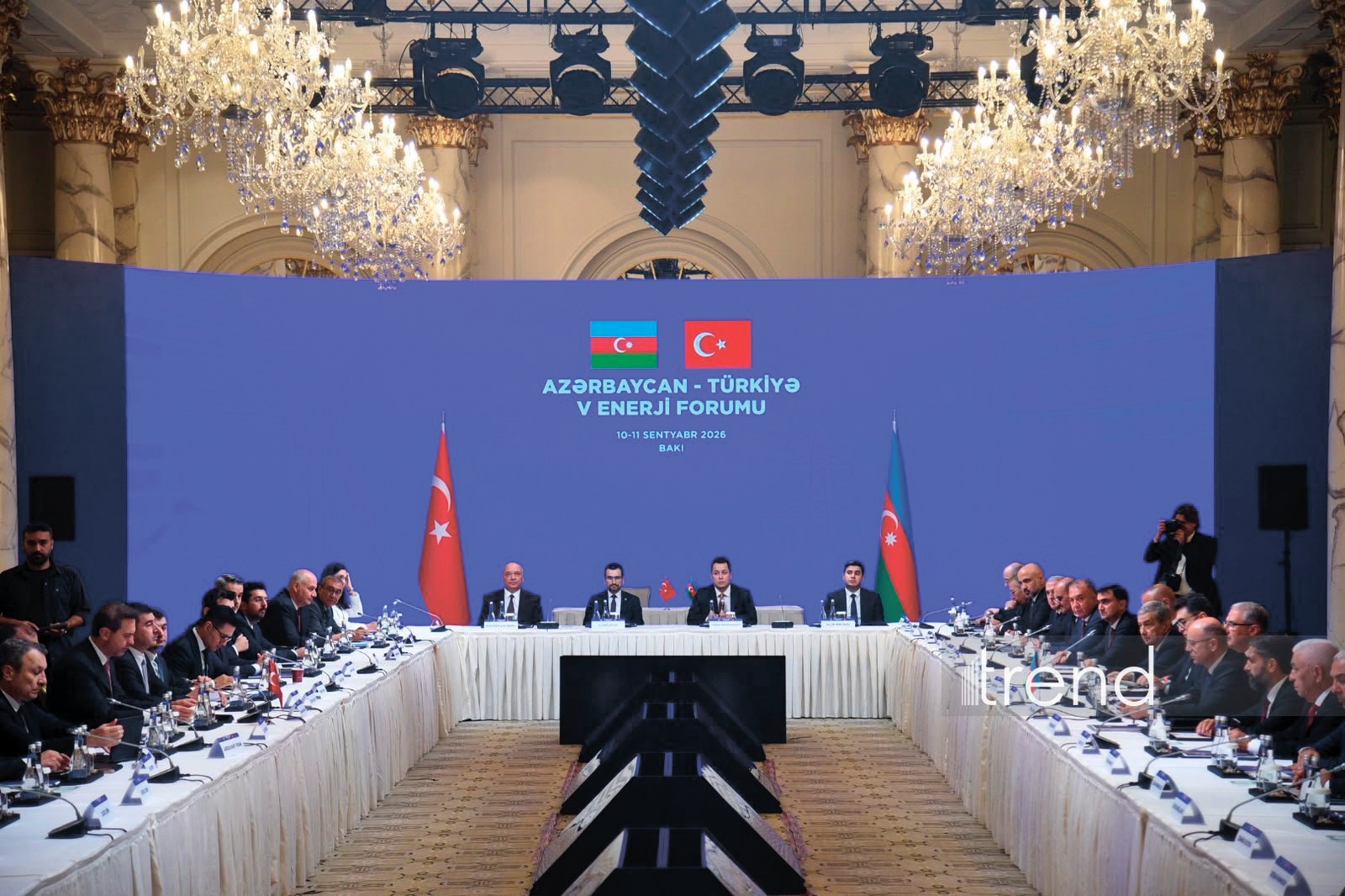
The outcomes of the 5th Azerbaijan-Türkiye Energy Forum in Baku demonstrated that the parties are seeking to transfer their accumulated experience of pipeline cooperation into the era of electricity. While the previous model focused on production, transportation and sales, the new one emphasises the interconnection, balancing and joint management of energy flows.
Solid foundation as-is
The scale of the infrastructure already in place helps to explain why the energy sector has become one of the most enduring pillars of the Azerbaijani-Turkish partnership. Azerbaijan's Minister of Energy, Parviz Shahbazov, has announced that 561 million tonnes of oil and 196 billion cubic metres of gas have been supplied to Türkiye and international markets via the existing oil and gas system. The Turkish market accounted for 130 billion cubic metres of gas, including around 40 billion supplied via TANAP.
These volumes are underpinned by a comprehensive system that has been meticulously developed around key infrastructure, including the Baku–Tbilisi–Ceyhan oil pipeline, the Baku–Tbilisi–Erzurum gas pipeline, TANAP, and the Southern Gas Corridor. It has provided Azerbaijan with access to major external markets, whilst enabling Türkiye to assume the role of one of the key energy hubs between the Caspian Sea and Europe. This experience will form the foundation for the subsequent stage.
"Today, using the platform of the Azerbaijan-Türkiye Energy Forum, we are working to continue our current work in the energy sector. However, we are also looking to the future," noted Shahbazov.
The transition towards the electricity sector does not indicate a shift away from hydrocarbons. The Baku–Tbilisi–Ceyhan pipeline currently transports 500,000 to 600,000 barrels of oil per day. Ankara is working to increase the pipeline's capacity, including through the use of raw materials from Central Asia. Alparslan Bayraktar, Turkish Minister of Energy and Natural Resources, has stated that the aim of the project is to channel oil from Central Asia and the Turkic world into this artery and utilise the existing infrastructure to its full capacity. Should sufficient supply volumes be available, it is anticipated that volumes along this route could reach 1 million barrels per day in the long term.
Cooperation between SOCAR and TPAO is also continuing. The companies are considering projects not only in Azerbaijan and Türkiye, but also in third countries, and following the ‘Shafag-Asiman’ project, they intend to develop joint geological exploration, including the Garabagh project. Thus, the traditional energy sector retains its role as a source of revenue, infrastructure utilisation and investment cooperation. The new framework does not replace the old one, but builds upon it.
Electric TANAP
The new model is exemplified by the four-party project for the transmission and trade of 'green' electricity between Azerbaijan, Georgia, Türkiye and Bulgaria. Bayraktar has referred to it as the 'electric TANAP', drawing a direct parallel with the gas pipeline that linked Azerbaijan to the Turkish and European markets. The same logic is now being applied to electricity: rather than transporting extracted raw materials, the aim is to integrate the generation and transmission networks of several countries.
Each country in this chain has a specific role to play. Azerbaijan has significant potential for solar and wind energy. Türkiye boasts a substantial domestic market, well-developed infrastructure and convenient geographical proximity to Europe. Georgia has the potential to become an important transit hub, whilst Bulgaria could serve as one of the entry points to the European power system. In such a model, interconnectors serve a function that extends beyond that of mere supply lines. They facilitate the redistribution of capacity, compensate for shortages in individual systems and enable more efficient use of intermittent renewable energy generation. According to Bayraktar, they should be regarded as an 'area of strategic cooperation' that will bring the countries' power systems closer together.
Nakhchivan is given special prominence. In Jabrayil, construction of a 74-kilometre, double-circuit 330 kV power line towards Aghbend is nearing completion. The transmission capacity is estimated to be approximately 1,000 MW. The subsequent step should be to establish a connection with Nakhchivan and Türkiye via the Zangezur Energy Corridor. Design work has already been completed within the autonomous republic, and a site has been allocated for a transformer substation.
Shahbazov emphasised that the creation of the Zangezur Energy Corridor, which will connect Nakhchivan to Azerbaijan's unified power system, will broaden the prospects for cooperation in the electricity sector among the countries of the region.
At the initial stage, the export of up to 1 GW of electricity from Nakhchivan to Türkiye is being considered. However, the strategic outcome goes beyond commercial supply: the autonomous republic will be able to move beyond being an energy-isolated territory and become a link between Azerbaijan’s main power grid and Türkiye. The project’s connection to the energy component of TRIPP also gives it a regional connectivity dimension.
Green route to Europe
An alternative route runs via the Black Sea. The subsea cable project is designed to establish a connection between Azerbaijan and Georgia with Romania and Hungary, with Türkiye having expressed its interest in participating. Its implementation will establish a route for Azerbaijani electricity that is comparable in geographical significance to oil and gas routes, but focused primarily on renewable generation.
For Europe, it is not only the additional volumes that are important, but also the origin of the energy, its carbon footprint and the reliability of supply. Azerbaijan can therefore fulfil two roles: remaining a supplier of natural gas as a transition fuel whilst gradually entering the 'green' electricity market. However, the competitiveness of such exports will be determined by the cost of generation and transmission, grid capacity, trading mechanisms and the recognition of the energy's origin on the European market.
The potential of the future system is not limited to Azerbaijan's own resources. Baku is developing cooperation with Kazakhstan and Uzbekistan, which, in the long term, makes it possible to envisage the South Caucasus as a route for channelling electricity from Central Asia to Europe. Kazakhstan possesses significant oil reserves and a major uranium industry; Turkmenistan has substantial gas reserves; and the countries of the region possess critical minerals and considerable renewable energy potential. Azerbaijan and Türkiye, in turn, offer existing transport and energy links to Western markets.
Bayraktar has noted that the abundant resources of the Turkic states of Central Asia can be channelled to various global markets via the existing transport and energy infrastructure of Azerbaijan and Türkiye. Therefore, the competition is not only over energy volumes, but also over the routes along which raw materials and electricity will be transported in the future.
Simultaneously, Azerbaijan is increasing its own 'green' power generation. Four small hydroelectric power stations are scheduled to commence operations in Kelbajar and Lachin by the end of the year. A 240 MW wind farm project is currently underway in Kelbajar, and in Nakhchivan, discussions are underway regarding the participation of Turkish investors in the construction of solar power stations with a combined capacity of 1,000 MW. The next key political milestone for advancing this cross-border project will be COP31 in Antalya, where Türkiye plans to hold a signing ceremony for a document on the transfer and trade of 'green' electricity. The establishment of an intergovernmental agreement has the potential to transform the concept of an 'electric TANAP' from a political idea into a tangible reality.
Energy going digital
As the proportion of solar and wind power stations increases, the management of the power system becomes more complex. Generation at such facilities is weather-dependent, while consumption fluctuates constantly. The system must forecast generation and demand, manage storage facilities, maintain balance and coordinate cross-border flows. Digitalisation and artificial intelligence are therefore becoming not merely an external addition to the energy sector, but a prerequisite for the sustainable operation of future grids.
Mr. Shahbazov has proposed that the Azerbaijan-Türkiye Energy Forum should consider establishing artificial intelligence and digital transformation as a new priority. In the long term, data quality and processing speed may be as important to the sector as the number of megawatts commissioned. This is of particular importance in the context of a cross-border system, where a deviation in one section has the potential to impact other participants.
It is precisely for this reason that the forum's six working groups' agenda extended far beyond oil and gas. The experts discussed a range of issues, including the regulation of the electricity market, transmission and distribution, interconnectors, renewable energy sources, energy storage, smart meters, energy efficiency and other related topics. Another area of collaboration focuses on enhancing the energy efficiency of buildings. The future model is expected to not only increase production but also reduce losses.
The final communiqué from the forum outlines the primary areas of work, with the actual outcome contingent on the pace at which feasibility studies, investment decisions and intergovernmental agreements are concluded. Electricity corridors present a more complex challenge than pipelines: harmonised regulations, constant balancing and coordinated management of multiple power systems are all required. However, the impact of establishing these relationships goes beyond that of a conventional export deal.
Over three decades, Azerbaijan and Türkiye have progressed from individual oil projects to a complex infrastructure linking the Caspian Sea with Europe. Now, alongside oil pipelines and gas trunk lines, power transmission lines, converter stations, storage facilities and digital platforms are set to emerge.
If this system is established, the nature of the bilateral partnership will change: it will evolve from a relationship between a producer and a transit country to the integration of power systems. It is precisely this kind of network that has the potential to form the backbone of the region’s new energy landscape.
RECOMMEND:
 31
31

