

THE CLIMATE AFTER BAKU
Azerbaijan transforms the COP29 agreements into energy projects, implementing new standards for urban efficiency
Author: Aghasaf NAJAFOV
Azerbaijan has previously proposed a range of initiatives at the 2024 UN Climate Change Conference, including financial support for developing countries. The country is now preparing new proposals to accelerate the 'green' agenda, which will be considered at COP31 in Türkiye.
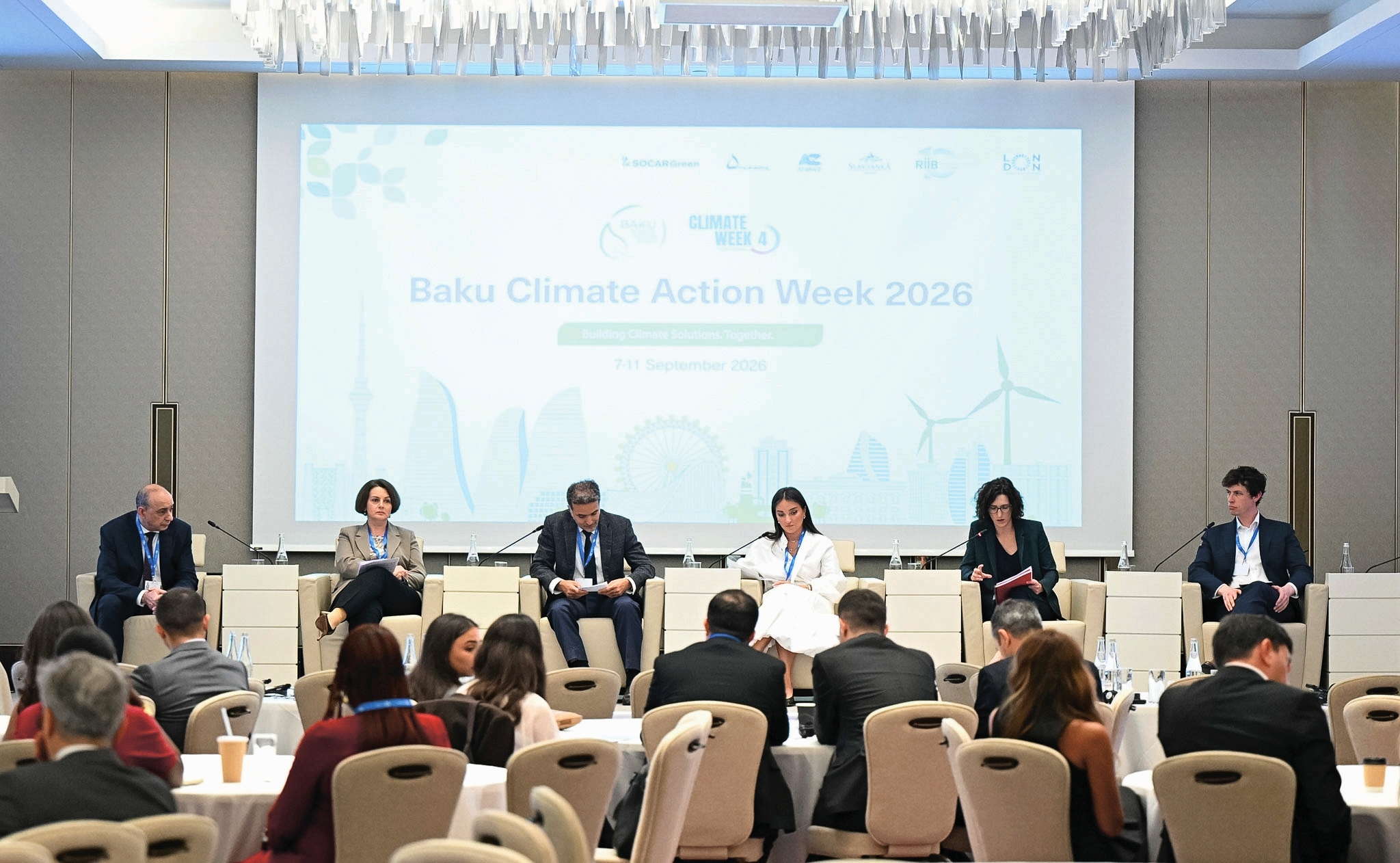
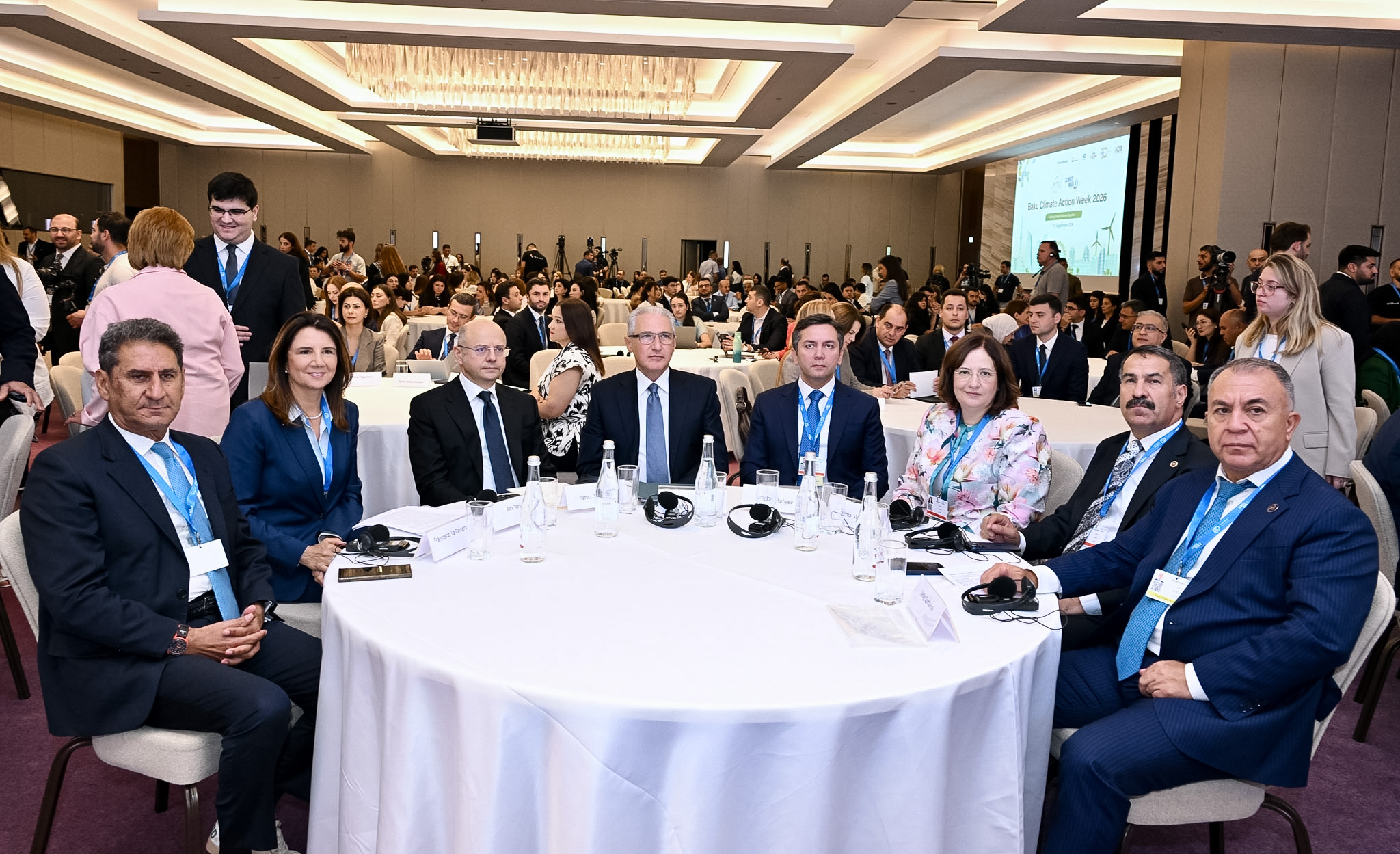
From 7 to 11 September, these and other issues were discussed at the 4th Climate Week of the UN Framework Convention on Climate Change (CW4) in Baku.
New goal
Following COP29, Azerbaijan maintains its position as a key player on the global climate agenda. The country is participating in the Belém Process and is supporting this dialogue in the run-up to COP31 in Antalya.
As Daniele Violetti, Senior Director for Programme Coordination at the UN Framework Convention on Climate Change, noted, the agreements reached in Baku two years ago remain an important foundation for further advancing the global climate agenda and the practical implementation of the commitments made.
Yalchin Rafiyev, chief negotiator for COP29, has confirmed that the new climate finance target is based on the terms agreed in Baku. These terms include an initial commitment of at least $300 billion per year by 2035, alongside a strategy to mobilise up to $1.3 trillion. "The new climate cycle must shift the focus from agreeing on commitments to their practical implementation, and the key prerequisite for this is accessible finance," noted Rafiyev. He also emphasised that the upcoming conference in Türkiye should help to accelerate this transition.
"Small island states and African countries require financial and technical support, and this issue will be included on the COP31 agenda alongside the support package," stated Fatime Varank, the Executive Director of COP31 and the Deputy Minister for the Environment, Urbanisation and Climate Change of Türkiye. In this regard, a new mechanism is being developed to assist developing countries in achieving their targets for the electrification of industry and transport, as well as for improving the energy efficiency of buildings. A pilot project involving six countries will be presented in New York. Among Türkiye's other initiatives is the aim to raise the global electrification rate to 35 per cent by 2035.
Azerbaijan's approach to international cooperation in the field of the 'green' energy transition is focused on the following areas: the pooling of ideas and experience, the introduction of uniform standards, and the coordination of neighbouring states' efforts to enter the global market. 'It is vital for countries to ensure energy security, accessibility and affordability. Our region comprises countries with different energy systems, economic structures and development needs. However, there are also many similar challenges, including gaps in technology and financing, as well as issues relating to standards, skills and institutional capacity. Therefore, regional cooperation will enable us to effectively address many of the problems faced by countries," said Mukhtar Babayev, the Azerbaijani President's Representative on Climate Issues and President of COP29.
In this regard, the Organisation for Economic Co-operation (OEC) Clean Energy Centre can assist countries in accelerating the deployment of clean technologies, collectively surmounting existing barriers and adapting developments from one country for utilisation in another.
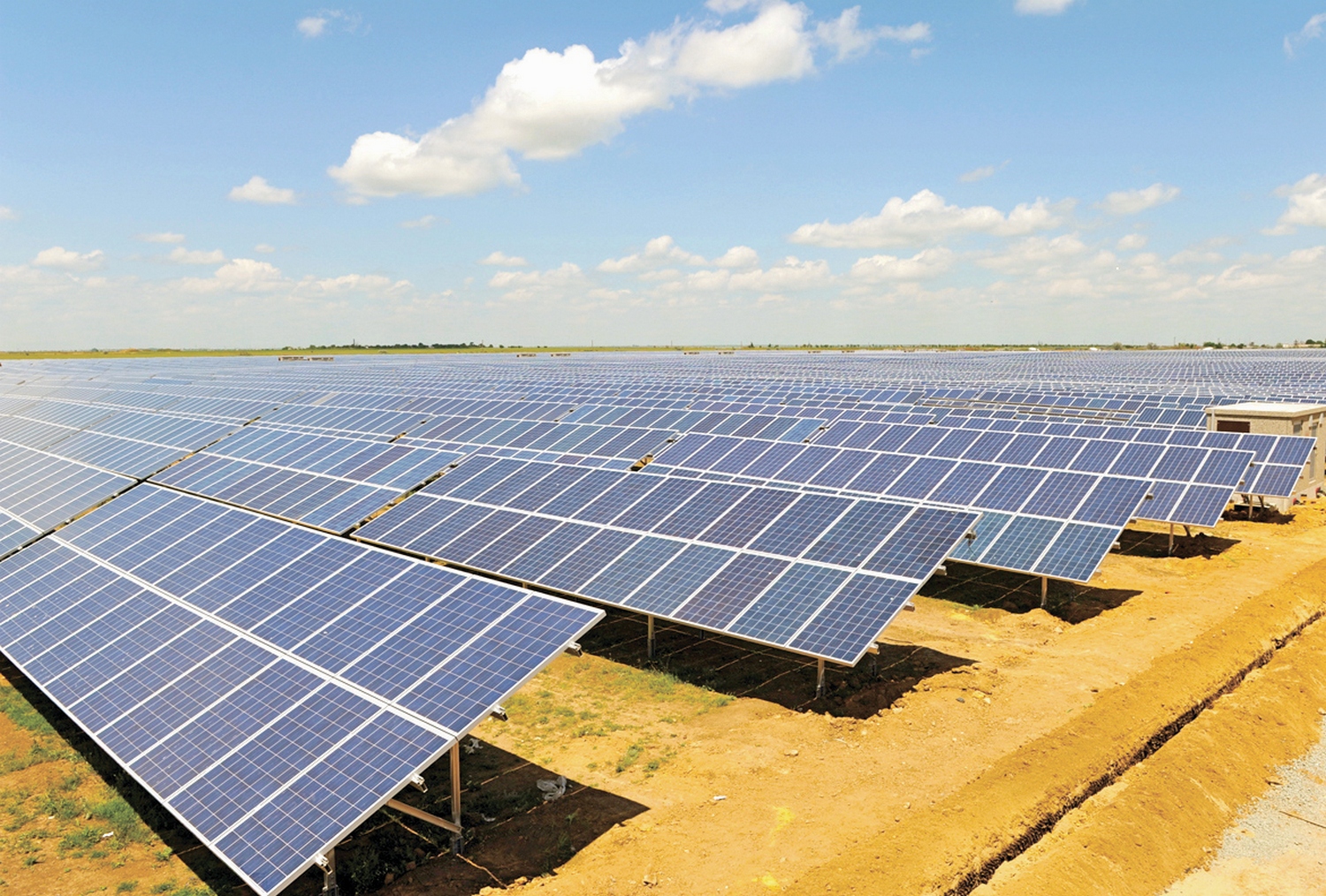
Azerbaijan's position as a regional leader in the development of renewable energy generation is due in no small part to a successful partnership with investors and specialist companies from the Gulf states, China, Türkiye and the EU. Solar and wind power stations are being actively built in the country with financial and technical support from companies in Saudi Arabia and the UAE, as well as through investments from BP and Nobel Energy. It is anticipated that by 2027, investment in the construction of 11 such facilities will reach almost $2.8 billion, and the country's power system will gain a further 2 GW. By 2032, the combined capacity of renewable energy facilities will reach 8 GW. Consequently, the share of renewable sources in the power system's installed capacity is projected to reach 39 per cent by 2030 and approximately 43 per cent by 2035.
Energy corridors
A significant part of the discussions during CW4 was devoted to the development of 'green' energy and the integration of alternative generation into the world's power systems. In particular, the International Renewable Energy Agency has identified a threefold increase in renewable energy capacity by 2030 as one of the priority objectives of the global energy transition. In 2025, an all-time record was set with 692 GW of new capacity being commissioned. By the close of the year, 'green' energy accounted for 49 per cent of the world's total installed power generation capacity and 85 per cent of all new generation capacity.
Such rapid expansion is already yielding tangible practical results: existing renewable energy facilities helped to reduce expenditure on fossil fuels by $480 billion and avoid 8.4 gigatonnes of CO2 emissions last year alone.
In the case of Azerbaijan, the renewable energy projects being commissioned will enable annual savings of around 1.1 billion cubic metres of natural gas at domestic thermal power stations, generate 5 billion kWh of electricity and reduce greenhouse gas emissions by 2.5 million tonnes. The plan is to use this 'green' energy to develop energy-intensive sectors within the IT industry, such as data centres. At the same time, the 'blue fuel' that has been saved will be channelled to external markets. Azerbaijan has also taken the initiative to supply 'green' energy to energy-deficient regions of Europe. In this regard, an agreement has been concluded with Kazakhstan and Uzbekistan on the integration of energy systems for the export of clean energy.
"From 2032, Azerbaijan will begin operating two green energy corridors. Another strategic priority is to enter international markets with green energy through the development of regional and inter-regional connectivity. The feasibility study for the 'Caspian Sea–Black Sea–Europe: Azerbaijan's representative emphasised that the Green Energy Corridor project, with a total capacity of 3,900 MW, is already putting these projects into practice," emphasised Azerbaijan’s Minister of Energy, Parviz Shahbazov.
The first phase of the route via the Black Sea and the Central Asian–Azerbaijani 'green' energy corridor is expected to be launched in 2032. Concurrently, concrete steps are being taken to develop new interconnectors for the transmission of 'green' energy to Türkiye and Europe via Georgia, the Zangezur Corridor and the Nakhchivan region.
"The countries of Central Asia have different energy systems, yet a regional partnership is developing between them. A Central Asia–Azerbaijan energy corridor is also taking shape to supply 'green' energy to Europe," said Aysel Yagubova, Executive Director of the CEC Clean Energy Centre. She asserts that the implementation of such initiatives necessitates interconnected energy systems, as well as specialists adept in working with innovative technologies, including artificial intelligence.
Cities focusing on energy
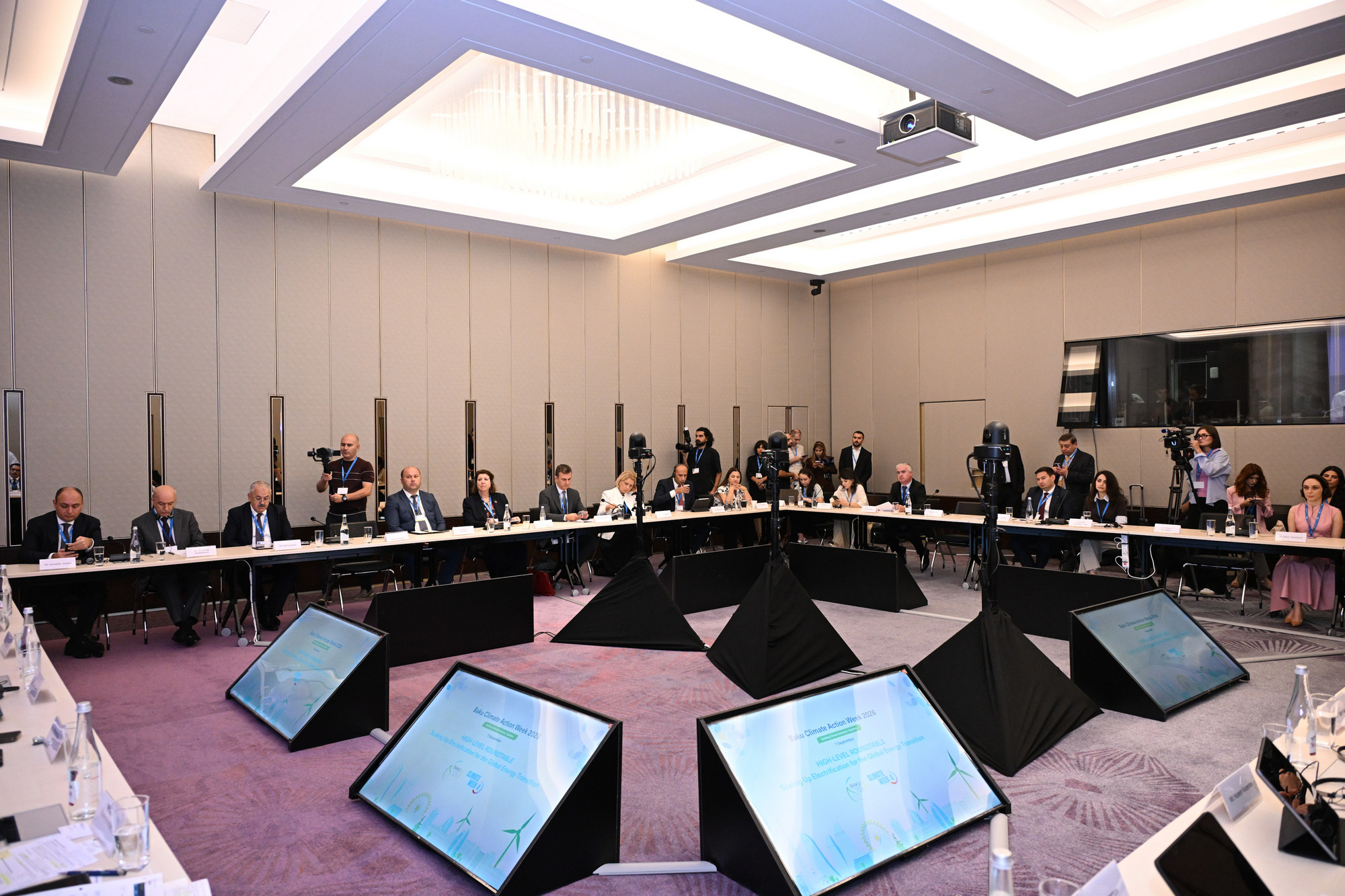
Another key theme that emerged at CW4 was the increased adoption of energy-saving technologies in major cities. The majority of the presentations given by participants at the roundtable on 'Energy efficiency certification of buildings' concentrated on this issue.
According to UN estimates, by 2050, 67 per cent of the world's population—or over 6.3 billion people—will be living in urban areas. Many megacities are already overcrowded, and it is becoming increasingly difficult for local authorities to ensure safety, tackle environmental issues, and manage public transport, utilities and the energy sector effectively. Mukhtar Babayev has stated that over 55 per cent of the world's population now lives in cities. He believes that rising temperatures and population growth in these areas will lead to increased demand for cooling. This, he says, will place an additional strain on electricity systems. "At the same time, cities already consume nearly 75 per cent of the world's energy and account for up to 70 per cent of global emissions. To maintain sustainability in this area, annual investment in electricity grids worldwide must increase from approximately $400 billion to $600 billion."
However, the development of the electricity sector, including the expansion of 'green' generation, is not sufficient to solve global problems. Introducing energy-saving technologies, using resources efficiently and reducing losses in building heating and cooling systems are all equally important. This also applies to urban enterprises, transport and other sectors, which are the largest sources of emissions. In Azerbaijan, the need to improve energy efficiency has increased significantly due to population growth, conurbation expansion and urban development projects in the liberated territories, particularly in the housing and utilities sector.
In recent years, there has been some progress in this area. In 2019, President Ilham Aliyev initiated the rollout of a comprehensive 'Smart City' system in Baku, with plans to extend it to other cities across the country. The programme involves replacing inefficient equipment with energy-saving technologies and introducing LED street and domestic lighting in Baku, Sumgayit and Shamakhy. Pilot measures are also being implemented with a view to reducing heat and cooling losses in the utilities sector. Similar work is being carried out in Ganja with financial support from the European Bank for Reconstruction and Development under the 'Green Cities' programme. The European Union and the World Bank signed an agreement with the government of the Republic on the grant-based Operational Technical Assistance Programme for Azerbaijan more than four and a half years ago. A comprehensive data collection process was undertaken on numerous public buildings in Ganja, Sheki and Gakh. These structures were systematically categorised based on their type and climate zone, and subsequently underwent detailed energy audits.
Jahid Mikayilov, Head of the Energy Efficiency Department at the Ministry of Energy, emphasised the need for the rational use of energy resources in new buildings, as well as in those undergoing reconstruction or major refurbishment. "The development of an electronic system for certifying buildings for energy efficiency will be completed in the country by October this year. The designer will enter project data into the Building Energy Efficiency Information System, after which the system itself will calculate the annual energy consumption per square metre of floor area, assign the building a class (A, B or C) and generate the certificate."
At the same time, the country is actively adopting best practices from Türkiye and Europe in the design, construction and management of energy-efficient buildings. According to Baku's Master Plan for Development up to 2040, heat consumption in the capital will reach almost 6.5 MW, which is 4.4 times higher than the 2020 figure. It is evident that, in the absence of substantial reforms, the demand for Baku's energy and heating capacity is projected to escalate exponentially within the next 14 years, thereby introducing additional risks.
Energy-efficient solutions are currently most widely applied in the Garabagh and Eastern Zangezur regeneration projects, which are based on the 'green city' model. Modern insulation materials are used in the construction of houses, whilst solar water collectors and heat pumps are utilised for heating, cooling and supplying hot water to flats. Smart energy management systems are being developed, solar panels are being installed on building roofs, and the streets are lit by self-contained LED lamps. The strategy for the Garabagh region is to prevent the construction of buildings with low energy efficiency. Azerbaijan's State Committee for Urban Planning and Architecture has approved energy efficiency classes A, B, C, D and E, drawing on the experience of European countries. New buildings with a rating below C are prohibited in the country.
Therefore, Baku Climate Week demonstrated that the global 'green' agenda is gradually shifting from declarations to practical mechanisms, such as financing, infrastructure and uniform standards. For Azerbaijan, this means not only expanding renewable energy capacity and creating international energy corridors, but also implementing energy-efficient solutions directly in cities and buildings. Combining these approaches will enable the country to strengthen its energy security, expand its export potential and reduce domestic resource consumption, all at the same time.
RECOMMEND:
 30
30

