

THE CAUCASIAN CROSSROADS
Peace as a key to open new routes and change the region’s transport configuration

Author: Namig H. ALIYEV
A new reality is taking shape in the South Caucasus, and its consequences could prove considerably broader than the Azerbaijani-Armenian peace process. For decades, the region's political map has been defined by closed borders, ongoing conflicts and the isolation of transport links. However, following the restoration of Azerbaijan's territorial integrity, an opposing trend is gradually emerging – the resumption of connections and the opening of new routes.
For Azerbaijan and Armenia, this is primarily a question of peace, security and economic development. For Türkiye, it represents a chance to reshape the region's transport and economic configuration. For Central Asia and Europe, this means the emergence of new routes. For Georgia, this transformation presents both opportunities and a strategic challenge.
How Georgia acquired its transit role
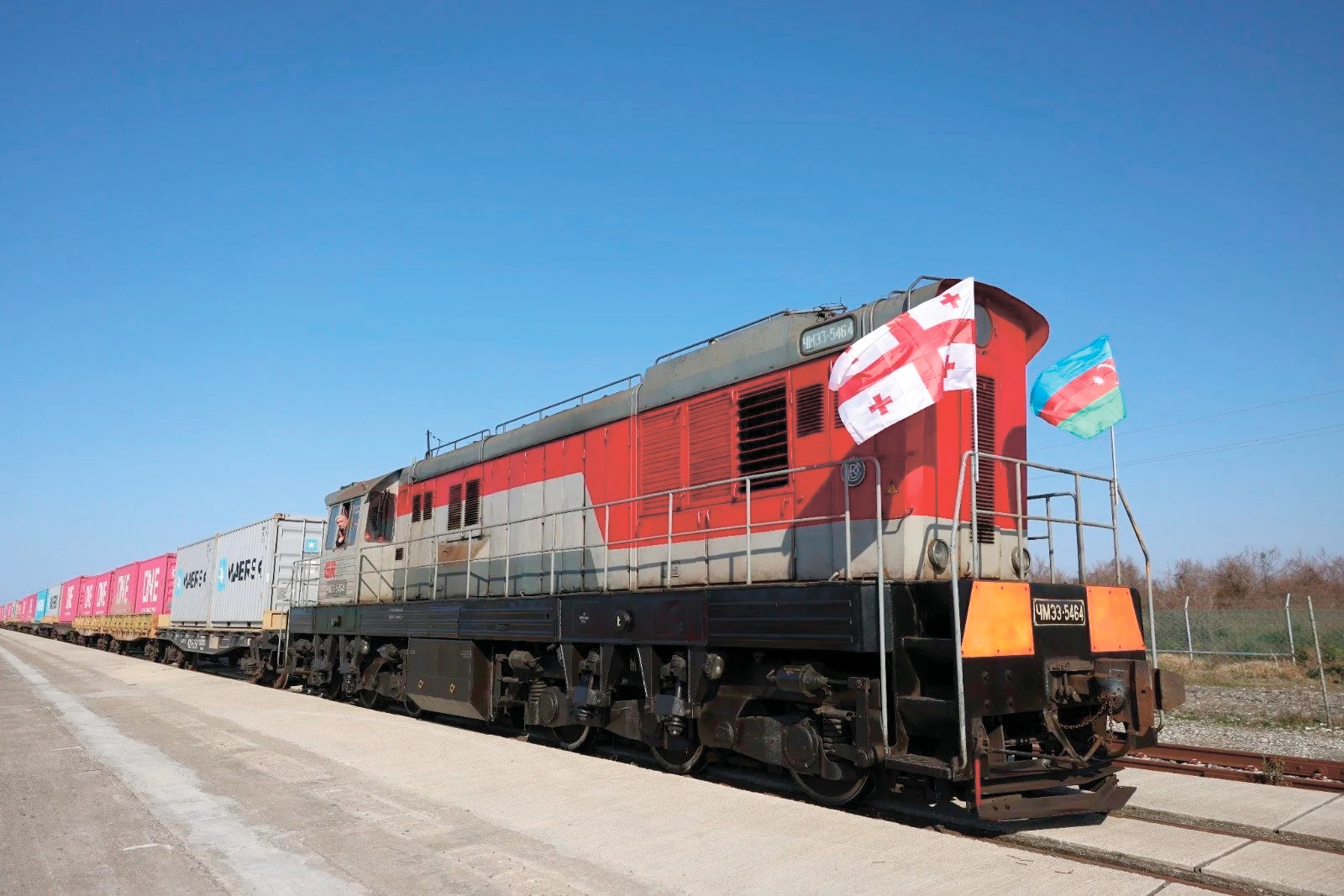
Georgia has effectively served as the main land bridge between Azerbaijan and Türkiye, and, through them, between the Caspian region, Central Asia and Europe. Azerbaijani oil and gas, cargoes from Central Asia, trains using the Trans-Caspian International Transport Route (the Middle Corridor) and road freight all pass through Georgian territory.
However, what consequences might ensue if a lasting peace is established between Azerbaijan and Armenia, with borders being opened and new transport routes beginning to operate?
Georgia's potential as the primary economic beneficiary of peace, or the challenges it might face in maintaining its transit monopoly, are crucial considerations. This issue is becoming increasingly salient.
Today, the Georgian section is an integral part of the South Caucasian segment of the Middle Corridor. Georgia's rail and maritime infrastructure connects Azerbaijan with Türkiye and European markets. In Georgia's case, it is therefore more accurate to speak not of a formal "monopoly," but of de facto transit dominance. This emerged not because the Georgian route was the only geographically possible option, but because of the region’s political circumstances.
That situation is now beginning to change.
Peace can change the map
The Washington summit on August 8, 2025, and the prospect of peace between Azerbaijan and Armenia have opened opportunities not only for the two countries but for the entire South Caucasus. For decades, Armenia has been effectively excluded from the region's main transport chains. The country's geographical situation, with borders shared exclusively with Azerbaijan and Türkiye, has restricted its capacity to engage in transit initiatives.
That situation may now change. The TRIPP project outlines plans for a transport link between mainland Azerbaijan and Nakhchivan, traversing the current Armenian territory, with the intention of integrating this route into the broader Trans-Caspian trade system. In May 2026, Armenia and the US signed a framework agreement on TRIPP, providing for the development of multimodal transit links across Armenian territory.
Should these projects advance from agreements and concepts to actual infrastructure, a new axis will appear on the South Caucasus map: Azerbaijan–Armenia–Türkiye.
For Tbilisi, this represents a wholly new situation. The opening of Armenian routes does not mean that Georgia will become "unnecessary", which would be practically impossible even in the distant future. Georgia has an operational railway network, roads, the ports of Poti and Batumi, the Baku–Tbilisi–Kars railway, developed logistics infrastructure and experience of working within the Middle Corridor.
Armenia's infrastructure, in its current state, cannot replace this system overnight. In the medium term, the route through Azerbaijan and Georgia will therefore most likely retain its importance, while the Armenian direction may become an additional route as borders open and substantial investment is attracted.
It is important to note that the issue does not concern the imminent disappearance of Georgian transit. The primary concern is that Georgia may no longer have an alternative. This would already constitute a strategic change. The introduction of a competing route would result in a shift in the dynamics of the transport market. Carriers would have a choice, investors would be able to compare options, and governments would negotiate with several transit directions rather than just one.
This could have a positive effect on the South Caucasus. Competition between routes could encourage lower transit costs, faster customs procedures, the modernisation of railways, port development, logistics digitalisation and improved infrastructure quality.
This prompts the key question for Georgia: can it maintain its importance not because alternatives are lacking, but because its own approach is competitive in terms of quality? This would represent a different development model.
Even more opportunities
For Baku, the emergence of alternative routes is strategically important. For many years, Azerbaijan has invested significantly in its transport infrastructure, with a particular focus on the Alat port, railways, motorways and logistics centres. It is now the primary gateway to the South Caucasian section of the Middle Corridor.
The expansion of transport routes in this region is a key development that will enhance the country's transport infrastructure and opportunities. The opening of the Armenian route would result in a reduction in Georgia's exclusive role, but would also serve to strengthen the position of Azerbaijan. The development of Baku could proceed in several directions: Azerbaijan–Georgia–Türkiye; Azerbaijan–Armenia–Türkiye; and, in a broader context, various combinations within the Middle Corridor.
Azerbaijan is therefore set to transition from a country through which a single route passes to a regional transport hub capable of connecting multiple directions.
For Yerevan, the change would be of an even more fundamental nature. Armenia would gain an opportunity to end its transport isolation, expand access to regional markets and create new sources of transit revenue.
If TRIPP is implemented, the issue will involve more than simply connecting Azerbaijan with Nakhchivan. The Armenian-American framework agreement treats the project as part of the Trans-Caspian trade route and regional economic integration.
Armenian territory could become part of a broader Eurasian transport system. The establishment of peace has the potential to effect a transformation in Armenia's political and economic roles. From a peripheral dead end, it could become a pivotal transit corridor within the South Caucasus region.
What would be the benefits for Georgia? This is the fundamental question. Tbilisi has two viable options at its disposal.
The first of these is competition. If Armenia becomes a new and more accessible transit route, some cargo could shift away from the Georgian direction, particularly if the Armenian route proves shorter, cheaper or more convenient.
The second is a new specialisation. Tbilisi could respond to competition by improving the efficiency of its own routes. In such a scenario, a network of interconnected directions would emerge instead of a single corridor.
Georgia retains significant advantages, including the ports of Poti and Batumi, railway infrastructure, access to the Black Sea, Türkiye and the European market. Armenia does not possess these assets. Furthermore, the region's overall trade volume is set to increase, which could result in additional cargo flows to Georgia even if its share of individual routes were to decline.
In other words, a smaller share of growing regional transit does not necessarily mean a reduction in the absolute volume of freight. This could represent a significant opportunity for Tbilisi.
The Armenian and Georgian routes do not necessarily have to compete with each other. There is potential for these two elements to be complementary. A more beneficial approach would be the creation of a unified regional transport network in which Azerbaijan, Armenia and Georgia perform different functions.
This could then give rise to a new logic: Azerbaijan is a key player in the Caspian logistics sector, serving as a crucial hub for transportation and distribution. Armenia plays a pivotal role as a transit corridor between Azerbaijan and Türkiye, facilitating seamless connectivity. Georgia's strategic position as a gateway to the Black Sea and northwestern regions positions it as a significant hub for trade and logistics. Finally, Türkiye's role as a major distribution centre in Eurasia underscores its importance as a logistics and transportation nexus.
Does peace create a threat or an opportunity for Georgia?
This represents the fundamental paradox. Georgia's interest in peace between Azerbaijan and Armenia is clear, with the potential benefits including increased trade, investment, regional stability and additional cargo. Concurrently, the opening of Armenian communications could potentially diminish Georgia's exclusive transit advantages.
It is essential that this issue be considered within the context of the Middle Corridor. Until now, its South Caucasian configuration has been largely built around the following axis: Kazakhstan–Caspian Sea–Azerbaijan–Georgia–Türkiye.
Should Armenian communications open, the system will become more extensive. This could increase the South Caucasus's overall capacity and reduce dependence on a single route. Therefore, the question does not necessarily have to be framed as a choice between "Georgia or Armenia". A "Georgia and Armenia" system is a viable option, in which the routes complement each other.
In terms of international business, this would result in enhanced resilience: if there is disruption on one route, the entire system will not be affected.
However, there is a key condition that must be met. New routes do not emerge simply because governments sign agreements. In order to facilitate trade and investment, the region requires infrastructure such as roads and railways, efficient border crossings, streamlined customs procedures, and clearly defined regulations for private business. Above all, they require political stability.
It is evident that the Armenian transport alternative is not yet a viable replacement for the Georgian route. Implementing the new projects will require time and substantial investment. Georgia's transit advantage will not disappear overnight. However, Tbilisi must already be aware that this is not guaranteed for decades to come.
There is another factor that could give the South Caucasus's new transport configuration political significance. Georgia's territorial conflicts. For many years, Abkhazia and South Ossetia were viewed through the prism of the Russian-Georgian confrontation and Moscow's military and political influence. The expansion of regional transport links could, however, gradually create an economic interest for Russia in closer connectivity across the South Caucasus.
The Middle Corridor is emerging as a pivotal route connecting China, Central Asia, the Caspian Sea, the South Caucasus, Türkiye and Europe. Its further development increases the economic value of stability and predictability in the territories through which transport flows pass, or could potentially pass.
This could create a new opportunity for Tbilisi. If participation in the developing Eurasian communications system acquires significant economic importance for Russia, there is a possibility that its pragmatic interest in regional transport connectivity could grow. Tbilisi could then present an economic rationale for resolution, involving the phased integration of Abkhazia and South Ossetia into regional transportation and economic networks.
In such a scenario, there is a possibility that some of Russia's economic interests could coincide with Georgia's interest in restoring its territorial integrity. Transport policy could thus become an additional factor in political settlement.
The establishment of peace between Azerbaijan and Armenia would represent more than a mere political settlement between two states. This could represent a pivotal shift in the South Caucasus' transport and economic infrastructure, potentially altering Georgia's role in the region. Georgia's position as the sole transit option may evolve, opening doors to new opportunities within a more expansive regional framework.
RECOMMEND:
 73