
A TIME FOR BIG INVESTMENTS
Azerbaijan offers global capital new avenues for long-term partnership
Author: Nurlana GULIYEVA
In the current economic climate, competition for investment resources is increasing. In this context, Azerbaijan is working to expand its network of potential partners and to provide international investors with new opportunities for long-term collaboration.
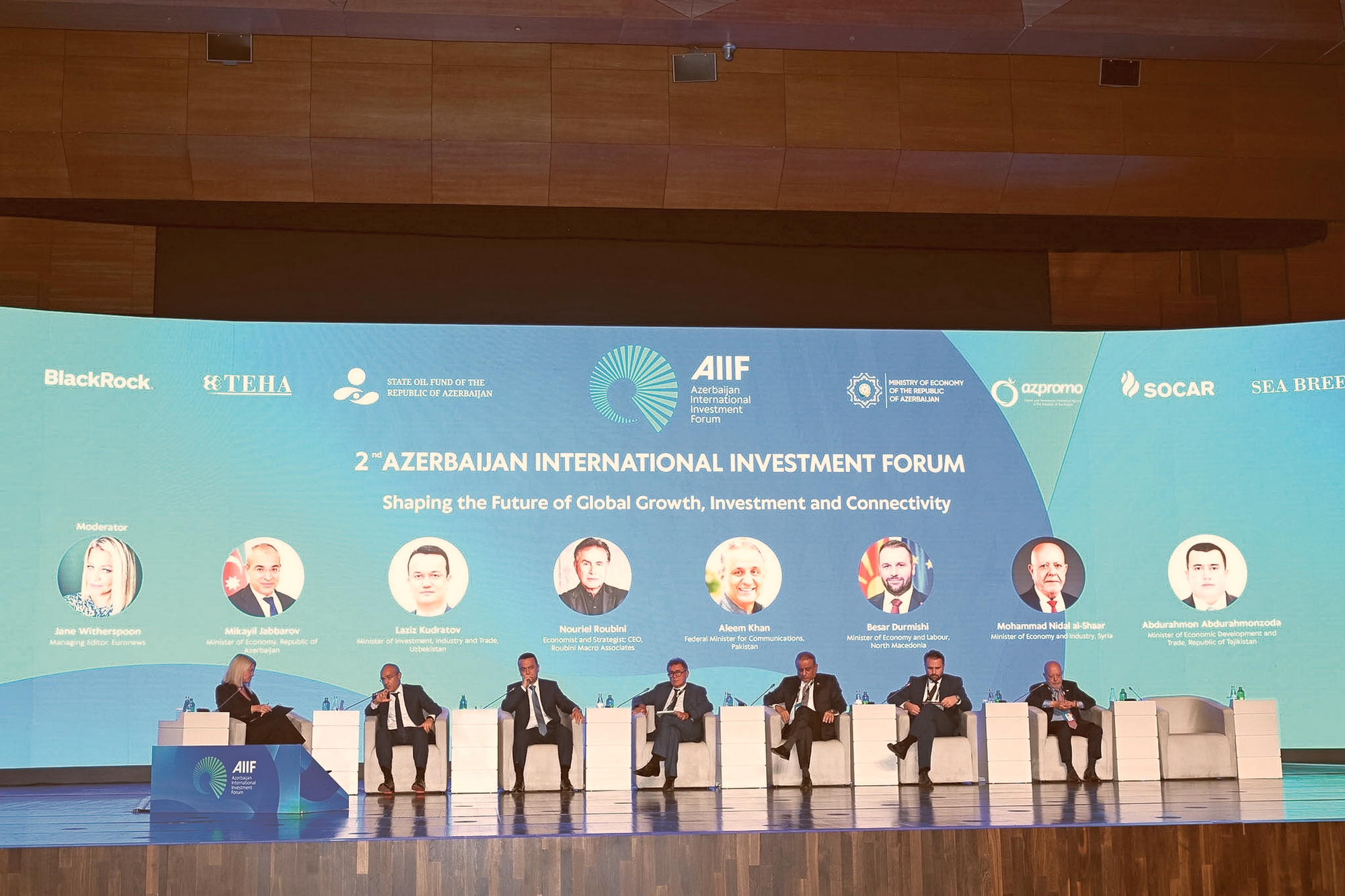
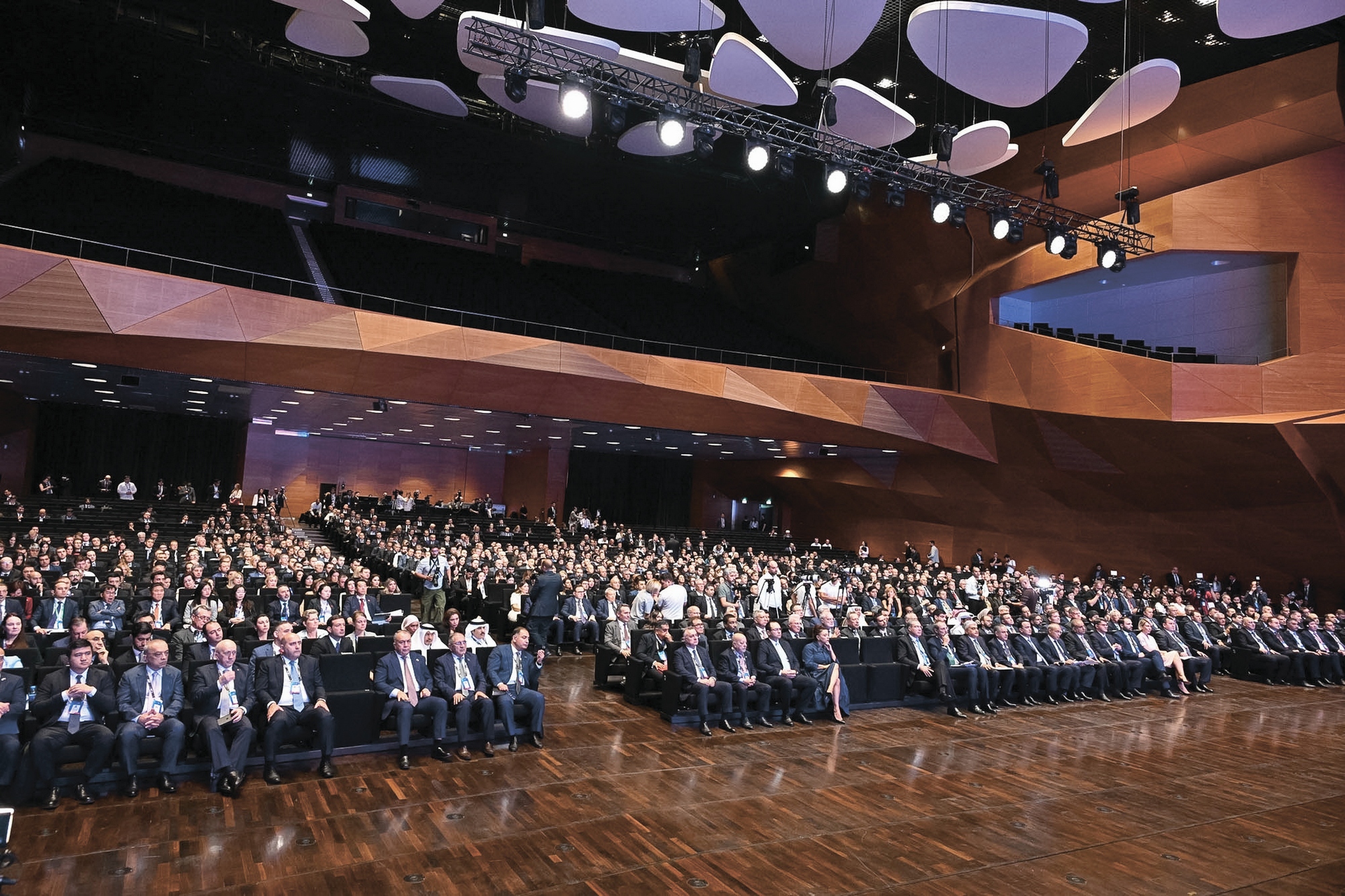
The 2nd Azerbaijan International Investment Forum (AIIF 2026), held in Baku, clearly demonstrated the scale of these opportunities. The event was attended by representatives of the world's leading investment companies, sovereign wealth funds, financial institutions and corporations, with a combined total of assets under management exceeding $33 trillion.
The outcome of the two-day dialogue was the signing of 23 documents on investment projects with a total value of $10.8 billion.
Capital of trust
The highlight of the forum was the address by the President of Azerbaijan, Ilham Aliyev, who outlined the country's key advantages and promising areas for global capital. Furthermore, the starting point for the discussion with investors was not so much plans for the future as the foundation laid over previous decades for their implementation. "The accomplishments achieved thus far have undoubtedly laid the foundation for future development. After all, were it not for the work already done, the stable economy and the independent financial and economic system, it would be difficult to talk about the future today," the Head of State asserted.
I. Aliyev cited the established perception of Azerbaijan as a reliable partner as one of the main achievements of the past period: over the last 20 years, more than $350 billion in investment has been attracted to the country's economy, half of which comes from foreign direct investment. The President observed that many prominent international companies in various sectors of the economy currently view Azerbaijan in this manner.
For an investor with a long-term outlook, macroeconomic stability is of equal importance. Azerbaijan's external debt stands at 5.6 per cent of GDP, whilst its foreign exchange reserves are almost 20 times that amount. The President also emphasised the stability of the national currency, noting that the manat's exchange rate against the dollar has remained consistent since April 2017. In addition to the aforementioned points, political stability has been identified as a key factor contributing to the country's investment appeal by Ilham Aliyev.
Further details on the financial aspects of this situation were provided by the Finance Minister, Sahil Babayev. According to him, between 2021 and 2025, the average growth rate of Azerbaijan's non-oil GDP exceeded 6 per cent. While the oil and gas sector was responsible for over 50% of GDP around 20 years ago, today the non-oil and gas economy accounts for more than 70% of the total. The next target is to further reduce the dependence of public finances on oil revenues: by the end of 2030, it is planned to reduce their share of state budget revenue to 30 per cent.
Further diversification does not mean the country is giving up on the advantages that the traditional energy sector continues to provide. Aliyev emphasised the importance of the oil and gas sector to the economy and its potential to generate significant financial resources, which will in turn be channelled into investment. Therefore, the emphasis is on expanding the economic base. Revenues from the traditional sector are being utilised as a resource to develop new industries and sectors.
Concurrently, the manner in which the quality of the investment is understood is evolving. In his address to participants at AIIF 2026, the President made it clear that the country's investment policy is not just about attracting capital for its own sake. "We place great importance on technology, expertise, innovation and access to new markets. We are always seeking partnerships that create sustainable value for investors whilst strengthening the modernisation and competitiveness of Azerbaijan's economy," said Aliyev.
In this sense, the current investment phase differs markedly from the period when the country's abundant hydrocarbon resources served as the main magnet for foreign capital. Over the past three decades, alongside capital, Azerbaijan has acquired technology, expertise and, no less importantly, its own professional workforce. The President has provided a figure that is very revealing: while, following the conclusion of the first production-sharing agreement in 1994, foreign specialists accounted for more than 90 per cent of the staff at Western energy companies, today, according to him, their share stands at around 5 per cent. Ilham Aliyev described human capital as a resource that cannot simply be bought, even with substantial financial resources at one's disposal.
Trillions in search of opportunities
The diversity of the audience gathered at AIIF 2026 was perhaps most clearly demonstrated by the dialogue between the President of Azerbaijan and Adebayo Ogunlesi, who is the Chairman and Chief Executive Officer of Global Infrastructure Partners (GIP), and Senior Managing Director at BlackRock. Turning to a discussion of the country's prospects for further development, he addressed Ilham Aliyev: "The audience here is eager to hear about your plans for the future. Let us now consider the future. There are people in this room who manage assets totalling around $30 trillion."
Ilham Aliyev also emphasised the considerably broader geographical representation of participants this year and the high level of participation by international institutions, investors and leading companies. The Head of State has stated that this is indicative of both growing confidence in Azerbaijan and the increasing economic significance of the entire region.
It is worth noting that BlackRock, a leading global investment management firm whose assets under management reached $15.3 trillion by the end of June 2026, was the largest participant at the forum in terms of assets under management. Also represented in Baku was GIP, a subsidiary of BlackRock and one of the world's largest infrastructure investors, operating in the energy, transport, digital and water infrastructure sectors.
It is also worth noting that other international asset management firms had a significant presence. These included PGIM, with assets of around $1.5 trillion; Brookfield Asset Management, which manages more than $1 trillion and specialises, amongst other things, in infrastructure and real assets; and Franklin Templeton, with assets under management of around $1.8 trillion. Representatives from Neuberger Berman also participated in the forum.
The presence of sovereign and state investment institutions lent significant weight to the event. These included the Abu Dhabi Investment Authority, Singapore's Temasek, the Türkiye Wealth Fund, Saudi Arabia's Hassana Investment Company, and Bahrain's Mumtalakat. This is particularly important given the specific nature of these investors, who focus on long-term returns. They invest significant funds in infrastructure, energy, transport, digital technologies and other strategic sectors.
On the second day of the forum, the Azerbaijan State Oil Fund, in collaboration with BlackRock, hosted an infrastructure investment dialogue. This event was attended by high-ranking government representatives, international investment institutions, infrastructure companies and global businesses. The discussion focused on three key areas requiring substantial long-term capital investment: artificial intelligence and digital infrastructure, energy infrastructure, and strategic transport and logistics corridors. Representatives from BlackRock, GIP and Temasek Global Investments, amongst others, participated in the discussions.
Consequently, virtually all the main categories of institutional capital were represented in Baku at the same time – from the world's largest asset management firms and private investment funds to sovereign wealth funds and international financial institutions.
A new investment landscape
Such a broad range of potential investors was in line with the significantly expanded sectoral agenda of AIIF 2026. In essence, forum participants were presented with a new investment map of Azerbaijan, on which – alongside the traditional sectors – non-oil industries, transport and logistics, renewable energy, digital infrastructure, tourism and urban development are taking on an increasingly prominent role.
The Minister for the Economy, Mikayil Jabbarov, outlined the overall rationale behind this process. “The main priority is to move from transport corridors to economic corridors, transforming the country’s economy into a diversified, export-oriented model driven by the private sector,” he said. At the same time, he noted that, in cooperation with international partners, Azerbaijan is interested not only in long-term capital but also in cutting-edge technologies, management expertise and access to global markets.
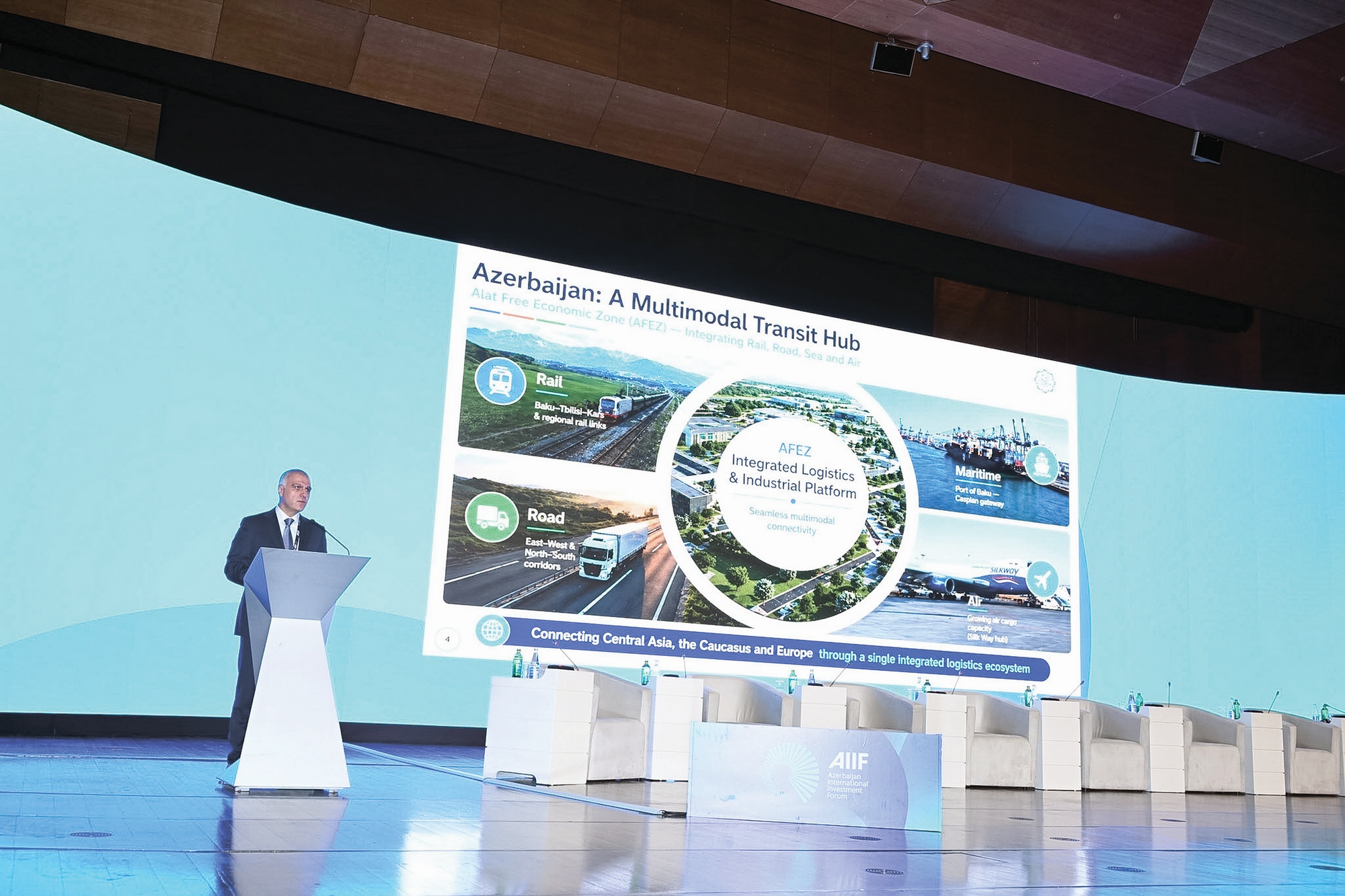
It was precisely from this perspective that the Middle Corridor was discussed at the forum. A separate panel was devoted to its role in regional trade, connectivity and the formation of value chains. The aim is for transport infrastructure to not only facilitate the transit of goods, but also to create conditions for the establishment of manufacturing facilities, logistics centres and other types of economic activity along the route. According to World Bank estimates cited by Jabbarov, the necessary investments and efficiency improvements could triple trade flows along the Middle Corridor and halve transit times by 2030. The minister himself formulated the objective in the most practical terms: routes passing through Azerbaijan must be not only safe but also competitive in terms of cost and delivery times.
Connectivity has become one of the key concepts in the AIIF 2026 energy debate, though now in the context of the emerging system of cross-border electricity grids. “Today, connectivity is the foundation of the new architecture of economic and geopolitical relations,” stated Energy Minister Parviz Shahbazov. Whilst the energy landscape of the 20th century was shaped by the geography of oil and gas fields and pipeline routes, in the 21st century it is increasingly being shaped by electricity grids, energy storage systems and green energy corridors. Azerbaijan intends to create an integrated and diversified network of electricity interconnections stretching from Asia to Europe, which, as the minister noted, opens up new investment opportunities for international financial institutions and the private sector.
Digital infrastructure has become another major focus of the investment agenda. Rashad Nabiyev, Minister of Digital Development and Transport, announced the aim of transforming Azerbaijan into a regional hub for the digital industry. He highlighted the country’s energy potential, extensive fibre-optic network and strategic geographical location as its competitive advantages.
Urban development, property and tourism are also emerging as distinct investment sectors. Anar Guliyev, Chairman of the State Committee for Urban Planning and Architecture, reported that the comprehensive planning for Garabagh and Eastern Zangezur covers approximately 13,600 square kilometres, including 12 towns, 11 settlements and around 900 villages, with a projected population of around 1.1 million people. “We are not merely restoring infrastructure and settlements, but also creating new urban and economic centres,” he noted.
For his part, Fuad Naghiyev, Chairman of the State Agency for Tourism, stated: “We want Azerbaijan to become not only a country that tourists choose to visit, but also a country in which investors see long-term potential.”
Agribusiness featured prominently on the AIIF 2026 agenda, with the main focus on the development of modern value chains and the introduction of innovation. Participants in the dedicated panel discussed investment opportunities in agricultural processing, modern technologies, productivity improvements and the expansion of export potential. Consequently, the agricultural sector was viewed not only from the perspective of food production, but also as a promising area for technological and long-term investment.
Finally, a separate discussion was devoted to the resource without which the implementation of all the projects listed would, in principle, be impossible: human capital. Anar Aliyev, Minister of Labour and Social Protection, presented work on adapting the labour market to future professional skills and strengthening human resource capacity in line with the requirements of the modern economy.
Thus, the forum’s investment agenda extended far beyond investment in physical infrastructure: the focus is on creating an entire ecosystem in which capital, technology, new production facilities, connectivity and human resources must function as elements of a single growth model.
From interest to projects
The ultimate measure of the investment forum's success is not the scale of representation or the number of discussions held, but their practical follow-up. In this respect, AIIF 2026 concluded with a very significant outcome: 23 documents were signed with international investors and partner companies, providing for the implementation of projects with a total value of $10.8 billion. These cover a wide range of sectors, including artificial intelligence, energy (including renewable energy), construction, the digital economy, industry, agriculture, pharmaceuticals, finance and water management. In consideration of the projects that were announced in June as part of Baku Energy Week, the total value of the planned joint projects is estimated to be $16.7 billion.
As Shahmar Movsumov, Assistant to the President of Azerbaijan, noted, forum participants are 'considering all possible options for investing in Azerbaijan. We are optimistic that this forum will yield tangible projects and investments. Consequently, the documents signed as part of AIIF 2026 have already indicated a practical continuation of the dialogue that took place in Baku.
At the same time, the objective is twofold: to attract new funds and to establish a sustainable investment presence. "Long-term partnerships continue to generate new investments and reinvestments. The majority of foreign companies operating in our country prefer to reinvest their profits here," stated Minister of Economy Mikayil Jabbarov.
In this context, the outcomes of AIIF 2026 are of particular significance, as the focus is not only on attracting new investors, but also on expanding existing partnerships into new sectors of the economy. The broad range of agreements signed in Baku demonstrates the expansion of this collaborative model to encompass a growing number of sectors, including traditional energy, infrastructure, industry, and new technologies.
RECOMMEND:
 69