
PISA WITH NO RUSH
The leaning tower is just one of the reasons to linger in this Tuscan city
Author: Elchin HUSEYNOV, Baku–Pisa–Baku
For most travellers, Pisa is associated with just one attraction: the famous Leaning Tower. Visitors come here for a few hours, take the obligatory photograph, perhaps climb the bell tower—and then hurry on. In the age of high-speed trains, many tourists try to fit several cities into a single trip: after Pisa, they head to Florence, Lucca and Cinque Terre, while the most ambitious even manage to combine it with Venice in one day. As a result, the city often becomes little more than a brief stop on the way.
Yet Pisa deserves a full day of exploration. In addition to its world-famous tower, the city has pleasant riverside promenades along the Arno, beautiful medieval streets, a lively student atmosphere, excellent trattorias serving traditional Tuscan cuisine and plenty of places where visitors can experience the real Italy without the bustle of its largest tourist centres.
Of course, visiting Pisa without seeing the Leaning Tower is impossible. But walk just a few blocks away from Piazza dei Miracoli—the historic complex containing the Leaning Tower, cathedral and baptistery—and it becomes clear that the city’s main symbol is merely the beginning of an introduction to one of Tuscany’s most remarkable gems.
Incidentally, the Leaning Tower of Pisa is not the only leaning tower in the city. Because of the soft ground, the bell towers of the churches of San Nicola and San Michele degli Scalzi have also developed a noticeable tilt. It is the tower in Piazza dei Miracoli, however, that has become world famous.
The tower that draws millions
Pisa is one of Italy’s most convenient cities for independent travel. Thanks to the country’s extensive railway network, it is easy to reach from almost anywhere in Italy. A high-speed train takes about two hours and 30 minutes from Rome, 50–60 minutes from Florence, just 25 minutes from Lucca and less than 20 minutes from Livorno. Most trains arrive at Pisa Centrale, from where Piazza dei Miracoli is roughly a 20–25-minute walk.
Many travellers arrive by air. Galileo Galilei International Airport is just 1.5 kilometres from the historic centre and is considered the largest airport in Tuscany. In 2025, it handled almost 5.7 million passengers, so for many tourists Pisa is the first city through which they discover the region.
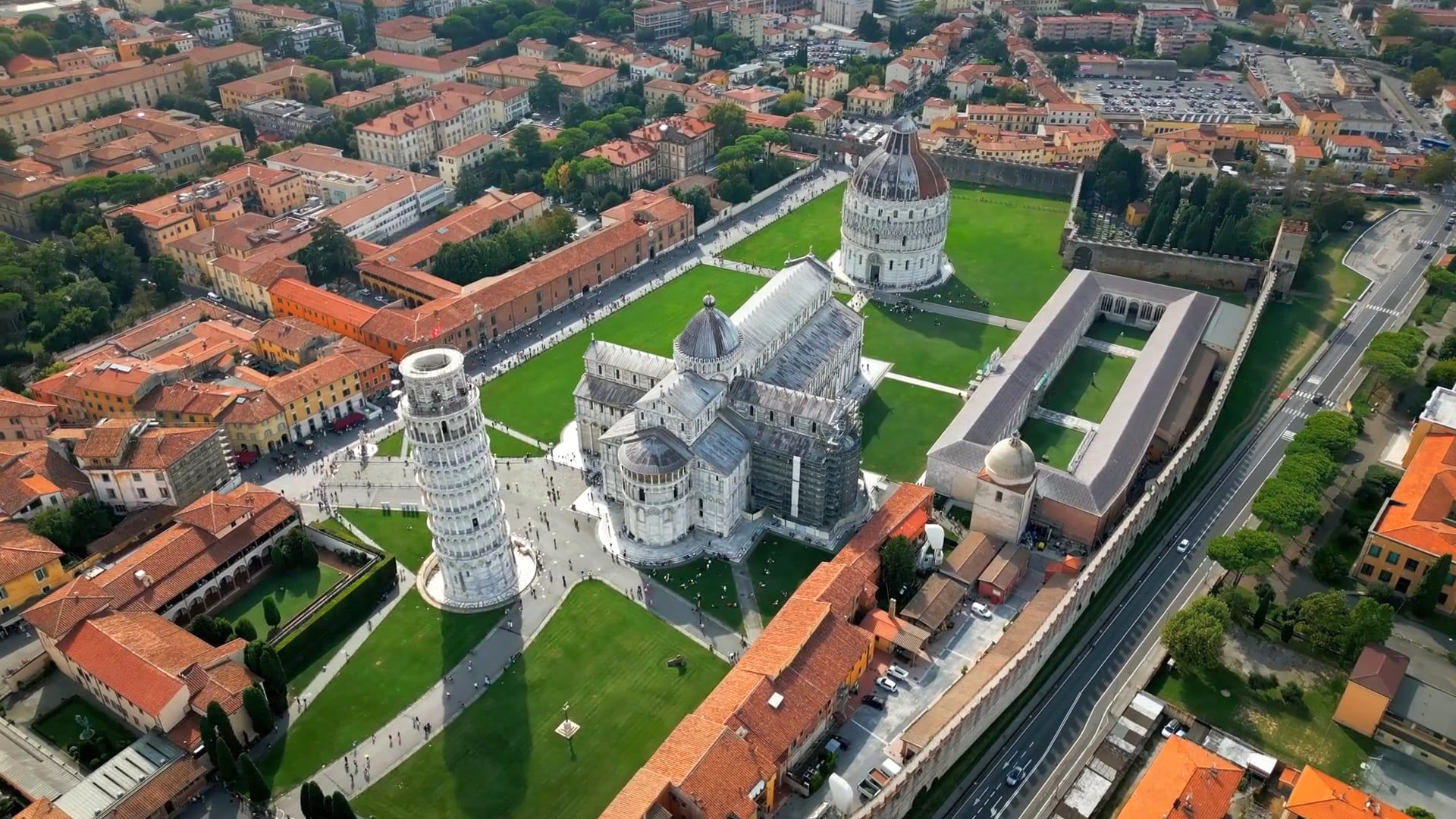
If possible, set aside a full day for Pisa. Your main destination will, of course, be Piazza dei Miracoli, home to the famous tower, the cathedral, Italy’s largest baptistery and the monumental Camposanto cemetery. The entire complex is listed as a UNESCO World Heritage Site and is regarded as one of Europe’s most outstanding ensembles of medieval architecture.
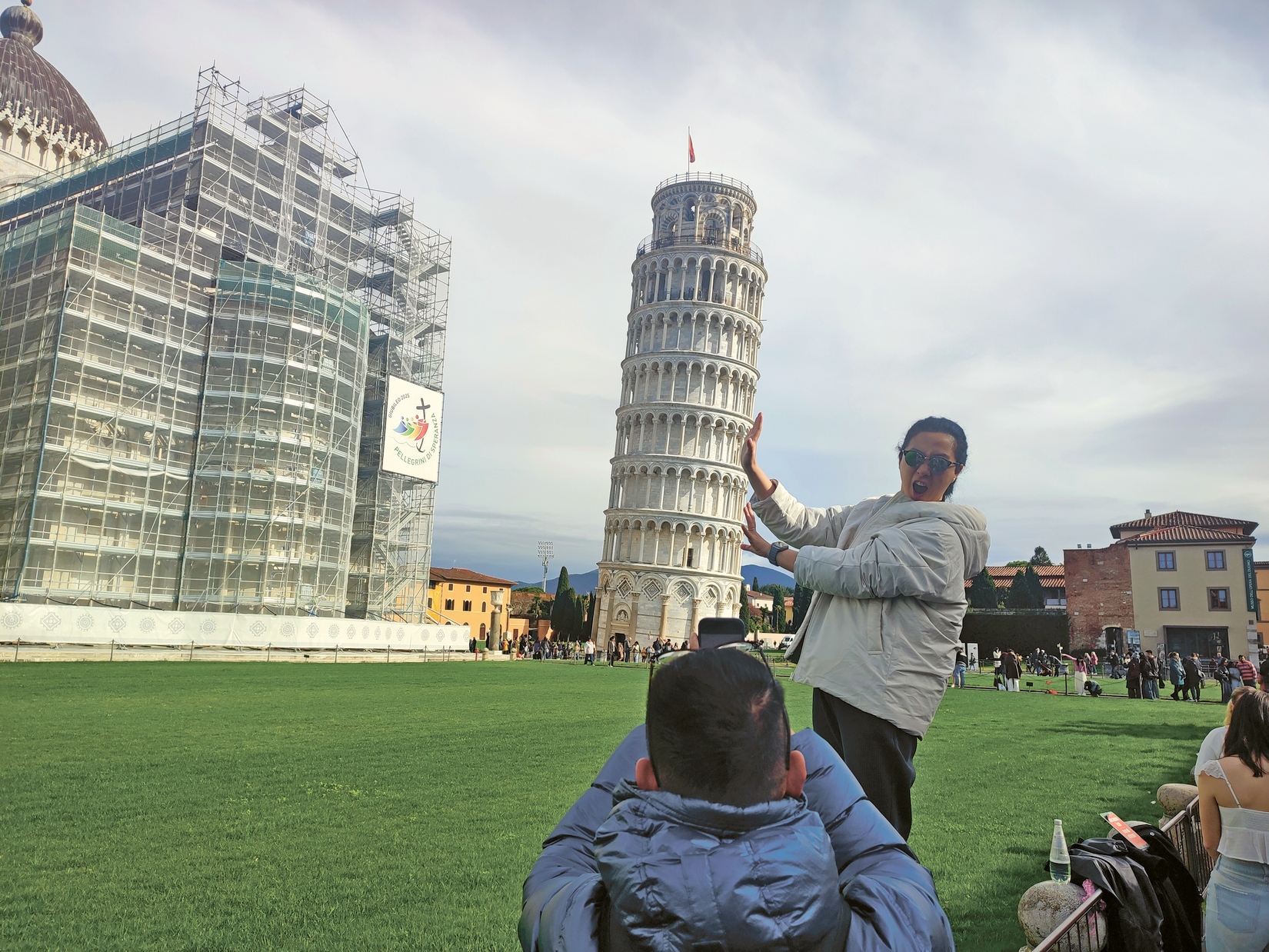
Not everyone knows that the Leaning Tower is not an independent monument but the cathedral’s bell tower. Its summit is reached by 294 steps, and the climb takes around half an hour. Because visitor numbers are limited, it is advisable to buy tickets in advance during the high season. The tilt feels unusual inside the famous structure: as you climb, the staircase seems to be constantly moving sideways.
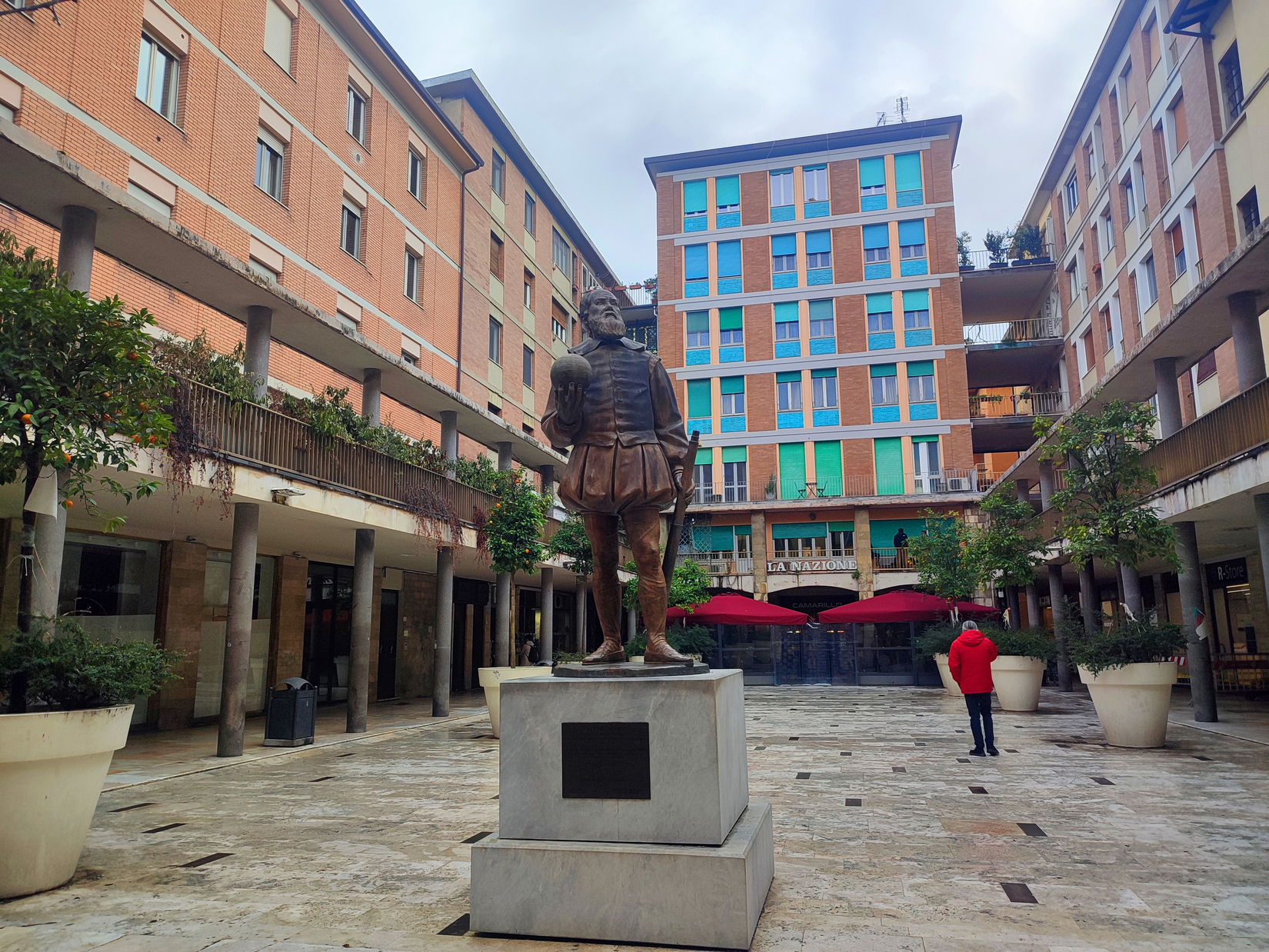
The tower is also associated with one of the best-known legends in the history of science. It is said that the great scientist Galileo Galilei, after whom Pisa’s international airport is now named, conducted his famous experiments here, dropping objects of different masses from a height at the same time to demonstrate that the speed of falling does not depend on an object’s weight. Historians still debate whether the experiment actually took place at this location, but the appealing story has long become part of the city’s image and continues to attract tourists.
And, of course, photographs cannot be left out. The classic image of a tourist apparently holding up the tower with one hand has long been Pisa’s calling card. But those looking for more unusual pictures have many other options. You can ‘hold’ the tower between two fingers, ‘lift’ it in the palm of your hand, ‘drink’ from it through a straw or ‘eat’ it like an ice-cream cone. The most striking photographs are taken early in the morning or towards evening, when there are considerably fewer people in the square and you do not have to wait for dozens of other tourists to disappear from the frame.
Pisa begins where the tourist crowds end
After visiting Piazza dei Miracoli, most travellers turn around and head back to the station. That is a mistake. To see the real Pisa, you need only walk a few hundred metres towards the historic centre.
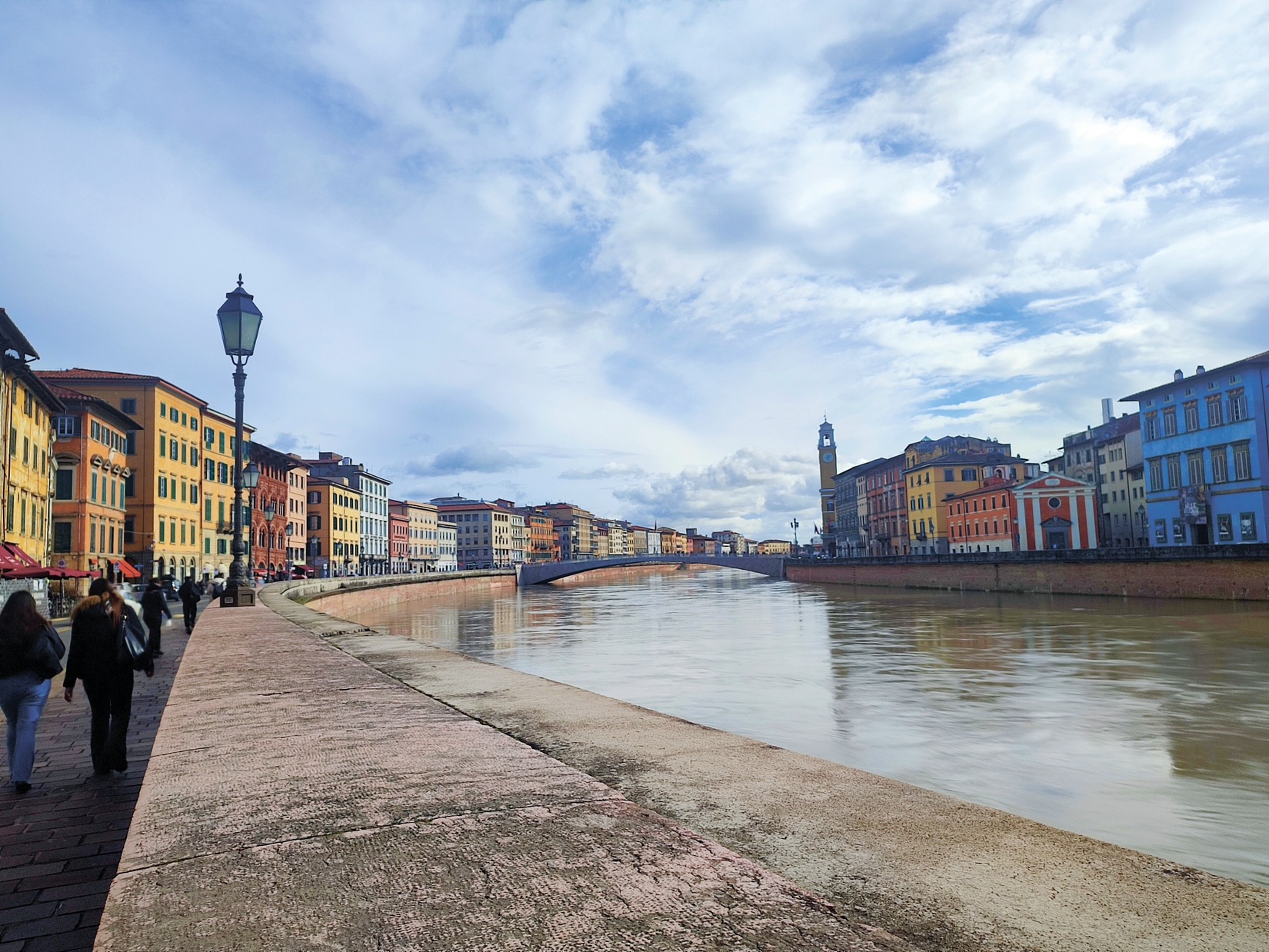
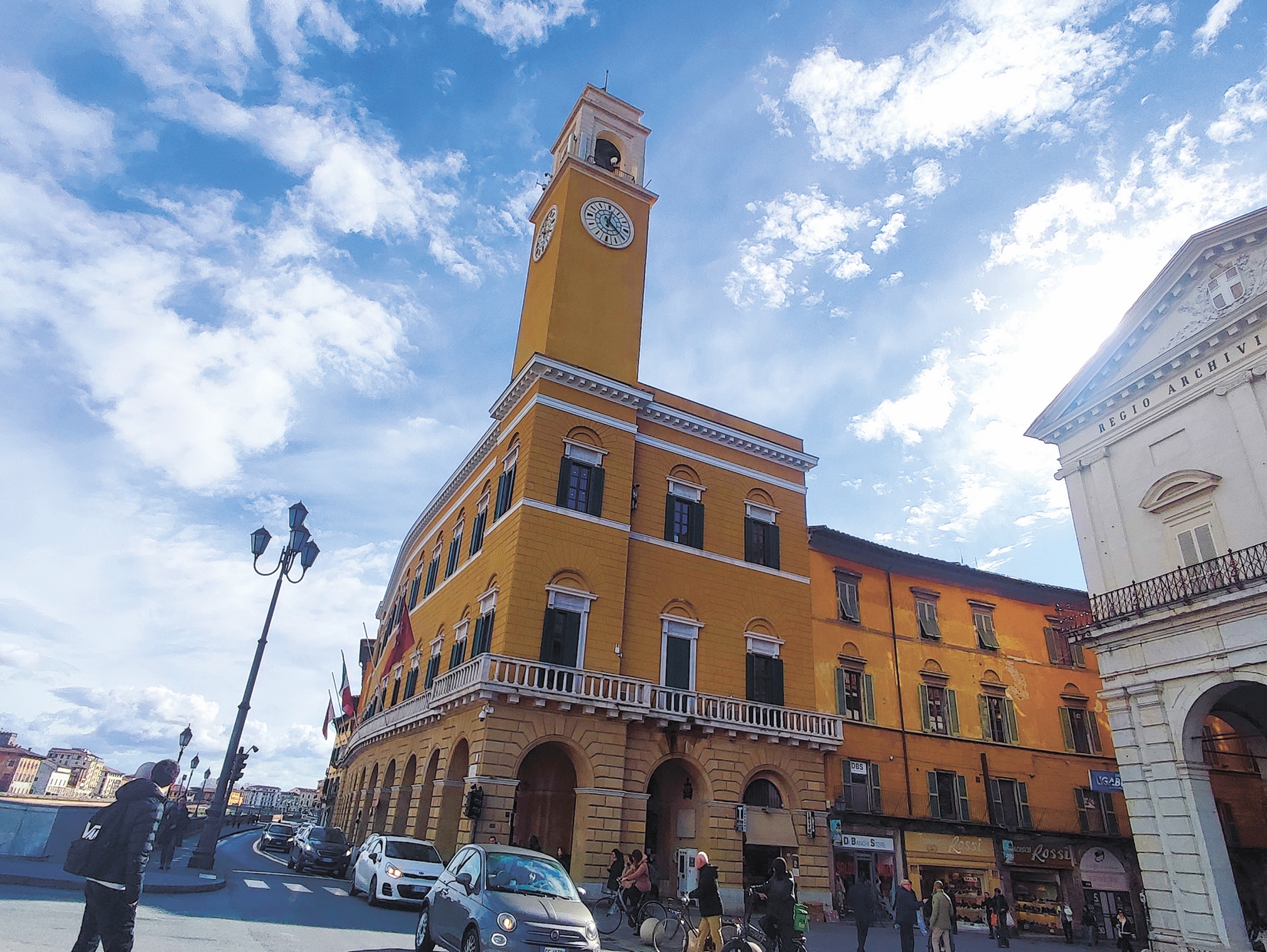
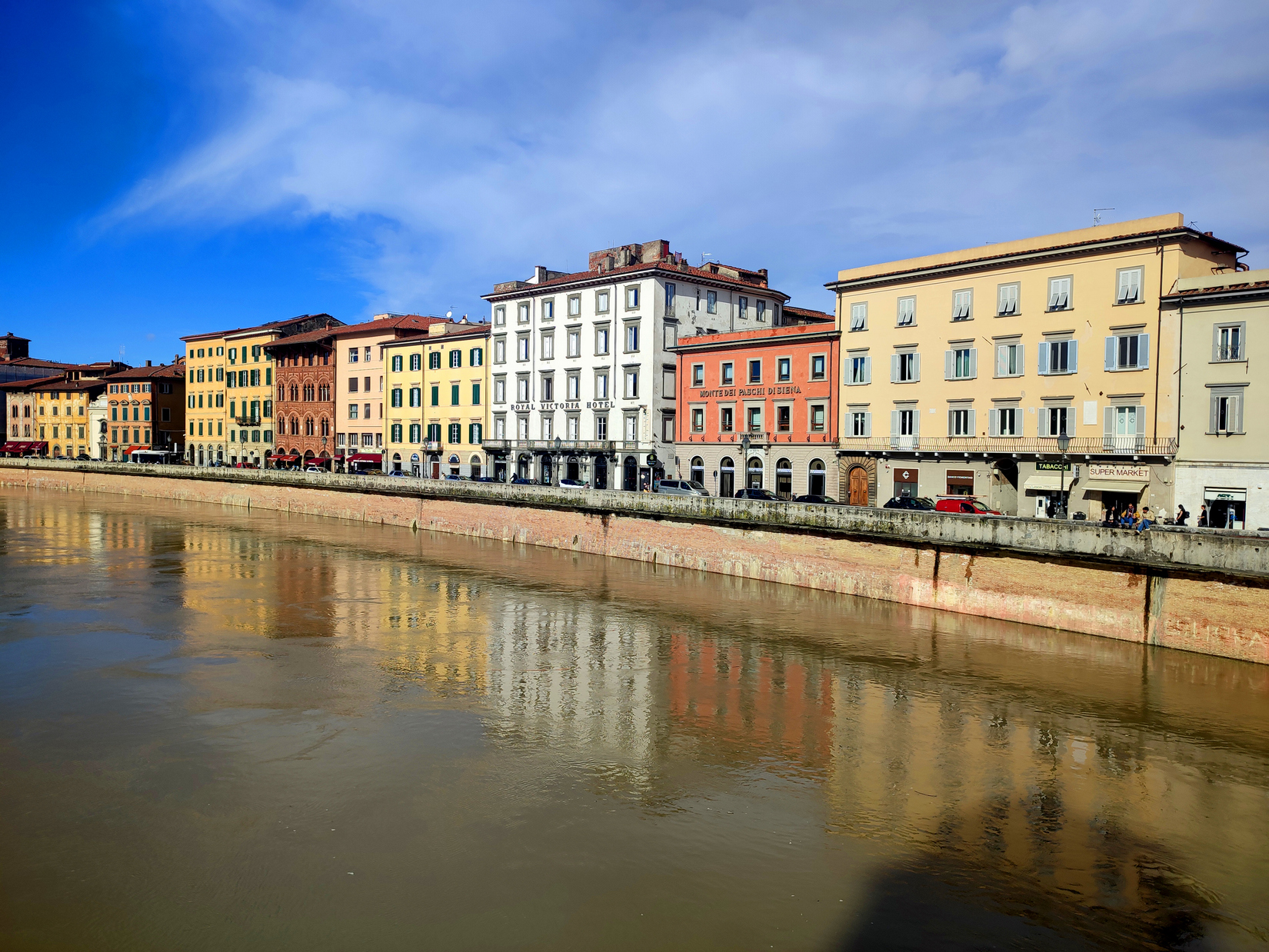
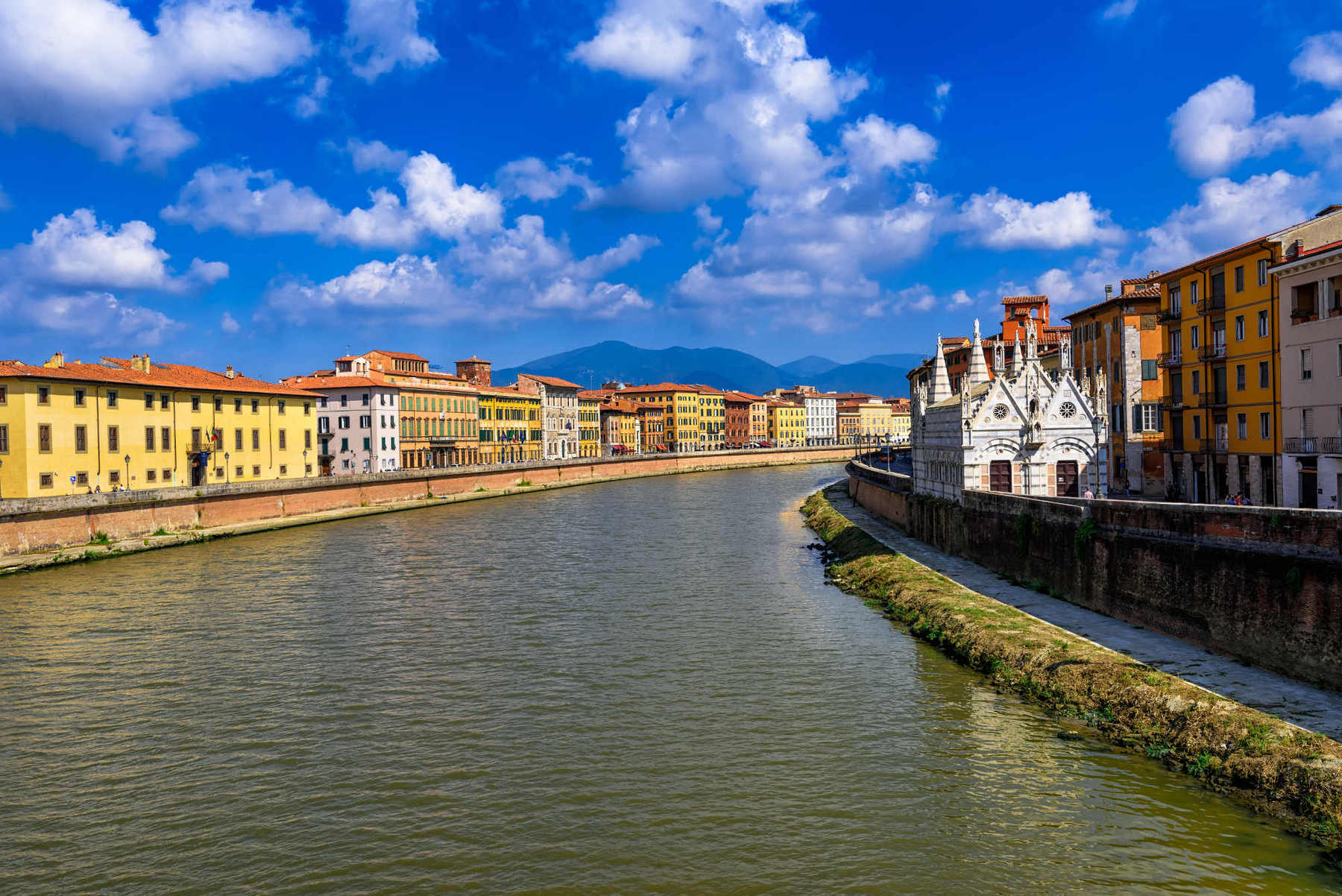
A picturesque starting point could be the riverside promenade along the Arno, about a 15-minute walk from the tower. Along the way, tourist shops gradually give way to small boutiques, cafés and residential neighbourhoods, and the city becomes noticeably quieter. The Arno’s embankments are among the best places for an unhurried stroll. Colourful palazzi are reflected in the water, cyclists constantly speed across the bridges, and local residents and students gather in the many bars and cafés.
Continue towards the small church of Santa Maria della Spina. Despite its modest size, it is often called one of Italy’s most beautiful Gothic churches. It seems to rise directly from the riverbank and looks particularly impressive against the Arno.
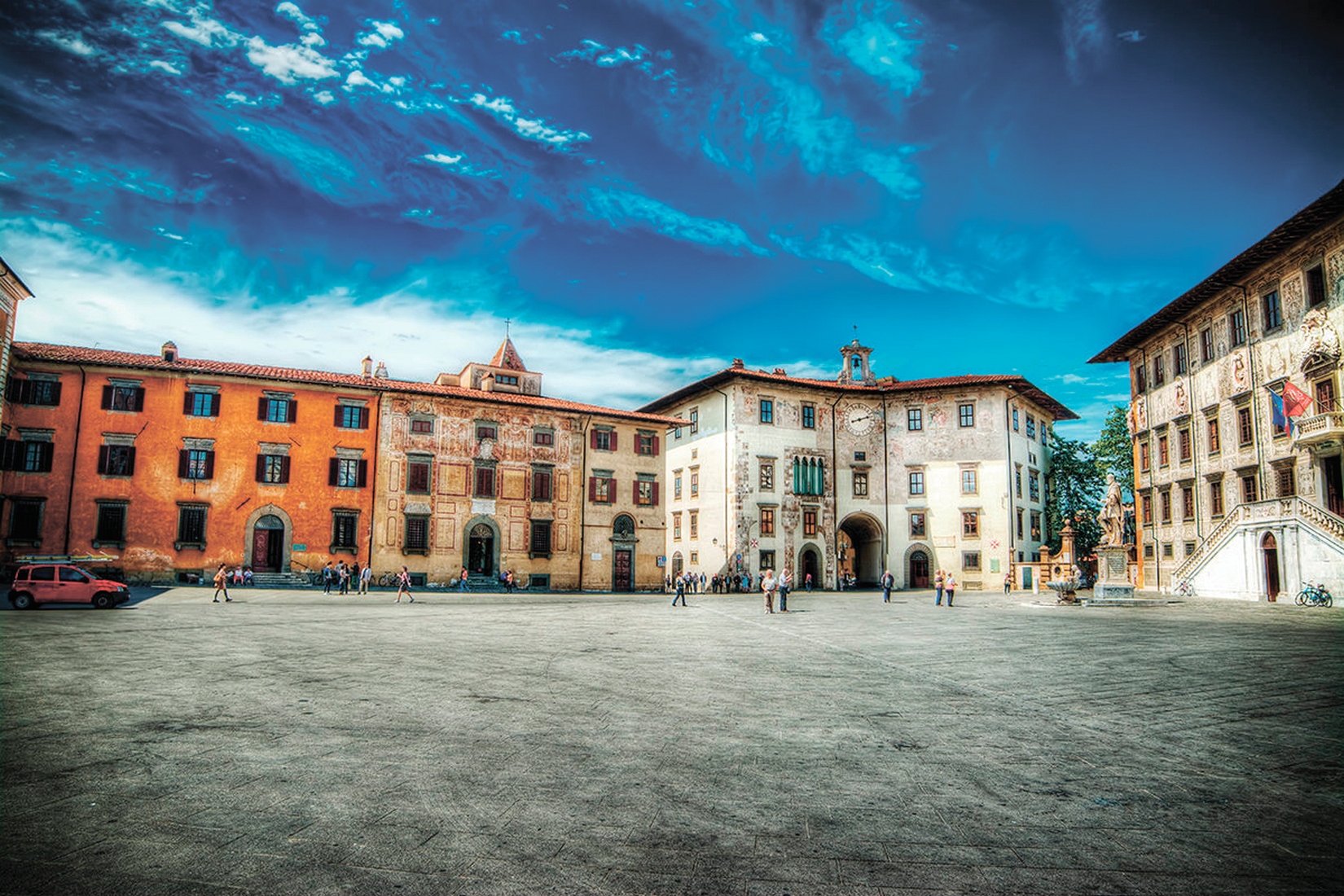
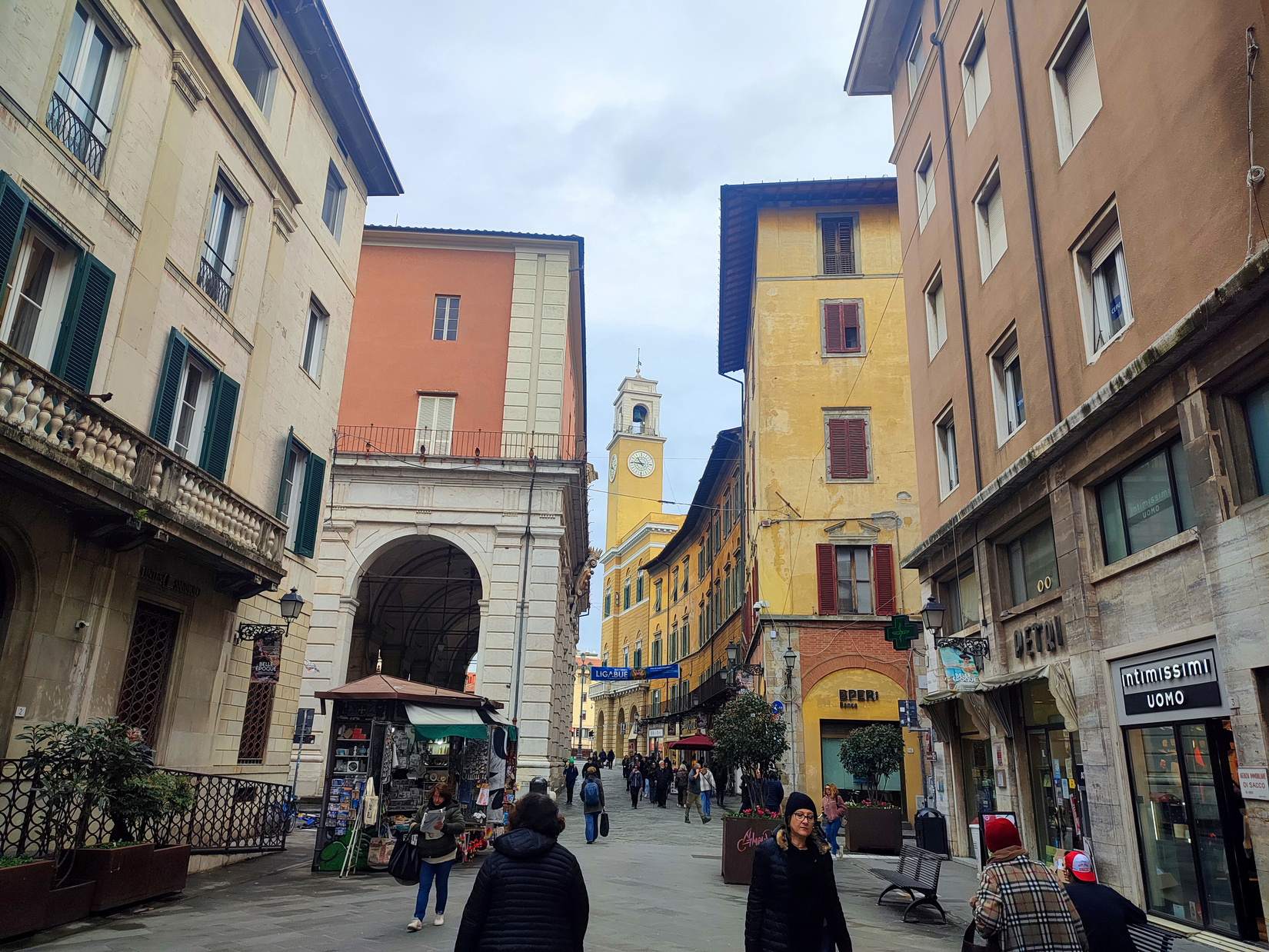
From there, it is only a few minutes to Piazza dei Cavalieri, Pisa’s second most important square. If Piazza dei Miracoli is considered the city’s tourist heart, this is where its historical and intellectual spirit can be felt. Its main feature is the Palazzo della Carovana, with its unusual decorated façade. The building now houses the Scuola Normale Superiore, one of Italy’s most prestigious universities.
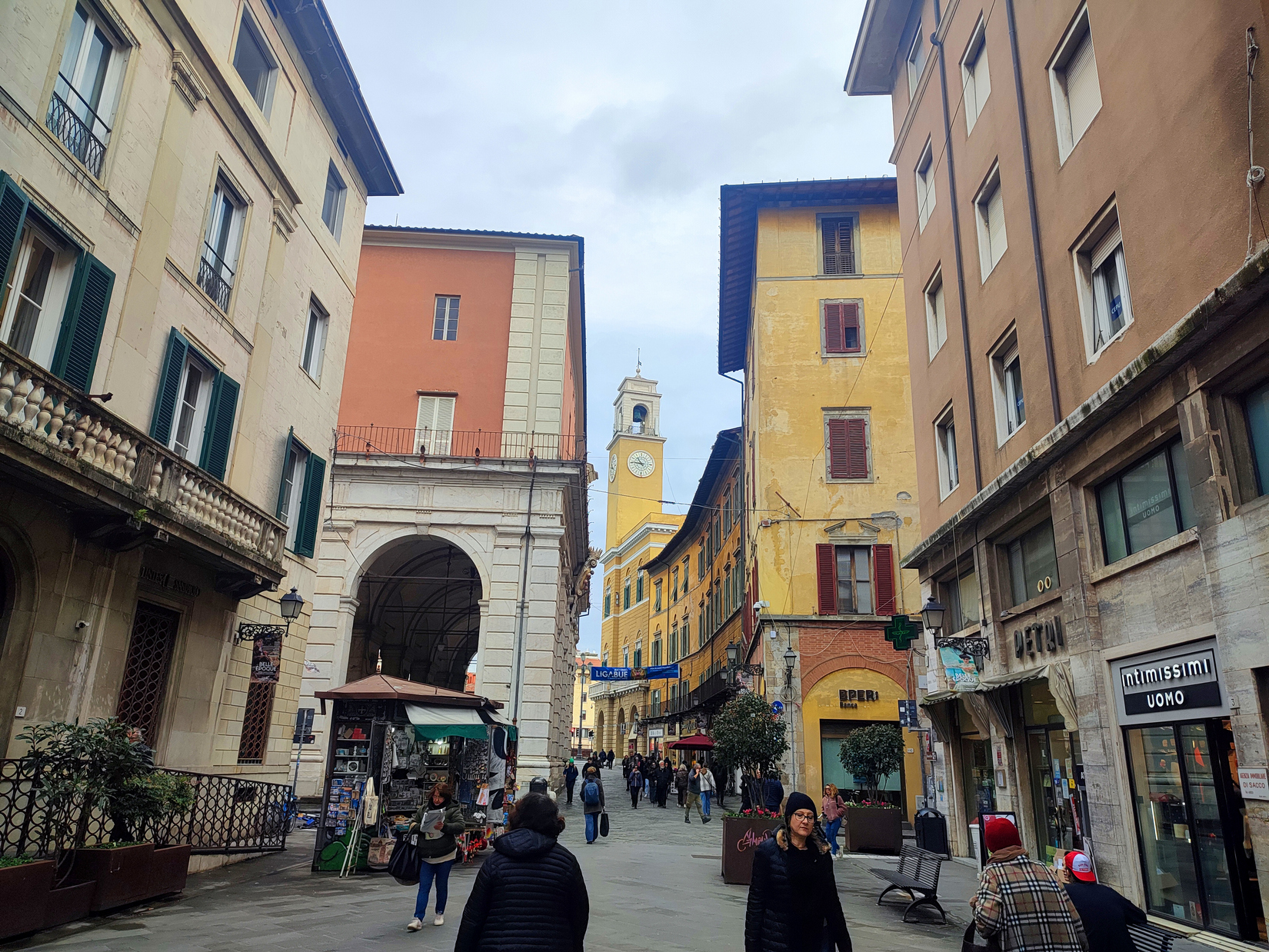
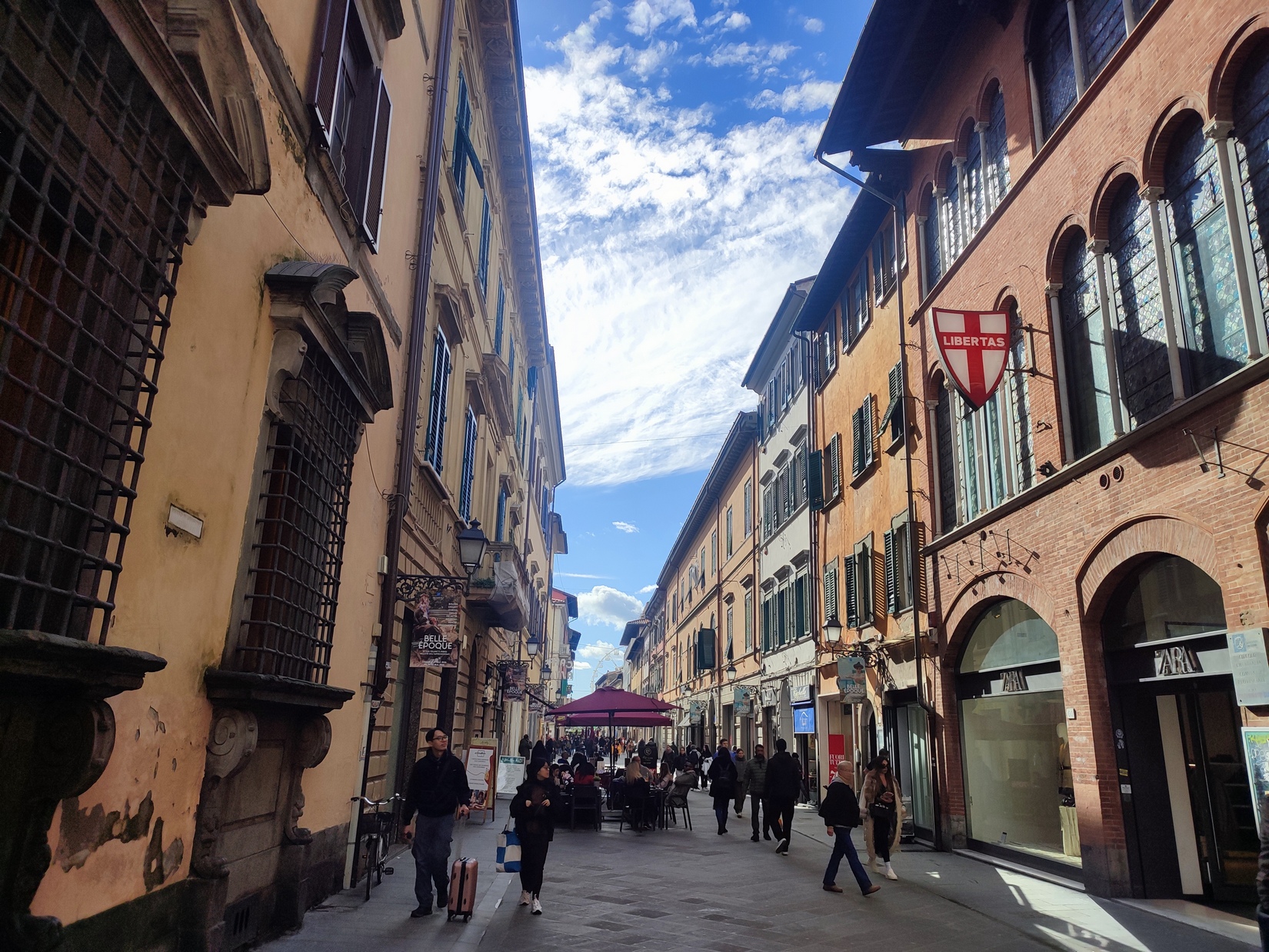
The next stop is Borgo Stretto. This street, with its long arcades, is considered one of the most beautiful in Pisa. The pleasure here lies less in visiting specific sights than in simply walking, browsing small shops, drinking coffee or stopping for a scoop of genuine Italian gelato costing €3–5. This is where it becomes especially clear that Pisa is, above all, a university city with a young and highly vibrant atmosphere.
If you would like to discover a less familiar side of Pisa, it is worth straying slightly from the main route. Very close to Piazza dei Miracoli is one of Europe’s oldest university botanical gardens, founded in 1544. It offers a chance to escape the bustle of the city for a while among rare plants and centuries-old trees. Near the railway station, meanwhile, visitors will find another symbol of the city: the huge Tuttomondo mural, created in 1989 by the American artist Keith Haring. The bright panel, composed of 30 interlocking figures, was one of the artist’s final works and is considered one of modern Pisa’s best-known attractions.
To see Pisa as local residents know it, visit Piazza delle Vettovaglie. A small market operates here during the day, while cafés and shops remain open. In the evening, the square becomes one of the liveliest places in the city. Students, families and groups of friends gather around the tables; music plays, and bars and wine establishments stay open. This is where it becomes particularly clear that Pisa is not merely a city for tourists but also a young university centre that continues to live its ordinary life far beyond Piazza dei Miracoli.
If time allows, do not rush back to the station. Instead, return to the Arno towards sunset. The city changes noticeably in the evening: tour groups have already departed, the streets become quieter, and the illuminated palazzi and bridges create precisely the atmosphere that makes you want to stay for at least a few more hours.
Pisa’s prices and flavours
Compared with Rome, Venice or Florence, Pisa is considered one of Italy’s more affordable tourist cities. If you are not planning expensive shopping and do not intend to stay in premium hotels, a single day is enough to get to know the city without significant expense.
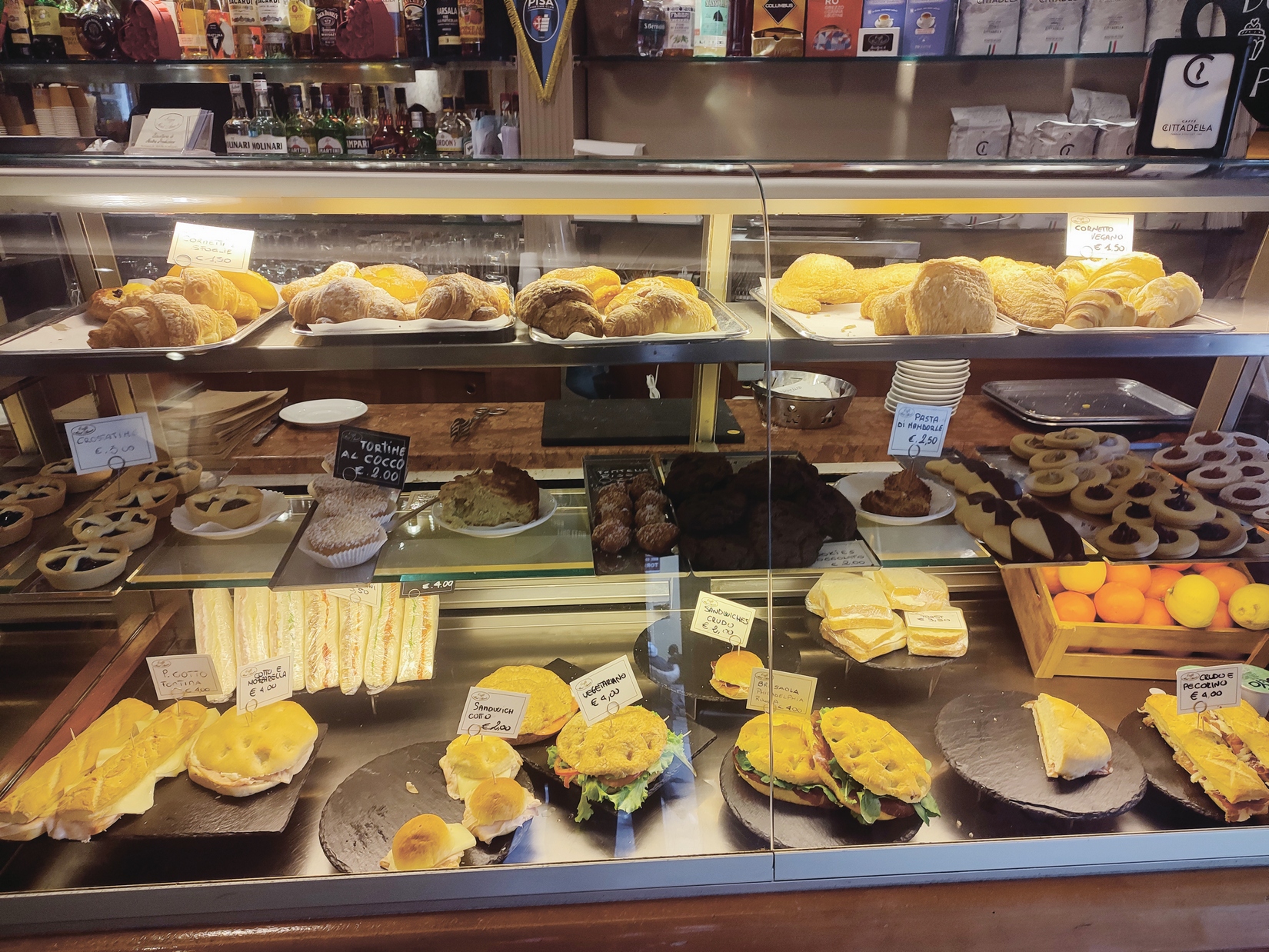
The most expensive item is usually a climb up the Leaning Tower. A ticket costs around €25, although many travellers prefer combination tickets that allow them to visit several monuments in the Piazza dei Miracoli complex. If you limit yourself to walking around the city, expenses will be considerably lower. An espresso costs €1.50–2 on average, while a full meal in a good trattoria away from the tourist streets costs €20–30 per person. Overall, an active day in Pisa—including a visit to the tower, meals and a few small purchases—usually costs €70–120, excluding transport and accommodation.
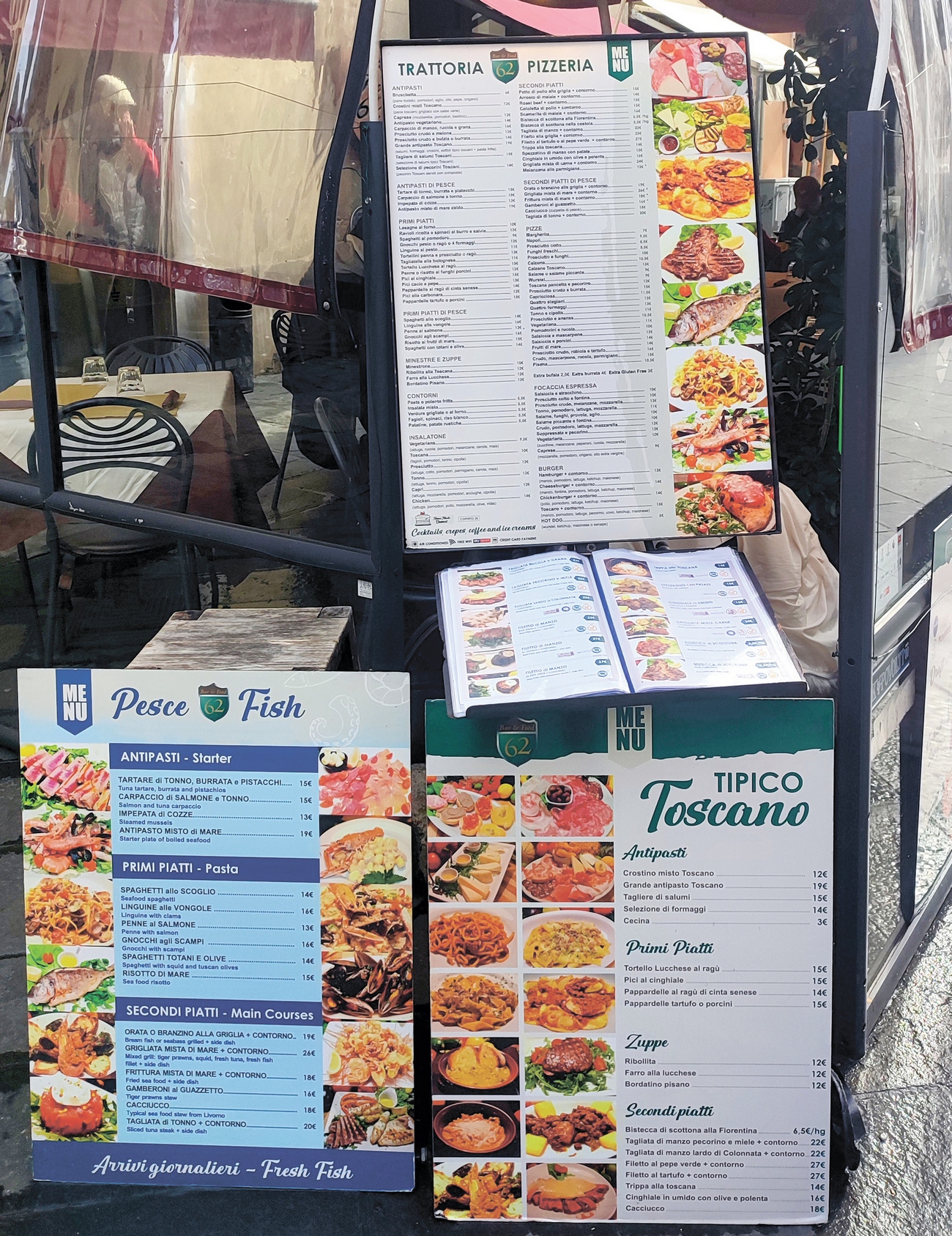
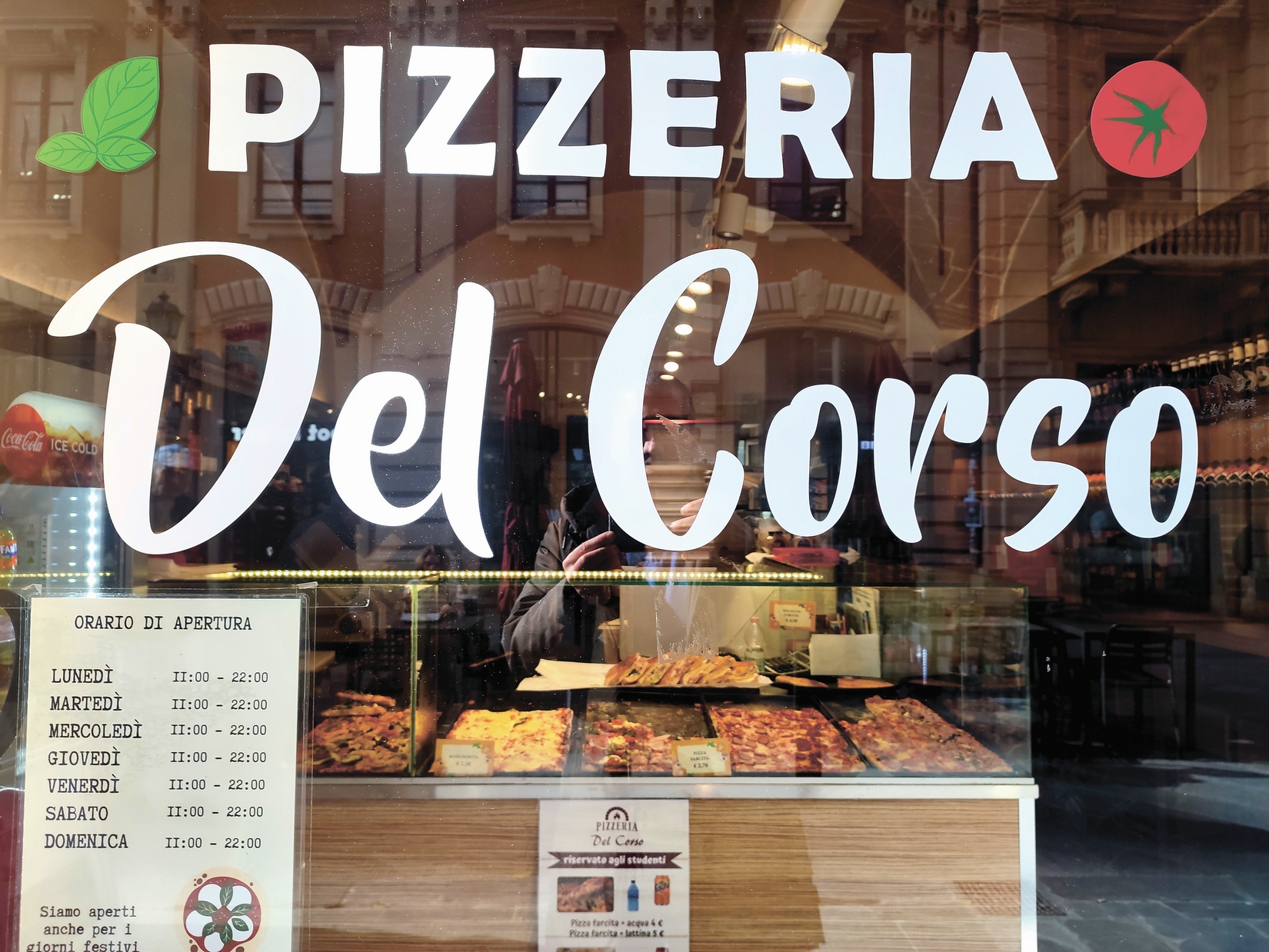
As in most popular Italian tourist cities, prices around Piazza dei Miracoli are noticeably higher. Walk for just 5–10 minutes towards the Arno or Borgo Stretto, and the choice of restaurants becomes much more interesting, while the cost of dishes is often lower. This is where local residents tend to eat, increasing the chance of trying genuine Tuscan cuisine rather than food prepared exclusively for tourists.
You should certainly try ribollita, a thick vegetable soup; pappa al pomodoro, a bread and tomato soup; fresh pasta with truffles or porcini mushrooms; and, if your journey continues through Tuscany, the famous Florentine steak, bistecca alla fiorentina. Seafood lovers should try cacciucco, a thick fish soup considered the signature dish of nearby Livorno but also prepared very well in many restaurants in Pisa. For dessert, the best choice is cantucci, traditional Tuscan almond biscuits usually dipped in the sweet dessert wine Vin Santo.
A few other tips may also prove useful. Pisa’s historic centre is fairly compact, so most tourists will not need public transport: almost anywhere can be reached on foot. Bank cards are accepted almost everywhere, although it is still worth carrying a few euros in cash for small cafés or souvenir shops. In summer, it is best to start your walk early: by midday, temperatures often exceed 30°C, while there is very little shade in the open expanse of Piazza dei Miracoli.
A reason to get to know the city
Pisa is one of those rare cities that knows how to surprise visitors pleasantly. It may seem that everything is already known about it: the Leaning Tower, amusing photographs of tourists and a few hours spent exploring the main square. But stay a little longer, leave the familiar route and allow yourself to walk without rushing, and the city begins to reveal an entirely different side.
An unhurried walk along the Arno, the welcoming streets of the historic centre, noisy student cafés, the aroma of freshly brewed espresso, traditional Tuscan cuisine and Piazza dei Miracoli in the evening, once most of the tour groups have left, create a completely different impression—calmer, more sincere and more authentic.
Perhaps that is why many travellers who come here solely for the famous tower leave with the feeling that it was not the tower itself but something else that proved to be the main discovery. Pisa is one of those rare places where the best-known attraction is merely a reason to get to know a city capable of offering far more memorable experiences than one might expect at first glance.
RECOMMEND:
 74