

SAUDI STALEMATE
Riyadh is trying to turn the tide of the war, but its allies are not ready for a large-scale offensive

Author: Samir VELIYEV
In October, alongside the war in Ukraine and tensions surrounding Iran, the international community's attention once again turned to the south of the Arabian Peninsula, where the long-running civil conflict in Yemen has escalated. Furthermore, events progressed so rapidly that, within a few weeks, the struggle for the country's coastal regions led to a new round of regional confrontation.
In response to the Houthis' September offensive, a counter-offensive was launched by government forces with support from Riyadh, followed by attacks on Saudi Arabia. It is evident that the events in Yemen have a direct impact on the security of international shipping and the stability of global energy markets.
The Houthis strike back
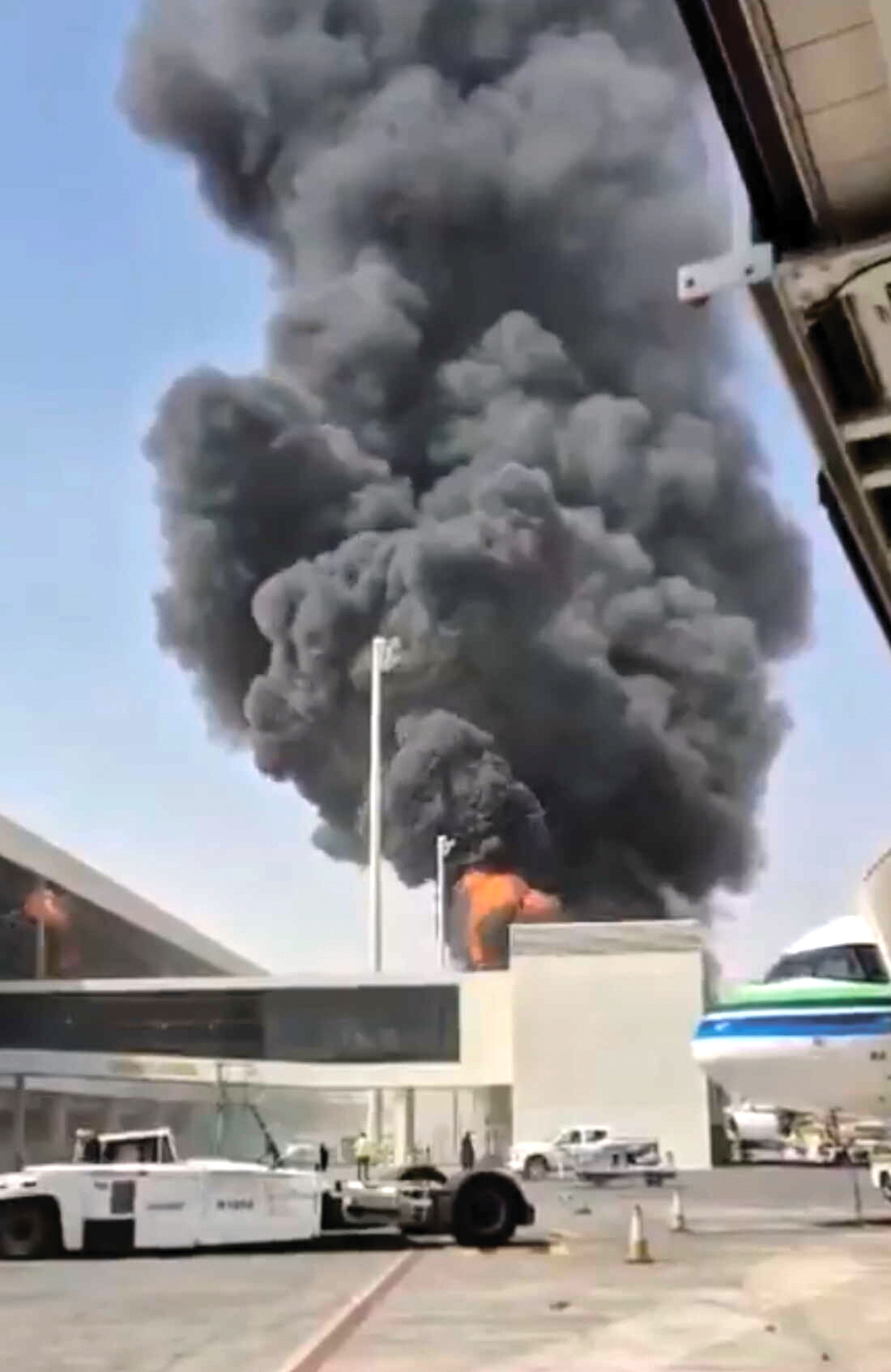
The attack by the Houthis on King Khalid International Airport in Riyadh on 10 October was particularly severe. According to the latest figures, the strike has resulted in 13 fatalities and more than 300 injuries. The following day, a further attack occurred, resulting in one fatality and 11 injuries.
The Houthis had previously issued warnings to airlines and passengers regarding the potential risks associated with using Saudi airports. In response, the kingdom's authorities have committed to taking action. However, it is evident that the Saudis lacked the capacity for effective defence. Consequently, the airport's closure had to be extended until 17 October as a precautionary measure.
In light of these developments, Riyadh has sought support from the US, which operates military facilities within the Kingdom and has a substantial presence in the region, including intelligence assets and air defence systems. However, according to a number of reputable publications, Donald Trump rejected Crown Prince Mohammed bin Salman's requests for direct military support, including strikes against the Houthis. In the aftermath of the airport attack, the US president indicated that he was contemplating the possibility of a response, yet no action has been taken thus far. Washington has continued to share intelligence and assist with planning, whilst London has even deployed an entire Voyager refuelling aircraft, in addition to British specialists and air defence assets. However, the allies are not in a rush to initiate an offensive war.
It is important to note that the Houthis have already made significant changes to the situation on the front line. In September, they captured the port of Mocha, advanced along the Red Sea coast and reached the Bab el-Mandeb Strait, whilst simultaneously increasing pressure on government forces in the Taiz area. For Riyadh, this was a particularly painful setback, as its allies were losing ground precisely where the enemy’s military successes could pose a threat to maritime transport.
The Houthis exploited the divisions between the groups opposing them, the weakness of the command structure and the lack of air support. The government coalition forces, however, clearly underestimated the preparations for the offensive, to such an extent that, whilst retreating, they abandoned weapons which fell into the hands of the enemy. As a result, the Houthis not only expanded the territory under their control but also replenished their arsenals at the expense of the retreating units.
The coalition’s response
On 4–5 October, the government forces proceeded with their planned offensive against the Houthi positions. The head of Yemen's Presidential Steering Council, Rashad al-Alimi, has set them the task of restoring state control over the entire country. Following the September retreat, the intention was to demonstrate that the government was still capable of seizing the initiative. However, the route from regaining the coastal positions to capturing Sana'a passes through areas that the Houthis have held for years, and it will require far greater forces than were needed in the initial battles at the strait.
While the Yemeni government aims to retake the entire country, Saudi Arabia's primary objective is to push the Houthis back from the coast, thereby eliminating the threat they pose to maritime traffic.
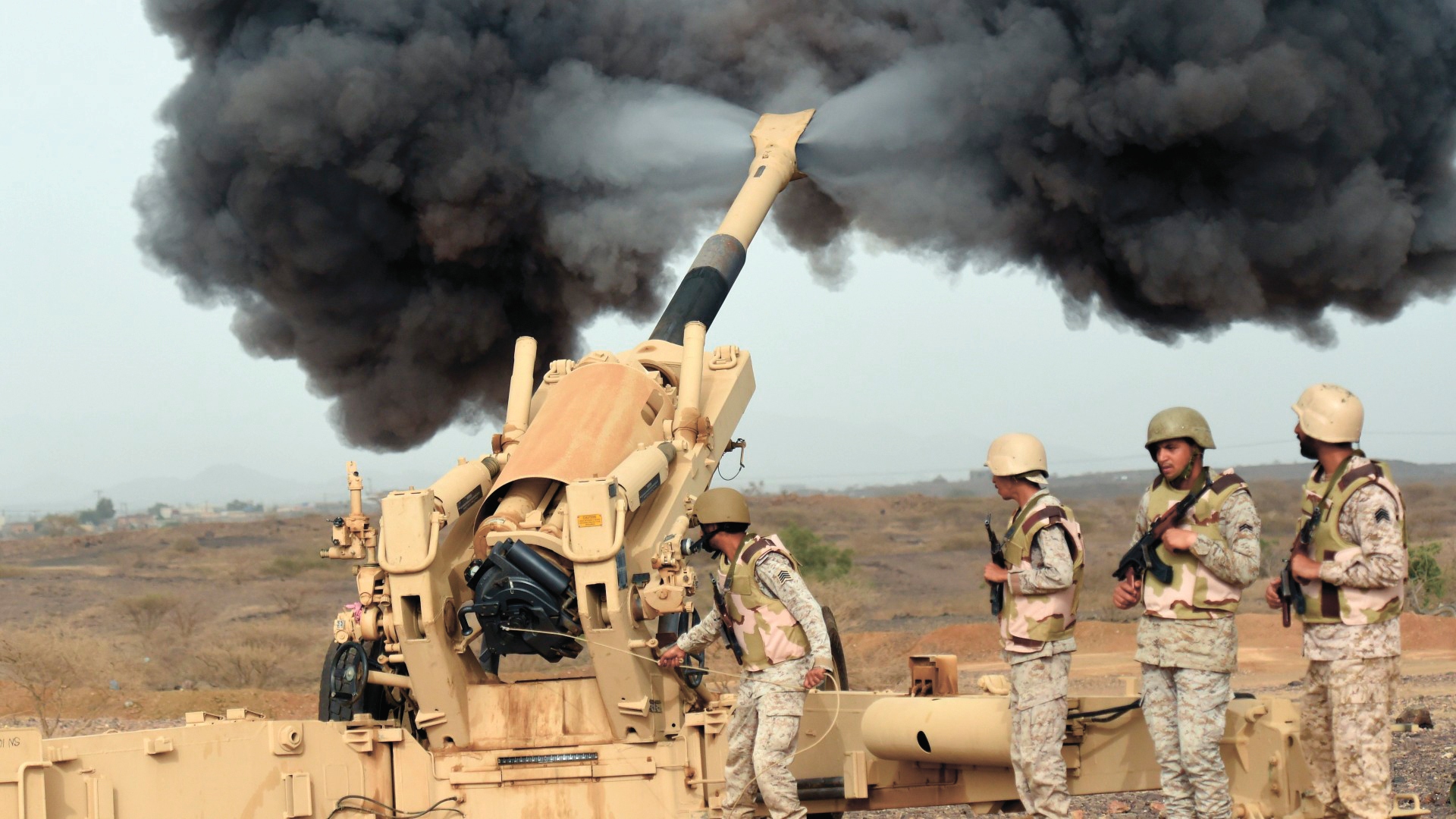
In response, the Saudis have initiated an offensive, with support from their air force, in collaboration with Yemeni forces. It is understood that the ground operation was prepared under Saudi supervision. Furthermore, depending on the scale of the campaign, the possibility of mobilising more than 100,000 Yemeni military personnel was discussed. Coalition representative Turki al-Maliki also announced the deployment of 100 combat aircraft. Riyadh has announced its intention to provide air support for the offensive, leaving the primary responsibility for ground combat to its Yemeni allies. However, the Houthis have already demonstrated through their attacks on airports that, even with this division of roles, Saudi Arabia remains vulnerable.
Initial reports from the front were positive for the coalition. Government sources have confirmed that the coastline near Bab el-Mandeb has been reclaimed, with forces advancing towards Mocha. In reality, however, only some of the coastal positions and the Dubab airfield had been recaptured, whilst reports of Mocha's liberation proved to be premature. As government forces advanced along the coast, the Houthis captured Al-Turba—the second-largest city in Taiz province—thereby complicating the enemy's supply lines. The coalition was forced to divert forces to defend supply routes and other sections of the front, which hindered further progress towards Mocha.
In the aftermath of the January conflict, Saudi Arabia has strengthened its hold on southern Yemen. The government has recaptured territory previously seized by the Southern Transitional Council, while the latter's representatives have lost their seats on the Presidential Steering Committee. Consequently, Riyadh gained greater scope to direct the operations of the forces opposing the Houthis.
However, the strengthening of Saudi influence does not guarantee success on the front line. The Houthis are retaliating with military action against Saudi Arabia itself. As government forces continue to advance along the coast, the deployment of missiles and drones has the potential to disrupt air travel and damage the economy at Saudi airports. The objective may be to impose a significant cost on Riyadh for its ongoing involvement in the operation, thereby encouraging a cessation of further advancement.
It will be challenging to prevent the Houthis from carrying out these attacks. Since capturing Sana'a in 2014, they have successfully withstood years of Saudi bombing and subsequent attacks by other states, retaining a significant portion of the territory under their control as well as their missile and drone capabilities. Therefore, even a withdrawal from the coast will not yet guarantee Saudi Arabia's security—having lost ground in Yemen, the Houthis may continue to strike the Kingdom.
The Iranian connection
It is evident from the documentation that the capture of Mocha is associated with Iranian weaponry and the involvement of advisers. Some media outlets have reported that Tehran has promised additional funds, weapons and assistance from senior officers, citing Iranian sources.
As early as July, reports were published regarding the deployment of representatives of the Islamic Revolutionary Guard Corps (IRGC) and equipment for missiles and drones. According to two sources, between 10 and 21 IRGC members were on board the flight on 13 July. However, the Iranian Foreign Ministry has explained this flight as the return of a Houthi delegation from Ali Khamenei's funeral and the transport of Yemeni patients.
It should be noted, however, that Iran's own military difficulties may limit such assistance, but continuing it does not require maintaining a large army abroad. The Houthis' capabilities can be sustained at a comparatively lower cost through the use of spare parts, technical expertise and small teams of specialists. For Tehran, this is a means of maintaining pressure on its adversaries, whilst for Riyadh, it is a reason not to expect that Iran's weakening will automatically halt attacks from Yemen.
In light of these developments, Saudi Arabia has also sought to expand its network of international allies. The Mecca Pact, which was signed on 7 August with Türkiye and Pakistan, stipulates that an attack on one member is considered an attack on all. On 31 August in Istanbul, work commenced on the establishment of permanent mechanisms for cooperation. On 5 October, the signatories to the pact gathered for an emergency meeting in Riyadh to discuss assistance to the Kingdom against the backdrop of the war in Yemen. Following a thorough selection process, retired Lieutenant-General Nauman Mahmood, proposed by Pakistan, was approved as Secretary-General of the alliance. In addition, the parties have agreed to accelerate the deployment of the agreed forces and resources on Saudi territory. Almost immediately after its formation, the new alliance transitioned from signed commitments to practical action.
The ‘red lines’ of the Mecca Pact
However, even in this instance, Riyadh encountered the limits of its allies' cooperation. Türkiye has agreed to assist the Kingdom in its defence, primarily through the provision of technical and defence support. The following day, the Turkish Foreign Minister, Hakan Fidan, explicitly ruled out participation in offensive operations and announced that an agreement was being prepared for submission to parliament. Ankara is prepared to provide support to strengthen Saudi Arabia's defences, but at this time is not prepared to take any offensive action in Yemen.
Pakistan is also supplying equipment, including air defence systems, light artillery and drones, and is sending advisers. It is estimated that there are between 30,000 and 40,000 Pakistani military personnel in Saudi Arabia, although this figure has not been officially confirmed. At this time, no decision has been made regarding the deployment of Pakistani units for ground combat operations. Consequently, the allies are providing Riyadh with support to defend its territory and assist with the campaign. However, it is ultimately the responsibility of Yemeni forces to capture the cities and positions held by the Houthis.
On 12 October, Saudi Arabia, Türkiye, Pakistan and Egypt jointly condemned the Houthi attacks and expressed their support for the Kingdom's right to defend itself. Earlier, Pakistan's Foreign Minister Ishaq Dar emphasised that the Mecca Agreement is purely defensive in nature and has no 'offensive agenda'. Pakistan's Defence Minister, Khawaja Asif, has officially confirmed that the Pakistani military will provide support in the form of air defence, intelligence and logistics in order to defend the Kingdom's territory. It should be noted that "combat operations are being conducted exclusively by Saudi forces". Meanwhile, the Egyptian Foreign Minister, Badr Abdel Aty, stated that Egypt is willing to provide Saudi Arabia with support in its fight against the Houthis, should Riyadh make a request to that effect. "We will respond to the Kingdom's requests in full. We will unconditionally provide it with support of any kind," he said.
For his part, on 5 October, Turkish Foreign Minister Hakan Fidan discussed the search for a peaceful solution with his counterparts from Saudi Arabia and Pakistan. He noted that Türkiye is currently examining the provision of technical and defence support to Riyadh and that a diplomatic and peaceful resolution of the conflict remains the priority for the region.
In the wake of the recent airport attacks, the foreign ministers of Saudi Arabia and Iran convened to explore potential avenues for reducing tensions. On 12 October, the Iranian Foreign Ministry reiterated its readiness to facilitate a settlement. At the same time, Riyadh's immediate objective is to achieve a military victory that can then be consolidated at the negotiating table.
If ground is regained near Bab el-Mandeb, this could ease the pressure on the Houthis and improve the conditions for negotiations. However, to achieve a comprehensive victory over the Houthis, it will be necessary to advance deep into Yemen and engage in extensive combat operations in the mountainous terrain, where the enemy is well-versed in the local geography. This will necessitate additional troops and a coordinated effort from our allies. In the interim period, while the war persists, the Houthis will have the capacity to initiate further attacks on Saudi Arabia.
As a result, the conflict is reaching an impasse. Saudi Arabia is not prepared for a large-scale ground offensive in Yemen, whilst the Houthis, whilst retaining the ability to deliver devastating strikes, are also unable to achieve all their military objectives. The government coalition's actions appear to be driven more by inertia than by a clear strategic direction, resulting in a lack of significant progress. It is evident that both parties have the capability to prevent the other from achieving victory. However, at this juncture, neither party has the capacity to conclude the war in accordance with their own stipulated terms.
The only way to resolve this issue is through diplomatic negotiations. However, calls for a ceasefire alone are insufficient to initiate negotiations. The appointment of a mediator is essential to ensure that both parties can trust the process and that agreements reached are implemented. I am looking for someone who is prepared to take on this role. And, crucially, who will both Riyadh and the Houthis agree to accept? This question remains open for the time being.
RECOMMEND:
 78