

ONE YEAR LATER
International support to Georgian opposition prevents revolutionary government change on October 4, 2025
Author: Namig H. ALIYEV
One year ago, Georgia experienced one of the most significant events in its recent political history. On 4 October 2025, concurrent with local elections across the country, opponents of the ruling 'Georgian Dream' party convened in the centre of Tbilisi. Some of the organisers have announced the commencement of a 'peaceful revolution'. In the evening, protesters attempted to gain access to the presidential palace on Atoneli Street. Police utilised water cannons and other riot control equipment to prevent this from happening. The culmination of the campaign for a change of government through street protests was not as anticipated.
What were the reasons for the failure of a scenario designed to capitalise on mass protest, political pressure and external support to bring about a change of government?
An attempt to replace elections with street protests
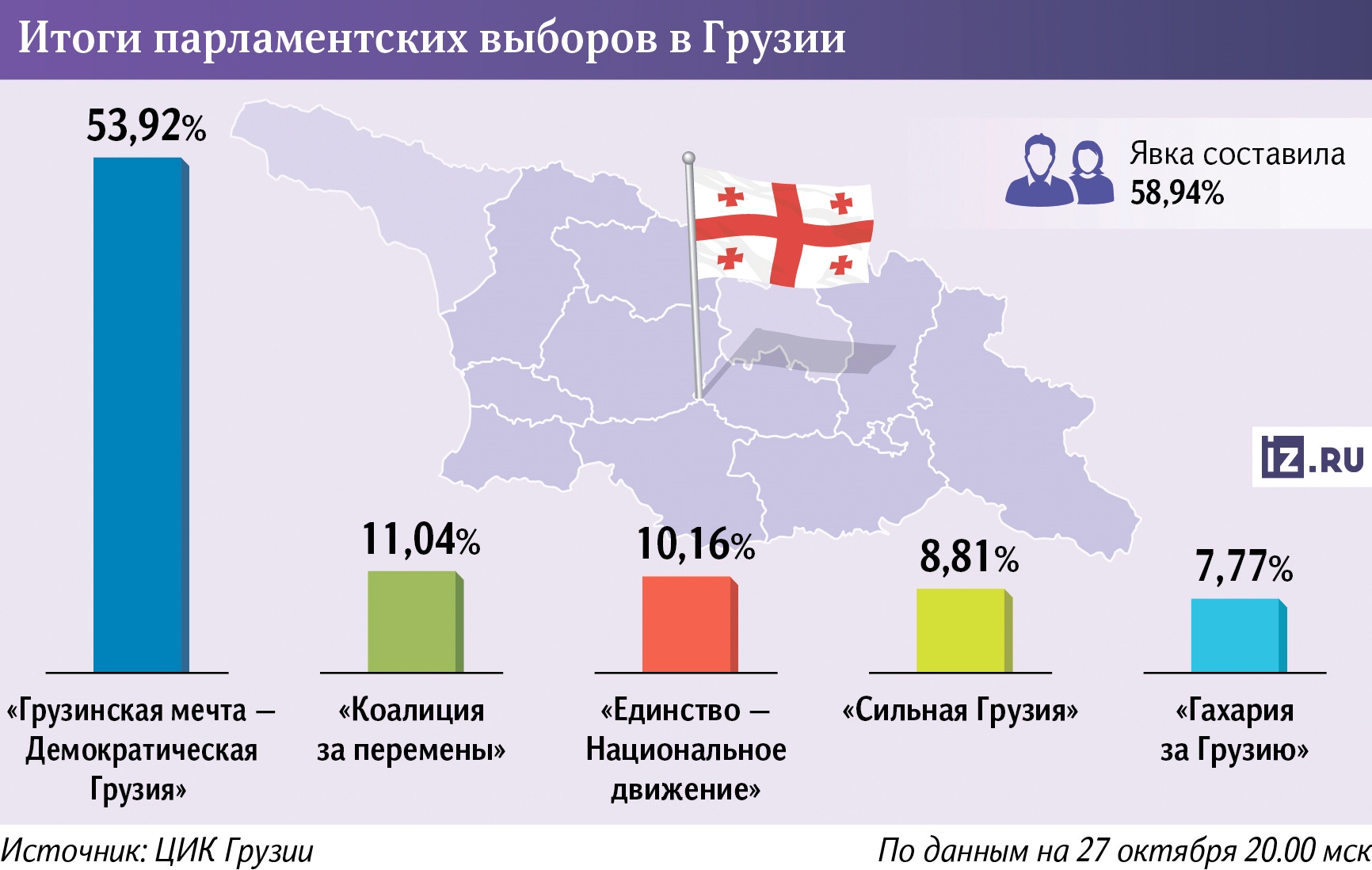
The events of 4 October must be viewed in the context of the broader situation. These events represent a continuation of the political crisis that began in the aftermath of the parliamentary elections of October 2024. The opposition has declared that it will not recognise the results, and the largest opposition forces have refused to take part in subsequent parliamentary proceedings. In 2025, this strategy was expanded to encompass the local elections. Consequently, on 4 October 2025, a marked political divide became evident: one region participated in the elections, while the other advocated for a boycott and engaged in street protests.
The main opposition parties boycotted the local elections. Consequently, 'Georgian Dream' secured 81.7 per cent of the vote, with a turnout of around 40.9 per cent. Meanwhile, international observation proved limited: the OSCE/ODIHR received its invitation too late to mount a fully-fledged mission. The European Union and the Council of Europe have both issued a strong statement of criticism regarding the electoral process.
However, there is another perspective to consider. If a political force considers the elections to be unfair, it faces a fundamental choice: to seek to change the rules and the outcome through the next elections, or to attempt to change the government outside the electoral process—whether by legitimate or illegitimate means. On 4 October, the second choice was made. It was at this juncture that a pivotal shift occurred. The attempt to physically occupy the presidential residence revealed the limitations of a strategy in which the streets were intended to serve as a substitute for the ballot box.
For a truly revolutionary change of power, it is not sufficient to gather a few thousand, or even tens of thousands, of people in the centre of the capital. There are several conditions that must be met in order for this to happen. Firstly, a split amongst the elites is required. Secondly, there must be a significant loss of control by the authorities over the state apparatus. Thirdly, there must be widespread public mobilisation. Finally, as a rule, a neutral or sympathetic stance on the part of a significant section of the security forces is required. In Georgia, this set of circumstances did not materialise: the state apparatus remained under control, the security forces did not side with the protesters, the ruling party did not split, and the opposition itself approached this moment in a deeply fragmented state.
The latter point is particularly important. The Georgian opposition had hoped that the crisis surrounding the government would automatically create an opening for its return to power. But political protest and the ability to govern the state are not one and the same. External support, too, proved unable to compensate for the lack of internal consolidation. This is the main lesson of 4 October.
External support does not mean political power
The role of external influence in Georgian politics is nothing new. In the aftermath of the dissolution of the USSR, the country found itself subject to a competitive influence from Russia, the US and European states. The West has consistently supported democratic institutions, civil society, reforms and Euro-Atlantic integration. Russia, for its part, has maintained its own political, economic and military-strategic levers of influence. Therefore, it would be inaccurate to depict the current crisis as a straightforward confrontation between 'internal Georgia' and the 'external West'.
Georgian society is indeed largely oriented towards Europe. This underscores the significance of the nation's European future in the context of its domestic politics. The European Union granted Georgia candidate status in December 2023; however, as early as 2024, Brussels announced that the accession process had effectively been put on hold due to the actions of the Georgian authorities. In November 2024, the government announced that it would not seek to open EU accession negotiations until 2028.
External influences have always been a factor, and continue to be so today. However, it is important to note that influence and control are not synonymous. Georgia is a particularly clear illustration of this distinction.
From the ‘Rose Revolution’ to 4 October
The paradox of contemporary Georgia is that its political history has given rise to a certain challenge. The 'Rose Revolution' of 2003 resulted in a change of government through mass protests. For a significant segment of Georgia's political elite, this experience underscored the potential of the people to influence political change.
However, it should be noted that political history does not repeat itself mechanically. In 2012, the country witnessed a stark shift in its political landscape, with the transfer of power to the opposition through the democratic process of elections. This was a pivotal moment for the post-Soviet space, as the state demonstrated its resilience in the face of a shift in political leadership without resorting to a revolutionary seizure of institutions. This is precisely why the attempt in 2025 looked, in many respects, like a return to a political model from twenty years earlier.
However, over the course of twenty years, the state, society and the political culture itself had all changed. Street mobilisation no longer automatically resulted in a change of power.
The most important thing after 4 October
It is noteworthy that, a year later, the issue is not being addressed in the same way as it was by the organisers of the October 2025 protests. Instead of anticipating a governmental collapse, the nation observed the crisis unfold within the judicial system. Following the events of 4 October, numerous individuals have been charged. In May and June 2026, Georgian courts issued several convictions, including against the organisers of the protest and those involved in the attempted seizure of a strategic facility. Pata Burchuladze, Murtaz Zodelava, and Irakli Nadiradze, along with other organisers, have been sentenced to significant prison terms. However, a significant number of the defendants later reached agreements with the prosecution, securing reduced sentences or suspended sentences.
This is no longer a political revolution. This is the judicial outcome of a political confrontation. Furthermore, assessments of current events remain polarised. The Georgian authorities have characterised the events as an attempt to seize power by force and have accused the opposition of receiving external support. Those opposing the government regard the prosecution as part of a broader campaign of pressure against the political opposition. International organisations have also criticised the Georgian authorities for restricting political competition and civil liberties.
In summary, the Georgian political conflict was not resolved on 4 October. It simply transitioned into a different phase.
A year on—a different Georgia
The most significant change took place outside Tbilisi, rather than in the square in front of the presidential palace. In October 2025, the main opposition forces boycotted the local elections. In October 2026, in municipal by-elections in four first-past-the-post constituencies, 'Georgian Dream' candidates once again emerged victorious, according to preliminary official results. In a number of cases, competition was extremely limited. This in itself is not proof of unconditional public support for the government: with low competition and limited participation from opposition, the results cannot be interpreted in the same way as those of fully competitive elections. However, it is evident that the political system has not been brought under the control of the opposition over the course of a year.
Research data presented as being based on European Commission materials and included in the World Bank's Worldwide Governance Indicators show an increase in the trust index for the Georgian government to 54.1 per cent in 2025, compared with 47 per cent in the previous survey. In the published comparison, Georgia was placed fifth among the European countries under review. This figure must not be regarded as a universal indicator of the quality of democracy or as proof of the absence of public discontent. Trust in government and an evaluation of the democratic system are two distinct concepts.
However, it is important for understanding the events of 4 October. This indicates that the anticipated decline in public support for the government has not materialised.
Another key paradox is worthy of note. The European Union does indeed have significant means of exerting influence on Georgia. Brussels has the authority to freeze programmes, restrict political contacts, impose targeted sanctions, support civil society and use the prospect of European integration as a key political incentive. The EU has already suspended some of the aid channelled directly to the Georgian authorities, whilst maintaining programmes aimed directly at the population.
But European influence has its limits. Brussels can alter the cost of a particular political course. It can make it more or less advantageous. It can support certain social forces. But it cannot create the political legitimacy within the country that these forces lack.
The same applies to Moscow. Russia is capable of exerting significant economic, military and geopolitical pressure on Georgia. Yet even it cannot simply appoint the Georgian leadership without facing a backlash from Georgian society and the state. This is precisely why Georgian politics has, for decades, remained an arena of competition between external powers, without becoming entirely controlled by any one of them.
A lesson that extends beyond Georgia
In this sense, 4 October 2025 is of interest not merely as an episode in the Georgian political crisis. It illustrates a more general limitation of contemporary geopolitics.
An external actor may provide a political movement with resources, international legitimacy, diplomatic support, a platform for communication and financial means. But it cannot automatically transform that movement into a national majority.
It is possible to support protests, the opposition, criticise the government, block funding and impose sanctions. But it is not possible to create, from the outside, a political reality in which a significant section of society decides for itself that the current authorities no longer have the right to govern the country. Ultimately, this decision is taken within the state itself. This is precisely why Georgia’s history over the past few decades presents a far more complex picture than the simple formula of ‘the West versus Russia’ or ‘the government versus the opposition’. There are three levels at which the situation is complex: external pressure, internal political conflict and the state's ability to make decisions independently.
This raises a key question: where does international support for democratic processes end and attempts at political control begin? For the Brussels-based institutions, this is a matter of principle. If support for civil society is perceived by a significant section of society as an attempt to shape a desired political configuration, it ceases to function as a neutral instrument of democratisation.
The situation in Georgia is particularly complex. As European integration remains a key part of the country's national identity, any deterioration in relations with the EU becomes a domestic political factor. The government has been known to utilise external pressure in order to mobilise its own supporters. In contrast, the opposition seeks to leverage international support as a means of mounting pressure on the authorities.
This has created a self-perpetuating cycle. The authorities are able to portray the conflict as a struggle for national sovereignty, the stronger the external pressure. As domestic political competition is restricted by the authorities, external partners are likely to increase the pressure. As the opposition relies more heavily on external support, it becomes easier for the authorities to accuse it of being dependent on external powers.
While external support can undoubtedly strengthen a political force, it cannot substitute for its own legitimacy. It is important to note that, in the absence of these elements, no 'revolutionary' scenario—however powerful it may appear at any given moment—can ensure a change of power. This dynamic can result in the emergence of a political system where external influence can, paradoxically, strengthen those forces that are intended to be counteracted.
RECOMMEND:
 102