

A DIFFICULT CHOICE
Victories at the front, trouble at home: why Netanyahu is fighting to keep his premiership
Author: Samir VELIYEV
On 27 October, parliamentary elections were held in Israel, which many have already described as pivotal, both within the country and abroad. The outcome of the event was of great interest, as it had the potential to influence the future direction of political processes in Israel and across the Middle East.
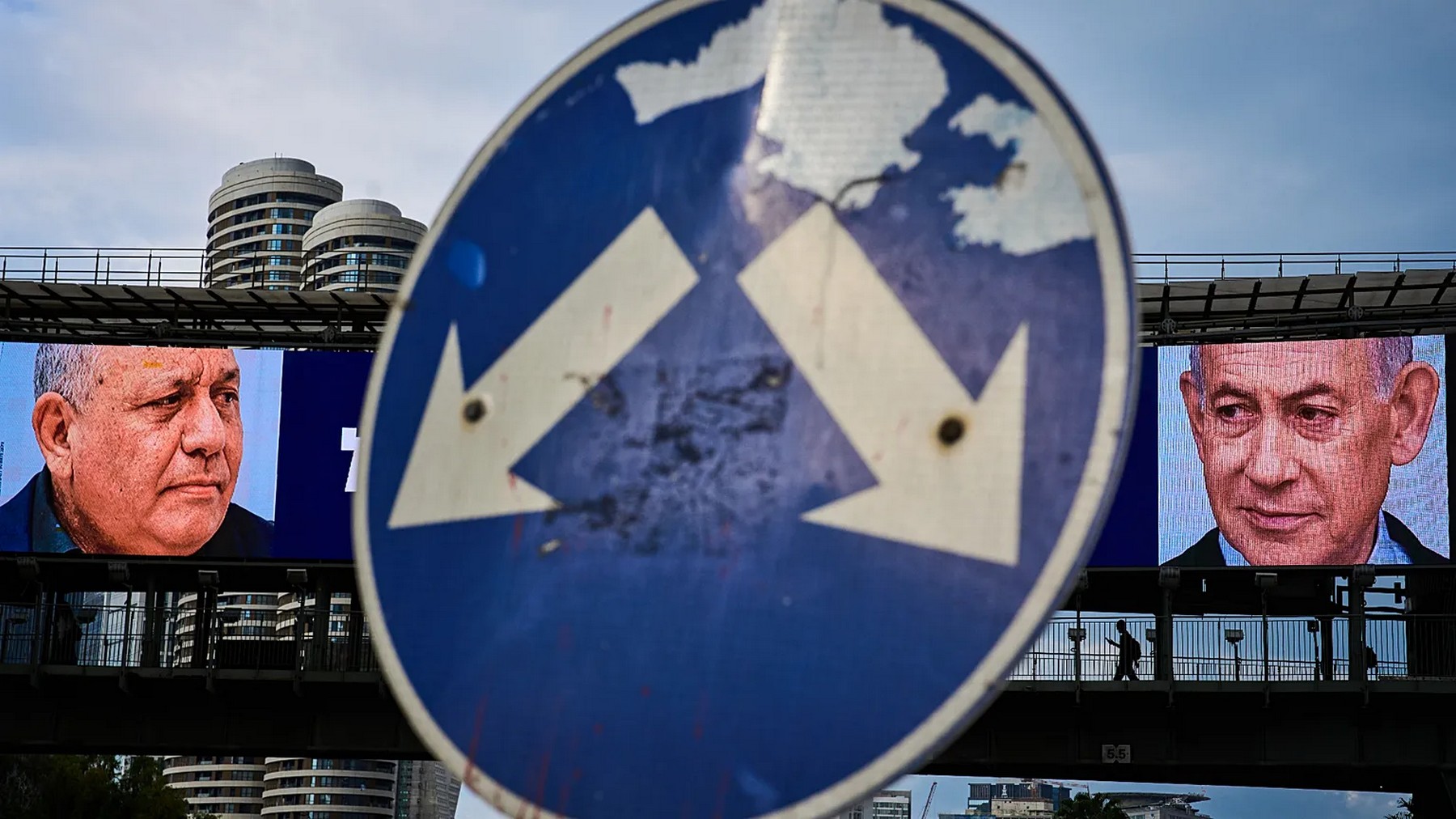
According to figures published by Israel's Central Election Commission, with virtually all votes counted in the 27 October parliamentary elections, Benjamin Netanyahu's bloc secured 53 seats, Gadi Eizenkot's bloc 48, and the Arab parties 19. Consequently, neither of the two main camps has yet secured the 61 seats required for a majority. The key question is whether the parties will be able to reach an agreement on forming a government, or if the country will face yet another election.
Will Netanyahu step down?
The political consequences of the investigation could have far-reaching implications for Benjamin Netanyahu, a prominent figure in the political landscape of Israel and the longest-serving prime minister in the country's history. Another notable feature was that these were the first parliamentary elections since the Hamas attack on Israeli communities on 7 October 2023 and the ensuing wars. Voters were therefore invited to evaluate two aspects of his leadership in parallel. On the one hand, he was responsible for the most significant failure of the security system; on the other, the outcomes of the military campaigns, which the Prime Minister himself presents as historic achievements.
It should be noted that the election campaign took place amid fierce competition and deep divisions within society. Netanyahu's coalition comprises various right-wing and religious factions: Likud, the ultra-Orthodox parties Shas and Yahadut HaTorah, Itamar Ben-Gvir's Otzma Yehudit, and Bezalel Smotrich's Religious Zionism. However, it should be noted that these interests do not always align. For the ultra-Orthodox parties, the status of religious communities, the funding of their institutions and the preservation of exemptions from military service are of particular importance. For the far right, the priorities are the expansion of settlements and a tougher policy towards the Palestinians. It has been necessary for Netanyahu to take the demands of both groups into account at all times, as it would have been impossible to maintain a coalition majority in government without their support.
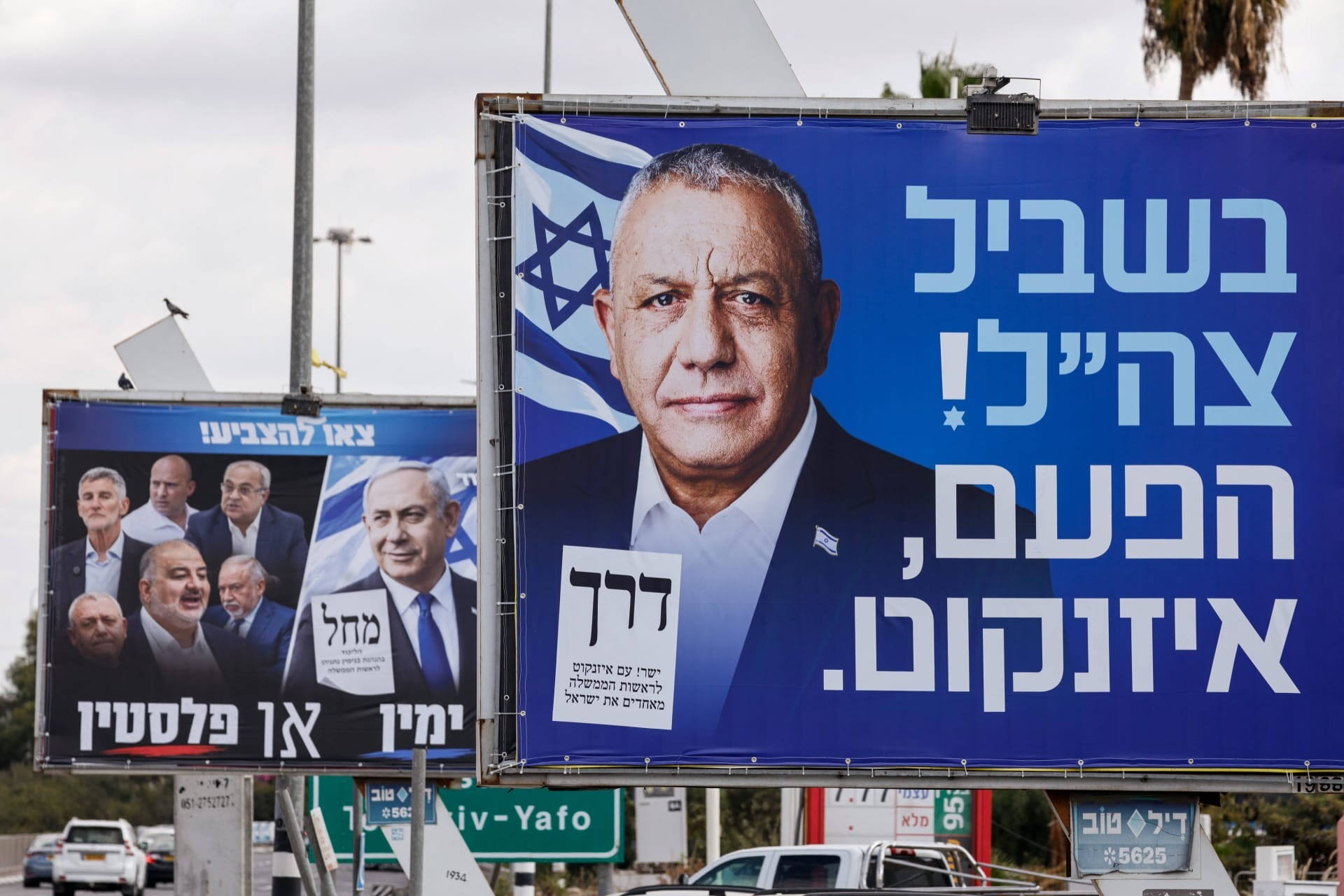
The camp opposing him is also heterogeneous, and it would be inaccurate to label it simply as 'left-wing', as Netanyahu himself does. It comprises the centrist 'Yashar' party led by former Chief of the General Staff Gadi Eizenkot; the 'Together' alliance of Naftali Bennett and Yair Lapid; Avigdor Lieberman's secular right-wing party 'Our Home—Israel'; and Yair Golan's left-wing 'Democrats'. The Arab parties—Ra'am and the 'Joint List'—are standing separately. Consequently, those opposing Netanyahu include politicians whose views on security and the Palestinian question are, in essence, right-wing. The strongest foundation for their cooperation is their reluctance to see him remain in power for several more years; consequently, it is considerably easier for them to agree on his departure than on the composition and programme of the next government.
The events of 7 October became the central issue from which Netanyahu was unable to escape. In the aftermath of the attack by Hamas and other armed groups, the death toll stands at approximately 1,200, with 251 individuals being taken hostage. For a politician who had spent years building his reputation on his ability to ensure Israel's security, this was a significant setback. The war that followed allowed him to regain his position as a military leader, but it did not resolve the question of why the attack had been possible in the first place. It is important to distinguish between military successes following the disaster and responsibility for the disaster itself, and the opposition was determined not to conflate the two issues.
Politics amidst wars
The war in Gaza that erupted shortly afterwards dealt a severe blow to Israel's international reputation. The Israeli government's actions have been the subject of constant criticism due to the scale of the destruction, loss of civilian lives and humanitarian catastrophe. The country went into the election facing increased international isolation, whilst Netanyahu himself was subject to an arrest warrant from the International Criminal Court in connection with charges relating to the situation in Gaza. This situation presented an additional political challenge: to persuade the Israeli public that external pressure was a result of necessary defence measures, rather than errors made by his government.
At the same time, Netanyahu did achieve a number of notable successes that he could present to the electorate. First and foremost, the return of the hostages—both living and deceased—had been completed. On 26 January 2026, Israel announced the return of the remains of the last hostage held in Gaza, Rana Gvili. Consequently, one of the most challenging issues has now been resolved. However, for the families of the deceased and a section of society, the question remained: could the hostages have been brought home sooner? The conclusion of this chapter provided the Prime Minister with a strong pre-election argument, but it did not put an end to the disputes over the cost and timing of the decisions taken.
With regard to Hamas and the future of the Gaza Strip, however, the situation has proven more complex. It is clear that the group has suffered a significant military setback, from which it is unlikely to recover in the near future. However, it would be inaccurate to assert that it has been completely destroyed. According to media reports from early October, the disarmament of Hamas remained an unresolved issue, whilst Israel controlled around two-thirds of the Strip's territory. It appears that significant military gains have not resulted in a definitive political resolution to the war. Israel has the capacity to hold territory and launch strikes, but questions remain as to who will govern Gaza, ensure security and fund the reconstruction. It is at this point that the line is drawn between declaring victory and being able to capitalise on its results.
The next major test for Netanyahu's cabinet was a direct military confrontation with Iran. In June 2025, Israel initiated large-scale strikes against Iran, a move that the US subsequently supported, and on 28 February of this year, the two countries launched a new military operation against Tehran. For Netanyahu, this presented an opportunity to portray himself as a leader who had succeeded in securing Washington's direct involvement in the fight against Israel's main regional adversary. However, the renewed hostilities have also given rise to questions regarding the effectiveness of the previous campaign. If the Iranian threat had been eliminated, as the leaders of both countries claimed, why was a new war necessary? It should be noted that this question is also a subject of political controversy in the US.
During the election campaign, the Iranian issue enabled Netanyahu to shift the focus from accountability for the past to threats of the future. In the context of an ongoing confrontation, it is imperative that the country is led by an experienced politician who exerts influence over the US President. However, his opponents see this as an attempt to exploit security for his own political survival. Following the vote, Eisenkot explicitly warned Netanyahu against using security interests for personal political gain.
Scandals and friendship with Trump
A separate chapter in this ongoing narrative pertains to the corruption trial against Netanyahu himself, who is widely known in Israel as Bibi. He is currently facing charges of bribery, fraud and breach of trust. He, however, denies the allegations. The trial began in 2020 and has since been repeatedly postponed, partly due to the Prime Minister's official duties and the security situation. In April 2026, the defence team once again requested that the hearing be postponed, citing classified circumstances relating to regional events. Such incidents have led his opponents to claim that the constant state of emergency is helping Netanyahu to delay the trial and maintain his position of power.
It should be noted, however, that the office of Prime Minister does not automatically confer immunity, as the investigation and proceedings continued whilst he was in office. It is in Netanyahu's best interests to maintain his position of authority, as this affords him greater opportunities to seek a pardon, engage in negotiations with the prosecution, and potentially influence legislative changes.
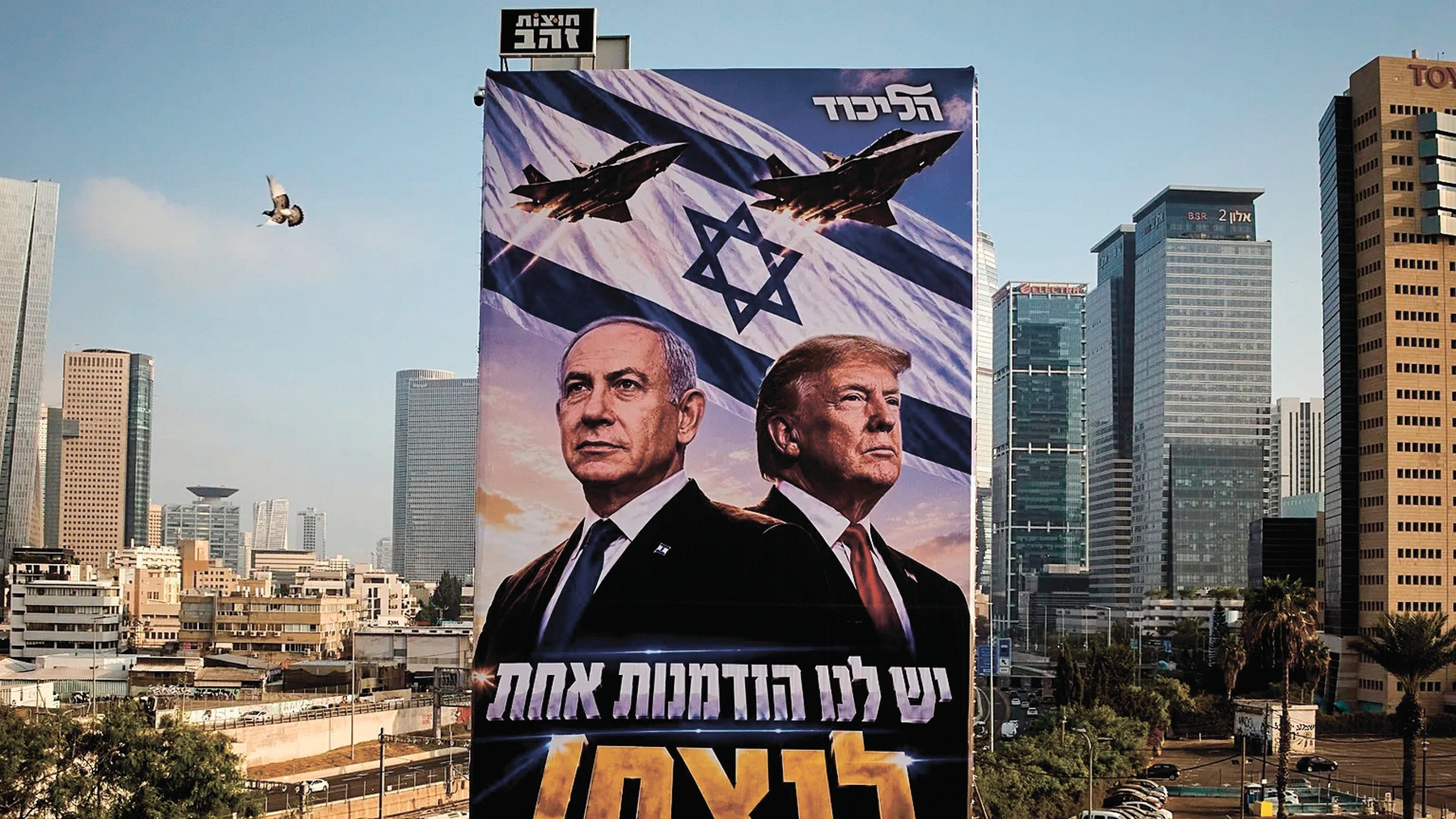
Incidentally, with regard to the relationship between Trump and Netanyahu: on 18 October, nine days before the vote, the US President publicly expressed his support for the Israeli Prime Minister's re-election, linking his position to joint action against Iran. During his election campaign, Netanyahu used the fact that he has a close relationship with the US President to emphasise how this would be good for national security. However, it is important to note that the effectiveness of this approach should not be overestimated. These factors did not prevent defeat for Viktor Orbán, nor did personal connections with Trump guarantee success for Flávio Bolsonaro in Brazil. The President of the United States' popularity does not necessarily translate into the trust of one's own voters.
In Israel, too, Trump's support did not immediately result in an uptick in Netanyahu's approval ratings. According to a Channel 12 poll, 64 per cent of respondents stated that it would not influence their choice, whilst 17 per cent said that, as a result, they were less likely to vote for the incumbent prime minister. It would therefore be a mistake to assume that Trump’s popularity would automatically win him additional votes. Moreover, for some voters, such interference was more of an additional irritant. Eisenkot capitalised on this, emphasising that it is the country’s citizens who must decide who will lead Israel.
The election is over but the questions remain
Given these circumstances, it is premature to declare a winner based on the preliminary results. Neither of the two main camps has secured the 61 seats required for a majority in the Knesset. It is evident that the outcome of the power struggle will be contingent on cross-party agreements, including the opposition's willingness to cooperate with Arab MPs.
Should no agreement be reached, the country may face yet another election and a new period of political uncertainty, which would be particularly undesirable in the current circumstances. This is precisely why Israel's President Isaac Herzog has called for every effort to be made to prevent this from happening. "It is imperative that we take every possible measure to avoid the necessity of holding new elections. I expect everyone who comes here to be willing to engage in dialogue and open to different views," he said. According to reports, he even suggested that the Israeli Prime Minister voluntarily step down from politics in exchange for the criminal case against him being dropped.
However, the primary challenge for Netanyahu is that he has virtually no potential partners beyond his own camp. The positions of Smotrich and Ben-Gvir make it highly unlikely that they would be willing to cooperate with Arab parties. In addition, the majority of other political forces are calling for the Prime Minister to step down. In this context, the statement by MP Ahmad Tibi regarding the 'Joint List's' willingness to work with the 'Change Bloc' to remove the Netanyahu–Ben-Gvir government from power is telling.
Therefore, if Netanyahu's bloc fails to secure 61 seats, his ability to form a government will be severely restricted. His opponents have greater scope for negotiation, although reaching agreements with Arab parties will also require overcoming serious differences. However, it should be noted that a majority of seats alone does not guarantee that Netanyahu will retain power. The decisive factor will be who manages to secure a parliamentary majority. It is noteworthy that the incumbent Prime Minister has alleged electoral fraud and claimed that his votes were stolen by media outlets affiliated with the Arab parties.
The significance of the election for the region will depend, first and foremost, on the composition of the future coalition. Netanyahu's ongoing tenure, in collaboration with his far-right partners, is likely to consolidate the position of those advocating a hardline stance towards the Palestinians. His departure may lead to changes in governance methods and relations with external partners, but it does not signify a departure from a policy of force, as there are numerous right-wing figures even amongst his opponents. The primary question, therefore, is whether Netanyahu will be able to translate his military successes and Trump's support into a new government. His opponents, meanwhile, face the reverse challenge: to demonstrate that their demand for the removal of 'Bibi' is indicative of a genuine ability to govern the country collectively.
RECOMMEND:
 71