

TODAY OR BY 2031?
Baku proposes bringing the settlement to a close, while Yerevan postpones the final decision
Author: Namig H. ALIYEV
The process of peace between the Azerbaijani and Armenian governments has reached a crucial juncture. The main text of the agreement has been agreed and initialled, and the sides are demonstrating tangible results in normalising relations. However, the document has not yet been signed. Nikol Pashinyan has stated his intention to secure the signing and ratification of the agreement by 2031. This raises an entirely legitimate question: why? Why is the completion of the settlement being deferred to such a distant date?
From military victory to the politics of peace
The history of Azerbaijani-Armenian settlement in recent years indicates a gradual transformation of the regional reality. Following the restoration of its territorial integrity in the wake of the 2020 Patriotic War, and the subsequent re-establishment of its full sovereignty following the counter-terrorism measures of September 2023, Azerbaijan has presented a unique opportunity for the countries of the South Caucasus to move beyond decades of conflict and establish relations based on mutual recognition of sovereignty and territorial integrity.
However, military victory alone does not guarantee a final settlement. In order to ensure long-term stability, it was necessary to consolidate the new reality through political and legal means. This involved eliminating the causes of the previous confrontation and creating conditions in which a return to conflict would no longer be regarded as an acceptable option in state policy. In this regard, the actions of President of Azerbaijan Ilham Aliyev must be assessed. He has repeatedly declared Baku's readiness for peace and stressed the need not to delay the signing of a peace agreement.
Azerbaijan did not limit itself to diplomatic declarations. Baku consistently advanced an agenda centred on mutual recognition of territorial integrity, the delimitation of the state border, the opening of transport links and the establishment of interstate relations. Simultaneously, the Azerbaijani side proceeded on the basis of the understanding that sustainable peace must be established on a political and legal foundation.
In February 2022, Ilham Aliyev reiterated that Azerbaijan had proposed a series of measures, including the recognition of each other's territorial integrity, the delineation of borders, the establishment of transport links, and the signing of a peace agreement. The President noted that the Armenian side had shown hesitation in responding to these proposals, even though they offered an opportunity to reduce the risk of a renewed armed confrontation.
Subsequently, the peace agenda gained further momentum. In August 2025, the sides signed a joint declaration in Washington, while the foreign ministers of the two countries initialled the agreed text of the Agreement on the Establishment of Peace and Interstate Relations between Azerbaijan and Armenia. Thus, the negotiating process reached a stage at which the main task was no longer to agree on the document’s fundamental provisions, but rather to create the conditions for its final signing and subsequent ratification.
This is a crucial distinction. The task is not to restart the peace process, but to complete work that has already been largely accomplished.
Practical implementation of the peace agenda
Following the Washington Summit, the peace process began to acquire a tangible economic and transport dimension.
At the meeting of 4 February 2026 in Abu Dhabi, Ilham Aliyev and Nikol Pashinyan noted the launch of bilateral trade, the export of Azerbaijani petroleum products to Armenia, the transit of grain and other goods from third countries through Azerbaijani territory, as well as the prospects for expanding economic cooperation.
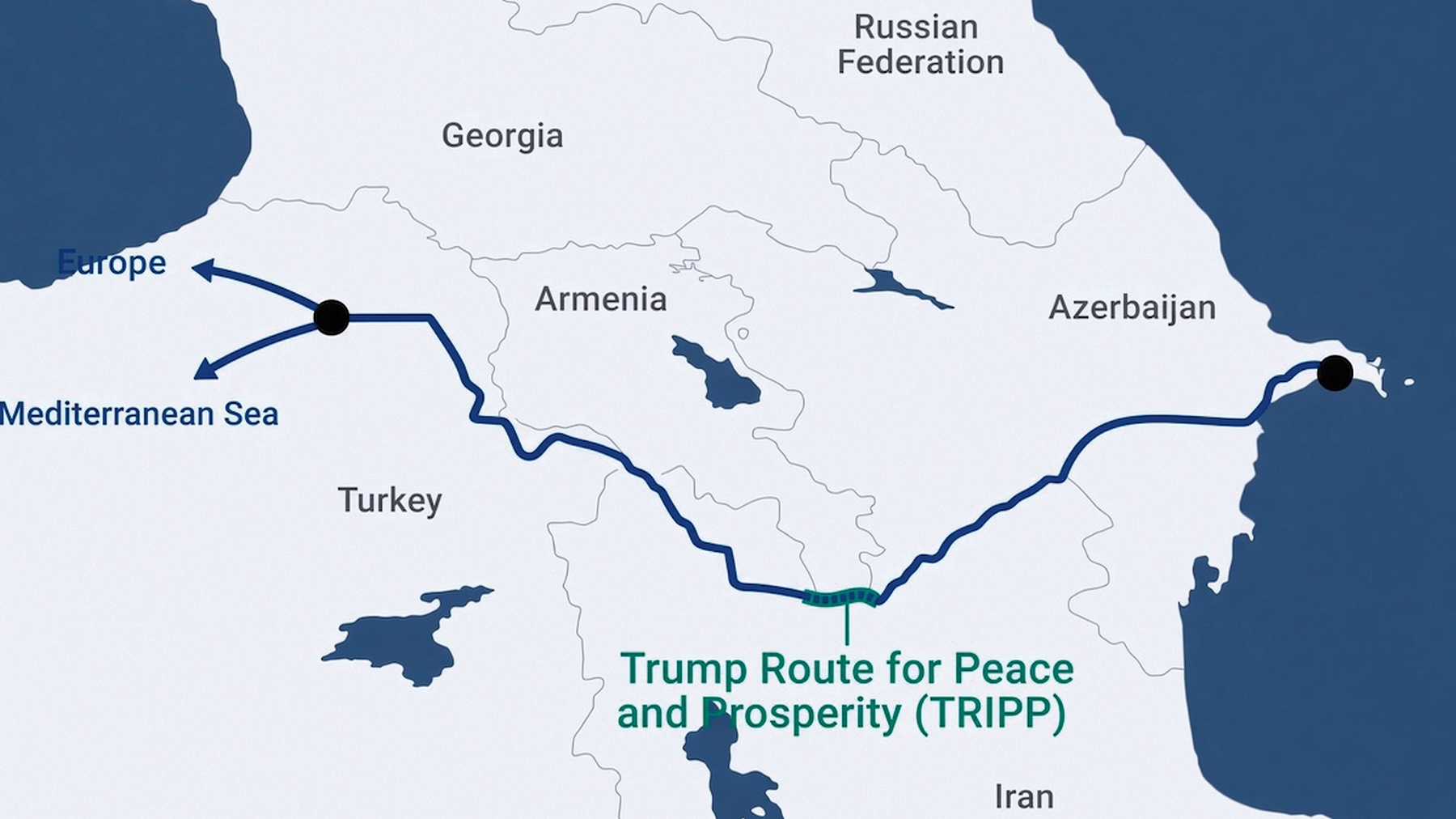
In Bishkek on August 31, 2026, the leaders once again emphasised the significance of the Washington Declaration, ongoing border delimitation, the advancement of trade and economic relations, and the execution of the TRIPP project—the route for international peace and prosperity.
These developments are of significance not only for bilateral relations. They demonstrate that peace can deliver tangible results even before the entire framework of interstate relations has been formally established.
Economic cooperation fosters shared interests in stability, while enhanced transport connectivity opens doors to new trade opportunities. Direct contact facilitates the establishment of conditions conducive to the gradual overcoming of mutual distrust.
In summary, Azerbaijan does not consider peace to be simply a document that will be signed at a future point. Baku is interested in ensuring that the new regional reality is consolidated through trade, transport links and cooperation.
At the same time, it is important to distinguish between a genuine reduction in tensions and a final legal settlement. The former is already yielding tangible results, while the latter remains incomplete. The timing of the agreement's signing is of fundamental importance.
Why 2031?
On 15 October, Nikol Pashinyan stated at a meeting of the Armenian government that he considered the signing and ratification of the peace agreement to be one of the country's most important objectives, and set himself the goal of achieving it by 2031.
Previously, this statement could be interpreted as establishing a definitive political deadline. Pashinyan did not claim that signing the agreement before then would be impossible. However, the objective's framing does give rise to certain questions.
But why to wait several years to complete the process, if the text of the agreement has already been agreed and initialled?
If peace is genuinely a priority for the Armenian government, it would be logical to expect it to remove the remaining obstacles as swiftly as possible, rather than setting a distant deadline in advance. A political objective must be reflected in a consistent sequence of concrete decisions, not merely in the formulation of long-term intentions.
It is important to bear in mind that Armenia's leadership had previously linked further progress on the peace agenda to domestic political developments. Parliamentary elections have now been held, and the ruling Civil Contract party has retained its majority. However, the peace process has yet to reach its final conclusion. This creates a contradiction between the declared priority of a peaceful settlement and the pace at which issues directly related to its completion are being addressed.
It is imperative that constitutional amendments adhere to national procedures, and that decision-making in a democratic state be conducted through public debate. However, the existence of domestic procedures does not in itself explain why the government should not seek to make the fullest and speediest possible use of the mechanisms provided by law. The core issue confronting Yerevan is determining whether the settlement process can be expedited or if opting for a more protracted process is a political decision.
The answer matters not only to Azerbaijan. Trust between the sides, the prospects for regional integration and the willingness of both societies to regard peace as a lasting rather than temporary arrangement all depend on the clarity of the Armenian leadership’s intentions.
Going through preamble: a legal alternative to years of reform
At this stage in the peace process, particular attention should be paid to the following issue: is adopting an entirely new Armenian Constitution really necessary to resolve the constitutional contradiction?
Azerbaijan's position is that the reference in the preamble to Armenia's current Constitution to the 1990 Declaration of Independence perpetuates the problem of territorial claims. The declaration refers to a joint decision by the Supreme Soviet of the Armenian SSR and the National Council of Nagorno-Garabagh, dated December 1, 1989, concerning the unification of Armenia and Nagorno-Garabagh.
The official position of Yerevan is that the interpretation of these provisions as constituting present-day territorial claims is inaccurate. It is maintained that the Armenian Constitution itself contains no claims against the territory of another state. However, for the peace process to be concluded, it is not only important how the current leadership interprets the relevant provisions, but also how the remaining legal uncertainty is to be eliminated.
In this regard, it is crucial to refer to Articles 103, 202 and 207 of the Armenian Constitution, which govern the procedures for adopting constitutional laws, amending the Basic Law and conducting referendums.
Amending the preamble could be treated as a separate legal task that does not necessarily require the drafting and adoption of an entirely new Constitution. Provided that the prescribed procedures are followed, the relevant amendments could be introduced through the parliamentary mechanism or put to a referendum, provided the necessary grounds exist and the established requirements are met. The issue, therefore, is not a lack of legal instruments, but a choice between different ways of making use of them.
Drafting a new Basic Law is a significant undertaking. The process involves the preparation of a draft, the conducting of expert consultations, the reconciliation of different political and public interests, parliamentary consideration and a referendum. Such a process will inevitably broaden the range of issues that need to be resolved and introduce additional uncertainties, both in terms of timing and politics.
Amending a specific provision that is a source of disagreement in relations with a neighbouring state is a much narrower task. If the priority is to sign a peace treaty as soon as possible, this option merits serious consideration.
Declarations or concrete action?
A peace process cannot succeed without trust, which does not emerge automatically following public declarations of commitment to peace. The process is founded on the consistent implementation of agreements, the removal of mutual concerns and a refusal to engage in actions that could call the results already achieved into question.
In the context of the relationship between Azerbaijan and Armenia, this has a particular historical significance. The protracted conflict, the occupation of Azerbaijani territories, human losses and repeated setbacks in the negotiating process have created deep-seated distrust between the two societies.
For this reason, it is fundamentally important to Baku that the new stage in relations should be based on legally binding commitments rather than solely on statements made by political leaders.
At the same time, it would be inaccurate to assert that no positive changes have occurred since the Washington Summit. Direct contacts have been maintained, trade has developed, border delimitation has continued and transport projects have been discussed. These processes provide a solid foundation for further rapprochement.
However, these practical achievements do not negate the necessity to resolve the outstanding issues definitively. The issue with setting a deadline of 2031 is that it does not take into account the necessary lead time for the project. This could be seen as an indication that the Armenian leadership does not intend to prioritize the final signing of the treaty. While this interpretation may not fully reflect Pashinyan's intentions, setting such a distant deadline inevitably creates uncertainty.
Trust is strengthened not only when the parties share the same declared objectives, but also when their words are matched by actions.
More than a bilateral issue
The repercussions of postponing the definitive resolution extend well beyond the bilateral relations between Baku and Yerevan.
The South Caucasus is strategically located at the intersection of transport, energy and trade routes, connecting Central Asia with Türkiye and Europe. The promotion of regional stability is conducive to the expansion of international trade, the development of infrastructure and the establishment of new economic ties.
For Armenia, normalising relations with Azerbaijan presents opportunities to overcome transport isolation, expand trade, and participate in regional connectivity initiatives. For Azerbaijan, the development of these links means strengthening its transport potential, broadening economic cooperation and creating a more resilient regional security system.
The TRIPP project is a prime example of how political settlement is inextricably linked to the future of the region. The implementation of transport projects requires not only economic viability, but also clear interstate agreements, respect for sovereignty and predictability in political decision-making.
The longer the uncertainty surrounding the final peace agreement persists, the more difficult it becomes to turn the political understandings already reached into a fully-fledged system of long-term cooperation. The absence of a definitive legal settlement leaves outstanding issues unresolved and prevents the opportunities that have emerged from being fully realised.
It is in the best interests of all parties that there is peace, not only in the case of Azerbaijan and Armenia. It is essential for the entire South Caucasus and for all countries with an interest in stable transport and economic links between Europe and Asia.
Peace today is an expression of political will
A comparison of the approaches taken by Ilham Aliyev and Nikol Pashinyan reveals a difference in how the objective is framed. Baku has declared its readiness to sign the peace treaty once the remaining constitutional obstacle is removed. Pashinyan, for his part, has set the signing and ratification of the document by 2031 as his objective.
In this context, amending the preamble to the Armenian Constitution could be considered a more direct way of resolving the existing disagreement. This approach would not preclude broader constitutional reform at a later stage. The government's primary responsibility is to utilise the legal options already available to address issues that directly impact the security and future of the region.
At this stage, the peace process requires not another distant target date, but concrete action capable of bringing the work already under way to completion. Azerbaijan has repeatedly declared its readiness for peace and is already taking part in practical efforts to normalise relations. The key issue at present is the consistency with which Armenia is prepared to remove the remaining obstacles.
The primary question is not whether peace can be achieved by 2031. If the necessary agreements have already been reached and legal mechanisms for resolving the differences are available, why should peace not be formally secured sooner?
The response will provide a valuable indication of the Armenian leadership's readiness to translate its declared commitment to a final settlement into concrete state policy.
RECOMMEND:
 91