

NO-CHOICE ELECTION
It remains an open question if it will bring closer an end to civil war
Author: Natiq NAZIMOGLU Baku
In 1973, in keeping with the Constitution of the Syrian Arab Republic, the leadership of the ruling Ba'ath Party (Arab Socialist Renaissance Party) nominated its presidential candidate which. Upon approval by parliament, the candidacy was put up for approval by a plebiscite. In this format, incumbent Syrian President Bashar al-Assad was first elected the head of state and re-elected for a new term in office in 2007. A new constitution was adopted in 2012 which deprived Ba'ath of its status as the guiding force and provided for the presidential elections to be held on a competitive basis. In addition, the presidential tenure in Syria is limited to two consecutive seven-year terms.
A number of known and unknown people have already declared their interest in running for the presidency. Among them are, for example, Samir Moalla, a law professor from Quneitra province, and Mohammad Firas Rajjouh, an ordinary resident of Damascus. There are two women among the candidates - respectively, Sawsan Mohammad Haddad and Azza Mohammad Wajih al-Hallaq, natives of Damascus and Latakia, respectively. A remarkable character among the candidates is Samih Mikhael Mousa who is a Christian.
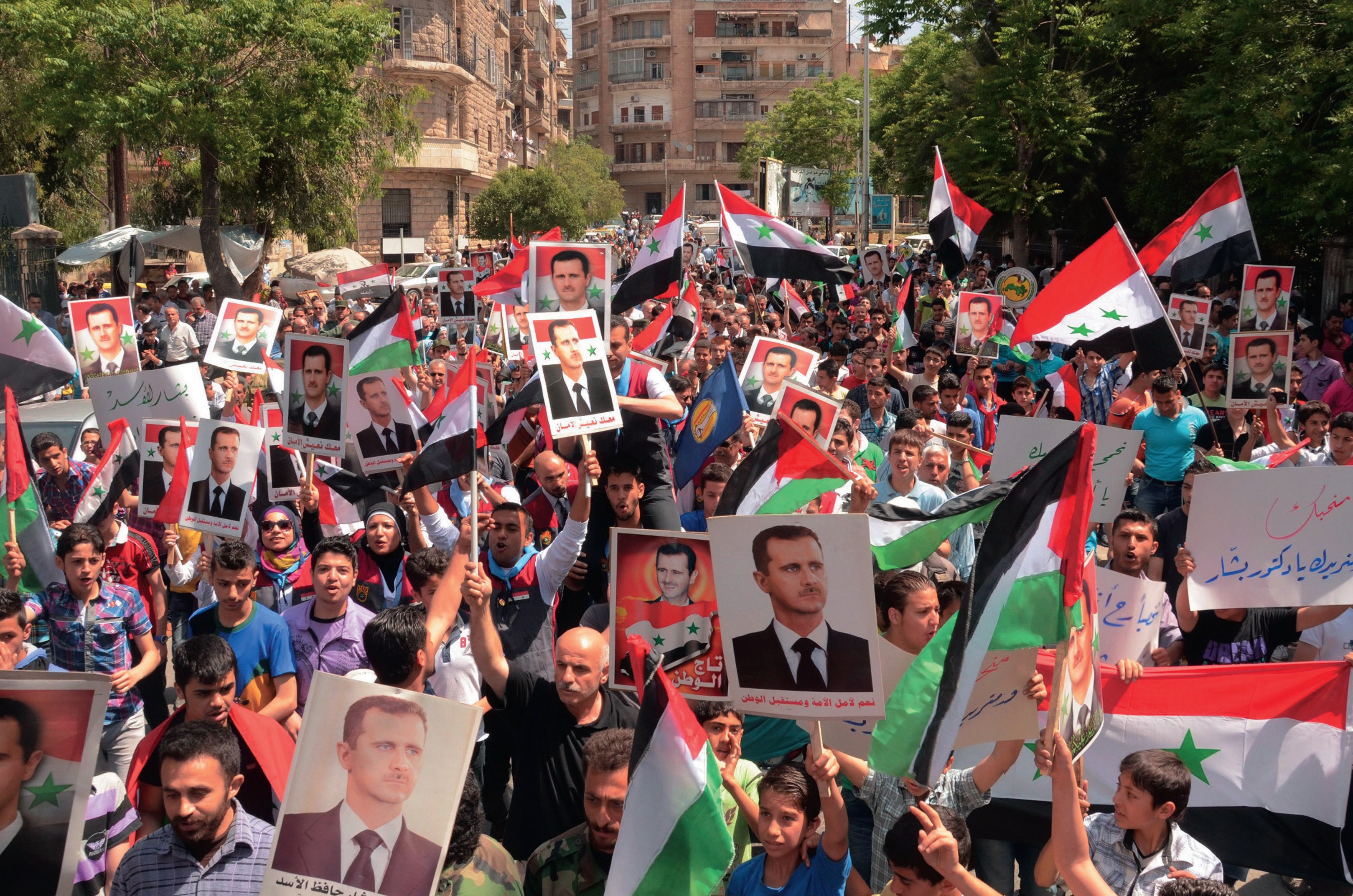
However, no one doubts that Bashar al-Assad will win the election. The matter is not only that he is supported by Ba'ath, the biggest political force in the country which has an overwhelming majority in parliament. The incumbent head of state is close to his electoral triumph in a situation of internal war which has been kept going on for more than three years by interested external forces using all available means. With this in mind, President al-Assad is seen by a considerable part of the Syrian community as a hero defending the sovereignty and territorial integrity of his country.
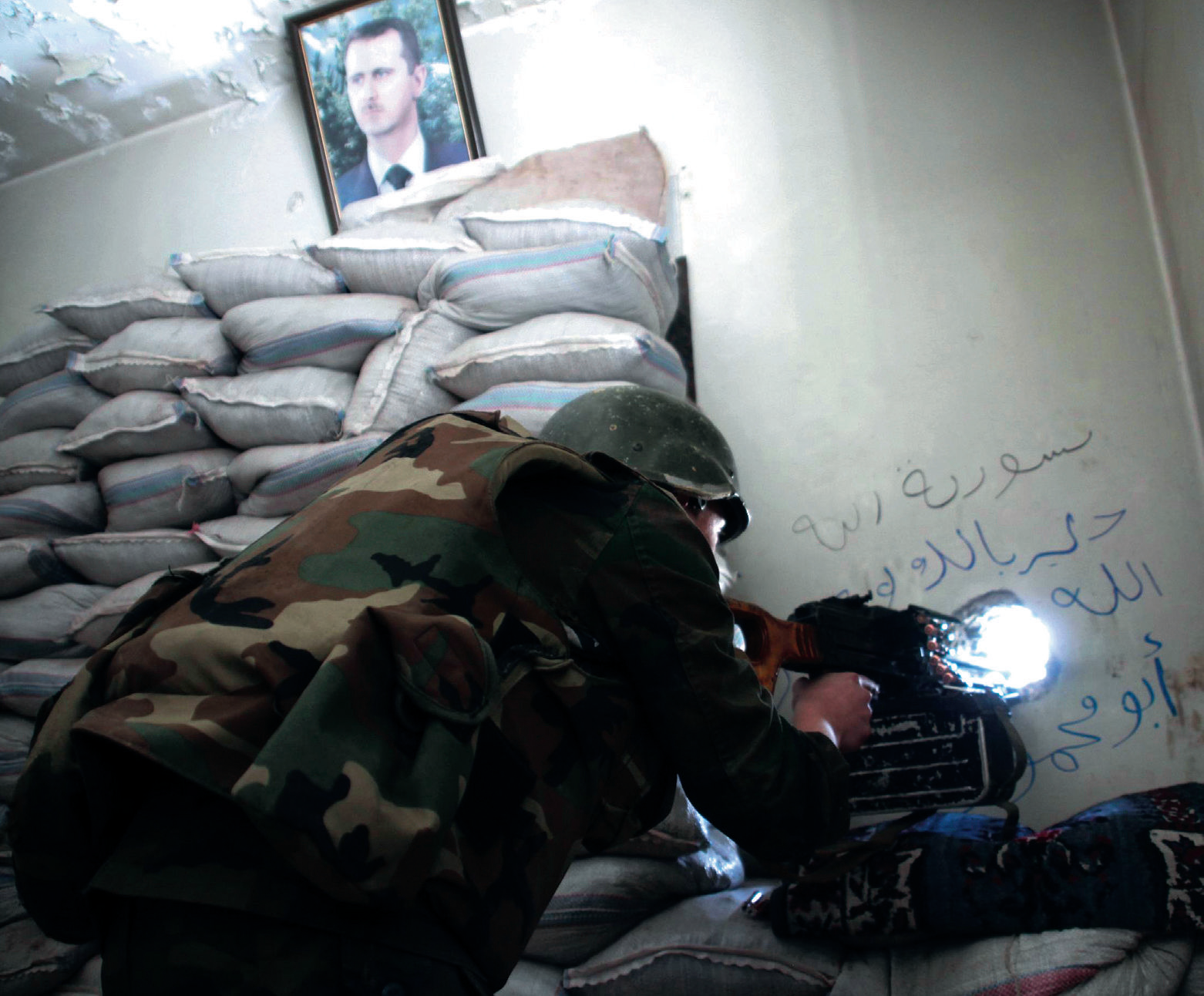
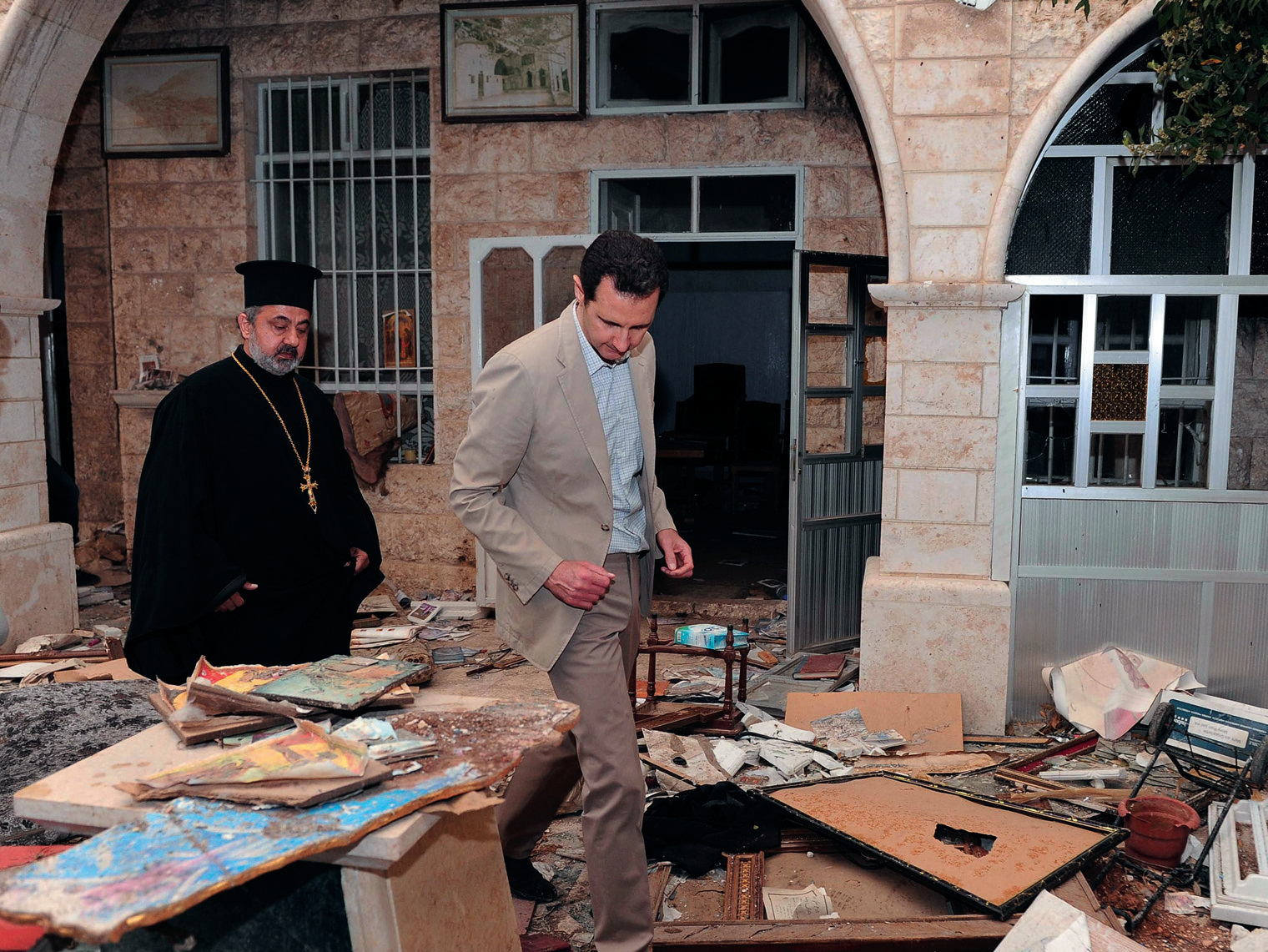
In recent weeks, the Syrian army has won several important victories over the rebels that gave Bashar al-Assad grounds to announce a turning point in the war. Government forces are carrying out an operation to eliminate the last strongholds of the armed opposition in the Jobar district on the eastern outskirts of Damascus. In addition, a rebel counteroffensive has been disrupted in western areas of Aleppo. The Syrian army has also recaptured areas at the border with Turkey. But perhaps the most significant event in recent days was the liberation from militants of the Christian town of Ma'loula and Bashar al-Assad's visit to it on the day of Passover celebrations. This goal of this move was not merely to show that the president is regaining control of the country but also to confirm his willingness to remain the guarantor of secularism and interfaith peace and the keeper of Syria's very rich spiritual heritage.
As for the opposition, its secular wing positioning itself as a democratic, Western-oriented force, says that presidential campaign cannot be regarded as fair because of the requirements set to the candidates. Thus for instance, eligible to run for the presidency are only citizens who are at least 40 years old and have lived the last 10 years in Syria proper. Given that some of the opposition leaders were in hiding abroad for years, the way to the presidency has thus been automatically closed for them.
The liberal opposition is even more indignant at the provision that, to be registered at the Supreme Constitutional Court, each presidential candidate is to enlist the support of at least 35 out of 250 members of parliament. However, given that the supreme legislative body is under control of the pro-presidential party Ba'ath, it is clear that the persons who spoke for overthrowing the al-Assad regime have virtually zero chances of being approved as candidates for the presidency.
As for the radical part of al-Assad's opponents making up the core of the armed opposition and represented mostly by extreme Islamist groups, they will not recognize the election a priori. Propagating the idea of a "war to the bitter end", the Islamists stand up for establishing a clerical state living under Shariah law. In this sense, not only the al-Assad regime staying in power will run counter to their interests but even its hypothetical replacement with a liberal government. This is why the Islamists or, jihadists, as they are called in western media, are trying in every way possible to destabilize the situation ahead of the presidential polls. They are mounting terrorist and mortar attacks almost every day. A flagrant act of violence took place in Al Shaggur residential area in Damascus the other day: 14 children were killed and another 86 injured as the Bader Al Din Al Hosayni school complex in the neighborhood of Al Shaggur was shelled. At least 36 people were killed in a car bomb explosion in the centre of the town of Homs 165 km from Damascus.
Meanwhile not only internal but also external opponents of the al-Assad regime are speaking in terms of non-recognition of the future presidential polls in Syria. The USA and the UK have already announced that they regard the forthcoming Syrian presidential polls as "a parody of democracy" and will not accept its results as legitimate. One of the main arguments of the West boils down to the statement that holding a presidential election in Syria runs counter to the Geneva communiqu? agreed on the basis of the international conference on Syria. The paper points out the need to form a transitional governing body to carry out constitutional reform after which a general election must be held. However, official Damascus makes it clear that there is no force in the irreconcilable opposition camp with which consensus on division of power could be achieved.
This approach does have grounds: the opposition has failed to prove that it is an integral force capable of leading the country in a direction corresponding to the interests of the majority of the population. Over the three years since the civil war began, a major change has also taken place in the appearance of that part of the opposition, which dictates its terms to the entire protest camp. Syria's internal conflict started with demands for democratic reforms in the country. But then, with support from external forces, other processes aimed in fact at destroying the Syrian state started in the country. A dominant influence on the opposition went over to the jihadists, not only homegrown ones but also those flooding into Syria en masse from abroad. It became clear that only radical Islamists can be a real alternative to the al-Assad regime. This is why many of those who originally stood for reforms, have come to realize that a secular regime, even authoritarian in nature, would meet their interests to a much greater extent than the jihadists.
The West which originally acted as the ideological inspirator and financial sponsor of the Syrian opposition is certainly well aware of what kind of forces can replace the al-Assad government at the summit of power in Syria. With this in mind, as well as the al-Assad regime's obvious military successes in its combat against the rebels, the interest of the West in Syrian problems has somewhat flagged. The general impression is that the West has taken a wait-and-see attitude realizing that it can offer nothing good to Syria and its people at the moment.
RECOMMEND:
 803
803

