

CHANGING THE STATUS QUO PEACEFULLY
To achieve fulfillment of their main demand for the settlement of the Karabakh conflict, the mediator countries will need to put pressure on Armenia
Author: Rasim MUSABAYOV, political analyst, Member of Parliament Baku
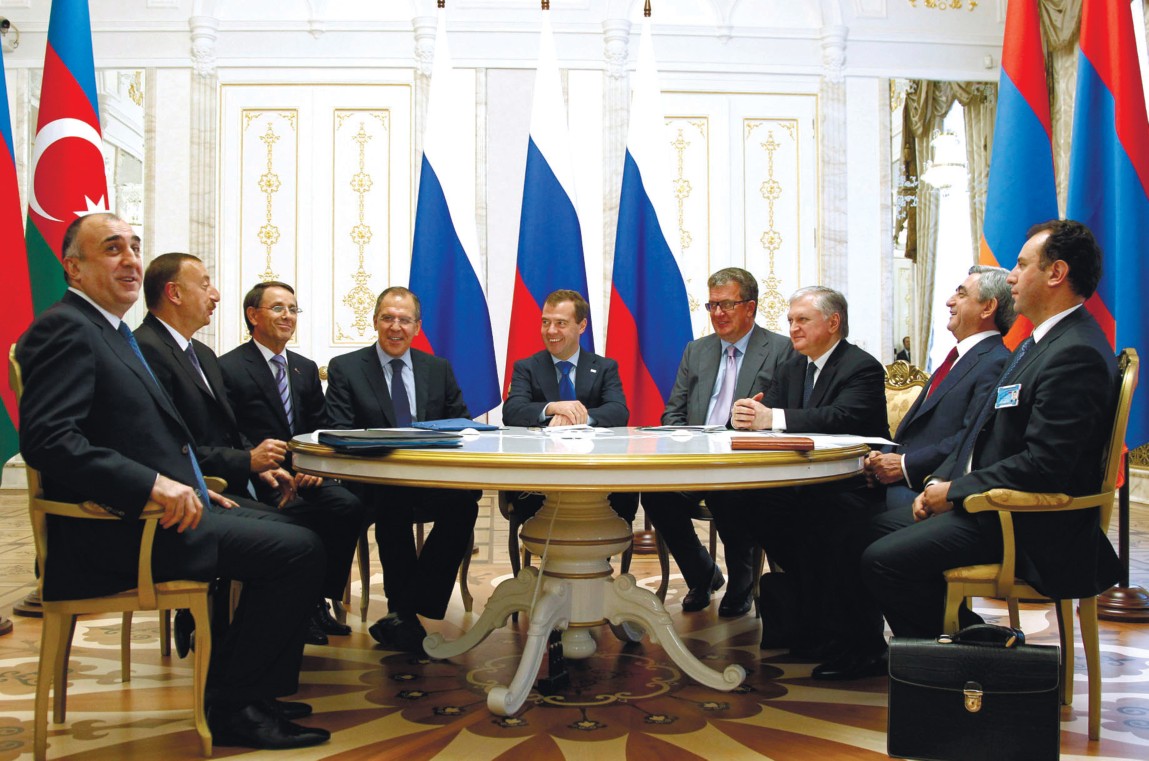
As is known, the meeting between presidents Ilham Aliyev and Serzh Sargsyan on Karabakh settlement, which was organized on 24 June with the mediation of Russian President Dmitriy Medvedev in Kazan, has not yielded any results. However, no complaints about the mediators followed, contrary to what is customary. Instead, Baku and Yerevan, through their top officials thanked the heads of co-chair states of the OSCE Minsk Group, that is, presidents of the USA, Russia and France, and especially Dmitriy Medvedev, for their personal participation in the process of the settlement of the Karabakh conflict.
Although right before the meeting there were no direct opponents of achieving an agreement on the basis of the Madrid principles and cautiously optimistic forecasts were made with respect to the possibility of reaching an accord on them, the fruitlessness of the talks has not caused disappointment. Both officials and analysts showed reserve in their comments. Azerbaijani Foreign Minister Elmar Mammadyarov said that the sides have not been able to achieve a compromise decision on a number of fundamental issues because Armenia demands maximum concessions from Azerbaijan, distorting thereby the gist of the negotiating process. During the military parade on 26 June, Ilham Aliyev, president and commander-in-chief of the Azerbaijani Armed Forces, refrained from harsh statements. Perhaps, there was no need for them, too, because the demonstration of the military hardware and the level of training of the troops spoke for themselves.
A strange mix of relief and confusion was observed in Yerevan. On the eve of the meeting in Kazan, the absolute majority of the Armenian politicians and analysts rejected the Madrid principles, saying that adopting them would be tantamount to betraying national interests. But now, when the meeting of the presidents ended without any results, few of them express their joy over the fact. Let us add that, according to the head of the Armenian foreign political department, Edvard Nalbandyan, they were ready to sign the document which was proposed in Kazan, but the amendments that were proposed by Azerbaijani at the last moment had presumably made that impossible.
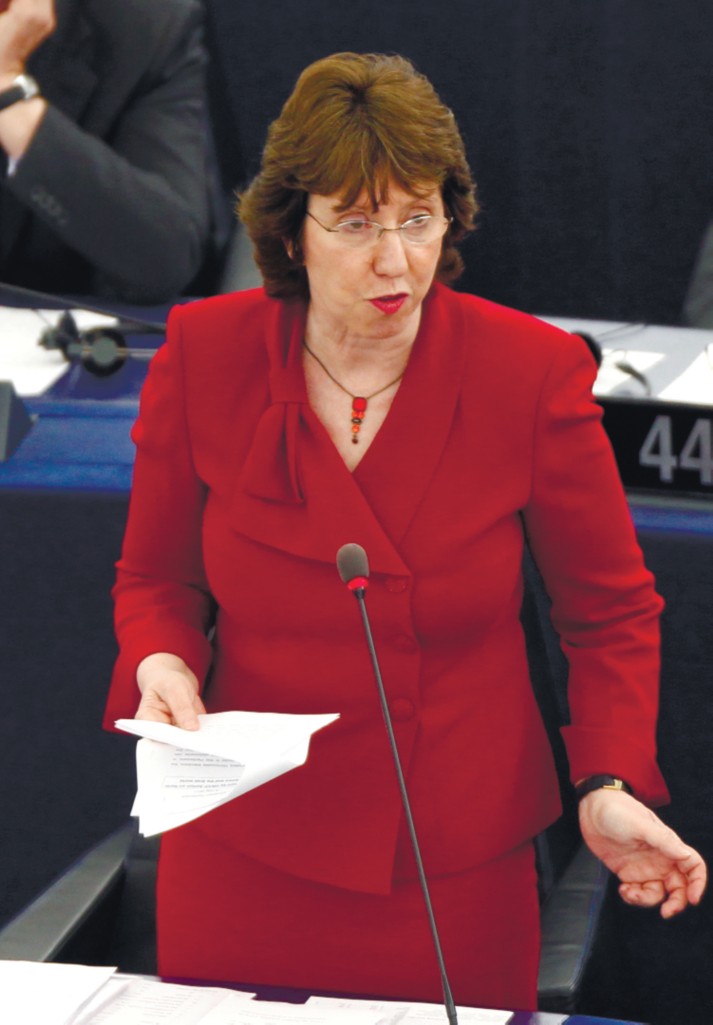
Influential European international organizations came out for continuing the talks. Catherine Ashton, High Representative for Foreign Affairs and Security Policy of the European Union, for example, said during a session of the European Parliament: "Efforts to find an agreement on the Basic Principles must continue and I welcome the fact that both parties recommitted themselves to the diplomatic process and to finding a peaceful solution. But we need to see more than that in the coming months. The parties need to redouble their efforts to find an agreement before the end of this year. This would then happen before domestic priorities take over in 2012: elections in Armenia in 2012, and in Azerbaijan in 2013."
The EU position, as voiced by Catherine Ashton is this: "Indeed, a continuation of the status quo is unacceptable, as is any effort to resolve the conflict or influence the negotiations by using force, or even the threat of force."
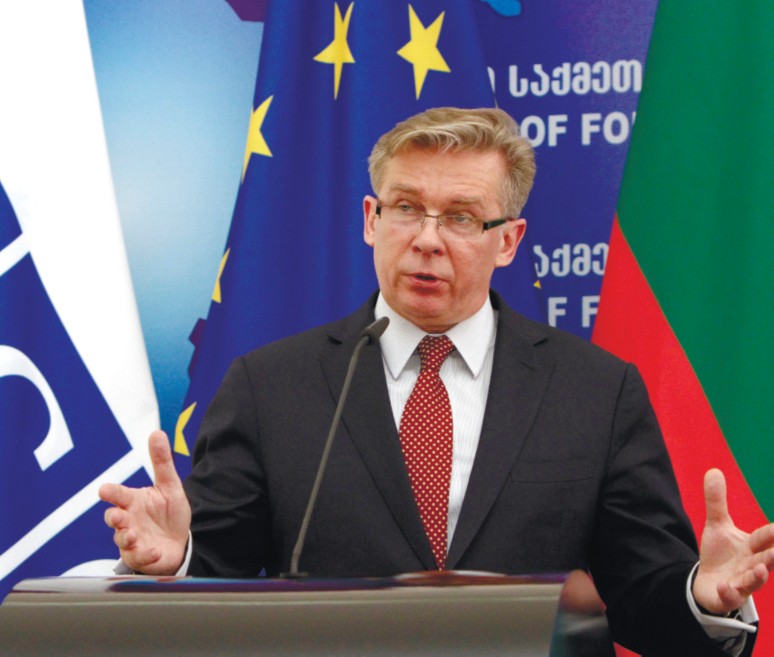
The OSCE will continue to work on finding a solution to the protracted conflicts, including the one in Nagornyy Karabakh, the incumbent OSCE chair, Lithuanian Foreign Minister Audronius Azubalis said, speaking before 300 members of the European Parliament from 53 OSCE member countries and four partner nations, who gathered in Belgrade to take part in the annual session of the OSCE Parliamentary Assembly.
Expressing their regret that the parties to the conflict were unable to reach agreement, the USA and France, together with Russia, keep looking for a way out of the impasse in the talks. For this purpose, French Foreign Minister Alain Juppe met with his Azerbaijani opposite number Elmar Mammadyarov, and US State Secretary Hillary Clinton had a phone conversation with Armenian President Serzh Sargsyan on 8 July.
Russia too demonstrates increased activity. Despite speculations that Moscow in reality does not want progress in the process of settlement and only imitates mediation activity, the thwarting of the Kazan meeting caused an open irritation there. I believe that not only the blow to the image of President Dmitriy Medvedev was the reason. The progress in settlement of the Karabakh conflict is genuinely in Russia's interests. But instead of restraining Armenia's territorial appetites, the Russian Foreign Ministry decided that it is possible to achieve an agreement on a scenario of settlement of the conflict which envisages Nagornyy Karabakh's secession through a referendum by combining Moscow's, Paris's and Washington's pressure on Azerbaijan. This, however, did not work in Kazan and, I dare to express my confidence, this will not work in the future either.
Soon after the Kazan meeting, the information was leaked to the media that Dmitriy Medvedev, disillusioned about the ability and will of the parties to the conflict to reach a compromise, intends to all but abandon his mediator mission. In the reality, Moscow decided not to postpone the issue indefinitely and undertook yet another energetic attempt to achieve signing of the agreement on the principles of the Karabakh settlement. Medvedev wrote a personal message to the presidents of Azerbaijan and Armenia, and the Russian Foreign Minister Sergey Lavrov took it to Baku and Yerevan. Armenian Foreign Minister Edvard Nalbandyan was invited for consultations to Moscow, and Azerbaijani Foreign Minister Elmar Mammadyarov is to follow suit. Simultaneously, the Russian Foreign Ministry conducts a dialogue on the settlement of the Karabakh conflict with heads of the US and French foreign political departments.
Obviously, everyone is first and foremost interested in what Russia proposes to guide the talks out of the impasse. We can only make assumptions. As is known, the issue of the status of Nagornyy Karabakh was a stumbling block. Armenians insist that the population must express its will within the short period of time and that secession, in other words, separation from Azerbaijan, must not be ruled out. Baku agrees to the idea of organizing a plebiscite on the status of Nagornyy Karabakh, but only within the context of territorial integrity and with consideration for the opinion of the ethnic Azeri Karabakh residents after their return to their homes.
Obviously, these are hardly compatible positions. A solution - and a purely tactical one at that - can be found by leaving out the controversial issue and leaving further details for the future rounds of the talks on the text of the peace treaty. Under this scenario, Armenians do not want to make a commitment to withdraw the Armed Forces from the occupied territories and away from Nagornyy Karabakh. But if this issue is also left beyond the scope, then the only truly important of all the agreed fundamental principles is the commitment of the parties not to use force for conflict settlement. This is precisely what Armenians and the powers which back them have been striving all the time to achieve. But this is not in Azerbaijan's interests at all, because it limits its unalienable right to use armed forces as an ultimate measure to liberate the occupied territories and restore the country's territorial integrity within the internationally recognized borders.
It can be sensed that, as a compensation for the refusal to demand a referendum on the status of Nagornyy Karabakh, Yerevan wishes to get Baku's agreement to allow officials of the separatist regime to the next phase of the talks. The Armenian media have even been discussing how this can be achieved. As one of the options, appointment of the former "Nagornyy Karabakh Republic President" Arkadiy Gukasyan as the Armenian president's special representative for the talks with simultaneous appointment as the "Nagornyy Karabakh foreign minister" was proposed. Incidentally, before his "presidential tenure," Gukasyan occupied the post of the separatist foreign minister and was involved, if only indirectly, in the talks on the peaceful regulations. The incumbent "Nagornyy Karabakh Foreign Minister" Georgiy Petrosyan has already resigned from his post.
It is hard to say whether the Russian proposals will turn out to be acceptable and whether organizing a meeting of the presidents Aliyev, Sargsyan and Medvedev in the near future will be possible. After all, to achieve positive results, there is a need to put great pressure on the parties to the conflict. However, neither Russia nor other co-chair nations of the OSCE Minsk Group wish to put real pressure on Armenians at present. As for Azerbaijan, they have no levers to put pressure with, especially as the international law, UN Security Council and General Assembly resolutions and documents that were adopted by other international organizations are on our side.
Moscow begins to realize that perpetuating the status quo is unacceptable not only for Azerbaijan, Turkey and the West, but also increasingly unacceptable for Russia itself. The regional balance of power is steadily changing to Armenia's disadvantage. Supporting this particular ally of Russia is becoming an increasingly burdensome matter. At the same time, Russia's significant economic and political interests in Russia are damaged. After all, being against Baku in the process of regulation of the Karabakh conflict rules out the possibility of counting on understanding and partnership on the issues of delivery of the Caspian energy resources to the international markets, Qabala early warning radar and missile defence. The situation is such that the process of the Karabakh regulation can be delayed for some more time to come, but this can only be to the disadvantage of Russia itself and its protege Armenia.
That country is not doing well at all. According to the popular periodical, Forbes, Armenia had the worst economy by the 2010 after Madagascar. The magazine's commentators write that the Armenian economy is unlikely to recover in the foreseeable future. In the "Poverty and food" rating, which was developed by the UN experts (the Millennium Development Goals 2011 report), the Armenian population was included in the list of the countries with the high levels of famine (25-34%). It is not surprising that, according to opinion polls, they have their bags packed and think where to emigrate to. From the beginning of this year, more than 60,000 people have actually acted on this wish. Far-sighted politicians, including former President Levon Ter-Petrosyan, who made loud statements that "Armenia is dwindling away," say that without peace, the negative situation in the country will not change.
Armenia cannot really rely on Russia too, for which it is gradually becoming a burden. From the economic point of view, Armenia, with its limited natural resources and tiny domestic market, is of no interest for the Russian business. The enterprises which were handed over to Russia to settle debts are poor-liquidity assets which generate no revenues. At the same time, Yerevan keeps burdening Moscow with its persistent requests for new loans, low natural gas tariffs and unrealistic projects like building an oil refinery, a nuclear power plant, or a railway to Iran, for which it cannot allocate even the smallest portion of the required funds. Politically, too, Russia benefits little from Armenia. Yerevan did not take the risk of joining Moscow in its pressure on Georgia, and it is a wrong time to play the Armenian card against Turkey, with which Russia is strengthening its ties.
Incidentally, when presenting the policy paper of the new government to Parliament on 8 July, Turkish Prime Minister Recep Tayyip Erdogan again confirmed the fundamental position that Ankara will keep making efforts towards establishment of peace and stability in the South Caucasus and ending of the occupation of the Azerbaijani territories.
In contrast to Armenia, Azerbaijan's positions are strong. The domestic political stability creates a favorable environment for the confident economic growth. The role and importance of Azerbaijan in Europe's energy security are increasing. The defensive ability, diplomatic and media activity are on the rise. If Azerbaijan did not accept the models of Karabakh conflict settlement which infringed its territorial integrity in the 1990s, when the country was incomparably weaker, in the current situation no one should mislead themselves in this regard at present all the more. As the settlement process gets dragged out, Baku's positions will become only firmer. This is the reality which not only Moscow, but also Paris and Washington, which are poised to seize the initiative as the leading mediator in case of a fiasco of Russian President Dmitriy Medvedev's efforts, will need to keep in mind.
RECOMMEND:
 590
590

