

THE LESSER OF TWO EVILS?
Georgia ends the transit of Russian troops from Georgia to Armenia, establishing military cooperation with Russia's outpost instead

Author: Sahil ISGANDAROV, political scientist Baku
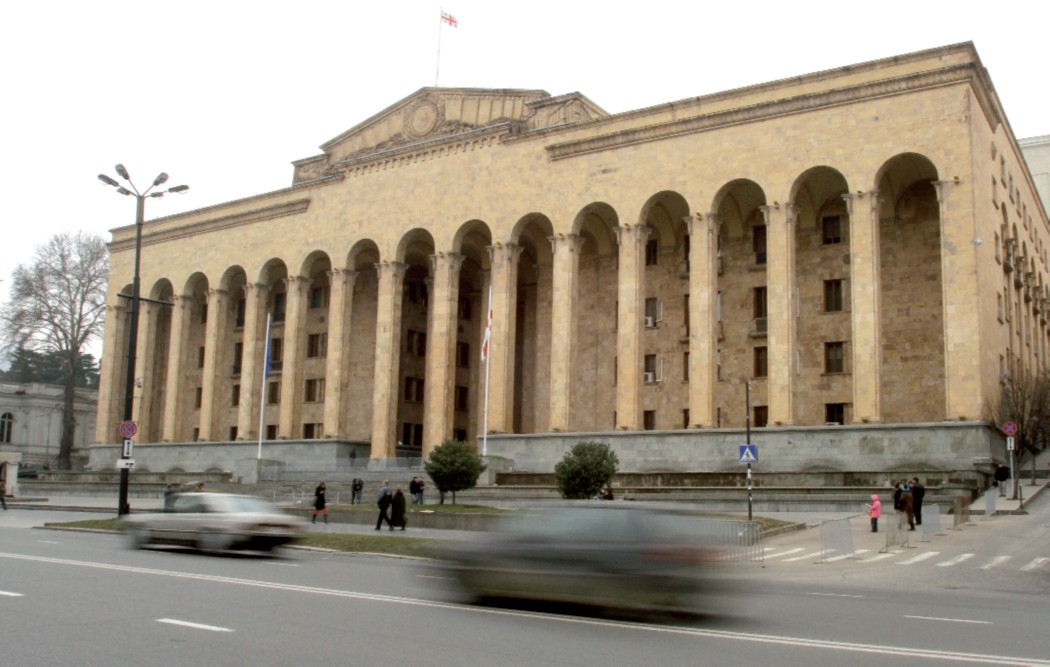
In the second half of April, the Georgian parliament voted unanimously to revoke the agreement on transit of Russian military cargo and personnel across the country (land and air) once it expires (from November this year). The agreement between Russia and Georgia was signed on 31 March 2006 in Sochi, alongside the agreement on withdrawal of Russian military bases from Georgian territory.
It is significant that the Georgian parliament's decision came after Russian President Dmitriy Medvedev submitted for State Duma ratification protocol No 5 between Russia and Armenia on extending the deployment of the Russian military base in Armenia. Naturally, the revocation of the Russian-Georgian treaty creates certain difficulties for timely supply from Moscow to the Russian military contingent.
However, it is most likely that the Kremlin already had a back-up plan because, following the Russian-Georgian war of August 2008, it would have been naive to expect Tbilisi to prolong the transit agreement. Thus many experts, in commenting on Tbilisi's decision, decided that it was unlikely to seriously complicate the situation of the Russian military base in Armenia, although it would require additional expenditure.
According to expert A. Khramchikhin, by blocking Russian air transit to Gyumri, Georgia only exacerbated relations with Armenia and strengthened Iranian involvement: "After the August events, the base was supplied exclusively by air and by an alternative channel through Iran. The Georgian parliament's decision blocks the air route - hence, there is only the Iranian corridor left - through the Caspian port of Anzali to the Armenian Meghri. In blocking Russian air transit to Gyumri, which was already extremely expensive and inefficient, Georgia only exacerbated relations with Armenia and strengthened Iranian involvement in Transcaucasian affairs. Georgia is positioning itself as a US ally and a candidate for NATO, which is unlikely to go down well with Tehran."
The Russian military expert Aleksandr Golts says that it will be difficult to find an alternative to the Georgian route for goods to the Russian military base, although there are options. M. Sargsyan, director of the Armenian Centre for Strategic and National Studies, is sure that Russia will find a way to bypass Georgian airspace, albeit spending a few extra millions.
K. Manoyan, head of the Hay Dat office in Armenia and member of the ARF Dashnaktsutyun, also believes that the Georgian parliament's decision has not altered the situation for Armenia, as Russian military cargoes have not been transited through Georgia since August 2008. Armenia's former defence minister, Vladimir Arutyunyan, did not fail to chide the Georgian authorities on this decision: "The Georgian side's decision to suspend the agreement on transit of Russian military cargoes through its territory cannot have a positive impact on Armenian-Georgian relations. The activity of the Russian base is aimed at ensuring Armenia's security. In this respect, steps taken against the base are thus directed against Armenia itself... However, there are alternative supply routes - through Iran and by air and, in addition, Russia has its own leverage to resolve such issues."
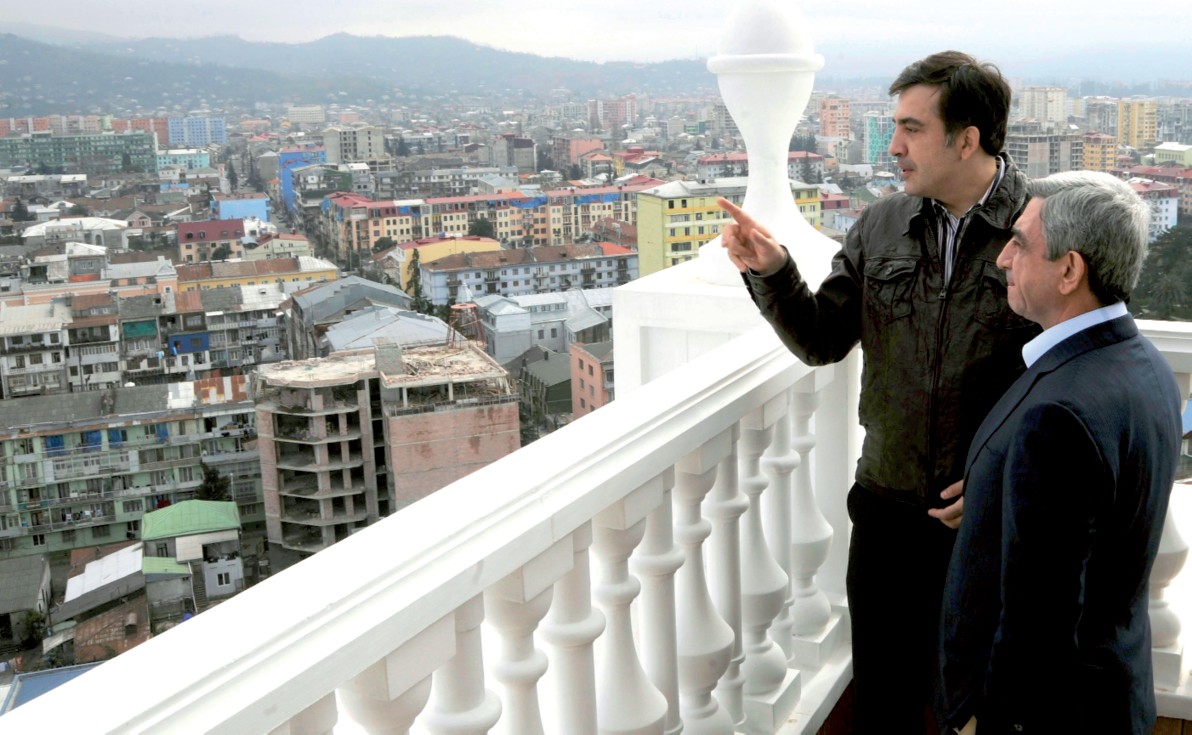
Nevertheless, despite this statement, Armenian-Georgian relations are now strengthening. Over the last few months, Armenia has been visited by Georgian President Mikheil Saakashvili and the Georgian prime minister, interior minister and defence minister to discuss a wide range of issues concerning the expansion of cooperation and the development of Armenian-Georgian relations. In this regard, special attention should be given to the latest visit by Georgian Minister of Defence B. Akhalaia and the statements he made in Yerevan: "Armenian-Georgian relations have a special nature. I am confident that this relationship will continue to strengthen and develop, and no force can prevent our cooperation." It is obvious that in speaking of forces, Akhalaia meant Russia.
Following Akhalaia, Yerevan was visited by Georgian Foreign Minister G. Vashadze, who noted that Georgia does not intend to interfere in the country's security matters, but has a right to express its position on the Russian military base in Armenia. In his view, the base does not provide any country with the possibility of stability, security and cooperation. In addition, it does not create favourable conditions for solving the problems existing in the South Caucasus in a peaceful and civilized manner.
It is possible that by offering its own military cooperation and making overtures to Armenia, Tbilisi is trying to placate Yerevan, concerned as Armenia is about Georgia's decision to revoke the agreement on the transit of Russian military cargo and personnel. At the same time, it is possible that this is part of a great geopolitical game.
In February this year, Georgian President Mikheil Saakashvili discussed the idea of creating a 'united Caucasus' at a meeting with Turkish Foreign Minister Ahmet Davutoglu in Tbilisi. The Georgian leader stressed the importance of 'open borders' in the region: "The emergence of a united Caucasus is my dream. The leaders of regional countries, particularly the leaders of Azerbaijan and Armenia agree with me in these endeavours." Despite the Georgian president's claim, nothing is known yet about the consent of the leaders of Azerbaijan and Armenia to this idea. But it is more than likely that the West could have started such a game for the successful implementation of a 'Greater Middle East' project.
The European Parliament resolution, adopted on 7 April this year, by which the EU intends to "establish informal contacts with communities of breakaway regions (self-proclaimed republics in the former Soviet Union) in order to support civil culture and dialogue, while maintaining the policy of non-recognition by the EU", gives rise to certain reflections. According to A. Karapetyan, leader of Armenia's New Times party, the logic of this resolution is as follows: "If there are no borders, there are no problems with territorial integrity or the right of self-determination. Realizing that the conflicts in the South Caucasus cannot be left in their present form and that it makes no sense to continue talks according to current logic, some circles in international politics are trying to integrate the Transcaucasian republics, including Abkhazia, Nagornyy Karabakh and South Ossetia into Europe in order to create some union in the region which could be called 'the United States of the Caucasus' with its capital in Tbilisi."
Frankly speaking, there is some logic in Karapetyan's thinking. Most of the steps taken by the West, at least in the South Caucasus, can be interpreted that way. But the West will hardly be able to achieve this goal without restraining Armenia's aggressive policy. After all, to accept this project, countries must obtain firm safeguards against territorial encroachments. Also, an end should be put to the evil practice of pandering to the aggressor's appetite. Because these guarantees do not exist, the idea of a 'Greater Caucasus house', if there is one, is doomed to failure. For the time being, it only suits Armenia, which wants to begin from scratch, post factum. But it turns out that, according to the same Karapetyan, this programme may contain a real threat to Armenia, because if it is implemented, there will be tangible demographic changes in the region: "With the opening of borders in the Caucasus, the Armenian-Turkish border will certainly open, after which the 2-million-strong Armenia will end up between 18 million Kurds on the one hand, and Azerbaijanis on the other." The chairman of the Armenian National Unity party, A. Geghamyan, who worries for Russia, spoke almost in the same vein: "The idea of a Greater Caucasus home without Russia, but with the North Caucasian republics of the Russian Federation, as promoted by the Georgian leadership, serves to dismember Russia. In the arsenal of destabilization tools, fomenting separatism in northern Iran, populated by ethnic Azerbaijanis, will also be used. In the severe socioeconomic situation which has affected a significant part of Armenia's population, any inflammatory and provocative actions by external forces and their stooges within the country will find fertile ground for destabilization. The reason is the lack of a unifying idea for the future of Armenian statehood, the Armenian people and its 5,000-year-old civilization. Such an idea does exist and it is in the mind of every Armenian who cares for his country's fate. The essence of this idea is the creation of a Eurasian Union of Armenia, Russia, Kazakhstan, Belarus, Georgia, Azerbaijan, Ukraine, Uzbekistan, Tajikistan, Kyrgyzstan and Turkmenistan."
Suffice it to read the comments of leaders of two Armenian political parties to become convinced: Armenia and the Armenians will never abandon their aggressive policy, their crazy idea about 'the exclusivity of the Armenians' and their idea of 'little mono-ethnic Armenias' in different parts of the world, which should ultimately be crowned by the 'Greater Armenia' project. Geghamyan, casually mentioning "the 5,000-year-old Armenian civilization" and suggesting that virtually all post-Soviet countries unite in a Eurasian Union, is unwilling to admit the truth that such alliances are impossible without respect for each other's territorial integrity. Ironically, Georgia, which is playing a dangerous game with the aggressor Armenia, either on its own initiative or at someone else's prompting, has been selected as one of the main victims in the implementation of the Armenians' overly ambitious plans. And Tbilisi is well aware of these threats to Georgia.
It is well known what consequences the support of two Armenian battalions for the separatist regime of Abkhazia had for Georgia and for Georgians living in Abkhazia. According to current official statistics, Abkhazians only slightly outnumber Armenians in Abkhazia. In addition, all significant business sectors (especially on the Black Sea coast) in Abkhazia are controlled by Armenians. They are increasingly demanding representation in the government. The argument they give is that Armenians were as active in the Georgian-Abkhazian war as the Abkhazians, and, therefore, they should have equal rights. By the way, such political blackmail sometimes pays off. Abkhazia's Prime Minister Sergey Shamba, recently received S. Kerselyan, head of the Armenian community in Abkhazia, and promised full assistance and support for his community.
After the events of August 2008, using the plight of Georgia and exploiting the issue of its blockade (which is why the West is putting strong pressure on Turkey to open its border with Armenia), Armenia forced Tbilisi to agree to lay a new highway connecting the two states along the route Yerevan-Gyumri-Ninotsminda-Akhalkalaki-Akhaltsikhe-Batumi. This road is very important for Armenia, as it will reduce the distance from Yerevan to the Black Sea from 700 to 450 km. Isn't this a direct route to a declaration of Abkhazia as Armenian territory, with a further demand for merger with Armenia? It is unlikely that the map of the 'Abkhaz Armenian Republic', recently published on the internet by Armenian bloggers, can be seen as a mistake.
Some representatives of the Georgian opposition and experts in Armenia claim that the construction of the aforesaid road may lead to the loss of another part of Georgia - Samtskhe Javakheti, which is populated densely by the Armenian diaspora. In their view, this creates the conditions for separatism in one more region of the country and will certainly lead to complex and terrible separatism in Georgia in the foreseeable future. The paradox lies in the fact that in taking such a step, Tbilisi is trying to appease Armenian ambitions and avoid an escalation of separatist sentiment in Javakheti. However, it is possible that such tactics could lead to a radically opposite outcome - Javakheti has long been a potential powder keg in the country. And any concessions, as well as the conciliatory steps taken by Georgia, could further whet the appetite of the Armenian separatists and Armenia. Moreover, according to the Georgian political scientist, R. Klimiashvili, Armenia is already saying that Azerbaijanis should not live in the Marneuli and Gardabani regions of Georgia because it is explosive for Russia. The theory is that they could make a deal with the Turks, and then the Turks would unite with Chechnya from there. This is Armenia's 'concern' for the interests of its 'big brother'.
Georgia's tactical moves may significantly complicate the situation for itself in the future, forcing it to take increasing account of inordinate Armenian ambitions. But even that will ultimately not save it from separatist complications in Javakheti, because the Armenians and their backers have long exploited the idea of federalization in Georgia. The most eloquent proof of this lies in the words of Russian State Duma deputy, Sergey Bagdasarov: "The Armenians will not rest until they break up Georgia. We need a confederated Georgia. I do not mean from the legal or constitutional aspect. I mean in psychological terms. Georgia is a small mini-empire, which is home to a range of national minorities, as well as original sub-ethnic groups of the Georgian people, who are often quite different from each other. Georgia should eventually become a country like Lebanon, which is formally a unitary state, but in reality is a confederated state, in which stability is often based on some sort of verbal agreement between the various communities." These remarks were made immediately following the war of August 2008. By the way, only strong pressure from the West, which acts as a strategic ally for Georgia, prevented Armenia from igniting another war in the breakaway region of Javakheti at the time. And just recently, after the intensive deepening and expansion of Armenian-Georgian relations, including in the sphere of military cooperation, the Armenians openly put forward their territorial claims against Georgia in respect of Javakheti.
The chairman of the Yerkir Union of NGOs for Repatriation and Settlement, S. Artsruni, claims that solving the problem of preserving the Armenian identity of Javakheti will certainly play a crucial role in the demographic and therefore, state formation of the Armenians in the Armenian highlands. He describes Javakheti, as well as Nagornyy Karabakh as constituent parts of the historic homeland of Armenians outside the Republic of Armenia, which still retain an Armenian identity.
And what sort of uproar was stirred up among the Armenians by the awarding of Georgian President Mikheil Saakashvili with the Order of Honour of Armenia in June 2009! According to the majority of Armenian experts, this was done under pressure from Washington, which is building a new geopolitical configuration in the Caucasus. Armenia, in turn, could be offered a choice - incorporation into the proposed scheme or reinforcement of the country's isolation. And despite this, the US is actively trying to involve Armenia in its own version of the Caucasian game. A statement by Armenian expert A. Alvrtsyan proved clearly that the issue was not Saakashvili, but the Armenians' pathological hatred for Georgians: "The awarding of the order to Saakashvili is a mistake from both a moral and political point of view. With this step, the Armenian authorities also offended the Armenians of Georgia, because Saakashvili has always been anti-Armenian. The Armenian government mistakenly thinks that this order can make the Georgians a more reliable partner, inspire confidence and make them pro-Armenian."
It should be noted that Armenian-Georgian military cooperation has provoked a controversial response from Georgian experts. In particular, Irakli Sesiashvili, Georgian expert in security matters, notes that Armenian-Georgian military cooperation will displease Azerbaijan, cause complications in the Transcaucasian region and may have disastrous consequences for Georgia. According to Sesiashvili, Yerevan suspects that the conflict with Azerbaijan may escalate, and it is clear that Armenia is trying to find alternative routes for both arms supplies and the mobilization of other resources. Naturally, the only transit route lies through Georgia. The air route is very expensive, so Armenia prefers cooperation with Georgia. But Tbilisi should not agree to cooperate with its neighbour in this area, since Georgia and Azerbaijan are connected by strategic partnership and are cooperating in many areas, continued the Georgian expert. Therefore, according to Sesiashvili, it will be very bad if Georgia's strategic and economic partner- Azerbaijan - regards all this as hostile action.
RECOMMEND:
 543
543

