

MIDDLE EASTERN EMOTIONS IN A GEOPOLITICAL DIMENSION
International law is hostage to geopolitical interests


Author: Sahil ISGANDAROV, political scientist Baku
The greater the unrest in the Arab world and more the fuss made about it, the more reinforced is the belief that all events in the Middle East are part of a plan carefully designed by the notorious Henry Kissinger, plotting change in the region's geopolitical configuration, which has existed since 1967. As you know, everything flows, everything changes. Against the backdrop of new political realities, new geopolitical configurations are increasingly in demand and the world's leading powers are trying to establish a modern world order.
Over the last 20-30 years, Western (especially American) politicians have been promoting the concept of mondialism, which advocates the creation of a global house managed by a world government. In other words, we are talking about the creation of a world government under the auspices of the United States. But there is a danger of a weakening of the role of the UN and other international centres, as well as international law, as a result of violations of the world's geopolitical balance. And the loss of global political balance may lead to a rapid growth in nationalism and fundamentalism. Today it is clear that in speaking of the rapid development of fundamentalism in eastern countries, we primarily refer to Muslim countries, although the West is silent about the growth of similar sentiments in Europe itself.
As expected, the United States and its allies have undertaken a key role in the formation of a new world order, and they have decided to start with the Middle East and North Africa. In this scenario, the geopolitical configuration existing in this region must undergo a serious, if not total change, especially after the US took on the 'Greater Middle East' project.
After the dismemberment of Africa's largest country - Sudan - into two states (this is almost certainly not the last division), a wave of socioeconomic riots swept through some leading Arab states. Along with socioeconomic demands, political ones were also made, providing for fundamental reforms in these countries. These internal political tensions are actively supported and endorsed by the West, which calls for the leadership of these countries to obey the will of the protesters. It is also striking that the West, which has repeatedly expressed its concerns about the increasing role of Islamist parties in Muslim countries, is watching with surprising calm their strengthening position in countries within the zone of political turbulence. In fairness, we should note the major socioeconomic and political problems in these Arab countries. Yet the West's insistent appeals to the leaders of these countries to resign provoke certain reflections.
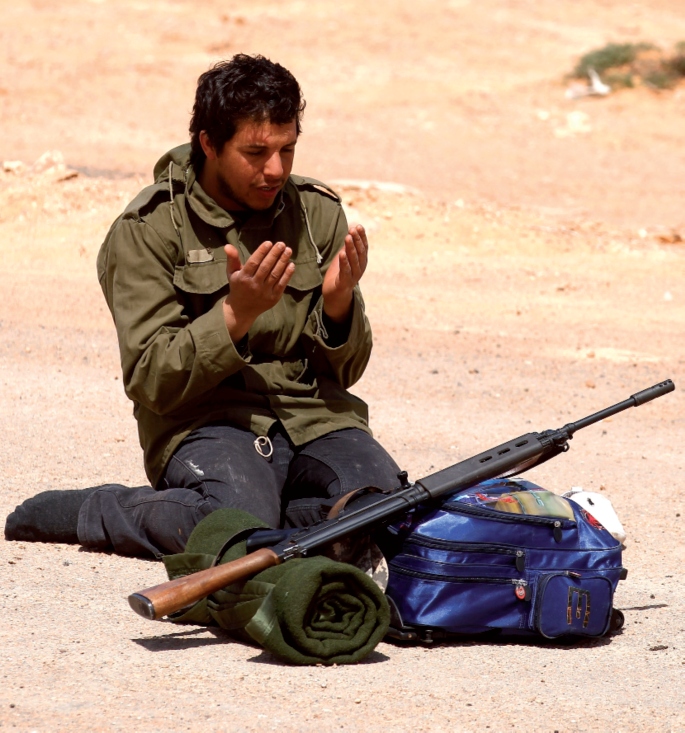
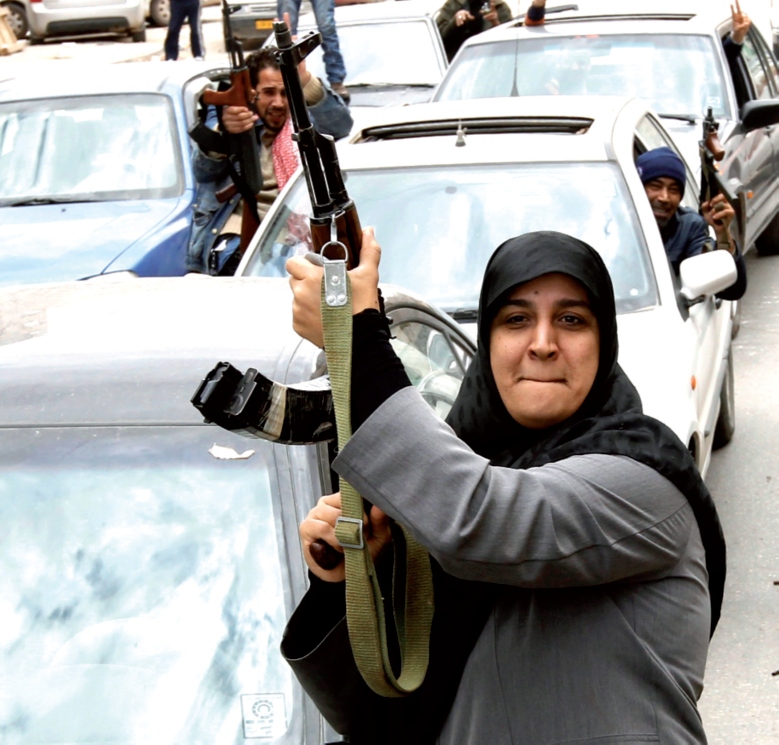
As we know, the presidents of Tunisia and Egypt, Ben Ali and Hosni Mubarak, have already resigned, while Yemeni President Saleh announced his readiness to follow their example, which was welcomed by the West. You might have thought that the United States and its allies would already be congratulating each other on the successful completion of the first stage of the planned great geopolitical game, but all cards were upset by the tough stance of the Libyan leader, the extravagant Colonel Qaddafi, who has ruled his country for more than forty years. His tough reprisals against the rebels, inhumane and illegal, forced the West to drop the game of 'non-interference in the internal affairs of a sovereign state' and throw down an open challenge to the obstinate colonel.
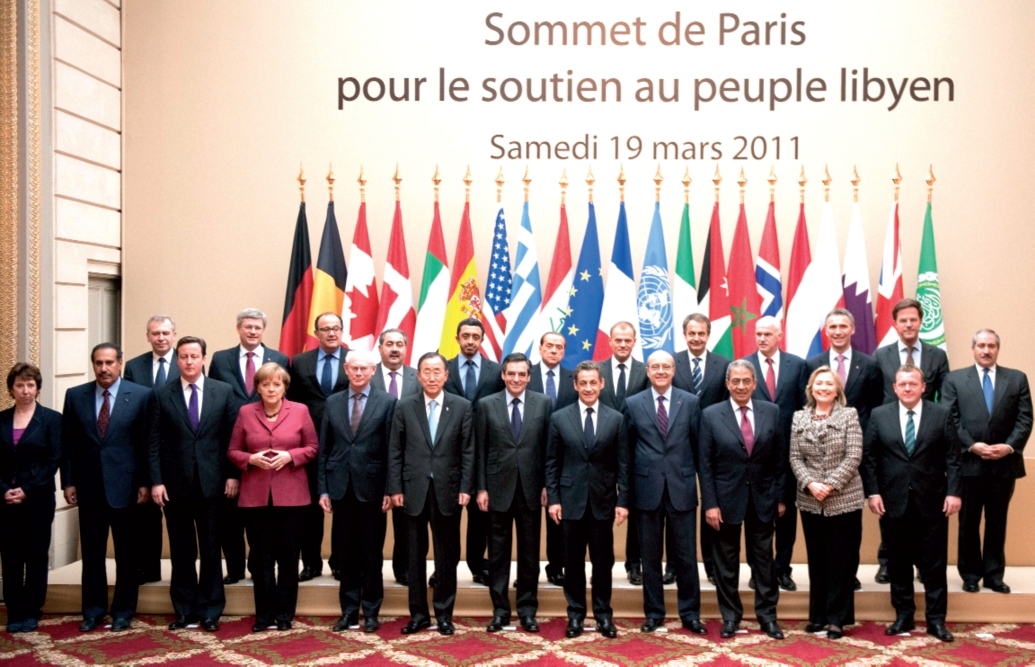
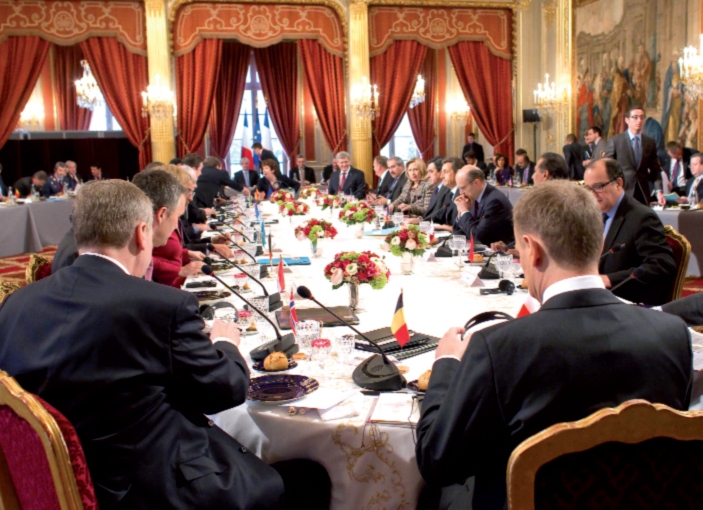
At the request of the League of Arab States (LAS), the United States, Britain, France and Lebanon initiated the required draft at the UN Security Council. And on the night of 18 March, the UN Security Council, by ten votes in favour and with five abstentions (Brazil, Germany, India, China and Russia), adopted Resolution No 1973, which provides for the possibility of air strikes on Libya. UN Secretary General Ban Ki-moon called Resolution No 1973 historic. In his view, with the adoption of this resolution, the international community showed its commitment to its responsibility to protect civilians from violence perpetrated by their own government. But not all countries, including Western states, share the UN head's positive assessment. The positions of Germany, Russia and China in the vote were particularly surprising. Germany surprised us, as a US ally, while Russia and China had an opportunity to veto the resolution. This shows that there are still certain differences between the Western allies. With regard to China's decision not to exercise its right of veto, it has long demonstrated a neutral position on many matters of principle in the UN Security Council, trying not to draw special attention to its 'humble' personality. In the opinion of several experts, by abstaining, China expects a return gesture from Washington in the form of a refusal to deliver weapons to Taiwan. As for Russia, according to some analysts, it is possible that Washington promised Moscow something in return: recognition of its leading role in the post-Soviet area, abandonment of missile defence in Eastern Europe, full support for WTO accession etc. Frankly, given the ill-concealed US-Russia and US-China standoffs, it is hard to believe in the reality of such deals, especially in light of the contradictory reaction from Russia's government tandem to tensions in Libya.
Russian Prime Minister Vladimir Putin said during a visit to Udmurtia that the UN Security Council resolution on Libya in fact authorizes the invasion of a sovereign country and is reminiscent of "the medieval calls for a crusade". The regime in Libya cannot be called democratic, but that does not mean that other states have a right to interfere in the internal affairs of the country, he said.
However, Russian President Dmitriy Medvedev criticized the prime minister's statement sharply. "Under no circumstances, should we use expressions which, in fact, lead to a clash of civilizations - 'crusades' and so on. This is unacceptable. Otherwise, it may all end up far worse than it is now" Medvedev said. Naturally, such a discrepancy in statements by top officials led to varying interpretations and gossip. Western and pro-Western Russian experts immediately began talking about serious contradictions in the tandem. But it seems that this is not an entirely true interpretation. First, it is most likely that Putin and Medvedev's statements simply complement each other in the game of 'good cop, bad cop, which is necessary for building relationships with the West. Second, during the UN vote on Resolution No 1973, Russia abstained, which allows Moscow to manoeuvre if necessary. Third, artfully dividing roles between themselves in this case, the Putin-Medvedev tandem gave the premier a very strong point exactly one year before the next presidential election, because most of Russian society is opposed to the West's arbitrariness and permissiveness. From this perspective, Putin, as a carrier of archaic and anti-Western values, is in a strong position compared with Dmitriy Medvedev, who is known as a pro-Western politician and modernizer. Fourth, Putin also drummed up support from the left opposition and Russian Muslims, who oppose interference in Libya's internal affairs. Fifth, the Russian prime minister shows himself to be a politician better versed in foreign policy than the current president. The point is that with the fall of the Qaddafi regime, Russia risks losing billions of dollars from military and oil contracts with Libya. The bitter Iraq experience, when Russia lost lucrative oil contracts there, has not yet been erased from memory. Even Medvedev's remark about the inadmissibility of statements about 'crusades' which lead to a clash of civilizations seems a weak move in this situation. The idea of a 'clash of civilizations' as an inevitable (if not mandatory) phenomenon in the modern world was first proposed by the American neo-Atlantist, S. Huntington. Sixth, the departure of former long-time leaders in leading Arab states, with whom Moscow had somehow established relations, even after the collapse of the Soviet Union, may lead to serious problems with the new leaders of those countries, who are likely to be explicitly pro-Western. Seventh, it is no secret to the Russian political leadership that American Atlantist and neo-Atlantist ideologues, whose concepts are the cornerstone of Washington's foreign policy, allocate Russia a minor role in the new world order, in which the leading role would be played by the US. In this context, Putin's harsh statement can be regarded to some extent as a response to a speech by US Vice-President Joe Biden, the author of 'resetting' relations between the USA and Russia. During his latest visit to Moscow, Joe Biden adopted a soft tone in his meetings with Putin and Medvedev. But at a meeting with Russian human rights activists and students at Moscow State University, he lashed out at Russia's government tandem. During a visit to Moldova, the US vice-president was unequivocal about the Dniester, South Ossetia and Abkhazia conflicts, which aroused dissatisfaction in Moscow. In this light, there is a reasonable question: "Why, then, didn't Russia exercise its right of veto?"
It appears that Moscow had no choice. It could not object to other members of the UN Security Council, or display a friendly attitude towards Qaddafi, who was shunned even by the Arab League and the Organization of the Islamic Conference (OIC). But by refraining from voting for Resolution No 1973, Moscow left itself room to manoeuvre. If we follow it through carefully, we can see that Moscow's criticism was voiced only three days after the international coalition began air strikes on Libya. The fact is that the resolution does not provide for strikes against ground military forces and other targets in Libya, which occurred during Operation Odyssey Dawn. During a meeting between Pentagon chief Robert Gates and his counterpart A. Serdyukov in Moscow, the Russian defence minister accused the US-led international coalition of killing civilians in Libya during the air attacks and called for an immediate ceasefire. According to The Washington Post, Anatoliy Serdyukov thus humiliated Gates and the entire American administration. In addition, Russia's permanent representative to the UN, V. Churkin, made critical remarks about the resolution, while the Russian Foreign Ministry later called it "hastily enacted". For its part, the LAS, which supports the allies on the Libya no-fly zone, criticized the coalition's actions. LAS Secretary General Amr Moussa said that the coalition's strikes went beyond the mission originally requested by the regional organization and had led to casualties among the civilian population.
The number of casualties is estimated in the hundreds. Against this background, several supporters (about 50 demonstrators) of the Libyan leader Qaddafi tried to attack UN Secretary General Ban Ki-moon in Cairo. He was forced to take refuge in LAS headquarters. There are also many opponents of the campaign in the US itself and allied nations. They consider it wrong to impose democracy by bombs. In their view, there is no guarantee that Libya will become a second Iraq.
Meanwhile, the US, again refusing to take responsibility before the international community and trying to put an end to strife between strategic allies, and despite Paris's objections, secured the handover of command of the military operation to NATO. Bloc discipline will not now allow even the most inveterate sceptics - members of NATO - to withdraw from the plan. According to a senior source in the Russian intelligence service, the international coalition is working on a plan of ground operations in Libya, which could begin in late April. Although the UN Security Council resolution does not provide for ground operations against the Qaddafi regime, the US has already begun to dispatch more than 4,000 sailors and marines to the Mediterranean Sea to support the coalition's Operation Odyssey Dawn in Libya. It seems that the Qaddafi regime will not last long before the united front of coalition countries and such powerful pressure.
In all the events unfolding around Libya, there is one essential point which is puzzling. According to the theory of international conflict, in certain situations internal conflicts, if other states interfere, can be transformed into international conflicts. Going by this theory, the adoption of the UN Security Council resolution and its prompt implementation raised the internal Libyan conflict to international level. Meanwhile, due to the inaction of the same UN member states, a number of other international conflicts remain frozen. In this context, it is interesting that the countries co-chairing the OSCE Minsk Group established to resolve the Armenian-Azerbaijani conflict participate in or passively support the UN resolution on Libya. The efficiency of the UN and its secretary general personally in pushing Qaddafi to peace and resignation are enviable. Where do such principles and leverage come from while in the process of settling the Nagornyy Karabakh conflict, which has been international in every respect from the very first day, we do not observe such efficiency and integrity? It turns out that in one case, just one resolution is enough for the UN to turn an internal conflict into an international one, including military intervention, while in another case, even a whole series of resolutions by the same UN Security Council are not enough to prevent the occupation of the territory of one member country of the UN and the OSCE by another.
International mediators shrug their shoulders and complain that they have no leverage against Armenia, which is choking in economic isolation, to stop Yerevan's humiliating response to resolutions by the UN Security Council and other international organizations. Isn't it time to end this situation which has made international law hostage to geopolitical interests?
RECOMMEND:
 662
662

