

WILL THERE BE A ''POST-ATOMIC'' WORLD?
The accident at the Fukushima nuclear plant reminds us of the danger of nuclear catastrophe
Author: Natiq NAZIMOGLU Baku
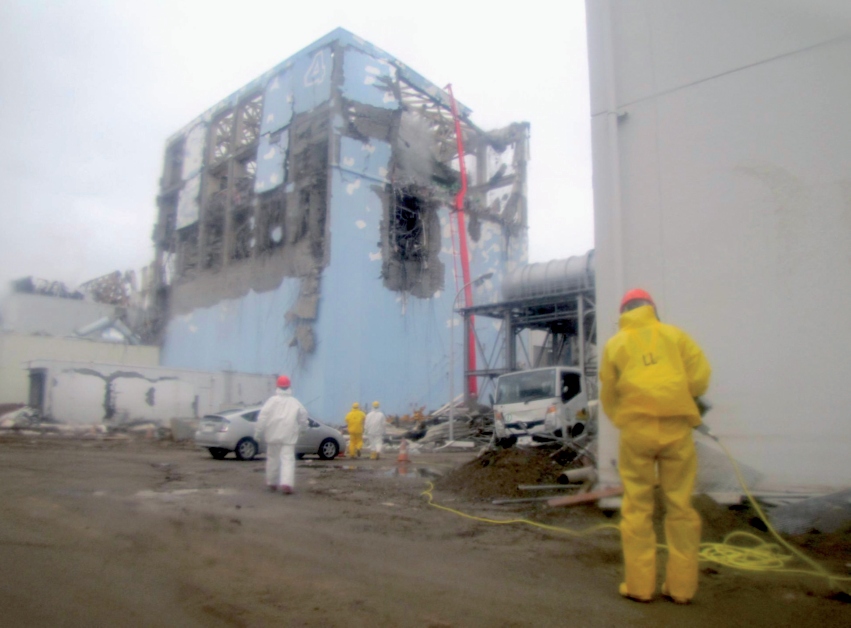
A major earthquake and the resulting tsunami claimed many victims in Japan. However, they also caused an accident at the Fukushima-1 Nuclear Power Plant, reminding mankind of the real danger of nuclear catastrophe.
A tipping point for the whole world
The world was shocked by the tragic events in the Land of the Rising Sun. They raised a question over the continued use of atomic energy. Prominent world leaders, scientists, cultural figures and clerics have had their say on this matter. In particular, Bartholomew I, Patriarch of Constantinople, known for his work to protect the environment, believes that "with all due respect to science, it is necessary to replace nuclear power plants, which are so dangerous to humanity, with various forms of 'green' energy".
The EU immediately took it upon itself to resolve this problem, opening discussions on the future of European nuclear power stations. Leading political centres of the Old World agreed on the need for active development of alternative energy (bioenergy, wind and solar energy). EU leaders made it clear that nuclear energy is no longer the locomotive of the energy sector, although in the medium-term demand for traditional fuel resources will remain high.
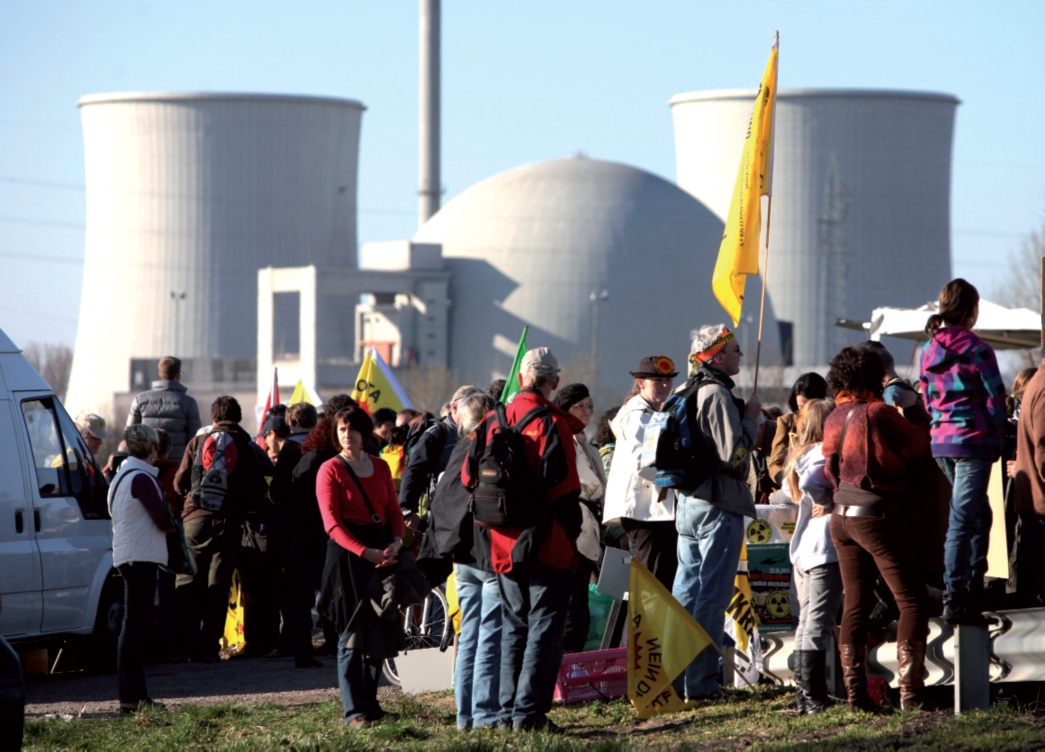
Meanwhile, a number of European countries are besieged by nationwide demonstrations against nuclear power. Individual states, including Switzerland and Germany, have come close to a total rejection of nuclear power plants. The sharpest discussions on the issue have unfolded in Germany, where there are almost daily protests against the operation of nuclear power plants and the extension of 17 nuclear power plants for another 12 years approved by the government of Angela Merkel last year. The German media is no slower than the protesters in defending 'antinuclear' sentiment.
"History shows that most Germans mobilize against nuclear energy immediately there is cause. Fukushima is a major event which will have a major impact on the German debate" says the influential Spiegel magazine.
"Events in Japan awaken dark memories. Chernobyl affected Europe directly. The disaster in faraway Japan will probably not affect us so much. But it will affect the future of energy production. Fukushima shows that we cannot rely on the safety of even the most modern nuclear power plants. And even if Germany is not threatened by earthquakes, problems with cooling units, as was the case in Japan, may arise from a combination of errors. And this is possible across the world" believes the Financial Times Deutschland.
Against the background of the disaster in Japan, the federal chancellor herself, who has so far defended the continued operation of nuclear plants, has now asked experts to check the status of all Germany's nuclear power plants. But the main point is that Merkel has announced a three-month moratorium on her own decision to extend the operation of the 17 stations. "What happened in Japan should be a turning point for the whole world" said the chancellor. "You cannot continue as usual after something like that happens in a high-tech country like Japan, where the generation of nuclear energy meets the highest standards."
In Germany, the demand has already been raised that the country should completely abandon the use of nuclear energy by 2017. Moreover, Chancellor Merkel calls for safety tests on all nuclear power plants in EU countries, as well as nuclear power plants in countries neighbouring the EU. At the EU summit in Brussels, the German leader said that nuclear power plants in the EU will be tested for safety by the end of 2011 and reactors that fail the test will be decommissioned or refitted. A similar position is shared by French President Nicolas Sarkozy, who noted that all European nuclear power plants that fail stress tests will be closed.
EU leaders expressed the need for such an approach not only at national and European level, but also across the globe. However, it is hard to believe that mankind will take a consolidated decision to abandon nuclear energy, which forms the basis of economies not only in Western states, but also in rapidly developing Asian countries like China, India and South Korea. Further, some states like Iran are openly striving to attain nuclear status. Currently, 29 countries operate 442 reactors, while 65 new nuclear power plants are being built. The government of one of the leading nuclear powers - Russia - has already made it clear that the disaster at the Japanese nuclear power plant will not affect its plans to build more nuclear power stations. And this is despite the tragic experience of Chernobyl. "We have not lost our belief that the development of nuclear power is inevitable" said Aleksandr Lokshin deputy head of Rosatom,.
However, Russia's leading experts are rather pessimistic about the idea expressed by many senior Russian officials that the Japanese scenario cannot be repeated in Russia. They believe that an emergency could occur at any nuclear power plant, including Russian ones. This could have extremely grave consequences, given that nuclear power plants in Russia are located near cities with populations ranging from tens to hundreds of thousands of people.
Prevent plague from Metsamor!
For the countries of the South Caucasus and adjoining regions, the greatest danger comes from the continued operation of the Metsamor Nuclear Power Plant in Armenia, which was built in the 1970s. This question is doubly urgent because Armenia, which is the poorest country in the region and is experiencing deep economic crisis, is unable to adequately ensure the safety of the nuclear power plant. After all, if even high-tech Japan failed to prevent an accident at a nuclear power plant, can we expect a decent intellectual drive towards nuclear security in Armenia, which is becoming weaker day by day? It should also be borne in mind that Armenia, like Japan, is located in a highly seismic zone. Thus when Armenia joined the Council of Europe, Yerevan gave a commitment to close Metsamor. More than 10 years have passed since then, and the station continues to operate as if nothing had happened. European authorities, in turn, insist, albeit unsuccessfully, on the closure of Metsamor, because it is obvious that, God forbid, in the event of a disaster its consequences will be felt not only in Armenia itself, but in all neighbouring countries.
The Armenian Nuclear Power Plant was shut down after the 1988 earthquake and did not work for more than five years. Then, because of electricity shortages in Armenia, which was isolated due to its aggression against Azerbaijan, the station was re-launched. However, the disaster in Japan once again shows that the Metsamor plant must be closed - once and for all. This is required by all of Armenia's neighbours, particularly Turkey. Turkish Energy Minister Taner Yildiz recently said that the Metsamor station, located 16 kilometres from the border with his country, is the most outdated in the world, it "uses old technology and could become the epicentre of a disaster. Therefore, Turkey will continue to campaign for the closure of this plant."
The IAEA also demands that Armenia close the facility. Strong statements about the necessity of shutting Metsamor down are regularly made by the European Union, which has recognized the nuclear reactor in Armenia as the oldest and least secure of all the 66 stations existing in Eastern Europe. Brussels is even ready to provide an appropriate amount - 200 million euros - for the closure of Metsamor.
An important statement to this effect was made by the famous British physicist Frank Barnaby: "Plants like Metsamor have outdated safety procedures. Modern power plants are much safer, albeit in the event of an earthquake, serious accidents cannot be ruled out there."
But in Armenia itself, apparently, no-one is seriously considering the possibility of closing the plant. Ashot Martirosyan, head of the Armenian State Committee for Nuclear Safety, was rather cynical on the subject: "It's not like shutting down the ignition in a car. Of course, every country dreams of having secure sources of energy, but for now we must proceed from what we have, increasing safety levels. If it was so bad at our nuclear power plant, we would close it."
Well, persuading Armenia peacefully, as evidenced by historical experience, is not practicable. And, apparently, even the tragic lesson of Fukushima will not help here. Perhaps Armenian government officials' confidence in the safety of Metsamor is influenced by the fact that Russia's Rosatom has decided to modernize the station. However, should Yerevan indulge in illusions that upgrading Metsamor guarantees their and the region's radiation safety?
On this subject it is appropriate to cite a statement by Vladimir Slivyak, expert of the World Information Service on Energy, board member of the US Nuclear Information and Resource Service and co-chairman of the Russian environmental group Ecodefence! "Two weeks ago, we considered it bad form to discuss the 'lack of safety' at nuclear power plants. State leaders, in the company of Rosatom chief Sergey Kiriyenko, demonstrate to the Russians several times a year their full support for nuclear energy as the safest, cheapest and most environmentally friendly of all the technologies available to Russia and which it is ready to export for good returns. The reality is, unfortunately, much sadder than the politicians' speeches: 22 out of 32 reactors in Russia are very old and unsafe, and are on the verge, or have exceeded, the 30-year period of operation specified by designers..."
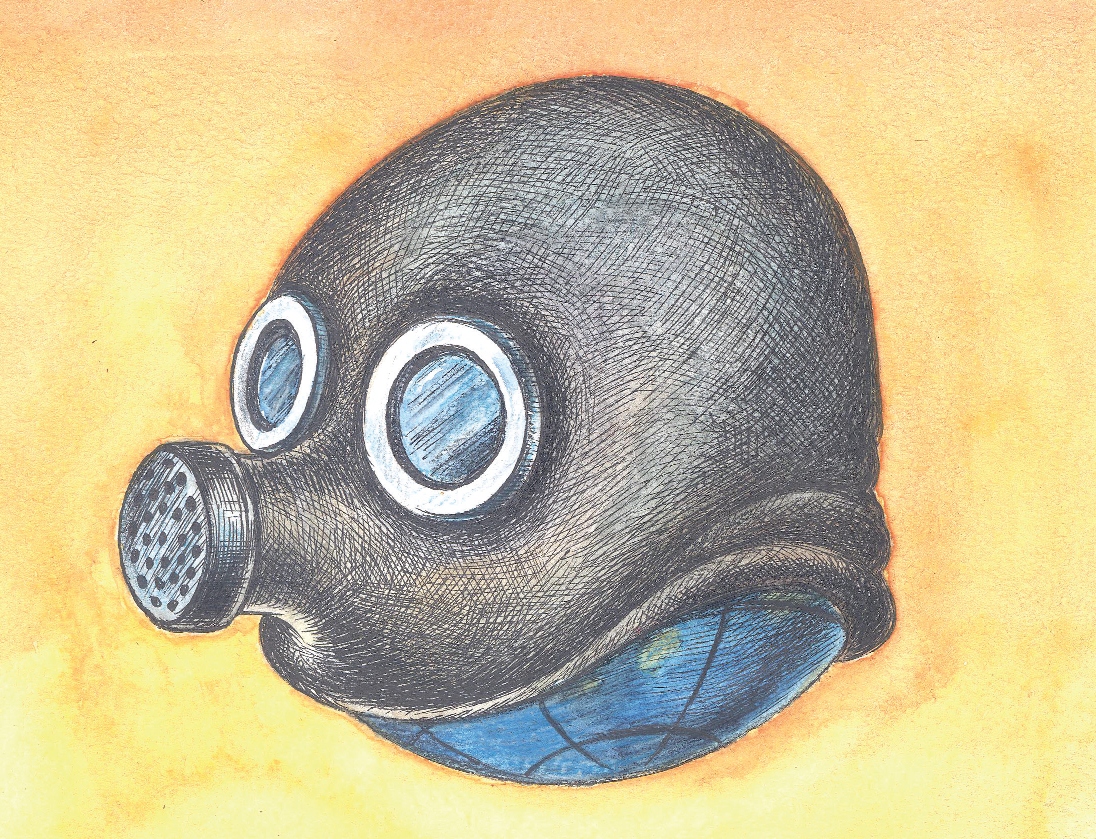
So regardless of a country's position on this issue, the nuclear danger continues to threaten all mankind. After the accident at Fukushima, the myth of a safe nuclear power industry was destroyed completely and irrevocably. The only question is, what energy path will mankind take in the future?
"What is the risk we are willing to take in trying to feed the voracious hunger for energy and in consideration of toughening climate policies and the need to achieve independence from fossil fuels in the coming decade?" asks the Swiss paper Neue Zurcher Zeitung in this context.
And Spiegel states: "A nuclear catastrophe in the country of robots and electric vehicles marks a turning point. Fukushima means an end to the dream of controlled nuclear power and the recognition that we are unable to control this energy." The German magazine published a photograph of an explosion with the following caption on its front page: "Fukushima, 12 March 2011, 15:36. End of the atomic era."
It is not yet clear whether this caption is prophetic. But the survival of mankind will, perhaps, depend on whether it is able to safely turn to a new 'post-atomic' page in its history.
RECOMMEND:
 617
617

