

MIDDLE EAST IMPASSE
Peaceful dialogue between Israel and Palestine stalls again and, it seems, for a long time
Author: Natiq NAZIMOGLU Baku
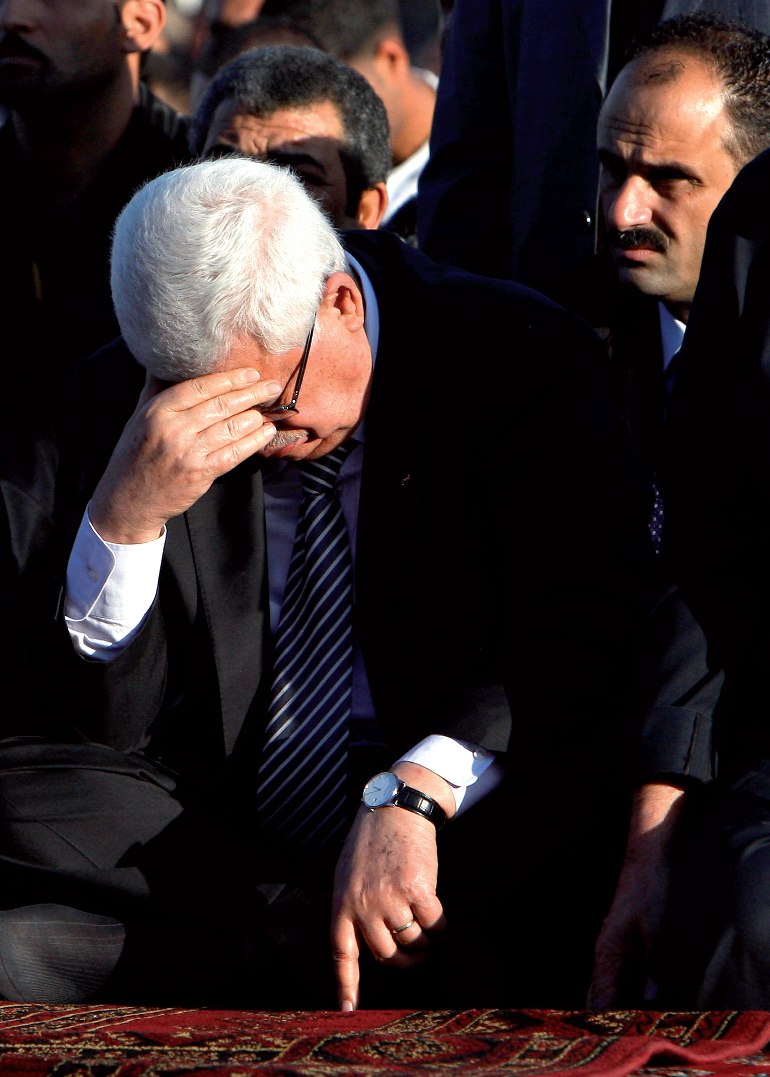
A Palestinian-Israeli settlement seems to have been put in cold storage again. The hopelessness of the situation in the Middle East peace process was confirmed indirectly by Mahmud Abbas, head of the Palestinian National Authority, who declared his willingness not just to leave his post, but also to disband the body he leads.
On the brink of failure
According to Abbas, the government agencies of the Palestinian Authority have, in fact, no authority, as the occupation of Palestinian territories, where an independent Palestinian state should have been established long ago, continues.
Although this statement is a clear exaggeration (the Palestinian leader has no intention of destroying the national administration as the basis of a future Palestinian state), it still illustrates the fact -peaceful dialogue in the Middle East is deadlocked again.
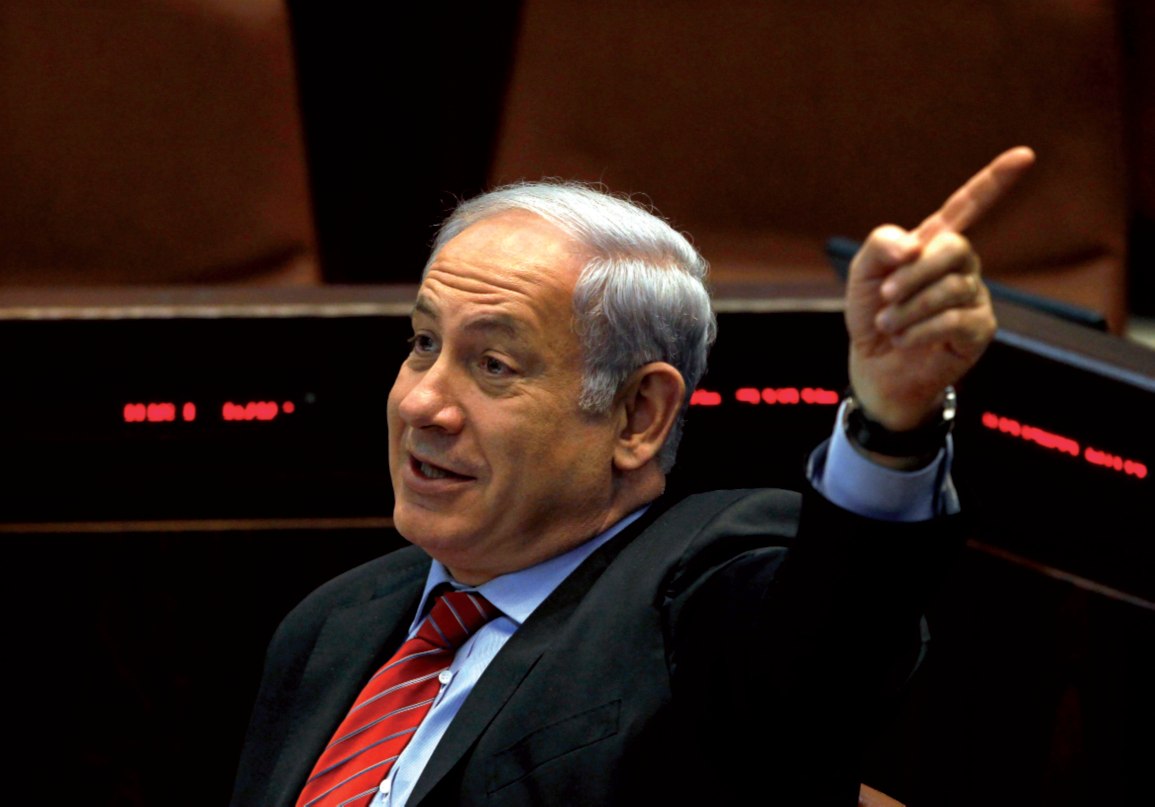
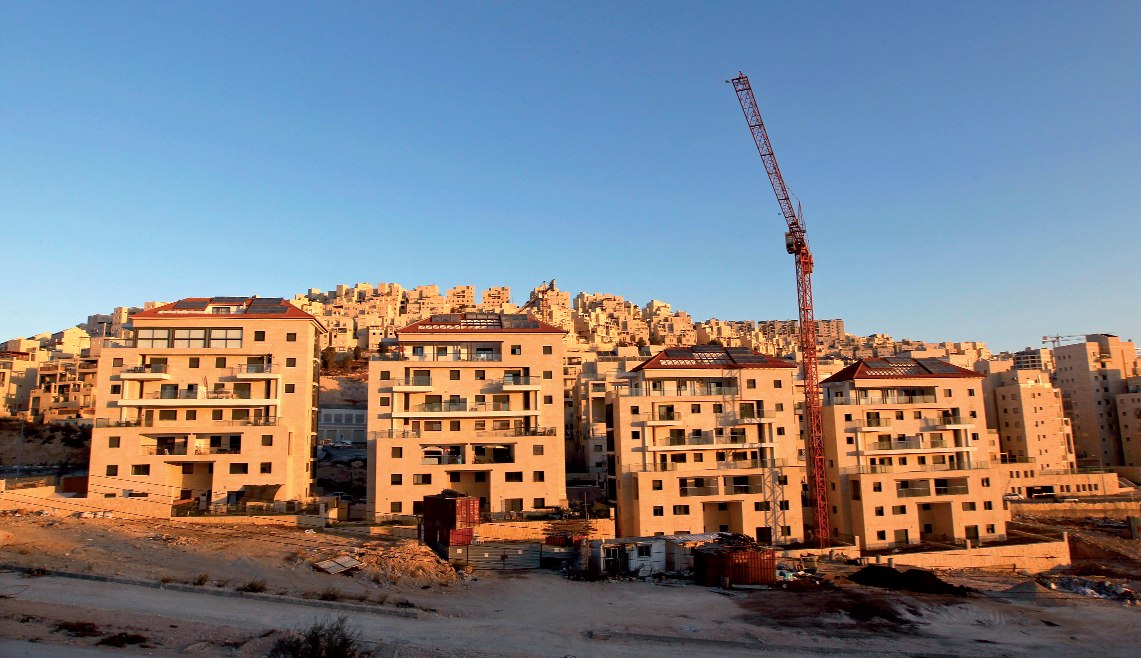
The US-brokered Israeli-Palestinian talks, which resumed in September this year, were intended to lay the foundation for a swift solution to the lingering problem and put the situation firmly on a peaceful track. But by the end of September, the negotiations had foundered once again. Representatives of the Palestinian Authority announced their withdrawal after a 10-month moratorium on the construction of Jewish settlements in the West Bank ended and the Israeli government decided to continue its resettlement policy. Abbas made it clear: the Palestinian side will not return to the negotiating table unless the construction of Jewish settlements in the occupied territories is halted completely. At the same time, the head of the Palestinian Authority rejected Israeli Prime Minister Benjamin Netanyahu's proposal to recognize Israel as a Jewish state if Israel agreed to extend the moratorium on the construction of settlements. He had also rejected the idea of establishing a sovereign Palestinian state with provisional borders.
"The question of a state with provisional borders is raised by some senior Israeli officials. It is unacceptable, because a state with provisional borders, even if we accept it for just two days, will become permanent and, moreover, without Jerusalem," said Abbas.
The Palestinian administration urged the chief mediator - the United States - to openly hold Israel responsible for the collapse of the peace talks and to exert pressure on the Netanyahu government. Meanwhile, Washington made some effort to secure a mitigation of the Israeli position. Information was leaked to the world media that in return for Tel Aviv ceasing to build illegal settlements, the Americans were ready to supply Israel with an additional batch of modern fighter aircraft. However, Washington's efforts proved to be in vain. The official representative of the US Department of State, Philip Crowley, finally acknowledged that the US was wasting its time trying to persuade Israel to extend the moratorium on construction in the West Bank. However, this statement was accompanied by a proviso that the United States would continue to help the parties towards mutual understanding in order to restore direct contact.
But achieving mutual understanding is becoming harder and harder. An example of this is the adoption by the Knesset of a law which states that an agreement providing for the ceding of "sovereign territory of Israel" must be approved by two thirds of deputies (80 MPs), otherwise the agreement should be put to a national referendum.
The Israeli parliament's decision was condemned by the League of Arab States, which considers it to be a new obstacle to advancement in the peace process and establishing a Palestinian state by negotiation. The Arab community is not alone in its assessment of the Israeli law. According to Germany's S?ddeutsche Zeitung, the law contradicts the basic principles of democracy. After all, democracy provides for the existence of a law-governed state, and it cannot interfere with the law or interpret it arbitrarily. If in the future the Israelis decide in a referendum whether to return the occupied Golan Heights to Syria and the eastern part of Jerusalem to the Palestinians, it means that Israel is misappropriating a right it does not have.
"It does not matter that the annexation of the Golan Heights and East Jerusalem took place 30 years ago. It was a unilateral move by Israel which was not recognized internationally. Thus, in terms of international law, these territories are occupied and Israel, respectively, cannot take any sovereign decisions or hold referendums on them. So the new law is yet another indication that Israel is quietly ignoring international law. Israel is behaving similarly on the issue of constructing Jewish settlements in Palestinian territories on the West Bank," says a leading European publication.
Meanwhile, the leadership of the Palestinian Authority alludes transparently to what lies ahead for the region if negotiations collapse. Actually, it is from this perspective that Abbas's statement about the possible dissolution of his administration should be considered. We are talking about the prospect of a resumption of an active phase of the intifada, which, as shown by past experience, is accompanied by terrorist suicide attacks on Israeli cities. However, Abbas also has a purely peaceful way of exerting pressure on Israel, which he hastened to use as the Washington-initiated round of talks faced the threat of total collapse.
Abbas change stactics
Abbas's peaceful "weapon" is to step up the international recognition of Palestine as an independent state. It is assumed that this will considerably weaken Israel's already shaky legal position in the settlement process. At present, independent Palestine has been recognized by more than one hundred countries (this does not include the US, Japan and most European Union countries) and Abbas, apparently, intends to substantially increase this number.
"If the Israeli-Palestinian peace talks fail, Palestine will urge countries that have not yet recognized its independence to do so," Abbas said, during a visit to Turkey in early December. By the way, the Palestinian leader has already secured Ankara's support in this respect. Turkish President Abdullah Gul said that Turkey would continue to show solidarity with Palestine and provide social and economic support for the establishment of a Palestinian state.
However, reports indicating further success by the Palestinians in their struggle for international recognition of their non-existent state, outlined within the 1967 borders in international legal documents, have come from distant Latin America. The largest countries in the region - Brazil and Argentina - have recognized the Palestinian state. Buenos Aires emphasized that Argentina's recognition of independent Palestine "reflects the deep consensus that has developed on this issue in South American countries". Uruguay, Paraguay, Ecuador and Peru have announced their intention to do so in 2011.
The world's media immediately began talking of a diplomatic offensive by the Palestinian Authority. Israel, for its part, argues that recognition of the Palestinian state by other countries violates the 1995 Oslo agreement between Israel and the Palestinian Authority, which provides for the recognition of Palestine only with Israel's approval.
However, there are different points of view regarding the reasons for the increasing international recognition of Palestine. The radical Palestinian movement Hamas has a very interesting version.
Unlike the Fateh organization, which runs the Palestinian Authority, it has been taking a much more uncompromising stance against Israeli policies. Hamas suggests that the United States is behind the campaign to recognize the Palestinian state. In their opinion, outraged by Israeli intransigence in the Middle East peace process, Barack Obama decided to keep his promise to the UN General Assembly that Palestine would become a member of that organization by September 2011. To begin with, he has drawn Latin American countries into this process.
Carmel rapprochement
Despite the total lack of prospects for negotiations between Israel and Palestine, there are still indications that dialogue between two parties that have been in conflict for decades is possible in principle.
For example, Mahmud Abbas called on Hamas to release the captured Israeli soldier Gilad Shalit, while Israel approved a number of initiatives to ease the blockade of Gaza, in particular the expansion of opportunities to export from the Palestinian enclave.
But most importantly, the Palestinian Authority assisted Israel in extinguishing a giant fire on Mount Carmel, sending three fire engines to the Haifa area. Israeli President Shimon Peres and Prime Minister Netanyahu greatly appreciated the gesture by the head of the Palestinian Authority. The Israeli prime minister also thanked the leaders of neighbouring Muslim countries (Egypt, Jordan and Turkey), who, despite their differences, responded to Israel's appeal and immediately came to its aid. "The Carmel disaster brought us and neighbouring states closer. Everyone understands that such a disaster could happen to anyone and everyone should help each other," said Netanyahu.
If the Israelis and Arabs are really aware of the need to help each other, this means that there is still a chance of a peaceful settlement of the protracted conflict which claims hundreds of lives every year and has such a significantly adverse impact on the whole international situation.
RECOMMEND:
 572
572

