

HOT WINDS OF THE DESERT
The South Caucasus and Central Asia are being drawn into global processes at a new level
Author: Azer ХUDIYEV, political expert Baku
A sage once said: "Space and time solve things which wisdom and knowledge cannot." Today's world has many hot spots (the Middle East, the Caucasus etc), and conflicts periodically intensify there when geopolitical interests clash.
Alarming events have been taking place over the past months in the area between the Middle East and Central Asia. This region borders the South Caucasus and it can be said with confidence that events unfolding there can have a serious impact on the political situation in our region. The world's leading politicians and analysts are aware of the global character of geopolitical processes and the gradual eastward trend.
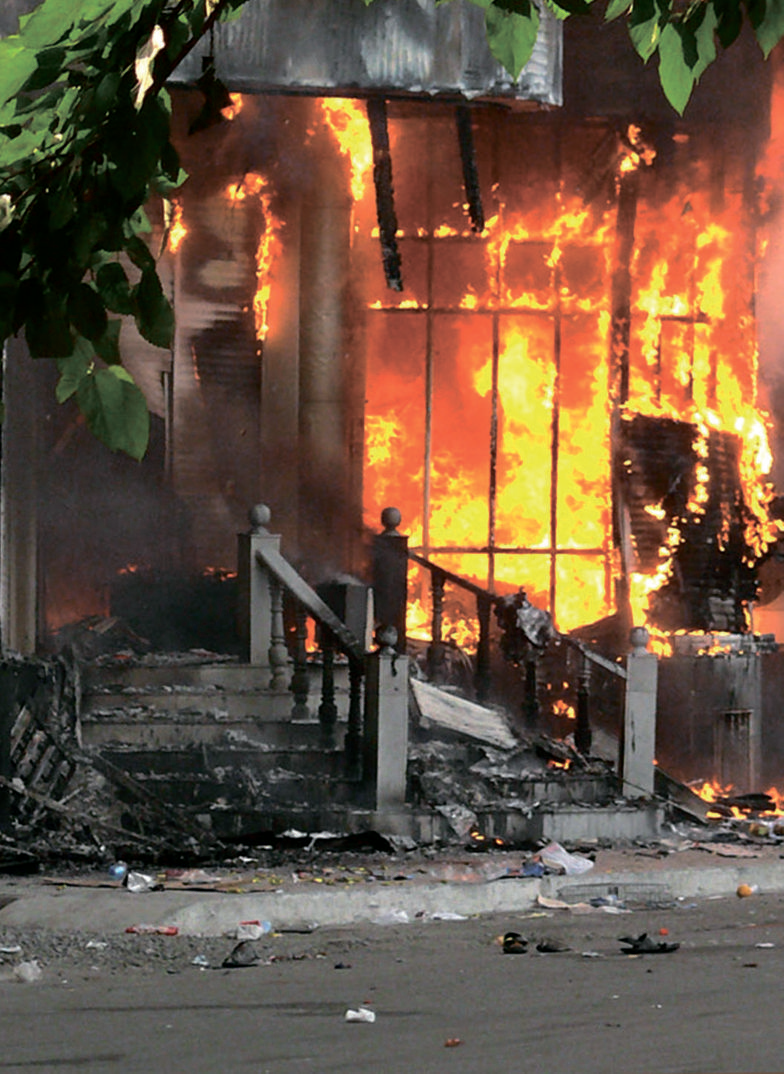
It is therefeore useful to consider this issue in the light of clashes in Kyrgyzstan and the tension prevailing in Israeli-Turkish relations.
The judicial "legacy" (enclaves, deliberate mosaic settlements of ethnic groups, border problems etc.) which the Central Asian states inherited from the Soviet Union and a forecast of potential interstate conflicts were described in Region+ in last October's edition (N87, 2009).
The article mentioned a possible deterioration in the political situation in Central Asia, and Uzbek-Kyrgyz relations were mentioned as the most precarious. That forecast was based on certain artificially-created ethnic problems which were a hangover from the Soviet era and has proved to be correct in Kyrgyzstan. In a struggle for power, the most fragile part of the country (and of Central Asia as a whole) was stricken.
But the main point is that these processes are not restricted to this region. Following the events in Kyrgyzstan, the world's superpowers held consultations on energy in the context of the struggle against terrorism and military cooperation. It turned out that this geopolitical space is still very susceptible to the slightest shock. Various countries are now providing aid to Kyrgyzstan (the USA allocated 48m dollars, Turkey made similar moves etc). But there is still no specific plan for the complete removal of antagonisms. OSCE foreign ministers held an unofficial meeting in Almaty (Kazakhstan) on 16-17 July 2010 about the events in Kyrgyzstan and they decided to hold a donor conference. The main aim of the conference is to raise an anti-crisis fund to help Kyrgyzstan. An informal meeting of foreign ministers of the Turkic states was held in Bodrum (Turkey) from 4-7 August 2010. Cooperation between the Turkic states is important to ensure security in the Caucasus and Central Asia. But one should bear in mind that the struggle between superpowers for influence in this region may cause surprises. In this light, the situation surrounding Turkish-Israeli relations is very interesting.
Energy policy: one solution for three regions
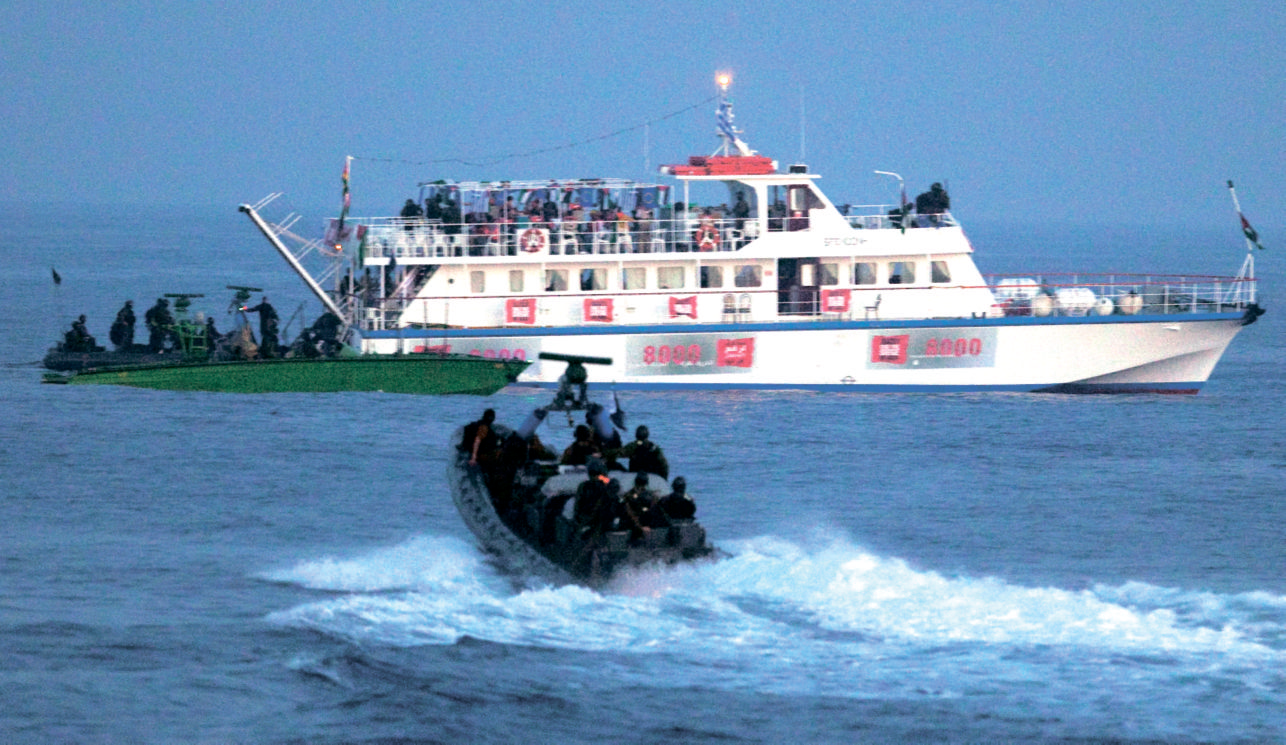
Israel appeared quite confident in using force against the Freedom Flotilla humanitarian convoy moving to the Gaza Strip. The country's leadership said it would not step back from its position. Turkey, whose citizens suffered in the Israeli military attack on the convoy, demanded that an international group be set up to investigate those events. At first the USA was quite relaxed and supported Israel. In contrast, the Organization of the Islamic Conference backed Turkey's demand and said it was unacceptable to hinder humanitarian aid.
However, as time passed, the positions of Israel and the USA have shifted. Now Israel agrees to an international investigation group being set up under the UN. We wonder why. There may well be several political reasons.
First, Turkey is becoming more and more geopolitically significant in the Middle East, both for the USA and for Europe. Suffice to mention Turkey's significance for the implementation of transnational projects such as Nabucco. There are plans to advance this project, and Ankara is actively involved. Turkey, Bulgaria, Hungary, Austria and Romania are expected to sign new agreements on its economic and financial aspects. The fact is that Azerbaijani gas from the Sah Daniz-2 field is needed for ambitious projects like the Turkey-Greece-Italy gas pipeline and the TransAdriatic Pipeline.
Intensifying rivalry has forced the world's many centres of power to liven themselves up. For example, Europe is trying to bring the energy resources of the Middle East, South Caucasus and Central Asia under its control. The Russian newspaper Kommersant says that the European Commission has proposed laying a gas pipeline from Turkmenistan to Azerbaijan via the Caspian Sea. Europe intends to have this project implemented, even though the Caspian's status has not been defined. Thus the energy issue acquires greater significance. Russia and Iran immediately voiced disapproval of the project, saying that an agreement cannot be signed until the Caspian's status is defined. Thus a new area of confrontation is developing between those countries and Europe. There are reports about Russia supplying four S-300 missiles to Iran. It seems that a new round of the arms race is brewing in the region. Against this background, Turkey's geopolitical significance is increasing for Europe. On the Turkish-Israeli confrontation, the USA and Europe have to carry out a balanced policy and not support Israel's tough stand in its relations with Muslim countries, especially Turkey.
Second, the West wishes to involve Iraq, Azerbaijan, Iran, Turkmenistan and Kazakhstan in its energy projects. Turkmenistan has not yet voiced its final opinion on Nabucco. However, there has to be one political position on the East-Caucasus-Central Asia line.
Azerbaijan's energy policy enables it to respond positively. First, because Baku has successfully diversified transport routes for its oil and gas supplies to the world's markets. One more route has appeared recently - the Azerbaijan-Georgia-Romania Interconnection project; these countries announced their plans in a statement on 13 April and signed the relevant contract on 12 May 2010. The three presidents will meet in Baku in 14 September, according to the Azerbaijani Energy Ministry. President of the European Commission, Jos? Manuel Barroso, and European Commissioner for Energy G?nther Hermann Oettinger are expected to take part in the meeting.
That means that another energy-related project has entered the EU sphere of interests.
Second, competition for Azerbaijani gas has intensified. Another interesting point is that the world's large companies have started competing for the right to sell gas from the Sah Daniz field. According to the Wall Street Journal, Statoil has opened negotiations with potential customers. The Wall Street Journal stressed the exclusive significance of Azerbaijani energy resources for Europe. The German company RWE AG has expressed its desire to buy gas from Sah Daniz as a member of Nabucco. According to Bloomberg, on 2 August in Ashgabat, the US Secretary of State's Special Envoy for Eurasian Energy, Richard Morningstar, spoke about Turkmenistan's forthcoming gas supplies as part of the Transcaspian project.
Third, it seems that attempts to solve ethnic problems in Central Asia have merely temporarily quietened them down. Bearing in mind that the focus of political interest is drifting towards that region, one can only say that the current tranquillity there is a fragile one. However, energy-related interest in the Middle East and the Caucasus may contribute to the establishment of stability in Central Asia, which may, later, tell on problems like the Nagornyy Karabakh conflict.
But it cannot be ruled out that Armenia's obstructive stance may push Azerbaijan into hasty decisions and disturb the strategy of establishing stability in the region. On the other hand, due to its negative attitude towards the Transcaspian energy project, Russia may take steps to at least impede processes in the region. If they coincide, these two trends may cause a paradox when both excessive activity and excessive passivity have negative consequences. In such a situation, it would be more appropriate to carry out fine diplomacy to counterbalance the conflicting trends.
Thus, the South Caucasus and Central Asia are being drawn further and further into global processes at a new level. Naturally, this explains why the West is trying to settle Turkish-Israeli relations. The West cannot tolerate an escalation of tension by Israel. The crisis trigged by the attack on the Freedom Flotilla indirectly hinders the implementation of the West's international energy projects, because maritime routes are important as energy corridors. Therefore, maritime tranquillity must be achieved. This in turn requires harmony in the political contradictions of the Middle East and global energy politics. One route to this harmony passes through the Caucasus. It is very difficult to reach this goal across a huge geopolitical area. But there is no other way forward.
RECOMMEND:
 624
624

