

"THE GAME IS NOT WORTH THE CANDLE"
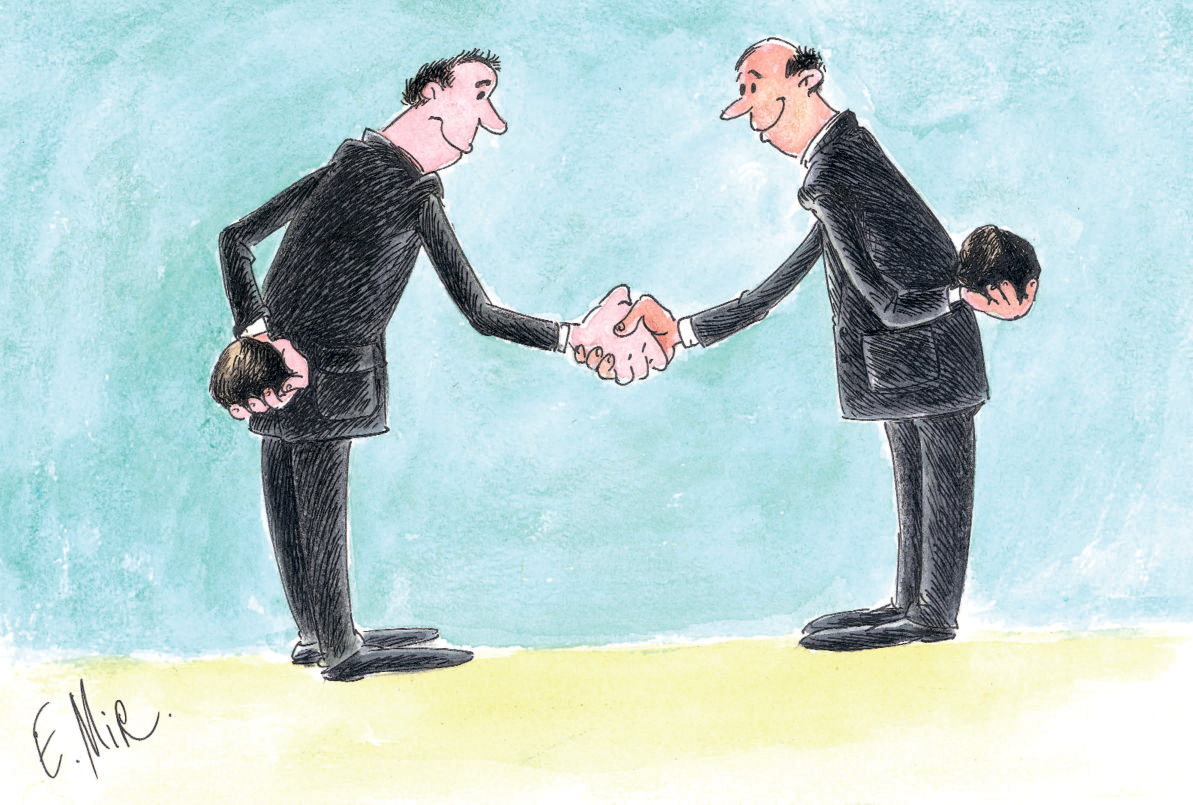
or who provoked the information war between Moscow and Minsk?
Author: Sahil ISGANDAROV, political expert Baku
The modern level of information technology is a good tool for use in political games. The world's leading countries use this tool to the maximum in defending their strategic interests.
Many analysts believe that the information war unfolding between Russia and Belarus is a good example.
Within a short period, Russia's NTV aired three episodes of "Godfather Batka", a film exposing Belarus President Aleksandr Lukashenko's improper deeds (abductions and cases of corruption involving people close to him). The Godfather Batka-3 episode openly mentioned, for the first time on Russian TV, the Belarus leader's mental health, on the basis of utterances by Shchigelskiy, a psychiatrist from Mogilev now hiding in the USA, who analyzed Lukashenko's behaviour 10 years ago and recorded an address to his fellow countrymen. It may well be that the filmmakers have plans to shoot more episodes.
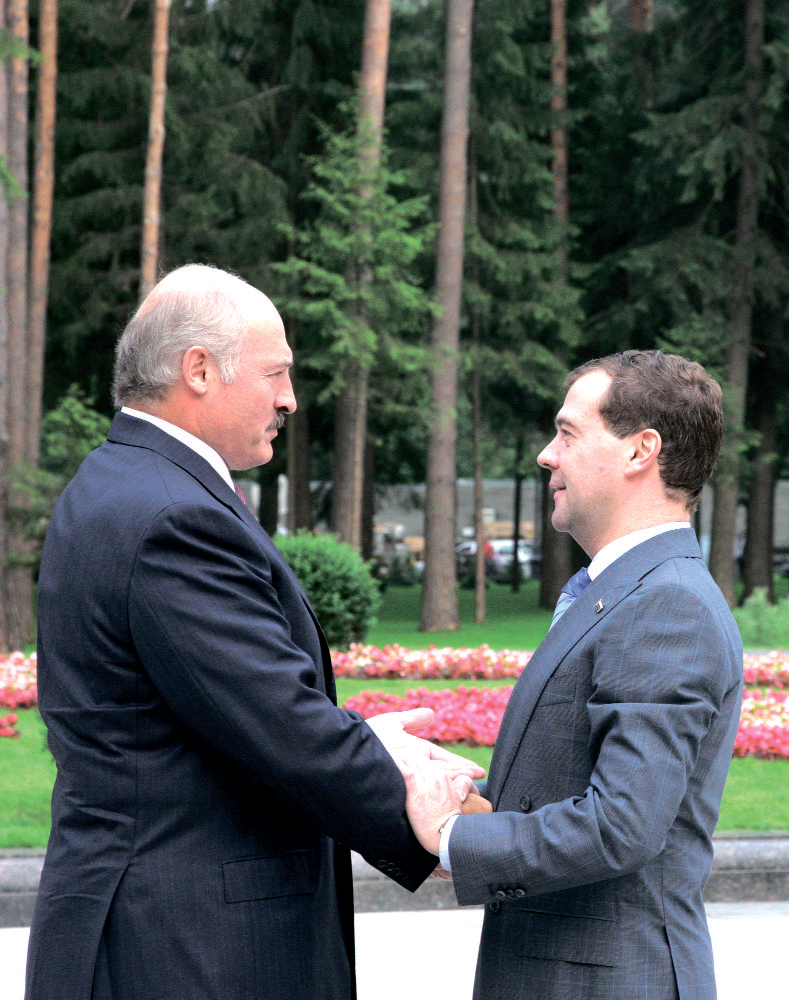
Official Minsk has hit back. Belarus TV aired the Belarus president's conversation with Moscow residents spending their vacation in the Braslavsky Lakes national park. But Lukashenko's remarks were not so harsh. "Some people in Russia want us to quarrel. But I say - you will not see this happen. Whatever films they create, whatever they say, they will fail." These remarks can be interpreted in different ways. One interpretation might go like this: "Only certain individuals and forces close to the authorities in Russia are to blame for this information war."
Nevertheless, Belarus TV takes pleasure in showing how life is "difficult" in Russia and how "corrupt" and "weak" the country's authorities are. The strange thing about this war is that NTV's film is practically inaccessible to the audience in Belarus, just as similar films from Belarus TV are inaccessible to Russian viewers. It turns out that the two sides are targeting their domestic audience. Those wanting "sensation" can easily watch the films on the Internet.
It is still difficult to say what benefits the sides have gained. To all appearances, the Belarus leader is better placed. Once in three months he meets journalists from Russian regions to tell them that he loves Russia and that enemies are hindering the formation of a union state with Russia. He recently sent letters to the Russian media, tycoons and politicians complaining about his partners within the Russian authorities.
Analysts say that people in Russia always sympathise with anyone being persecuted and one might suppose that the Godfather Batka film will have the opposite effect and turn against its creators. Analyst Viktor Yadukha believes that "by pouring dirt on Lukashenko, the Kremlin is dirtying itself" and can easily fall into its own trap.
Yadukha described such methods as vulgar, unwise and tabloid-style, which even the West does not permit itself, despite its criticisms of Lukashenko. Yadukha thinks that in the next presidential election in Belarus, Moscow will try to get a pro-Russian candidate elected. But almost all experts are unanimous that Lukashenko's opponents have no chance of beating him, either as individuals or as a group, because the middle aged and elderly, the core of the country's electorate, still trust him.
Moreover, a pro-Russian candidate would be unacceptable to Lukashenko and the opposition alike. Even Yuriy Azarenok, sacked chairman of the National State TV and Radio Company, is ready to back Lukashenko in the information war with Moscow.
Dmitriy Yermolayev, deputy editor-in-chief of the weekly Rossiyskiye Vesti, has a similarly negative attitude towards the Moscow-Minsk information war. Yermolayev described remarks by Russian presidential aid Sergey Prikhodko as undermining the fundamentals of Russian diplomacy when he said that the Kremlin is ready to make public records of a CSTO meeting at which Lukashenko promised to recognize independence of South Ossetia and Abkhazia and other remarks that would be interesting to the world. He accused Prikhodko of political short-sightedness for his threat to make public confidential talks with a foreign partner. "Such a move, and even the threat to do it, undermines confidence in Russian diplomacy as a whole. Who would want to discuss confidential issues with Russia, if the Kremlin is even ready to disclose the content of talks with Belarus, its closest strategic partner?"
It is notable that Yermolayev believes that Prikhodko is the mastermind behind the Moscow-Minsk information war due to, as Yevmolayev says, his hatred of Lukashenko. Yermolayev mentions Aleksey Gromov, deputy head of the Russian presidential administration, who denied that President Medvedev voiced discontent with Prikhodko's remarks. Yermolayev does not believe Gromov, who said that records of a CSTO summit had been made public on instructions from Medvedev. He says that Gromov and Prikhodko framed the Russian president.
Indeed, why would Medvedev need to quarrel with Belarus? In Yermolayev's view, despite his eccentricity, Lukashenko guarantees the durability of Russia's military-political positions to the west.
One cannot but to agree with Yermolayev that interpersonal sentiment plays a great role in politics nowadays. But it would be too much to explain the current tension in Russian-Belarus relations by interpersonal dislikes. This has its role but such a one-sided approach would be an excessive simplification of the problem.
Moscow has definitely begun to strengthen its positions in the post-Soviet area. A scheme successfully carried out in Ukraine inspires Russia to similar deeds to the west of its borders. Since Kiev has become pro-Russian, Moscow now can increase pressure on Lukashenko.
However, there have been many frictions between the leaders of Russia and Belarus since the formation of the Russia-Belarus union state began.
Suffice to mention that Lukashenko accused Moscow of causing the riots in Kyrgyzstan and then refused to extradite ousted Kyrgyz President Bakiyev, who found refuge in Belarus, moves that infringed the Kremlin's political prestige. Lukashenko's close ties with Georgian President Saakashvili also annoy the Russian leadership.
Ukrainian-Russian columnist and editor-in-chief of the Ukrainian daily Gazeta-24, Vitaliy Portnikov, has his own interpretation of the current tension. "The Kremlin will never understand that relations between Lukashenko and Saakashvili did not derive from their friendly or hostile attitudes towards Russia, or by their being traitors or opportunists. They met because they are political figures. Can Belarus be better without Lukashenko and can Georgia be better without Saakashvili? No doubts about that. But a new Belarus president and a new Georgian president will not be pro-Russian. Indeed, a Georgian president could be as anti-Russian (or anti-Kremlin if you like) as Saakashvili is. And a Ukrainian president could be as anti-Russian or anti-Kremlin as Yushchenko was. But there cannot be a pro-Russian president just because Moscow wants to see governors there, not presidents. But no-one wants to be a governor, be it Lukashenko or anti-Lukashenko, Saakashvili or anti-Saakashvili, Yushchenko or anti-Yushchenko, i.e. Yanukovich."
A similar opinion was voiced by Andrey Marchukov from the Russian History Institute of the Russian Academy of Sciences. He says that Ukraine's policy now resembles the one followed under President Kuchma - a flexible foreign policy which implies numerous utterances about friendship and fraternal ties with Russia, but which is clearly West-oriented. Thus, the tactical success of Russian-Ukrainian "friendship" may result in a strategic defeat. Russian may miss an opportunity to review the rules of the game - which are disadvantageous to the country - on the national and political arena of Russian-Ukrainian relations that were assigned by the Ukrainian project and accepted by the Russian elite.
This assessment means that the Kremlin still cannot manage to get a pro-Russian orientation even in post-Soviet states where Russian-backed forces came to power.
The situation is similar in Kyrgyzstan. The interim government has proven to be non-compliant with Moscow's demands and does not intend to stop close cooperation with the West. Probably for that reason, some experts say that if Russia achieves Lukashenko's defeat in the election, the West, the USA first of all, may make use of the situation. Russian political expert Svyatenkov says that Lukashenko will most likely win the coming election by a landslide if there is no serious pressure from outside. Acting alone, the West will not be able to destabilize Lukashanko's regime, which enjoys Moscow's support and systemic relations with the Kremlin, despite the latest conflicts. The Belarus opposition is weak and unpopular. In addition, the West will probably not dare to destabilize Belarus, as it does not want a repetition of the Kyrgyz scenario in the region. The West hardly wants radical change in Belarus now.
But a Russia that is now in conflict with Lukashenko may want to have him ousted. However, in this case the situation might develop in the way it did in the former Socialist countries in the late 1980s. Groups close to the Kremlin overthrew the regimes there with the help of certain strata of society and then the new governments were ousted by a people's revolution which oriented those countries to the West.
We can see that it is quite possible that the Kremlin will overthrow Lukashenko, only to see later how pro-Western forces grow stronger and oust Moscow's prot?g?s.
Russian experts say that Moscow is running a risk when it worsens relations with the Belarus president. Is the game worth the candle? One may suppose that the leaders of the two countries will find common ground and a way out of this difficult situation, following the wisdom of a Russian saying that an old friend is worth two new ones. Then the current tension will be remembered as just an unnecessary information row between members of one union state.
RECOMMEND:
 666
666

